 \n
\n
Bacteria: The Hidden Threat Lurking on Your Hands
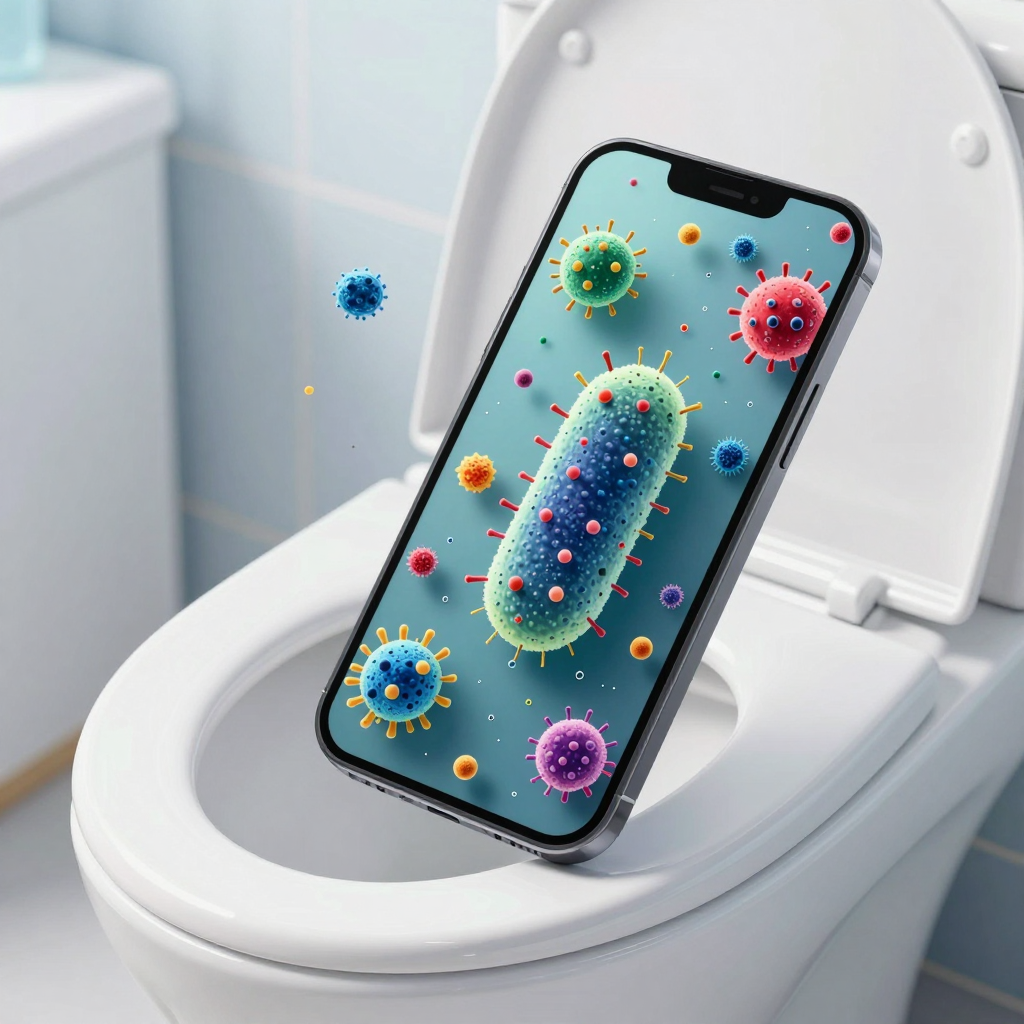
Can you believe that your cellphone is 10 times dirtier than a toilet seat? We touch our screens dozens of times a day, then rub our eyes or grab a snack with those same hands. The problem is that in those brief moments, bacteria can transfer from hands → face → mouth.
The more frequently we handle an object in daily life, the more vulnerable it is to contamination. Cellphones follow us everywhere — from restrooms to public transport, dining tables, and even beds — passing through countless surfaces and hands. Especially when used in places like restrooms, where E. coli and Staphylococcus aureus might be present, the surface of the device easily becomes a ‘bacteria transfer hub.’
The reason we should be even more cautious is that bacteria survive much longer than we might think. Some bacteria can live on surfaces for an entire day, while others survive for weeks. In other words, the careless thought of “I just set it down briefly” accumulates, causing contamination on our hands to happen repeatedly.
Ultimately, the key is simple. It’s not about whether your hands look clean or not, but how contaminated the items your hands frequently touch are. From now on, the most practical first step is to seriously suspect where the ‘invisible bacteria’ might be hiding.
Bacteria Are Everywhere Around Us
From E. coli to Staphylococcus aureus, from bathrooms to cell phones and kitchen utensils—how do these invisible bacteria survive, spread, and multiply in so many places? The key is simple. Bacteria endure and wait for opportunities when they encounter frequently touched surfaces, environments with moisture and nutrients, and tiny cracks and scratches.
What Places Do Bacteria Stick To? Surfaces That Are ‘Touched Often But Cleaned Rarely’
Places where bacteria tend to accumulate in daily life share common traits.
- Cell phones: Constant contact with hands and face, traveling through various locations like bathrooms, desks, and beds, leading to piled-up contamination.
- Around bathrooms: Flushing can spread microscopic contaminants, increasing the chance of contact with harmful bacteria like Staphylococcus aureus and E. coli.
- Kitchen utensils (silicone spatulas, strainers, etc.): Food residues and moisture linger, simultaneously supplying bacteria with both ‘food’ and ‘water.’
In other words, usage patterns and cleaning habits determine bacterial buildup more than whether something looks visibly dirty.
Bacteria Live Longer Than You Think: ‘Time’ Amplifies the Risk
Bacteria don’t disappear easily from surfaces. Their survival time varies by species, and this difference can lead to infections, skin problems, and gastrointestinal issues.
- E. coli: Can survive throughout the day
- Salmonella and Campylobacter: Survive for about 4 hours
- Staphylococcus: Can live for several weeks
This means that bacteria, once on a surface, can create opportunities for contact for days or even weeks—far longer than the common belief that “it dries quickly, so it’s fine.”
How Bacteria Multiply: When ‘Cracks’ and ‘Temperature’ Meet, They Explode
Bacteria don’t just exist—they rapidly multiply when conditions are right.
- Tiny scratches and cracks: Small damages from repeated use, like on silicone spatulas, become perfect hiding spots and footholds for bacteria.
- Biofilm: A thin layer forming on surfaces that protects bacteria and makes them hard to remove with regular cleaning.
- Temperature range (5–60°C): Bacteria causing food poisoning thrive here and can multiply rapidly within 4–24 hours if nutrients are present.
In the end, bacteria quietly gain strength throughout our living spaces by exploiting ‘invisible structural weak points (scratches)’ plus ‘gaps in care (inadequate drying and cleaning)’.
Bacterial Survival Time and Risks – Much Longer Than You Think
Did you know that bacteria can survive anywhere from a few hours to several weeks, and that this impacts our health? The problem doesn’t end with just “washing your hands.” Bacteria left on surfaces we touch can transfer back to our hands, then to our mouths and faces, increasing the risk of skin diseases and food poisoning.
Bacteria Surviving on Surfaces—More Tenacious Than You’d Expect
Given the right conditions, bacteria can live on surfaces far longer than anticipated. For example:
- E. coli: Can survive all day on surfaces
- Salmonella & Campylobacter: Can survive about 4 hours
- Staphylococcus: Can survive for weeks
This means contamination that happened in the morning can still be there by evening, and some bacteria stubbornly outlast repeated attempts to clean them off.
Two Real Threats Created by Bacterial Survival: Skin Diseases and Food Poisoning
A long bacterial survival time means more opportunities for exposure. The two main risks are:
- Skin diseases (acne, folliculitis, etc.): Touching your face with your hands or repeatedly contacting contaminated objects like phones, keyboards, and door handles can transfer bacteria to your skin, triggering problems.
- Food poisoning (diarrhea and other digestive symptoms): Bacteria on cooking tools or hands can transfer to food, causing symptoms—even from small amounts. Warm and humid environments speed up bacterial growth, heightening the danger.
When “Brief Contacts” Add Up, Bacterial Exposure Becomes Everyday Life
The scary part about bacteria is that they don’t cause trouble through dramatic events but through small, repeated contacts. Objects frequently touched, like phones, as well as kitchen areas prone to moisture and residue, allow bacteria to survive for long periods, waiting for chances to infect. Ultimately, the key isn’t just wiping surfaces when you notice dirt but adopting a habit of regular cleaning based on bacterial survival times to reduce exposure frequency.
How to Manage Bacteria: Simple Yet Essential Habits for Everyday Germ Control
From disinfecting your phone to maintaining kitchen tools, adopting daily, practical bacteria management habits can dramatically reduce your health risks. The key isn’t “perfect sterilization,” but rather breaking the cycle where bacteria transfer and multiply.
A Phone Disinfection Routine to Cut Down Bacteria: Start with What You Touch More Often Than Your Hands
Your phone is the object that comes closest to your face and mouth. Even if you wash your hands, if your phone is contaminated, germs keep passing back and forth. Manage your phone with this quick and safe method:
- Lightly moisten a soft cloth (like microfiber) with disinfectant and gently wipe the front and back
- Never spray disinfectant directly onto the device or soak it (to avoid damaging the screen and internal parts)
- Allow the phone to air dry completely for about 15 minutes after wiping
- Especially disinfect after using the restroom, public transportation, or being outdoors
Kitchen Tool Care to Prevent Bacterial Growth: “Wash Immediately, Rinse Hot, and Dry Thoroughly”
Kitchen tools are often exposed to food residue and moisture—perfect conditions for bacteria to thrive. Tools prone to tiny scratches, like silicone spatulas or strainers, can accumulate contaminants inside these grooves, so immediate after-use care is crucial.
- Wash right after use to remove all leftovers
- Rinse with hot water over 60°C whenever possible to inhibit bacterial growth
- Store completely dry with no remaining moisture (leftover dampness encourages bacteria)
- If odors or a sticky surface develop, intensify cleaning or consider replacing the item
Bacteria Management Habit Checklist: Consistency Is Your Best Defense
Rather than relying on complicated tools, the most important factor is small habits repeated daily. Even picking 2 or 3 of these to stick to can noticeably improve your environment:
- Make washing hands and wiping your phone a paired routine after going out
- After restroom use, pause phone use briefly to minimize contamination
- Always store kitchen tools fully dry
- For frequently used items, set a schedule to regularly wipe them down, assuming invisible bacteria are present
By accumulating these small actions, you reduce the amount and movement of everyday bacteria, helping keep your body in steady, healthy condition.
How to Live Peacefully with the Invisible Enemy, Bacteria
While bacteria can never be completely eliminated, wise management can significantly reduce their risks. Ultimately, the key is not ‘eradication’ but ‘designing a lifestyle that minimizes exposure.’ Small habits you can start changing today can make a surprisingly big difference.
3 Steps to Reduce Bacteria Exposure in Your Daily Routine
Cut the Hand-to-Face Route
Hands are the most common carriers. By consciously reducing the habit of touching your eyes, nose, and mouth, the chance of bacteria entering your body drops dramatically.Treat Frequently Touched Items as an Extension of Hand Hygiene
Even if you wash your hands, objects like your phone, keyboard, desk, and door handles — surfaces repeatedly touched by your hands — can get contaminated again. “Hand washing + surface disinfection” should be treated as a package deal for real effectiveness.Eliminate Moist Environments Quickly
Bacteria thrive where there’s moisture and moderate temperature. Simply washing and thoroughly drying wet kitchen utensils, dishcloths, sponges, and bathroom areas can greatly lower the risk.
A Bacteria Management Checklist to Apply at Home Right Now
Wipe Your Phone Before Putting It on Your Bed
After washing your hands outside, gently wipe items you frequently touch, like your phone, to finish the process. Instead of spraying liquids directly, use a cloth with a small amount of cleaner and let it dry fully for safety.Kitchen Tools: “Clean Immediately → Rinse with Hot Water → Fully Dry”
Tools prone to cracks and scratches, like silicone spatulas and strainers, require especially thorough drying. Simply not postponing cleaning after use interrupts bacteria proliferation conditions.Set a Replacement Schedule for Consumables
Items structurally hard to clean perfectly, such as sponges and dishcloths, are best managed by regular replacement. If they still feel unpleasant despite cleaning, it's likely time to replace them.
Balance with Bacteria Is More Important Than Excessive Sterilization
Making every surface sterile is practically impossible—and unnecessary. What really matters is prioritizing management of high-risk infection routes (hand-to-face, hand-to-phone, wet kitchen environments).
Changing just one habit today will surely reduce your bacteria exposure tomorrow.
Comments
Post a Comment