2026 North and Central America World Cup Rankings Summary: South Korea's Round of 16, Ghana, and the Asian Uprising
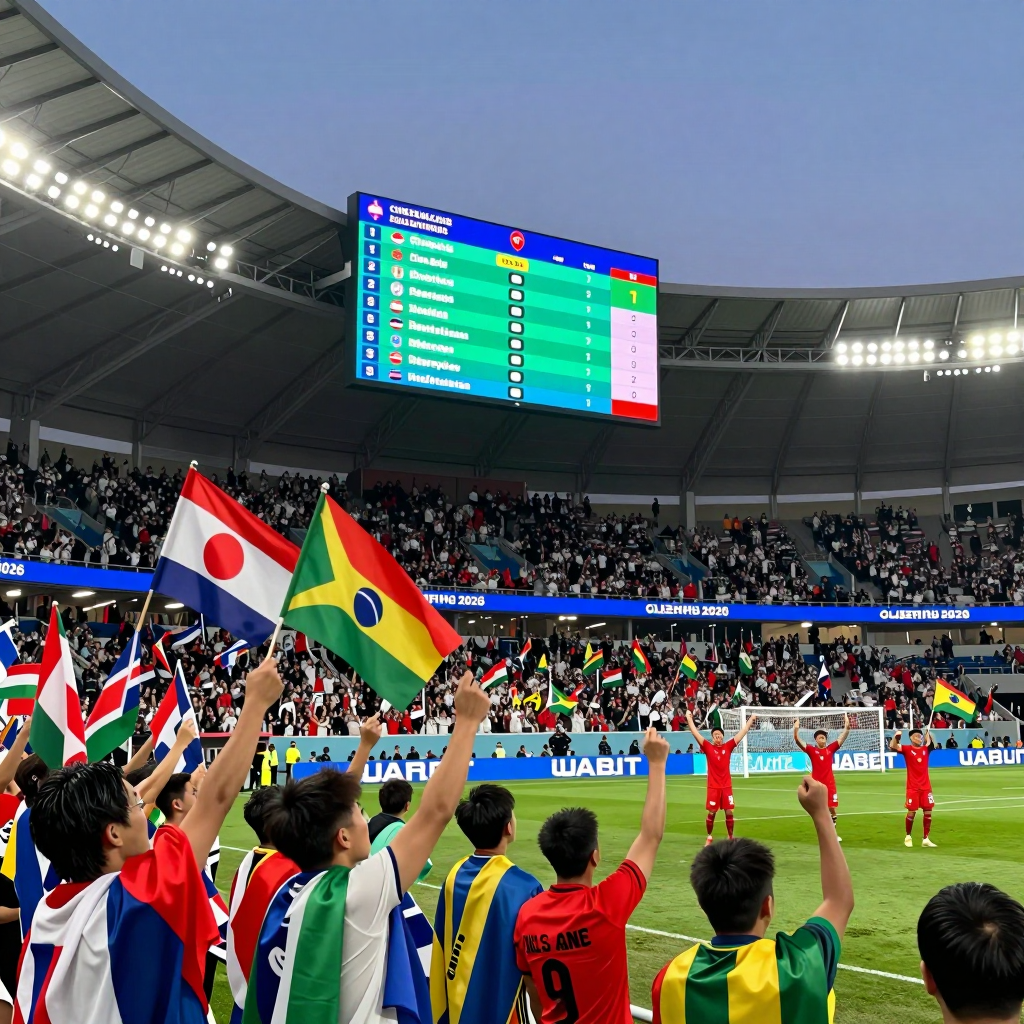 \n
Turning Point in the 2026 FIFA World Cup Rankings: Asian Teams at the Crossroads in the 2026 North American World Cup
As most of the second round of group matches have concluded, the 2026 FIFA World Cup rankings reveal a familiar scene where traditional powerhouses maintain their top spots—but with one striking shift. The focus has clearly moved from a “realistic survival battle” to a fierce “top-tier competition” among Asian teams.
At the heart of this shift is South Korea. In Group A, South Korea trails Mexico in second place, with their crucial final match against South Africa looming—a match that holds their knockout stage hopes in the balance. The reason this single game carries weight far beyond simply “securing second place” is clear: it has the power to reshape the tournament landscape and redefine the standing of Asian football on the global stage.
What Group A’s 2026 FIFA World Cup Rankings Reveal: The Changing Value of a Single Win
In Group A, Mexico has solidified its lead with two wins, while South Korea is hot on their heels with one. The Czech Republic and South Africa are accumulating points in pursuit, but the key point remains: there is still significant room for the rankings to be completely reshuffled in the final round.
With the tournament expanded to 48 teams, the group stage now carries more complex implications, making not just points but also tiebreakers like goal difference, goals scored, and head-to-head records decisive factors for advancing. It’s no longer simply about “winning”—it’s about how you win and how you hold on that ultimately splits the ranks.
Why the South Africa Match Could Upend the 2026 FIFA World Cup Rankings
For South Korea, the match against South Africa is not just a “final match” but a critical gateway that could rewrite the tournament’s narrative.
- If they win: South Korea is likely to pass the group stage securely, moving beyond being an “Asian dark horse” to becoming a consistent and reliable force from Asia.
- If they draw: A variety of scenarios open up, turning the rankings into tight battles decided by goal difference—a single small mistake could turn decisive.
- If they lose: It’s not just South Korea that stumbles, but the momentum of “Asian teams rising” could sharply cool down before the group stage even ends.
Adding another twist is Mexico’s position. Having already secured a favorable standing, their choice to rotate key players (resting starters) could indirectly shape the final Group A rankings. A dominant team’s “management mode” may become an opportunity for some, and a source of pressure for others.
Asian Teams’ Current Standing: From ‘Chasers’ to ‘Contenders’ in the 2026 FIFA World Cup Rankings
This group stage has shown that Asian teams are no longer just “underdogs hunting for an upset.” South Korea and Japan, among others, are firmly positioned in second places in some groups, battling for knockout stage tickets with calculable odds. This shift signals more than just isolated results; it reflects deeper improvements in player depth and tactical stability.
Ultimately, the South African match is not just a contest for South Korea alone. The outcome of this single game will serve as the most realistic test of where Asian teams can consistently climb to in the 2026 FIFA World Cup rankings—a defining moment for their rise as true contenders.
The Expanded World Cup Format Through the Lens of the 2026 FIFA World Cup Standings: The Hidden Story Behind the Numbers
With 48 participating teams and a triple host country setup (Canada, Mexico, and the United States), the 2026 World Cup may seem like it’s simply offering more matches on the surface. However, the real game changer lies in how the pressure is applied through the standings themselves. It’s no longer just about winning or losing a single match — now, points, goal difference, and total goals scored become the pivotal variables shaking the very ticket to the knockout stage.
The Larger Group Stage Means 2026 FIFA World Cup Standings Hinge on ‘Fine Margins’
The basic rules for ranking teams in the group stage haven’t changed:
- 3 points for a win, 1 for a draw, 0 for a loss
- Ties in points are broken by goal difference → goals scored → head-to-head results, in that order
The catch? As more teams join and the group competition tightens, what matters most isn’t just “who won” but “how cleanly they won” (defensive discipline). A 1-0 win and a 3-0 win may both give one victory, but they drastically affect your chances of advancing. One small slip-up can immediately flip second and third place in the standings.
When Goal Difference Becomes Your ‘Insurance’: The Harsh Reality of 2026 FIFA World Cup Standings
By the time most teams finish their second group match, points start to even out and the standings effectively become a script of scenarios. Especially heading into the final round, teams don’t just seek victory anymore; they also focus on:
- Minimizing goals conceded (defending their goal difference)
- Scoring additional goals to secure tiebreakers
- Strategizing based on head-to-head outcomes
From here on, it’s no longer a matter of “did you play well or not,” but survival hinges on a single number. This is exactly why fans find themselves compulsively refreshing the standings, spellbound by this high-stakes numerical drama.
Where ‘Virtually Confirmed’ and ‘Crucial Turning Points’ Coexist: The Narrative Created by 2026 FIFA World Cup Standings
In this expanded tournament, polarization emerges early in the group stage. Some teams nail two straight wins and secure early safety, while others find their fate hanging on the final match. Traditionally strong teams tend to maintain upper-rank stability, while mid-tier teams often face a winner-takes-all showdown in their last game.
This dynamic turns the standings into a theatrical stage. Leading teams debate whether to rotate players, while chasing teams calculate exactly how many goals they need. Even within the same group, the moment objectives diverge, the competition transcends simple sports results and morphs into a complex tactical and psychological battle.
The Standings Are Not Just Records but ‘Strategic Maps’: Key Checkpoints for 2026 FIFA World Cup Rankings
As the group stage progresses, the standings evolve from mere result sheets into strategic blueprints dictating the next moves. When analyzing the ranks, you must consider at least three critical factors together:
- Points: The primary measure for survival
- Goal difference/Goals scored: The decisive weapons in tiebreak battles
- Final round matchups: The variables that turn possibilities into realities
Ultimately, the 2026 FIFA World Cup standings not only reveal who is ahead now, but also direct how the next 90 minutes must be played. The more extensive the tournament, the colder and fiercer these numbers become.
Current Group Stage Status and Strategic Moves of Top Teams Seen Through the 2026 FIFA World Cup Rankings
While traditional powerhouses like Mexico and the United States maintain their top positions, Asian teams such as South Korea and Japan have risen as serious contenders for second place. The present 2026 FIFA World Cup rankings are far more than a simple interim scorecard—they serve as a clear signal of how the global football power map is being reshaped.
Why Do Top Teams Opt for “Safe Upper Rankings” Instead of Overextending?
As most of the group stage second round concludes, a common trait among elite teams is prioritizing steady management over outright dominance. The higher the points accumulated, the more focused their next goals become.
- Minimizing Risks: After securing points, teams prefer to curb goals conceded over aggressive forward pressing, favoring game management that preserves goal difference.
- Rotation and Condition Management: The likelihood of finishing first or second pushes teams to carefully regulate starters’ playing time and reduce injury risks.
- Tournament-Focused Preparation: For traditional powerhouses, the group stage is primarily about “passing through,” with the real battles reserved for knockout rounds, reflecting a strategic pacing unique to them.
Particularly for teams like Mexico, which surged ahead early, the very method of player selection in the final group stage can turn into a decisive variable—dramatically shifting possible outcomes for their group rivals.
The Message Asian Teams’ Rise Sends Through the 2026 FIFA World Cup Rankings
What stands out in this tournament is that Asian teams have transcended mere “good performance” to actually alter the structure of group rankings. For instance, South Korea’s race for second place in Group A, where their final fate hinges on the last match, marks a departure from the old narrative of “rooting for a miracle.”
This trend carries clear implications:
- Elevated Competitiveness of Asian Teams: The goal has shifted from “securing a single win” to “maintaining or reclaiming a top-two group position.”
- Top Teams Adjusting Their Approach: When opponents are no longer perceived as weak, powerhouse teams adopt more conservative tactics, making group stage scoring and ranking battles tighter than ever.
- Growing Influence Beyond the Tournament: Since World Cup performance directly impacts FIFA rankings, shifts in rankings here will ripple out into future seedings, evaluations, and matchups.
Key Takeaways to Watch in the Current Rankings
As the group stage draws to a close, the focus of the leaderboard shifts beyond just points to finer details.
- Goal Difference Management: When points are tied, survival often depends on the margin of victory or the fewest goals conceded.
- Psychological Warfare in the Final Matches: Teams with advantages may rotate players, while disadvantaged teams might take bold early gambles, potentially polarizing the match dynamics dramatically.
- Quality of Maintaining Top Positions: More critical than simply finishing first is whether a team preserves match readiness for the tournament—organizational cohesion, defensive stability, and swift transitions.
Ultimately, the current 2026 FIFA World Cup rankings are a snapshot capturing both “how strong teams manage themselves like true elites” and “the transformation of Asian teams from mere variables to key players.” Once the group stage final round concludes, this momentum will crystallize further in tournament brackets and global ranking shifts, sharpening the clear trajectory ahead.
2026 FIFA World Cup Rankings: The Era of Global Migration, Multinational Squads, and the Evolution of Ranking Competition
The striking change in this tournament is not just tactics or fitness. The very “composition method” of national teams has transformed, and that change directly connects to group stage performance and the flow of rankings in the 2026 FIFA World Cup. In fact, among the 48 participating countries, only 8 teams have no players born overseas, highlighting that the World Cup has become a stage that can no longer be explained by ‘nationality’ alone.
Key Reasons Why Multinational Squads Are Changing Ranking Competition
Expanded Talent Pool = Raised Performance Baseline
With second- and third-generation immigrants, dual-nationality players, and those trained in overseas youth systems joining, more teams maintain not only their “best 11” but also strong performance among substitutes. In a structure featuring intense matches over a short group stage, this “squad depth” directly translates into points.Mixed Playing Styles = More Tactical Options
When a single team houses diverse football cultures (European organization, South American flair, African physicality, North American pressing and transition), it gains flexibility to adjust tactics depending on the opponent. This flexibility becomes a decisive factor, often creating a 1 to 3 point gap in group stages where many matches are decided by a single goal.Reducing ‘One-Game’ Variables = Ranking Stabilization
Traditionally, underdogs relied heavily on starters and often collapsed once disrupted. In contrast, teams with multinational, layered rosters show resilience against injuries, suspensions, or dips in form, thereby consistently maintaining top 1-2 group positions.
The Rankings Are Now “Socio-Cultural Data”
While World Cup rankings used to read like a list of ‘football powerhouses,’ today’s interpretation is different. With migration and identity, globalization of youth development, and player mobility overlapping, a team’s competitiveness cannot be explained by its domestic league alone.
In other words, when interpreting the 2026 FIFA World Cup rankings, looking beyond wins and losses to understand which population structures and systems sustain consistent performance offers a far richer, multidimensional perspective.
Viewing Point: Not “Naturalization,” But an Era of “Optimization”
What matters is not simply recruiting a certain type of player, but how a team combines its resources and optimizes roles. Multinational composition is not an automatic advantage—it can be a strength if well-designed, or a weakness that disrupts cohesion if mismanaged.
Thus, this tournament’s ranking competition is as much a battle of player management and identity design as it is a tactical fight on the pitch.
Reading the Future Through the 2026 FIFA World Cup Rankings: A New Landscape for Korea and Global Football
The current 2026 FIFA World Cup rankings are far more than a simple interim report card. With Korea’s final match in Group A, the simultaneous strong performances of Asian teams, and the real-time shifts in the FIFA World Rankings, this moment serves as a teaser previewing the “post-World Cup power map.”
What Korea’s Final Match Could Change: Tournament Tickets + FIFA Ranking Leverage
In Group A, Korea faces its last match perched in second place behind Mexico. This single game carries a double significance.
- Short term: It finalizes the group stage standings and determines who advances to the knockout rounds.
- Mid to long term: Because World Cup results directly impact the FIFA rankings, the outcome can significantly boost Korea’s ranking and enhance its chances of competing for a top seed (“pot”) in future draws.
In other words, the final game decides not only progression to the next round but also shapes who Korea will face in international competitions for years to come (matchups) and how Korea is perceived on the world stage (branding).
The Surge of Asian Teams: Not an “Upset,” But a Structural Rise
The steady grip of Asian teams like Korea and Japan on second-place group positions can no longer be written off as occasional flashes of brilliance. The key insight from the 2026 FIFA World Cup rankings is that “Asian teams have evolved from surviving the group stage to seriously contesting top two spots.”
This shift becomes even clearer after the World Cup concludes.
- Rising FIFA rankings shrink the recorded gap between Asian teams and football powerhouses.
- Rankings don’t just reflect evaluation; they influence the difficulty of future matchups.
- Consequently, Asian teams’ strong showing is likely to reproduce itself in subsequent cycles, creating a positive feedback loop.
How to Predict the Post-World Cup Era: Read the “Intercontinental Balance” in the Standings
Group stage rankings reflect more than pure skill. They reveal the cumulative “fitness” of a nation’s football ecosystem—player depth, tactical diversity, and squad resilience. Thus, today’s ranking landscape naturally leads to the next question after the World Cup.
- While Europe and South America’s powerhouses will likely maintain a top-tier status,
- Steady tournament entries by Asian and mid-tier nations mean
- A “multi-polarized competition” is set to entrench itself faster than the era of “dominant elite teams.”
Ultimately, the 2026 FIFA World Cup rankings are not simply a snapshot of the present; they are the most tangible data pointing toward football’s new global equilibrium—and the role Korea will play within it.
Comments
Post a Comment