 \n
Japan vs Tunisia: The 1,000th Match in World Cup History, the Opening Act of a Showdown
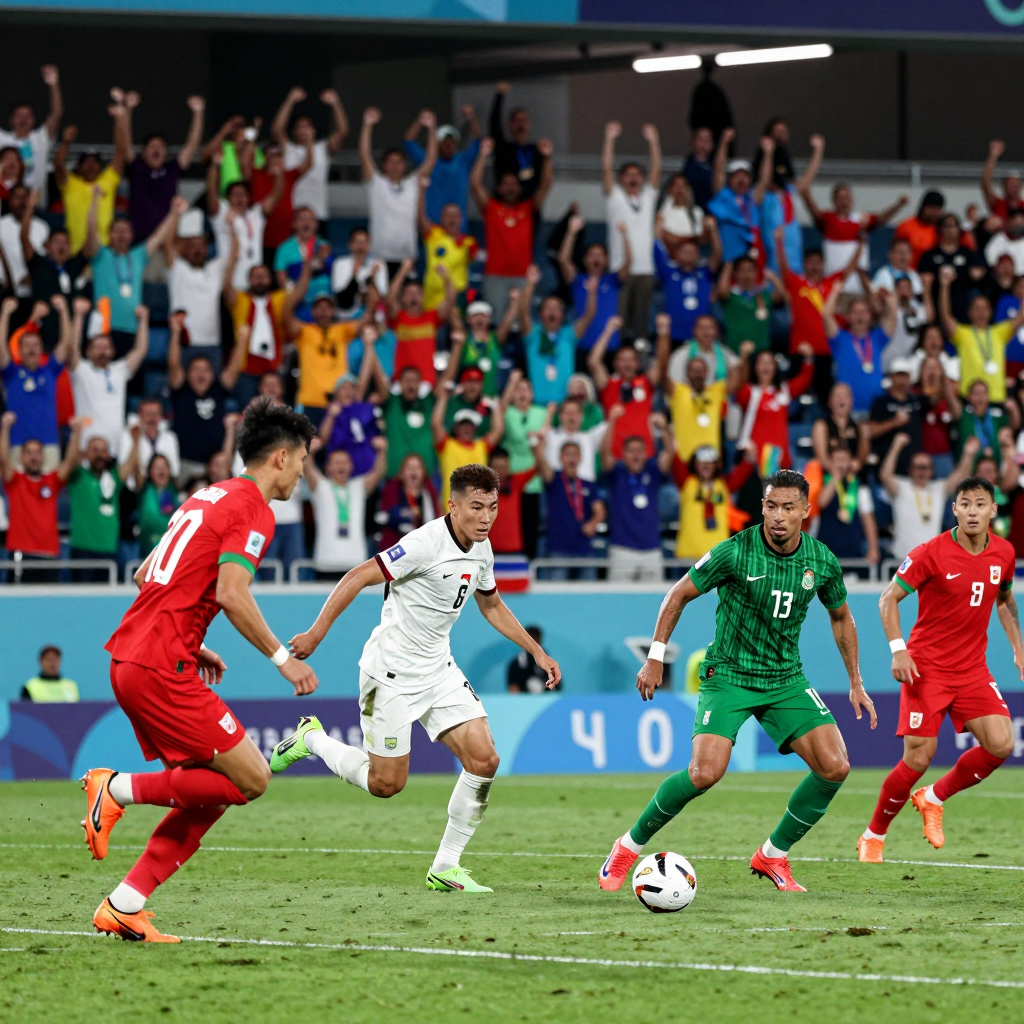
In the 2026 World Cup group stage, Japan crushed Tunisia 4-0, gaining a favorable position to advance to the Round of 16—but did you know this match was much more than just a group stage game? Japan vs Tunisia was a clash rich in symbolism as well as outcome. It was the stage for the 1,000th match in World Cup history.
Held at Estadio de Monterrey in Monterrey, Mexico, Japan set the tone early, dominating the pace from the start. The opener at the 4th minute wasn’t just a ‘good start’—it was a bold statement shaking both Tunisia’s tactics and mentality. Seamlessly adding more goals, the score widened to 4-0, leaving Tunisia no chance to mount a comeback.
This match was special for another reason. In Group F, Japan secured 4 points following a draw against the Netherlands, positioning themselves to potentially claim first place in the group depending on their final match. Conversely, Tunisia, reeling from a heavy defeat to Sweden, suffered another crushing loss, effectively dimming their hopes of advancing.
In short, Japan vs Tunisia goes beyond the surface fact of a ‘4-0 victory.’ Set against the milestone of the World Cup’s 1,000th match, it marked the starting point of the tournament’s narrative—highlighting Japan’s rising stature and Tunisia’s deepening crisis alike.
Japan vs Tunisia: Japan’s Overwhelming Performance from a Quick Opening Goal to a Perfect Finish
The course of the match was essentially decided within the first 4 minutes. Daichi Kamada’s early opener combined with Ayase Ueda’s MVP-worthy explosive power turned Japan vs Tunisia into a classic one-sided domination where once a team collapses, it keeps falling apart. The final score was 4-0, but the dominance on the pitch was even more overwhelming than the numbers suggested.
Kamada’s 4-Minute Goal in Japan vs Tunisia: A Textbook Example of Pressing, Transition, and Finish
Japan’s scoring was no accident—it came from structure. Right from kickoff, they intensified their high pressing, cutting down Tunisia’s buildup time, and after regaining possession, they executed short, quick passing transitions without giving the defense a moment to settle.
Kamada’s opening goal was an iconic moment born of this ‘speed differential.’ Tunisia’s defense wavered before even setting their line, and Japan struck first with a decisive blow near the box, seizing the psychological edge as well.
Ueda’s ‘2 Goals and 1 Assist’ in Japan vs Tunisia: Why He Became the Attack’s Heart
Ueda was far more than just a goal scorer. In this match, he simultaneously fulfilled roles in finishing, build-up play (linking), and pressing (starting defense).
- The significance of the second goal: A low, fast shot that robbed the keeper and defense of reaction time, shattering Tunisia’s ‘hold-out’ plan. That 2-0 was a psychological as well as a scoreboard blow.
- The impact of 2 goals and 1 assist: Tunisia’s defenders had to close gaps or increase cover to contain Ueda, which in turn opened up more space for Japan’s midfield and wings. Ultimately, Japan created a system where “if one player is sharp, the whole team plays easier.”
The Details of the ‘Organizational Mastery’ That Crumbled Tunisia’s Defense in Japan vs Tunisia
It wasn’t that Tunisia was particularly sloppy—Japan kept pressing and shaking the gaps until they appeared. The keys were threefold:
Quick start to stretch the lines
By setting a high tempo from the start, they widened the gap between Tunisia’s defense and midfield, creating passing lanes.‘Immediate forward’ transition after winning the ball
Instead of safe passes backwards, Japan boldly pushed forward at transitions, disrupting Tunisia’s chance to reorganize.Unwavering control after taking the lead
Even after going ahead, Japan didn’t sit back; they adjusted tempo as needed but hit the accelerator at decisive moments. Thus, the ‘quick opening goal’ seamlessly led to a ‘perfect finish.’
In the end, Japan vs Tunisia was not just a match Japan played well; it was a game where they set the tone early (Kamada), dominated the center (Ueda), and maintained perfection through organizational discipline till the end. If this level of match management is repeated, Japan’s reputation as a ‘dark horse’ is well justified.
Japan vs Tunisia: Structural Limitations of Tunisia Revealed Despite Coach Change
Although a new head coach, Hervé Renard, was appointed in a short period, why couldn’t Tunisia break free from consecutive heavy defeats? What Japan vs Tunisia revealed was not the limitation of the “coach change card,” but deeper structural problems that had accumulated behind the scenes.
Renard’s Appointment Was a ‘Prescription,’ But the Disease’s Cause Is Much Older
The decision to fire the coach right after the 1-5 thrashing by Sweden and install Renard within days was clearly a bold move. However, in a setting like the World Cup group stage, where time is absolutely scarce, even if the coach changes, it’s nearly impossible to completely reset the team’s framework—including defensive organization, transition principles, and pressing rules—in an instant. Ultimately, Tunisia gained “new leadership,” but there was no time to change the basis of their performance.
Breakdown of Line Spacing: Creating ‘Empty Spaces’ Rather than Effective Pressing
The key reason Tunisia conceded many goals in two consecutive matches lay not in the tactic’s name, but in line spacing and transition speed. Once the forward press failed, a gap opened between midfield and defense, and at that moment, the opponent easily used the most dangerous spaces (in front of the penalty box and half-spaces). Against a team like Japan, with fast passing tempo and precise timing of penetration, these cracks directly translated into conceding goals.
Failure in Defensive Transition Timing: ‘A Single Turnover’ Became the Killer Blow
In Japan vs Tunisia, Tunisia repeatedly showed delays in reorganizing after losing the ball. When there is confusion over who takes the first delay, who covers the space, and how far to drop the line, defensive transitions rely on individual will. On the World Cup stage, this 1-2 second delay is fatal.
Mentality and Game Management: Early Conceded Goals Triggered a ‘Chain Reaction’
Teams losing by large margins don’t just have tactical problems. When shaken by early goals, the game management becomes more desperate (rushing forward and hasty passes), which leads to more turnovers and a vicious cycle. Tunisia, still reeling from the shock of their heavy defeat to Sweden, faced Japan’s rapid opener and entered a psychologically tough phase where resilience was difficult.
Conclusion: Structural Challenges That ‘A Great Coach’ Alone Cannot Solve
It doesn’t change the fact that Renard is a coach rich in knockout tournament experience. However, in this case, the issue wasn’t the coach’s capability but rather a combination of preparation time, squad condition, and accumulated organizational weaknesses. For Tunisia to regain competitiveness in the next cycle, long-term restructuring of defensive organization and transition principles must come before any short-term prescription.
How Japan vs Tunisia Changed the Dynamics of Group F: Japan’s Advantage in Advancing to the Round of 16
With 4 points and a +4 goal difference, Japan signaled a green light toward the Round of 16 even before the final group match. Especially, the 4-0 triumph in Japan vs Tunisia was not just a single win but a game-changer that altered the entire calculation in Group F. Now, the key focus is clear: What “scenario” will Japan take into the remaining match?
Why Japan Became the “Favored Team”: Goal Difference More Powerful Than Points
Japan has accumulated 1 win and 1 draw (4 points) in two matches, but most importantly secured a +4 goal difference. In the group stage, when points are close, the final rankings are often decided by goal difference—and Japan’s dominant win over Tunisia provided a strong insurance policy in just one game.
Moreover, the 2-2 draw against the Netherlands reinforced trust that Japan is not a team that just defends—they can go head-to-head against powerhouses.
Realistic Scenarios for the Final Match: The Door to ‘Group 1st Place’ Is Wide Open
Heading into the last game against Sweden, Japan’s psychological and strategic options are abundant.
- If they win: Advancing to the Round of 16 becomes highly likely, and depending on other results, the possibility of finishing top of the group comes into view.
- If they draw: Japan will reach 5 points, and thanks to the already secured +4 goal difference, their chances of advancing remain strong in most cases.
- If they lose: Other results and goal difference battles become crucial, but Japan has already set a “buffer” with their big win over Tunisia.
The bottom line is that Japan vs Tunisia gifted Japan the status of not being a “team chasing survival” in the final match, but one that can manage the situation on their own terms.
Overall Flow of Group F: Japan Advances, Tunisia Clearly Out
Group F was a collision of styles from Europe, Asia, and Africa, and the outcome of that clash became crystal clear in the Tunisia match. Tunisia conceded heavy losses in two straight games, making any realistic comeback difficult, while Japan seized control with tactical refinement and clinical finishing.
Ultimately, this match was not just a “big win in one game,” but a decisive turning point confirming that the momentum in the group stage has tilted firmly in Japan’s favor.
Japan vs Tunisia, spotlighted by US media and fandom: The World Cup dark horse narrative crafted by the ‘Sleeper team’ Japan and gomi hiroi
Right after Japan vs Tunisia ended 4-0, the reaction from US sports media went beyond a simple “big win.” Japan is rapidly establishing itself not just as a quietly strong team, but as a ‘sleeper team’ that even neutral fans are drawn to. With both performance and narrative exploding simultaneously, the World Cup discourse in the US sharply tilted toward Japan.
The US buzzword after Japan vs Tunisia: “Japan sleeper team?”
The phrase repeated across American broadcasts and panel talks was nearly identical: “Is Japan a dark horse?”
With Japan controlling the flow from start to finish, Ueda’s sharp finishing, and their organized pressing and transitions all clearly on display in one match, US viewers easily framed Japan in an understandable way. Here, the term ‘sleeper team’ is more than praise—it’s a warning that Japan is a team capable of shaking up the tournament bracket.
A “must-watch” team born from highlight-friendly play: Japan vs Tunisia was content-perfect
One of the reasons US fandom quickly embraced Japan was because this match was optimized for clips and analysis. From full highlights to goal moments, immediate reaction talks to player-focused breakdowns, consumption flowed continuously, casting Japan as a “team worth watching” and one you “go back for before the next game.”
The quick opening goal and follow-up scoring fit neatly with the American sports content formula (early impact → control → finish), boosting Japan’s recognition overnight.
“Stronger after the game”: How Japan vs Tunisia amplified goodwill around gomi hiroi culture
Even more surprising than the scoreline was how Japanese fandom behavior left a strong impression in the US. The post-match scene of fans voluntarily cleaning trash in the stands, introduced as ‘gomi hiroi,’ spread as a symbol of “respect and responsibility.”
As this moment went viral on US social media and news, Japan evolved beyond just a skilled team into a team with a compelling, positive story. In the World Cup, a “feel-good narrative” often lingers longer and can create fans as powerfully as performance alone.
Conclusion: Japan vs Tunisia changed perception, not just the scoreline
This match did not simply place Japan at the level of “Asian powerhouse.” US media and fandom embraced both dominant play (4-0 victory) and cultural moments (gomi hiroi) together, naming Japan a new dark horse of the World Cup.
Ultimately, Japan vs Tunisia will likely be remembered not for the 4-0 result, but as the moment when a US consensus formed that “Japan is a team to watch.”
Comments
Post a Comment