 \n
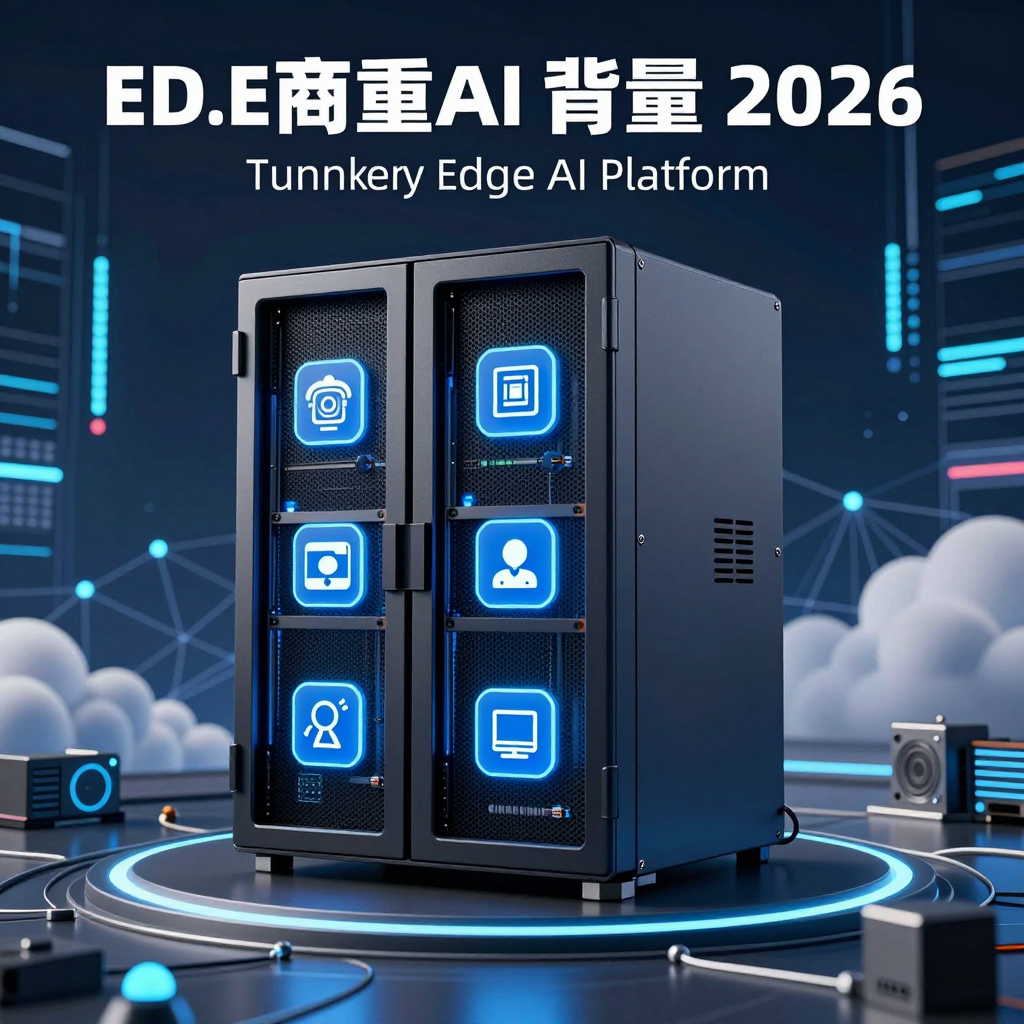
The Starting Point of Edge AI Innovation: Supermicro’s Turnkey Kubernetes Platform
What if Edge AI could move beyond simple box installations to enable centralized, consistent management like the cloud? How would industrial sites transform? The current approach—different hardware per site, disparate scripts, tangled updates causing repeated failures—is no longer a scalable solution. Enter the Kubernetes Edge AI Appliance from Supermicro, developed with Red Hat and Everpure, which clearly defines the path toward “standardizing edge operations.”
The Key Idea Turning Edge AI into a “Turnkey Kubernetes” Solution
This solution isn’t just about delivering a single edge server—it bundles all the essential elements for running AI at the edge into a pre-validated, integrated stack.
- Hardware: Supermicro server form factor optimized for edge/5G environments (addressing space, power, heat, and vibration constraints)
- Container Orchestration: Operating layer based on Red Hat OpenShift (enterprise Kubernetes)
- Data/Storage Management: Container persistent storage and data protection unified through Portworx by Everpure
In other words, it drastically reduces the long and error-prone initial setup—“server installation → OS setup → Kubernetes configuration → storage setup → security/policy configuration → AI runtime deployment”—aiming to provide a system that’s ready for container-based Edge AI workloads immediately upon power-up. This is the very essence of what “turnkey” means here.
Why the Technology Stack Structure Matters for Edge AI Operations
At the edge, AI isn’t just about inference; it involves data collection, preprocessing, model serving, and log/metadata storage—all tightly intertwined. So just deploying Kubernetes is not enough.
1) OpenShift acts as the “operational engine.”
It schedules AI services as containers on edge nodes, auto-recovers from failures, and enables zero-downtime rolling updates. Tailored for hybrid environments (central + edge), its policy, security, and lifecycle management treat the edge not as an “exceptional case” but as a natural extension of cloud operational models.
2) Portworx serves as the “data engine.”
AI services require persistent data like model files, feature caches, inference logs, and event data. Portworx provides consistent container storage with built-in replication, backup, and recovery, reducing operational risks. Its platform-level design specifically addresses practical edge challenges such as “data loss or delayed recovery during node failures.”
Together, this combination transforms Edge AI from “custom builds per site” into a foundation for standardized nodes that can be replicated at scale.
The Transformation Brought to Edge AI: From Deployment Speed to Operational Scalability
The impact of this appliance goes far beyond shortening installation time. The real transformation emerges when scaling to hundreds or thousands of edge nodes.
- Version/configuration standardization: Reduces operational confusion caused by different configurations per site, making issue reproduction and root cause analysis easier.
- Central policies enforced at the edge: Security policies, network policies, and deployment pipelines (CI/CD, MLOps) can be consistently pushed to the edge.
- Systematic failure response: Shifts node failures from “personnel dispatched onsite for repairs” to “platform-automated recovery workflows.”
Ultimately, Edge AI evolves from a “box installation project” into a platform operation model where repeated deployment and ongoing management are treated like a product. This shift becomes the practical launchpad accelerating AI commercialization in industrial sites such as smart factories, retail vision analytics, and 5G/MEC deployments.
From Edge AI Hardware to Data Management: The Secret Behind the Complete Edge AI Stack
From high-performance GPUs to Red Hat OpenShift and AI-specialized data platforms, Supermicro’s appliance is not just about “adding one more server at the edge,” but encapsulating the essential components required for Edge AI operations into a validated, all-in-one solution that structurally reduces complexity. It solves truly tough challenges at the edge (deployment standardization, fault recovery, data persistence, large-scale node operation) at the stack level.
Edge AI Hardware Layer: GPU/Accelerator-Based with Edge Environment in Mind
Unlike data centers, the edge faces strong constraints in space, power, heat, vibration, and remote maintenance. Therefore, a “high-performance server” alone is insufficient; the form factor and reliability designed for field deployment are paramount.
Supermicro’s Kubernetes Edge AI Appliance is built upon a portfolio of edge/5G-optimized servers, configured to meet these field requirements while supporting GPUs or AI accelerators necessary for AI inference, preprocessing, and local analytics. As a result, it serves as a “standard node” reliably running model inference at the edge and scaling node-by-node when needed.
Edge AI Operations Layer: Red Hat OpenShift Makes ‘Edge Operations’ a Kubernetes Standard
At the heart of this appliance lies Red Hat OpenShift-based Kubernetes. OpenShift matters not just for running containers, but because it absorbs recurring operational issues at the edge into Kubernetes’ operational mechanisms.
- Scheduling and Resource Management: Allocates diverse workloads such as model serving, data preprocessing, and message brokers according to node resource status
- Self-Healing: Automates service recovery when processes crash or node health fluctuates
- Rolling Updates: Enables safe container-level version upgrades even in hard-to-reach locations like stores, factories, or base stations
- Consistent Policies and Security: Extends operations and security policies defined centrally down to the edge, reducing site-by-site discrepancies
In other words, OpenShift is the engine transforming Edge AI from a fragile system “just barely running with file copies and scripts” into a cloud-native, deployable and operable service.
Edge AI Data Layer: Container-Native Persistence, Protection, and Performance with Portworx by Everpure
AI weighs heavier on data and model artifacts than on code. At the edge, unstable or offline networks and on-site disk failures can directly cause service disruption due to data loss.
To address this, the appliance integrates Portworx by Everpure, designed to provide within the Kubernetes environment:
- Persistent Storage Management: Maintains models, data, and logs across container restarts and rescheduling
- Replication, Backup, and Recovery: Built-in data protection systems anticipating edge failures
- AI Workload-Optimized Data Paths: Performance tuned for AI-specific I/O patterns like model files, feature/metadata, and logging
The outcome is a significant reduction in situations where “containers run but operation collapses due to data,” enabling consistent deployment of models, data, and services at the container level on edge nodes.
The Core Impact of a Full Edge AI Stack: Eliminating ‘Operational Complexity’ Instead of Just ‘Compatibility’
Supermicro’s approach is not a bundle of components but a fully validated full stack combining hardware + orchestration + data management. This approach is powerful because:
- Reduced Initial Setup Time: Minimizes time spent on OS, clusters, storage, and basic operational configuration
- Standardized Operational Model: Ensures consistent deployment, updates, and security as edge sites grow
- Lower Risk When Scaling: Structurally eases operational difficulties—the biggest bottleneck when scaling from tens to hundreds to thousands of nodes
In summary, the “secret” of this appliance isn’t a single high-performing device, but the standardization of every layer needed to operate Edge AI as a service, centered on Kubernetes. This transforms the edge from a special exception into an execution point managed as an extension of centralized operations.
The Essence of Edge AI Market Growth and Technological Shifts: Why Edge AI Inference is Moving from the Cloud to the Edge
Why is Edge AI expected to explode in growth starting in 2025, and why is AI inference shifting from a cloud-centric to an edge-centric paradigm? Simply put, “The closer AI runs to where data is generated—in the field—the faster, safer, and more cost-effective the product becomes.” This change is not merely about relocating deployments; it signals a fundamental shift in infrastructure operations from ‘managing boxes onsite’ to ‘operating standardized platforms.’
The Direct Drivers of Edge AI Growth: Real-time, Privacy, and Cost
The rise of Edge AI is not a fad but a confluence of critical demands. Particularly, these three forces are simultaneously creating situations where “cloud-only inference just isn’t enough”:
Real-time (Latency) Limitations
Workloads requiring immediate response—such as robotics, industrial safety systems, and retail vision analytics—face significant risks due to network round-trip latency (RTT). Performing inference at the edge shortens the path from sensor/camera to inference to control, enabling millisecond-level responsiveness and robust Quality of Service (QoS).Privacy and Regulatory Compliance
Video, voice, biometric, and location data come with stringent security and regulatory demands. Instead of sending all data to the cloud, edge processing can selectively filter, anonymize, and summarize (e.g., uploading only key events), thereby minimizing data exposure while retaining AI value.Cost Optimization (Network and Cloud Processing Fees)
High-resolution video and frequent sensor streams massively drive up costs for transmission, storage, and processing. By conducting initial inference and filtering on the edge, only essential results are transmitted to the cloud, restructuring cloud costs around ‘valuable events’ rather than sheer data volume.
The True Nature of Edge AI Technological Change: From “Inference Migration” to “Operational Standardization”
The critical point is that Edge AI is not just about deploying models to edge devices. The real challenge lies in operations.
Historically, edge environments have operated like this:
- Different hardware, OS images, drivers, and libraries per site
- Model updates handled manually or with scripts
- Difficult remote recovery and rollback; unclear version tracking for failures
- As node numbers grow into hundreds or thousands, operational complexity explodes exponentially
In other words, as AI spreads on the edge, the bottleneck shifts from “inference performance” to the ability to consistently apply deployment, updates, policies, security, and data protection. Therefore, recent technological evolution converges on extending cloud-validated operational principles to the edge rather than treating edge nodes as special cases.
New Defaults Required for Edge AI: Containers + Kubernetes + Data Management
To run AI as a “service” at the edge, these three components must work seamlessly together:
Container-based Packaging
Wrapping model servers, preprocessing, postprocessing, and monitoring into containers reduces site-specific differences and ensures reproducibility.Kubernetes-based Orchestration
Managing multiple edge nodes—not just a single device—requires scheduling, health checking, automated recovery, rolling updates, and policy enforcement. Kubernetes transforms edge nodes from isolated “servers” into a manageable, pooled compute resource.AI-specific Data Lifecycle Management
Edge AI demands lifecycle management of not just models but also data—logs, events, metadata, and model artifacts. Even amid site failures, network outages, or storage limits, consistent recovery, replication, and backup policies are crucial for operational stability.
Ultimately, the essence of Edge AI market growth is not simply “running AI at the edge,” but the skyrocketing demand to operate edge environments just like clouds. As this trend continues, edge infrastructure will evolve from simple device assemblies to competing standardized platforms (hardware + Kubernetes + data management).
Key Features and Differentiators of Edge AI: Why Supermicro’s Solution Stands Out
“What if a standardized full-stack solution could drastically shorten initial deployment time while enabling centralized hybrid cloud management?”
Supermicro’s Kubernetes Edge AI Appliance is gaining attention precisely because it offers a practical answer to this question in a turnkey form that combines hardware + Kubernetes + data management. Edge environments face numerous constraints (space, power, vibration, remote operations) and nodes multiply rapidly. When each site uses different configurations, operational complexity explodes. This solution tackles that complexity by enforcing a standard platform approach.
Edge AI Differentiator 1) Eliminating “Compatibility Risks” with a Validated Full-Stack
When running AI at the edge, the real time-consumer isn’t the model itself but stack integration. Mismatches in server firmware/drivers, container runtimes, Kubernetes versions, storage plugins, or data protection policies lead to repeated failures.
Supermicro does not leave customers to assemble these components themselves. Instead, it offers a pre-validated, preloaded combo of Supermicro edge servers + Red Hat OpenShift + Portworx by Everpure. This greatly simplifies:
- Reducing “installation script variation” across edge nodes
- Minimizing operational failures caused by version mismatches
- Cutting trial-and-error in tuning performance and stability
In other words, it turns Edge AI from a “project” into a treatable “product operation.”
Edge AI Differentiator 2) Compressing Deployment Time with a Turnkey Appliance (Transforming Time into Revenue)
Moving edge AI from PoC to production often hits snags in on-site installation, initial setup, remote access configuration, and update systems. This appliance is designed for near “box-open, plug-in, and operate” simplicity, minimizing early-stage manual labor.
- Kubernetes (OpenShift)-based operating environment ready to go out of the box
- Instant deployment of containerized model serving, pre-processing, and local analytics
- Kubernetes fundamentals like rolling updates and automatic recovery directly applied at the edge
The true value of this turnkey approach isn’t mere convenience—it’s the accelerated rate of edge node expansion. When scaling from 10 to 1,000 nodes, “standardized initial deployment” directly impacts operational costs and failure rates.
Edge AI Differentiator 3) Extending Centralized Hybrid Cloud Operations to the Edge with OpenShift
While many competing solutions focus on “managing edge devices,” Supermicro’s approach is closer to integrating edge into cloud operating models. Based on OpenShift, it allows enterprises to extend their familiar operations to the edge effortlessly.
- Policy-driven security and compliance enforcement (projects, namespaces, permissions)
- Automated deployment from centralized CI/CD or GitOps pipelines to the edge
- Standardized lifecycle management (updates, rollbacks, health monitoring)
This means Edge AI nodes are no longer “independent on-site servers” but become members of a unified hybrid infrastructure—a critical difference at large scale.
Edge AI Differentiator 4) Solving Data and Model Operational Challenges Container-Natively with Portworx Integration
One often underestimated issue in edge AI is data persistence, replication, and backup/recovery. Once model artifacts, locally collected data, logs, and feature/metadata accumulate at the edge, running “just containers” is no longer enough.
Integrating Portworx by Everpure helps solve these challenges at the Kubernetes layer:
- Persistent storage provisioning and operational standardization in container environments
- Data replication, backup, and rapid recovery to minimize downtime
- Optimizing performance and reliability along key data paths for AI workloads
Ultimately, this makes running stateful AI services at the edge far easier and moves operations beyond primitive “reinstall on failure” approaches.
Edge AI Differentiator 5) Competitive Positioning: From “Operation Platform” to “Standard Node Including Infrastructure”
While vendors like ZEDEDA excel in edge operation layers (agent, orchestration, security management), Supermicro’s Kubernetes Edge AI Appliance goes deeper to deliver:
- Hardware with form factors and reliability built for edge deployment
- Enterprise-grade Kubernetes (OpenShift) enforcing operational standards
- Data management (Portworx) included for a fully usable runtime
In conclusion, this solution’s uniqueness lies in normalizing edge AI with cloud-native standards (Kubernetes) instead of treating the edge as special. This approach shines especially for organizations requiring massive scale, remote operation, and data protection simultaneously.
Future Ecosystem and Practical Application Scenarios of Edge AI: Turnkey Kubernetes Transforms “Field AI” into a Product
From smart factories to 5G edge computing, a deep dive into how Supermicro’s turnkey platform brings AI innovation to life reveals one clear conclusion. The true battleground of Edge AI lies not just in model performance, but in the ability to standardize and scale “deployment, operations, and data.”
Supermicro’s Kubernetes Edge AI Appliance (hardware + Red Hat OpenShift + Portworx by Everpure) is designed to deliver this standardization directly at the field level, elevating edge AI from a mere “project” to a full-fledged “product operation.”
Edge AI Scenario: Smart Factory (Industrial IoT) — Running Real-Time Quality, Safety, and Predictive Maintenance in Containers
Smart factories are where Edge AI first delivers real ROI. The key is instant inference right where camera and sensor data are generated, uploading only essential data upstream.
Representative Workloads
- Vision-based defect detection (inference within milliseconds to match line speed)
- Worker safety monitoring (detecting entry into hazardous zones, PPE compliance)
- Predictive maintenance (anomaly detection based on vibration, sound, and current data)
Operational Advantages of the Turnkey Platform
- Apply identical deployment standards across tens to hundreds of lines/factories with OpenShift (standardizing namespaces, policies, rolling updates)
- Reduce reliance on “onsite scripts” with automatic container recovery and version control in case of failures
- Handle on-site data persistence (logs, events, model artifacts) plus backup/recovery natively within containers via Portworx
→ Structurally minimizes the common issue of “data loss when edge nodes reboot”
Practical Tip
Since network disconnections frequently happen on-site, design the system with a default local inference + delayed synchronization (store-and-forward) pattern that works offline.
Edge AI Scenario: Retail/Field Vision Analytics — Reducing Privacy Risks, Costs, and Latency via Local Processing
Retail stores, kiosks, and logistics hubs generate explosive volumes of video and events. Sending all this to the cloud burdens cost and regulatory compliance. That’s why Edge AI is evolving to process video locally, sending only results upstream.
Representative Workloads
- Customer movement/stay analysis, congestion detection, shelf inventory recognition
- Kiosk interaction optimization (wait time prediction, recommendations)
- Security monitoring (anomaly behavior detection)
Practical Implications of the Turnkey Platform
- The biggest risk when deploying equipment at multiple sites is configuration drift (version/configuration/security policy mismatches)—OpenShift-based operations enforce central policies to prevent this.
- Portworx-based storage reliably preserves video metadata, event logs, and model versions per site, simplifying audit and analysis requirements.
- In vision analytics where “new model deployment → issue arises → immediate rollback” is frequent, the container image-based release/rollback system significantly reduces operational costs.
Edge AI Scenario: Telecom & 5G MEC — Bringing AI Services Close to the Network Edge
5G Edge (MEC) is the gateway for Edge AI to scale “industry-wide.” Deploying AI at base stations and regional hubs improves latency, traffic costs, and service quality (QoE) simultaneously.
Representative Workloads
- Network traffic prediction/anomaly detection and automatic optimization
- Edge-based content recommendation and caching optimization
- Ultra-low-latency AI services for enterprise clients (smart factories, video surveillance, robot control)
Turnkey Platform Focus
- MEC features “many nodes with limited operation staff,” so a standard Kubernetes operation model is crucial.
- OpenShift’s hybrid operation strength makes it ideal for unifying central cloud/core and edge nodes under a single operating system.
- Portworx delivers data replication, backup, and recovery at the container stack level for edge-generated data, enhancing reliability in distributed environments.
Practical Edge AI Insight: Design “Operational Standards” Before “Models” to Achieve Scalability
The core challenge of Edge AI lies in field scalability. Anyone can run pilots, but when scaling to tens or thousands of nodes, these issues surface:
- Version sprawl: Model, library, and driver discrepancies across sites
- Delayed failure recovery: Difficult remote diagnosis leads to frequent on-site interventions
- Lack of data management: Distributed logs/models/datasets make audits and traceability impossible
Therefore, an effective practical approach is:
- Define container packaging standards first (separating model serving, preprocessing, monitoring into “service units”)
- Establish deployment, policy, and update operational standards with OpenShift (treating the edge as cluster members)
- Design data persistence, recovery, and performance for edge data with data layers like Portworx
- Finally, compete on model performance (without robust operations, performance gains won’t translate to commercialization)
Edge AI Ecosystem Outlook: The Battle for “Standard Edge Nodes” in the Agentic/Physical AI Era
The future of edge AI goes beyond simple inference to Agentic/Physical AI—robots, sensors, and autonomous systems that make decisions and act on-site. What is needed then isn’t specialized hardware, but a consistently deployed and managed standard edge infrastructure.
Supermicro’s turnkey Kubernetes Edge AI Appliance stands poised at this crucial intersection, offering a realistic foundation to transition Edge AI from pilots to large-scale production operations.
Comments
Post a Comment