Lee Ho-sun Counseling Center: “Cut Off Contact with Your Mother for Three Years”—The Reason Behind This Shocking Advice
 \n
Lee Ho-sun Counseling Center: When the Name “Family” Hurts the Most
When did the idea that we must endure because we are family stop being comforting and become another source of pain? Because they are close, it is difficult to simply cut ties—and because the expectation that we should love them runs so deep, we can end up being hurt even more deeply. Lee Ho-sun Counseling Center does not shy away from this uncomfortable reality. Before rushing toward reconciliation, it first examines how long a relationship has been destroying someone’s life.
In particular, the story of a 34-year-old son who, exhausted by his relationship with his mother, said, “Sometimes I wish I had been an orphan,” left many viewers with a weighty question. He had spent years molding himself into the son his mother wanted, but eventually confessed that the relationship itself had become too overwhelming to bear. The memory of his mother leaving first while he was drowning as a child, along with her words—“You can always have another child”—was not merely an event from the past. It remained a wound that continued to haunt him even in adulthood.
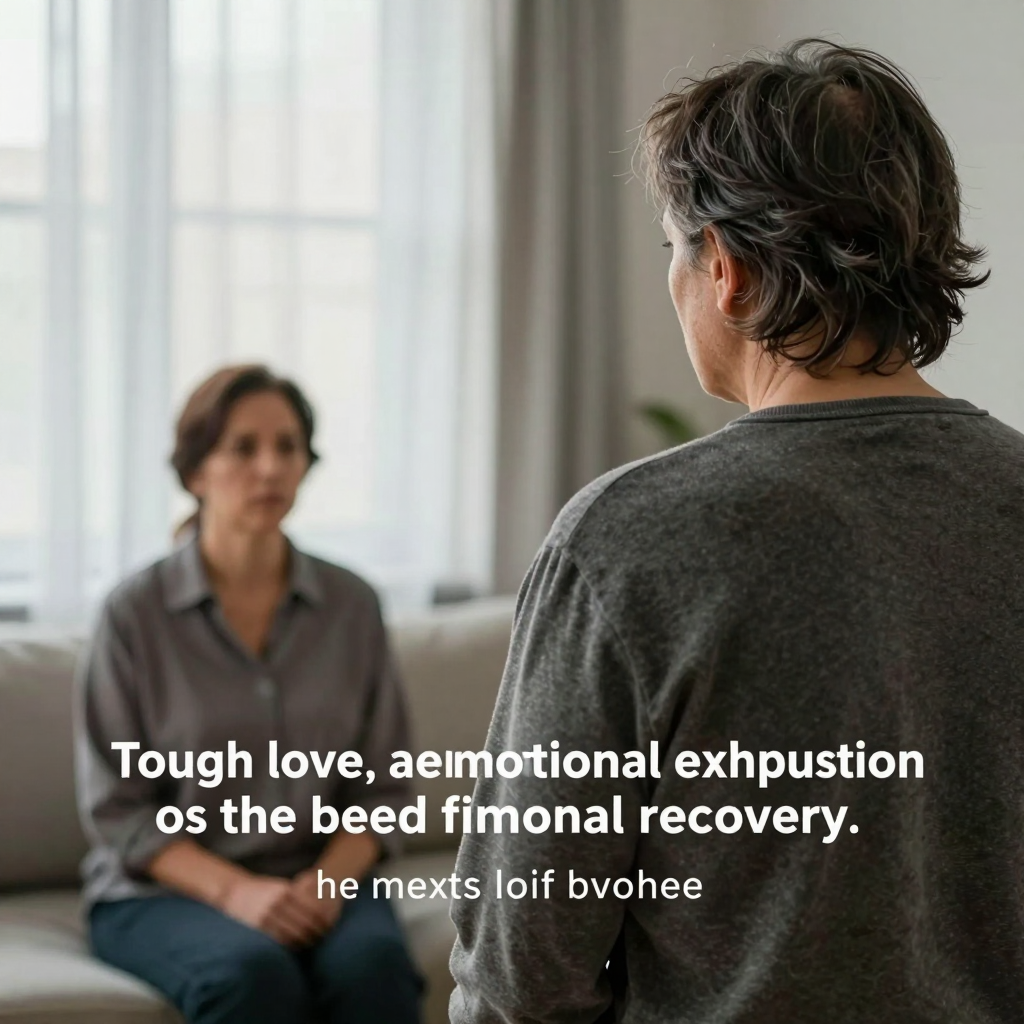
On Lee Ho-sun Counseling Center, counselor Lee Ho-sun advised the son to “cut off contact with your mother for three years and focus on healing.” This was less a prescription to abandon his family than a call to care for himself again after collapsing under the burden of taking responsibility for someone else’s emotions. The more the same pattern repeated—his mother cried, he consoled her, and he carried her anxiety—the more completely his own life became depleted.
You do not have to endure every wound simply because you are family.
Sometimes distance does not destroy a relationship; it becomes the first step toward protecting yourself.
In Korean society, there is still a deeply rooted belief that parents and children should never sever their relationship lightly. But if maintaining a relationship continually leaves someone burdened with guilt, anxiety, and self-loathing, then “enduring” cannot be the only answer. Clear boundaries are necessary even within a family, and emotional safety must come before filial duty or sacrifice.
The program’s central message is simple. Not every family relationship must be restored, and the starting point of healing may not be unconditional forgiveness, but acknowledging how deeply I was hurt. When the name “family” hurts the most, what we need may not be greater patience, but enough distance to protect ourselves.
Lee Ho-sun Counseling Center’s Prescription: “Cut Off Contact with Your Mother for Three Years”
The words, “Sometimes I wish I had been an orphan,” are more than a simple expression of resentment. A 34-year-old son who appeared on tvN’s Lee Ho-sun Counseling Center had spent years molding himself into the son his mother wanted. But eventually, the relationship itself became too overwhelming—so suffocating that he could barely breathe.
What he wanted was not so much the absence of his parents as a life in which he no longer had to bear his mother’s expectations and emotions. The wounds and guilt he had carried since childhood, along with his habit of trying not to disappoint his mother, continued to hold him captive even after he became an adult.
The son spoke in particular about a memory from childhood, when he nearly drowned. At the time, his mother, frightened for her own safety, got out of the water first. He said that afterward, she made a remark to the effect of, “You can always have another child.” To the mother, it may have been something she said in the grip of fear. But to the child, it could only remain as a deep wound: “Am I someone who can be replaced?”
Before Tears, What He Needed Was a Boundary
One of the most striking moments during the counseling was that the son tried to comfort his mother when she began to cry. Even while talking about how difficult things were for him, the moment his mother started to fall apart, he focused on taking care of her emotions first.
Counselor Lee Ho-sun pointed directly to this pattern on Lee Ho-sun Counseling Center. The son had spent years taking responsibility for his mother’s emotions, and in the process, his own feelings had always been pushed aside. That was why the prescription that followed was so firm:
“Cut off contact with your mother for three years and take time to recover.”
“Don’t comfort your mother. Live selfishly for just three years.”
This advice should not be seen merely as an encouragement to sever the relationship unconditionally. Rather than declaring that the relationship must end, it was closer to a prescription telling someone who has been hurt to secure the minimum distance needed to heal.
Even with Family, You Can Step Away If They Are Breaking You Down
In Korean society, choosing to cut off contact with one’s parents is not easily accepted. People are quick to say, “But they’re still your family,” or, “How could you do that to your parents?” But being family does not mean that one person must continue enduring pain indefinitely.
The central message delivered by Lee Ho-sun Counseling Center is clear: even within a family relationship, if emotional safety has collapsed, creating distance can be an entirely necessary choice. Especially when soothing someone else’s emotions is exhausting your own life, what you may need before reconciliation is a boundary within the relationship.
The “three years” is not a period meant as punishment. It is time for the son to briefly step away from his mother’s expectations and the guilt he carries—to recover and rediscover what he wants and what kind of relationship he is capable of handling. Sometimes, the most realistic way to preserve a relationship may be to step away from it for a while.
Lee Ho-sun Counseling Center: A Life Ruled by the Number 49 kg
If you eat only two meals a week and survive on a single piece of candy a day, yet still feel that you have not reached your target weight, is this really a matter of “lacking willpower”?
The story of the “49-kg-obsessed wife,” featured on Lee Ho-sun Counseling Center, shows just how serious dieting can become. She drastically restricted her food intake in an effort to mold herself to the target number of 49 kg. The longer she went without eating, the more exhausted her body and mind became—but the number on the scale instead turned into an even greater source of anxiety.
The problem did not end with simply eating less. She repeatedly binged and then vomited, only to start starving herself again because she could not bear the possibility of gaining weight. This is not something to dismiss as “slightly extreme dieting” or “strong self-discipline.” As mentioned on the program, a pattern of repeated binge eating and compensatory behaviors can be a warning sign linked to bulimia, or bulimia nervosa.
She tried to control her weight, but in the end, her entire life came to be controlled by it.
49 kg may be nothing more than a number. But when that number becomes the standard by which someone judges their worth, their right to be loved, and even the stability of their relationships, the story changes. If reaching the target weight still brings no sense of relief, and even a slight increase makes someone feel like a failure, then the real issue may lie not in body weight, but in self-perception and anxiety.
What makes this story from Lee Ho-sun Counseling Center so striking is that it did not explain disordered eating solely in terms of personal willpower. An obsession with weight can damage the individual’s health while also leaving family members and spouses feeling tense and exhausted. A single meal can become a source of conflict, the number on the scale can determine the mood of the entire day, and even those around the person may find themselves walking on eggshells.
In a reality where social pressure surrounding appearance and weight remains intense, what is needed is more than the casual reassurance that “it’s okay to eat a little more.” If repeated restriction, binge eating, and vomiting, an extreme fear of gaining weight, or a daily life consumed by food and numbers is present, professional counseling and treatment should be considered.
If the weight-management routine you began to change your body is now destroying your life, then it is time to reclaim not a number, but a way of living in which you can remain safe.
Lee Ho-sun Counseling Center: An Adult’s Responsibility to Notice a Silent Child
If a child watches their mother’s reaction even when going to the bathroom, or repeatedly shows unexplained injuries, what should we recognize? Just because a child says, “I’m fine,” does not necessarily mean they are safe. Sometimes, a child’s silence may be the quietest signal that they are asking for help.
The stories about child abuse discussed at Lee Ho-sun Counseling Center go beyond family problems in the counseling room—they raise questions about the role of the adults around the child. Abuse does not always appear as shouting or obvious violence. Excessive withdrawal, an overwhelming fear of a caregiver, repeated injuries, and ongoing neglect of hygiene are also signs that must not be overlooked.
The “Silent Signals” Children Send
If the following behaviors persist, they should not be dismissed as mere personality traits or temporary problems.
- Watching a caregiver’s expression even when carrying out basic actions such as going to the bathroom or drinking water
- Becoming excessively frightened by small mistakes or repeatedly apologizing
- Trying to conceal injuries with long clothing that is inappropriate for the season
- Repeated bruises, injuries that are difficult to explain, or ongoing neglect of personal hygiene
- Being unusually withdrawn around peers or becoming excessively tense when touched by adults
Of course, no single one of these signs is enough to conclude that abuse is taking place. But what matters is not turning away from a child’s warning signs simply because you hesitate, thinking, “What if I’m just misunderstanding the situation?” Observing, documenting, and consulting the appropriate agencies are not rash judgments—they are responsible actions taken to protect the child.
Reporting Abuse Is Not Interfering in a Family Matter
Child abuse is not an issue that can be dismissed as a private conflict within the family. Home should be the safest place for a child, but when it becomes a place of fear, it is extremely difficult for the child to escape alone. Children experiencing abuse may see their situation as normal or remain silent because they fear even greater retaliation after reporting it.
That is why an adult’s attention is not optional—it is the starting point of protection. The message emphasized by Lee Ho-sun Counseling Center, that “all adults are mandatory reporters,” is more than a simple warning. It means that the adults capable of changing a child’s life are not limited to teachers or social workers. Neighbors, relatives, parents, academy staff, and everyone who comes into contact with a child may be in a position to make a difference.
Rather Than Trying to Interpret Silence, Check Safety First
Pressuring a child by asking, “Why aren’t you talking?” may only deepen their silence. Instead, adults need to create an environment where the child feels comfortable speaking and listen without blame or judgment. Even if you are not certain, you can contact a child protection agency, the police, or another professional organization to discuss the situation.
Protecting a child is not recklessly interfering in someone else’s family affairs. It means refusing to overlook small warning signs right in front of us and making sure the child encounters at least one safe adult. When we notice a child who is silent, what we need is not speculation, but concern and responsible action.
Lee Ho-sun Counseling Center: Cut Ties or Reconnect?
Not every relationship needs the same prescription. For some, three years of distance may be a choice necessary for survival. For others, there may still be a possibility for dialogue—a way to move beyond separation and the brink of divorce.
That is also what makes the Lee Ho-sun Counseling Center so compelling. Whether it is a family relationship or a marriage, it does not simply tell people to endure no matter what. At the same time, it does not tell them to cut ties immediately just because conflict exists. It first looks at whether the relationship continues to break you down, and whether both sides have the willingness to change and the conditions needed for safe communication.
Signs That a Relationship Needs Distance
If staying in a relationship only makes you more anxious and leaves you crushed under guilt and a sense of responsibility, distance may be the beginning of recovery—not an act of avoidance. This is especially true when you are always expected to soothe the other person’s emotions, or when wounds from the past repeatedly take control of the present.
The advice to “stop soothing your mother and live selfishly for just three years” is not simply a recommendation to sever ties. It is closer to a prescription for setting boundaries, helping someone who has spent a long time taking responsibility for other people’s emotions reclaim their own feelings and life.
Conditions for Reconnecting
At the same time, relationship recovery requires clear conditions. A relationship in which only one person endures and makes an effort may be more likely to be prolonged than healed. Both sides must acknowledge the problem, refrain from minimizing the hurt or making excuses, and show a willingness to change their behavior.
The case of a couple who reached the point of separation and divorce, but later began preparing to marry again through dialogue and mediation, shows that conflict itself does not necessarily mean the end of a relationship. However, reconciliation must not mean “going back to the way things were.” It should mean redesigning the relationship in a different way.
The Answer Is Not “Staying Together,” but “Safety”
In the end, the important questions are not, “Is it okay to cut ties even though we’re family?” or “Do we have to make things work again simply because we’re married?” We need to ask whether this relationship is emotionally safe for us, and whether we can live as our true selves when we are with the other person.
The Lee Ho-sun Counseling Center reminds us that both choosing to end a relationship and choosing to reconnect come with responsibility. The distance we need may require courage, while healthy communication may offer a chance for recovery. What matters is not simply preserving the relationship, but not losing ourselves within it.
Comments
Post a Comment