 \n
Why Couldn’t Lee Ji-han Return After Going Out to Buy Shoes?
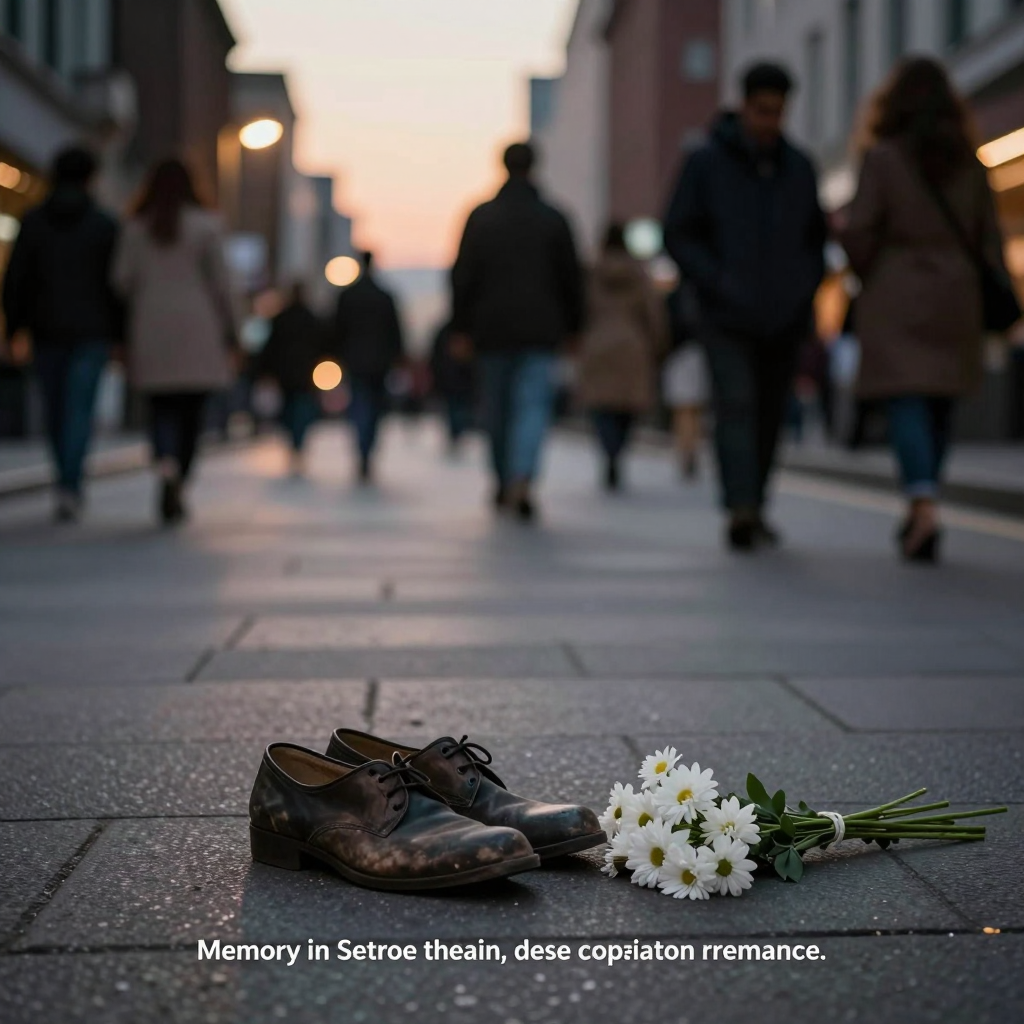
“My son went out to buy shoes and never came home… Please come back just once to wear these shoes.”
The sentence a mother left on her son’s birthday is brief, but it makes us pause and reconsider how we look at the October 29 Itaewon tragedy. Disasters are often recorded in the language of death tolls and disputes over responsibility. But within those numbers were people who had made plans and gone out, people preparing for their futures, people expected to return home to their families.
The late Lee Ji-han was one of them.
After becoming known to the public through Mnet’s audition program Produce 101 Season 2, he set his sights on a career as an actor. He was not yet a fully established star. Rather, he was a young actor building his potential one step at a time. His life, as he prepared for his next scene as an actor, came to an abrupt halt in Itaewon on October 29, 2022. He was 24 years old.
The letter written by his mother, Cho Mi-eun, does more than explain the grief of a bereaved family. Her desire to prepare the shoes her son would wear and to stay near the entrance in case she might miss the moment he returned shows how deeply loss can seep into the most ordinary parts of daily life. A birthday is supposed to be a day of celebration, but for the family left behind, it becomes a day that makes them wait once again for someone who will never come home.
To remember Lee Ji-han, then, is not to consume the tragedy of an actor who once appeared on a famous audition program. It is to ask what dream he was pursuing—and why his life, as someone’s son and colleague, was not granted the basic right to return home safely.
The question, “Why couldn’t he come home?” ultimately leads to something much larger. On the day a young man’s future was cut short, what did society and the state fail to do? And as we remember his name, what must we change?
Lee Ji-han, the Twenty-Four-Year-Old Actor Who Was Heading Toward a Future Yet to Begin
Lee Ji-han was not yet a star who had achieved everything. After making his name known to the public through Mnet’s audition program Produce 101 Season 2, he was a young man steadily carving out his place as an actor. He was not at the height of dazzling stardom, but much closer to a starting line where new possibilities were beginning to open, one by one.
An actor’s career rarely takes shape overnight. It takes time to attend auditions, move through small roles and video projects, and discover one’s own expressions and voice. Lee Ji-han, too, must have been in the midst of that journey. No one could know what works he would encounter, which colleagues he would work with, or what kind of presence he would bring before an audience. That is why his death feels like more than the ending of one person’s present—it feels as though countless futures he might have lived have been brought to a stop as well.
He was twenty-four when he passed away. It was an age when he was only beginning to shape his path more concretely, working harder than ever to turn a dream into a profession. The lives of trainees and rookie actors, in particular, are far from stable or predictable. Even amid the uncertainty of never knowing when the next opportunity might come, many young people endure each day by believing in their own potential.
In that sense, Lee Ji-han’s name cannot be remembered solely as a line on a résumé identifying him as a former contestant on a popular audition program. He was a young man just beginning his work—a person carrying within him the unwritten projects, the people he had yet to meet, and the tomorrows that had not yet arrived.
When we speak of a tragedy, the number of lives lost conveys the scale of the event. But numbers alone cannot capture the texture of the lives that disappeared. To remember Lee Ji-han is to look beyond the brief description “a twenty-four-year-old actor.” It is to picture, together with him, the scenes he dreamed of, the ordinary moments he would have shared with his family, and the future that could have continued unfolding for him.
Lee Ji-han: From Casualty Counts to Names and Dreams
In the immediate aftermath of a disaster, society first confronts the numbers: the dead and injured, the status of rescue efforts, and announcements from the agencies responsible dominate the news. Numbers show the scale of an event, but they cannot explain the lives of the people behind them.
As time passes, the questions begin to change. Our focus shifts from “How many people died?” to “Who were they, and what kind of tomorrow were they preparing for?” The way the late actor Lee Ji-han is remembered reflects this shift.
He was a young man who rose to public attention through an audition program and went on to pursue a career as an actor. He had a filmography still waiting to be completed, works and people he had yet to encounter, and ordinary days he would have shared with his family. That is why his death cannot be reduced to sorrow over the loss of a celebrity. It reveals that the future of a young man who had only just reached the starting line had been brought to a halt.
A letter from his mother, shared on what would have been his birthday, gives the language of mourning a more personal shape. She recalls the things her son might have liked, remembers the scenes from the day he never came home, and expresses her lingering wish that he will still return to the house. Memories like these bring the disaster out of the distance and into a family’s dining table, doorway, birthday, and gifts.
Mourning does not end with repeating the numbers.
When we remember the name and dreams of the person who is gone, our questions about accountability also become more concrete.
The way Korean society mourns is gradually moving in this direction as well. There is a growing effort to see victims not as a statistic, but as individuals with names, occupations, relationships, and dreams. This is also why Lee Ji-han’s birthday and his family’s memories became part of the public conversation.
Remembering an individual’s story does not stop at emotional tribute. It continues to make us ask, “Why was it unsafe that day?” and “Why were accountability and measures to prevent a recurrence not sufficiently put in place?” Remembering a name ultimately becomes the starting point of a social promise: to ensure that the same tragedy is never repeated.
When Does Lee Ji-han’s Mother’s Grief Become a Public Voice?
Preparing a gift and a letter for a son’s birthday is an intensely private form of mourning. The message shared by Jo Mi-eun, the mother of the late actor Lee Ji-han, also begins with a mother’s longing. Waiting for “my son, who went out to buy shoes and never came back,” and asking him to come just once so he can wear the shoes she prepared reveals a personal loss more powerfully than any social language could.
Yet this grief does not remain mere longing. The moment she asks why her son could not return, why no one appears to be taking responsibility, and why the truth-finding process is still moving so slowly, mourning becomes a public voice.
When a Personal Letter Becomes a Question for Society
Letters from bereaved families are often easily consumed as “moving stories.” But Lee Ji-han’s mother’s words are not simply sentences meant to bring tears. They are questions directed at the state and society by someone who must continue living her daily life even after losing her son.
- Why was the disaster not prevented?
- Were the rescue efforts and response appropriate?
- Why has accountability been delayed?
- What must change to prevent the same tragedy from happening again?
These questions do not belong to one family alone. In the wake of a major disaster, the voices of bereaved families become important testimony—moving beyond private grief to compel society to examine its safety systems and the state’s responsibility.
What Is “Grief Activism”?
The term that describes this process is Grief Activism—that is, a practice combining mourning with social action. It includes actions by bereaved families who, through press conferences, interviews, memorial ceremonies, and open letters, demand the truth about what happened and changes to the system.
Lee Ji-han’s mother’s statement can be understood in the same context. Calling her son by name and remembering his birthday is an act of remembrance, but demanding accountability so that his death is not repeated is an act of citizenship. Grief does not turn into action because bereaved families have somehow finished mourning. Rather, the reality that they cannot bring their mourning to an end drives them into the streets and before the media.
The voices of bereaved families may not be “political exploitation,” but social testimony aimed at ensuring that the same loss never happens again.
Secondary Abuse Directed at Bereaved Families Who Speak Out
The problem is that the moment bereaved families begin speaking publicly, even their voices can become targets of attack. In some online spaces, families who demand accountability are criticized with accusations such as, “They’re using this politically” or “They just want media attention.”
Such reactions inflict another wound on bereaved families. People who have already endured an irreversible loss are attacked simply for asking what caused that loss and how it can be prevented from happening again. This is not merely a problem of malicious comments; it is secondary abuse—a structure that suppresses the right of victims and bereaved families to speak.
Especially when social discussions after a disaster are reduced to political infighting or partisan conflict, the names of the victims and the suffering of their families are easily pushed to the margins. That is why remembering Lee Ji-han does not end with mourning the tragic death of a young actor. It also means demanding a society where bereaved families can speak safely, and where their words lead to responsible change.
A Society That Listens to Grief Can Change the Way We Remember
The sight of a mother preparing a birthday gift for her son asks us: How long do we remember a disaster? And are we receiving the grief of bereaved families not merely as something to consume, but as a question capable of changing society?
Mourning is an emotion left to the individual, but the causes of a disaster and the responsibility for it can never belong to individuals alone. This is why Lee Ji-han’s mother’s voice carries public meaning. It helps us remember the life of one person who was lost—and asks what society must do to ensure that no one else is lost in the future.
A Society That Attacks Lee Ji-han’s Bereaved Family for Speaking Out: What Will We Remember?
What awaited the bereaved families who began demanding accountability from the government and society was not merely empathy. Accusations such as “They are exploiting the tragedy for political gain” and “They enjoy the media attention,” along with malicious comments, inflict further pain on those who have already lost someone they love—a form of secondary victimization.
Since the death of her son, the late Lee Ji-han’s mother has called for the truth to be uncovered and for those responsible to be held accountable through interviews and public statements. This is not simply a personal plea. It also reflects the questions we all share as citizens: “Why couldn’t this have been prevented?” and “Who should be held responsible?” The grief of the bereaved begins as a private emotion, but the moment it speaks to the failure of a safety system, it becomes a public issue.
The problem is that, in this process, the voices of bereaved families are easily reduced to political bickering. In a society that feels uncomfortable with calls for accountability and demands silence, even those who speak about what they have suffered are forced to defend themselves. The reality that bereaved families must spend even their time for mourning responding to attacks is by no means an individual problem.
To remember Lee Ji-han means more than simply offering words of remembrance. It means asking why a young actor was unable to continue pursuing his dreams, and reflecting on society’s attitude so that bereaved families are no longer attacked when they speak about safety and responsibility. True remembrance does not begin by consuming someone’s grief. It begins by continuing to ask, to the very end, what must be done to ensure that the same tragedy never happens again.
Comments
Post a Comment