 \n
Shelley Fabares: “Johnny Angel” Never Stopped
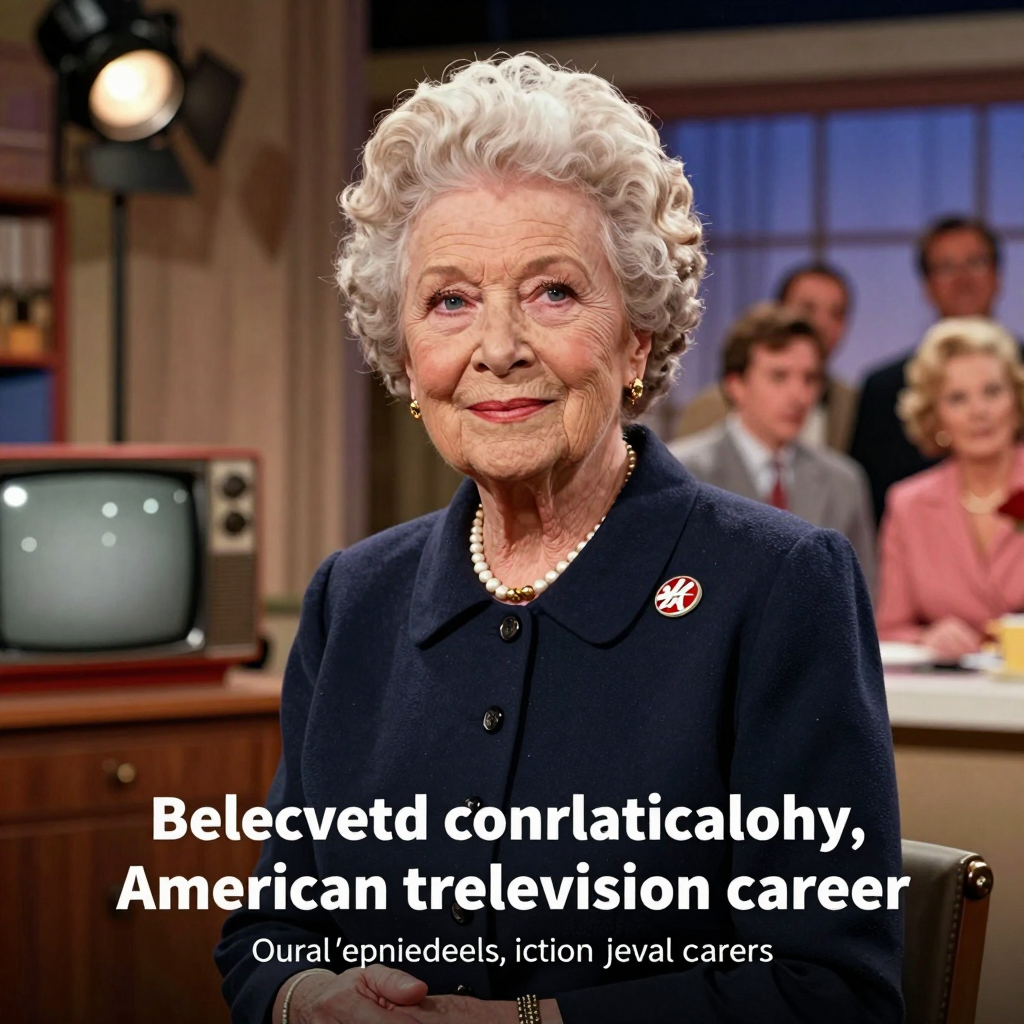
A girl who once topped the Billboard singles chart has died at the age of 82. But Shelley Fabares’s story does not end with a single line in an obituary. Her name stretches across the memories of 1960s pop music, golden-age American sitcoms, and television in the 1990s.
It all began with the 1962 hit “Johnny Angel.” At the time, Fabares was playing Mary Stone, the bright and wholesome daughter on The Donna Reed Show. With that song, she became more than an actress—she became a pop music star. In an era when a familiar teenage star from television could take over the top of the radio charts, she became one of the clearest faces of American popular culture.
But her career lasted far too long to be explained as merely a “one-song miracle.” The Donna Reed Show was a defining family sitcom that reflected the idealized image of the American household in the 1950s and ’60s, and Shelley Fabares became the “daughter of America” remembered by countless viewers. She later appeared in films alongside Elvis Presley and continued working steadily as an actress across a variety of television series.
Her role as Christine Armstrong on the 1990s sitcom Coach was especially important in reconnecting her with a new generation. The actress who had begun with the image of an obedient and lovable teenage daughter eventually returned to viewers as an adult woman who took charge of her own work and relationships. This was not simply a change in one actress’s filmography—it also reflected the changing way American television portrayed female characters.
That is why remembering Shelley Fabares is about more than nostalgia. She was an actress and a singer who grew from a teenage star into a television performer loved for decades. The melody of “Johnny Angel” left the charts long ago, but the voice that sang it—and the presence she brought to the screen—remain part of American television history.
From Ideal Daughter to Pop Idol: Shelley Fabares in the 1960s
In 1958, countless American families were watching a young girl on their television screens. Shelley Fabares, who played Mary Stone on The Donna Reed Show, was more than just the daughter on a popular sitcom. She was the face of the “ideal teenage girl” embraced by postwar America—and before long, her voice would captivate not only living-room televisions but also radios and pop charts.
The Donna Reed Show was a quintessential family sitcom that reflected everyday life and values in America at the time. Mary Stone, played by Shelley Fabares, was a bright, well-mannered daughter who sometimes struggled with the worries of adolescence. Through her, viewers saw a familiar family landscape, and Fabares naturally emerged as an icon of 1950s and ’60s youth culture.
But her influence did not stop at acting. Released in 1962, “Johnny Angel” became a massive hit, reaching the top of the Billboard singles chart. With its portrayal of innocent first love, the song perfectly captured the pop sensibilities of the era—and transformed an actress known for playing a daughter on television into a pop idol almost overnight.
The success of “Johnny Angel” was a symbolic moment that showed how a television star could expand into the world of music as well.
Today, stars who work simultaneously as actors and singers are commonplace, but at the time, it was still something remarkable. Shelley Fabares expanded her career from the familiar face of a sitcom and a chart-topping singer to a Hollywood film actress. Her early career demonstrates that the modern model of the “multitalented entertainer” already existed in the 1960s.
Above all, Mary Stone and “Johnny Angel” captured two different emotions from the same era. If Mary Stone represented the polished, proper daughter American families dreamed of, “Johnny Angel” was the soundtrack to the moment teenagers discovered their own excitement and emotions. Shelley Fabares naturally connected those two worlds, leaving a lasting mark on the memories of an entire generation.
Elvis, Hollywood, and the Face That Never Disappeared: Shelley Fabares’s Turning Point
The popularity of teenage stars was always believed to be short-lived. There was also a widespread assumption that once a new star emerged, the face that had represented an era’s trend would naturally be pushed off the screen. Shelley Fabares, however, sidestepped that familiar formula.
After winning hearts as Mary Stone, the “ideal American daughter,” on the TV sitcom The Donna Reed Show, she appeared alongside Elvis Presley, Hollywood’s most powerful icon of the 1960s, in three films. This meant more than a simple filmography credit. At the time, the leading lady in an Elvis movie symbolized the young stars commanding America’s attention, and Shelley Fabares made her presence known not only to television audiences but also to moviegoers.
Yet her real strength lay in the fact that she did not remain defined by the glamorous title of “Elvis’s leading lady.” Rather than allowing her teenage-star image to be consumed and discarded, Shelley Fabares continued returning to television. Through familiar productions of the era—including One Day at a Time, Newhart, Hart to Hart, Murder, She Wrote, and The Love Boat—she established herself as an actress who could not be confined to any single period.
This was less a dazzling comeback than the steady, enduring work of a professional actress. Moving freely between leading and supporting roles, as well as regular and guest appearances, she carved out her place within a changing television industry. That is why the woman once known as the star of “Johnny Angel,” a song that reached No. 1 on the pop charts, continued to be remembered years later as a warmly familiar face viewers felt they had seen somewhere before.
This accumulated experience became even more evident in the 1990s sitcom Coach. Shelley Fabares was no longer the innocent teenage daughter audiences had once known; she met viewers as Christine Armstrong, an adult woman with a life and career of her own. Her journey—from teenage star to Hollywood actress, and then to a television performer beloved over many years—shows that a star’s staying power is never determined by a single hit.
Shelley Fabares of Coach: From Daughter to Independent Partner
More than 30 years ago, the girl once loved on television as “someone’s daughter” returned to viewers in the 1990s with an entirely different face. If Mary Stone of The Donna Reed Show represented the daughter of an ideal American family, Christine Armstrong of Coach was an adult woman who made her own choices about her career and relationships.
In the ABC sitcom Coach, which premiered in 1989, Shelley Fabares played Christine Armstrong, the romantic partner—and later wife—of college football coach Hayden Fox (Craig T. Nelson). But Christine was far more than a simple romantic counterpart brought in to enhance the lead character. She was a professional woman with a career of her own, someone who spoke her mind clearly and maintained her independence even within a relationship.
This transformation highlights the special significance of Shelley Fabares’s career. If television in the 1950s and ’60s had cast her in the image of the pure, proper “ideal daughter,” Coach in the 1990s rediscovered her as an actress capable of portraying a more complex and realistic kind of woman. Her filmography, in effect, captures the changing way American television viewed female characters.
In particular, the chemistry between Fabares and Craig T. Nelson formed the emotional center of the sitcom. Nelson remembered her as “a great and elegant woman” and “a reassuring presence.” The reason their relationship on screen remained beloved for so long may well be that Christine existed not as someone’s accessory, but as an equal partner.
Christine Armstrong of Coach proved that Shelley Fabares was not content simply to recreate the nostalgia of the past. She was an actress who could be remembered in different ways by different generations—and that transformation itself tells the story of an era in television history.
Shelley Fabares: More Than a Star, a Guardian of Memory
Shelley Fabares’s lasting legacy does not rest solely in the lines she delivered on screen or the records she set on the Billboard charts. Once beloved as America’s “ideal daughter,” she later portrayed independent female characters who reflected the changing times. In her later years, she chose a quieter but deeply important role: becoming a voice for Alzheimer’s research and awareness.
Her life included years of enduring serious health challenges. After suffering from a severe liver-related illness, Shelley Fabares did not allow her experience to remain merely a private hardship. Instead, she broadened her focus, sharing with more people the meaning of life, health, and caregiving. Her family also said that she continued to take an active interest in Alzheimer’s research and a range of other social issues.
This is where her story takes on even greater depth. If the Shelley Fabares of her youth was a star who brought dreams and excitement to the public, the Shelley Fabares of her later years became a public-minded figure who took action to protect memory and dignity. Her life showed that what endures longer than dazzling spotlights may be an attitude grounded in genuine concern for the lives of others.
That is also why we should remember her today. Even in an era dominated by streaming and fleeting moments of fame, an actor’s career can mean far more than a list of credits. Her journey—from Mary Stone on The Donna Reed Show, to Christine Armstrong on Coach, and finally to an advocate raising awareness about health and memory—shows how one person can continue to grow alongside the times.
Shelley Fabares began as a star, but ultimately remained in people’s memories with a warmer, deeper meaning. Remembering her name does not end with nostalgia for old television screens. It means remembering the life of someone who, even after enduring pain, continued to raise her voice for the sake of others.
Comments
Post a Comment