 \n
iPhone Duo: Apple Finally Folds the Line—Meet the $1,999 iPhone
Apple has finally folded the boundary between smartphones and tablets. Unveiled in September 2026, the iPhone Duo is Apple’s first book-style foldable iPhone—and the most expensive iPhone ever, with a starting price of $1,999. Preorders are scheduled to open at 5 a.m. PT on October 16, with the official launch set for October 23.
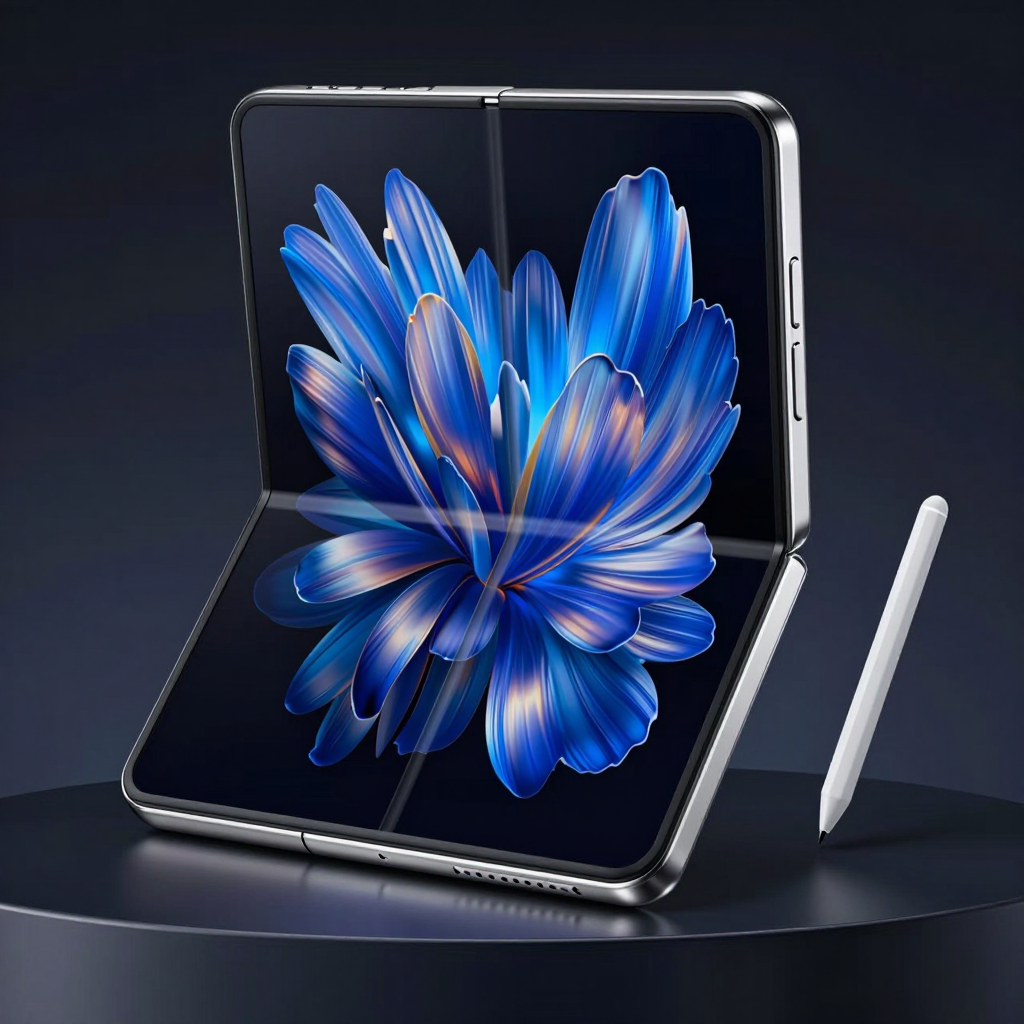
Folded, it’s a smartphone with a 5.4-inch outer display. Open it up, and a 7.6-inch inner screen unfolds before you. This is more than simply having a larger display. With Split View in iOS 27, users can run two apps side by side, while Apple Pencil support makes it possible to take notes or sketch directly on the device. The question Apple is posing with the iPhone Duo is clear:
“Does a phone really have to remain just a phone?”
Why the iPhone Duo Is Being Called a “Pocket iPad”
The 7.6-inch OLED inner display provides enough workspace to review documents on the go, conduct research, edit video content, or jot down meeting notes. Multitasking—which often feels cramped on traditional iPhones—becomes the central experience on this device.
The change is especially appealing to creators and productivity-focused users. They can place a browser or reference material on one side and open a notes app, email client, or document editor on the other. With Apple Pencil support added to the mix, there may be more moments when users can leave their iPad at home for quick note-taking and idea sketching.
From this perspective, the iPhone Duo is less a “larger iPhone” than a hybrid device that combines the roles of a primary smartphone and a compact tablet.
$1,999: The Price of Innovation—or the Price of Status?
The biggest issue is the price. At $1,999 for the 256GB model, the starting point sits well above the usual premium-smartphone range. Higher-capacity models are likely to become the most expensive iPhones in Apple’s history.
Of course, it would be difficult to judge the device on price alone. The A20 Pro chip, Apple C2 modem, dual 48MP cameras, under-display FaceTime camera, and up to 31 hours of video playback on the inner screen all suggest that this is more than a simple experiment. Its unfolded thickness of just 5.2mm could also leave a strong impression on consumers seeking premium hardware.
Still, the iPhone Duo’s first buyers are easy to imagine: Apple loyalists eager to experience the latest form factor before anyone else, creators and professionals who refuse to compromise on productivity while traveling, and luxury-tech consumers who want to express their personal taste through a device unlike everyone else’s.
In the end, the iPhone Duo could be a $1,999 status symbol—or a genuine “pocket iPad” capable of transforming the way people work every day. The difference will come down to one thing: how often users actually unfold the screen.
iPhone Duo: A 7.6-Inch Canvas That Unfolds in Your Pocket
When folded, it is a 5.4-inch smartphone. But the moment you unfold the iPhone Duo, its display transforms into a spacious 7.6-inch workspace. This is more than a simple increase in screen size. A device once used to check messages becomes something closer to a “pocket iPad”—a tool for working on documents, watching videos, drawing, and multitasking.
A Familiar Smartphone When Folded, a Tablet-Like Device When Unfolded
The outer display is a 5.4-inch OLED Super Retina XDR screen. For quick everyday tasks such as making calls, checking messages and maps, or controlling music, the folded form is more than enough. It also retains the iPhone’s fundamental role as a device you can carry in your pocket.
By contrast, the inner 7.6-inch flexible OLED Super Retina XDR display expands what the device can be used for. With more screen real estate, you can scroll less while browsing webpages, view photos at a larger size, and enjoy a more immersive experience with videos and games. The fact that it offers roughly 80% more space than the largest existing iPhone creates a difference that goes beyond the numbers.
New Portability Made Possible by a 5.2mm Thickness
When unfolded, the device is reportedly just 5.2mm thick. This design aims to challenge the assumption that a large-screen device must also be thick and heavy. Its book-style form factor, which opens from left to right like a book, allows the screen to be carried while protected and reveals the larger canvas only when needed.
The essence of this design is not “carrying around a big screen,” but creating a big screen only when the moment calls for it. You can use it like a regular smartphone during your commute, then unfold it at a café or in a meeting room to handle content and work.
How Dual OLED Displays Change the Way You Use It
The iPhone Duo’s two screens differ not only in size, but also in purpose.
- 5.4-inch outer display: Quick checks, calls, messages, and simple app use
- 7.6-inch inner display: Watching videos, browsing the web, reviewing documents, gaming, and creative work
- Split View: Place two apps side by side, such as a browser and notes, video and chat, or email and calendar
In particular, Split View in iOS 27 is a key feature that could determine the value of a foldable device. You could display research materials on one side while opening a notes app or blog editor on the other. It reduces the constant app switching common on smartphones and makes simultaneous tasks possible—tasks that were often abandoned on smaller screens.
More Than a Content-Consumption Device, a Tool for Creation
The 7.6-inch display and Apple Pencil support make it difficult to view the iPhone Duo as merely a luxury phone. You could take notes during a meeting, sketch ideas, and add simple annotations to photos—all in a natural workflow on a single device.
Of course, it is still too early to claim that the screen size alone can fully replace an iPad. However, adding this much workspace to a smartphone you carry everywhere would make short document edits, content planning, and note-taking on the go far more practical use cases.
Ultimately, the iPhone Duo’s dual-display design is less about creating “a bigger iPhone” and more about introducing a new way to fold and unfold the boundary between a smartphone and a tablet.
iPhone Duo: An iOS 27 Productivity Experiment Beginning Between the iPhone and iPad
Working with a browser open on one side and a document or notes app on the other has traditionally been considered the domain of iPads and laptops. But with its 7.6-inch inner display and iOS 27’s Split View, iPhone Duo aims to bring this familiar productivity workflow to an iPhone that fits in your pocket.
When folded, it functions as a smartphone suited to checking messages, making calls, and using simple apps. But the moment it unfolds, Duo becomes more than just an iPhone with a larger screen. It feels closer to a compact workspace designed for handling two tasks at once.
A ‘Pocket Office’ Created by Split View
The centerpiece of iOS 27 is Split View, optimized for the foldable display. Two apps can run side by side on the inner screen, with the biggest advantage being the ability to keep your workflow moving without interruption.
For example, you could:
- Search for information in Safari while drafting content in Pages or a blog editor
- Keep a video call open while organizing meeting notes in the Notes app
- Review an attachment received through Mail while adding an event to your calendar
- Follow directions in Maps while sharing the meeting location through Messages
- Open your photo library alongside an editing app to quickly prepare content
What matters most is not the size of the display itself, but the experience of switching between fewer apps. On a conventional smartphone, you repeatedly check information, close one app, and return to the screen where you were writing. iPhone Duo can keep the information you need visible, creating a continuous flow between thinking and recording.
Apple Pencil Support Turns a Consumption Screen into a Work Canvas
Apple Pencil support makes Duo’s role even clearer. A 7.6-inch display may have limitations when it comes to fully replacing a professional tablet, but it is a persuasive size for quickly taking notes and developing ideas while on the move.
Creators and pro users could imagine scenarios such as:
- Handwriting key statements during an interview and instantly converting them into text
- Quickly sketching storyboards and screen layouts during a content planning meeting
- Marking revision instructions or ideas directly on top of photos
- Adding notes in the margins while reading articles, research materials, or PDFs
- Immediately visualizing video or podcast ideas that come to mind while traveling
This combination transforms iPhone Duo from a large-screen consumption device into a personal work tool that can be opened at any time. In particular, it could change those spare 10 to 20 minutes that are too short to take out a laptop, yet too frustrating to handle on a smartphone.
Rather Than Replacing the iPad, It Targets the iPad’s Gaps
It is difficult to imagine Duo replacing the iPad in every respect. The iPad and Mac will still have the advantage in areas that require a large workspace, such as extended document work, precise drawing, and video editing on a large display.
But iPhone Duo’s goal is not complete replacement. It is to fill the gap between a smartphone and a tablet. It is a device with smartphone-like portability and a tablet-like workflow when unfolded. Apple’s next step in productivity may not be a larger screen, but a screen that opens the moment you need it.
Ultimately, iOS 27’s Split View and Apple Pencil support are the key features that must justify Duo’s high price. If these capabilities move beyond simple demonstrations and naturally become part of everyday writing, research, meetings, and content creation, iPhone Duo could become more than an extension of the iPhone. It could evolve into an entirely new kind of ‘pocket iPad.’
iPhone Duo: From the A20 Pro to Touch ID, New Choices in a Foldable Form
The core of the iPhone Duo is not simply that its screen folds. Apple has combined cutting-edge performance, large-screen productivity, and an authentication method unlike that of existing iPhones in a single device. It is, quite literally, the first-generation foldable iPhone—adding unfamiliar hardware choices to the Apple experience users already know.
A20 Pro and C2 Modem: Performance for a Larger Screen
The iPhone Duo is equipped with the A20 Pro chip and the Apple C2 modem. To smoothly handle iOS 27 Split View, which runs two apps side by side on the 7.6-inch inner display, as well as high-resolution video editing, gaming, and multitasking, it needs more power than a typical smartphone.
The C2 modem is also an important component for users in the United States. In major 5G network environments operated by Verizon, AT&T, T-Mobile, and others, connectivity and power efficiency can directly shape the real-world experience. In particular, because the iPhone Duo is designed to work quickly like a regular iPhone when folded and like a small tablet when unfolded, dependable cellular performance becomes even more important.
Dual 48MP Cameras and a Front Camera That Clears the Display
The rear features dual 48MP cameras. Rather than sacrificing camera performance simply because it is a foldable, Apple appears to have chosen to preserve the premium photography experience expected from an iPhone. For users who frequently take travel photos, shoot in low light, or create short videos, the combination of a large-screen preview and a capable camera system should be especially appealing.
The front houses a 12MP under-display FaceTime camera. Being able to use the expansive inner display without a notch or punch-hole is clearly an advantage. The quality of video calls and selfies will need to be confirmed in real-world reviews, but prioritizing an immersive screen experience fits the iPhone Duo’s identity well.
Why Choose Side-Mounted Touch ID Instead of Face ID?
The most intriguing change is Touch ID built into the side button. For users accustomed to Face ID on the iPhone, this may feel like an unfamiliar choice. Yet on a foldable device that shifts between folded and unfolded modes, side-mounted fingerprint authentication may be more intuitive.
Users can unlock the phone with the natural motion of pressing the button, while the design also helps reduce the complexity of positioning internal cameras and sensors. Rather than representing a return to older technology, this can be seen as a case of choosing an authentication method better suited to a foldable structure.
Two Things to Check Before Buying: eSIM and Hinge Durability
That said, a new form factor inevitably brings some variables.
- eSIM only: The iPhone Duo is reportedly not expected to support a physical SIM card. This will likely pose little trouble for customers using major carriers in the United States, but some MVNO users and travelers who swap in local SIM cards abroad should check eSIM compatibility and activation procedures in advance.
- Hinge and display durability: The true refinement of a foldable phone is ultimately judged by hinge longevity, display creasing, and long-term durability. As Apple’s first foldable, the iPhone Duo is best approached with caution at launch: users should carefully examine real-world reviews, warranty coverage, and repair costs.
The A20 Pro’s performance, large-screen multitasking, Apple Pencil support, and side-mounted Touch ID make the iPhone Duo feel like more than just an expensive smartphone. On the other hand, its starting price of $1,999 and the uncertainty surrounding any first-generation foldable are clear barriers to entry. Ultimately, this device may be most compelling not to people who simply want a “new iPhone,” but to those who want to fill the gap between an iPhone and an iPad with a single device.
iPhone Duo: Can a $1,999 Price Tag Reshape the U.S. Premium Smartphone Market?
The iPhone Duo, which begins pre-orders at 5 a.m. PT on October 16 and launches in major markets, including the United States, on October 23, is more than just an expensive smartphone. Its $1,999 starting price is both Apple’s first price statement in the foldable market and a declaration that asks: “How much are people willing to pay for a single smartphone?”
If the existing iPhone Pro Max has defined the high-end smartphone, the iPhone Duo is targeting a new ultra-premium category built on top of it—one that combines productivity, creative work, and luxury appeal.
The iPhone Duo’s Price Is Not for a ‘Phone,’ but for ‘Two Devices’
At first glance, $1,999 is an intimidating price. But the value Apple has designed lies in combining the iPhone experience when folded with a mini-tablet experience when unfolded.
The external 5.4-inch display can handle messages, calls, maps, and simple tasks, while the 7.6-inch inner display allows users to run two apps side by side with Split View in iOS 27. Add Apple Pencil support, and users can handle meeting notes, document reviews, sketches, and content planning while on the move.
In other words, the iPhone Duo is less a replacement for a conventional smartphone and more a device designed for users such as:
- People who carry an iPhone and iPad together every day
- Professionals who frequently work on documents, email, and notes while traveling
- Creators who shoot, edit, draw, or create storyboards
- Early adopters who want to experience the latest Apple hardware first
Of course, the iPhone Duo will not completely replace an iPad or laptop. But if it can move a significant portion of short work sessions and spontaneous creative tasks onto a single device, the price calculation begins to look different.
How the Apple Ecosystem Makes $1,999 More Convincing
Foldable devices themselves are not a new concept. Samsung and Google have already advanced the large-screen smartphone and multitasking experience. The iPhone Duo’s core competitive strength is not that it is the first foldable device, but how naturally it can make a foldable work within the Apple ecosystem.
If users can seamlessly continue tasks from a Mac with Handoff, open files stored in iCloud, take notes with Apple Pencil, and connect with an Apple Watch and AirPods, the product becomes more than a simple large-screen phone. For Apple’s loyal customers in the United States, this connectivity may be a stronger reason to buy than the hardware specifications themselves.
The iPhone Duo is particularly well suited to the message of being an “iPad in your pocket.” Users could fold it up and use it like a regular iPhone during their commute, then unfold it at a café or airport to research and take notes at the same time. If Apple sufficiently refines the productivity experience, the device could reduce the compromises between portability and workspace.
The iPhone Duo as a Luxury Device
In the U.S. market, a $1,999 price cannot be explained by functionality alone. The iPhone Duo is a technology product, but it also has the potential to become a conspicuous tech status symbol.
Limited color options such as Star White and Night Sky, a book-like folding form factor, and the highest price point in iPhone history turn the product itself into an ownership experience. In major metropolitan areas such as New York, Los Angeles, and San Francisco, the device could command an even stronger presence than simply being “the latest iPhone.”
Apple has spent years turning the iPhone into a broadly accessible premium product. The iPhone Duo, by contrast, is a model that prioritizes scarcity and desirability over mass appeal. As a result, what matters more than its initial sales volume is whether consumers come to recognize it as the new benchmark for high-end smartphones.
Ultimately, Who Can Justify Spending $1,999?
The iPhone Duo’s price will not be reasonable for everyone. If web browsing, social media, messaging, and video streaming make up most of your usage, a regular iPhone or Pro model may be a far more practical choice. The durability of the foldable hinge, the display crease, and repair costs are also variables that early buyers will have to accept. Its eSIM-only configuration is another factor that some travelers and users with multiple lines will need to consider carefully.
Even so, the equation changes for users who have consistently felt a gap between the iPhone and iPad. If the larger display, Apple Pencil, Split View, and continuity across the Apple ecosystem can genuinely reduce work time and the number of devices they carry, the iPhone Duo may become not an expensive phone, but an entirely new work tool.
$1,999 is clearly a high barrier to entry. But if Apple has sufficiently perfected the foldable experience, the iPhone Duo could raise the price ceiling in the U.S. premium smartphone market while establishing a new standard: a “smartphone beyond the smartphone.”
Comments
Post a Comment