 \n
Bob Mackie: The Day the Sultan of Sequins Departed
On September 14, 2026, an era of American showbiz glamour quietly came to an end at a home in Palm Springs, California. Bob Mackie, who died at the age of 87, was more than a designer who simply made clothes. He was the person who made stars onstage appear bigger, bolder, and more unforgettable.
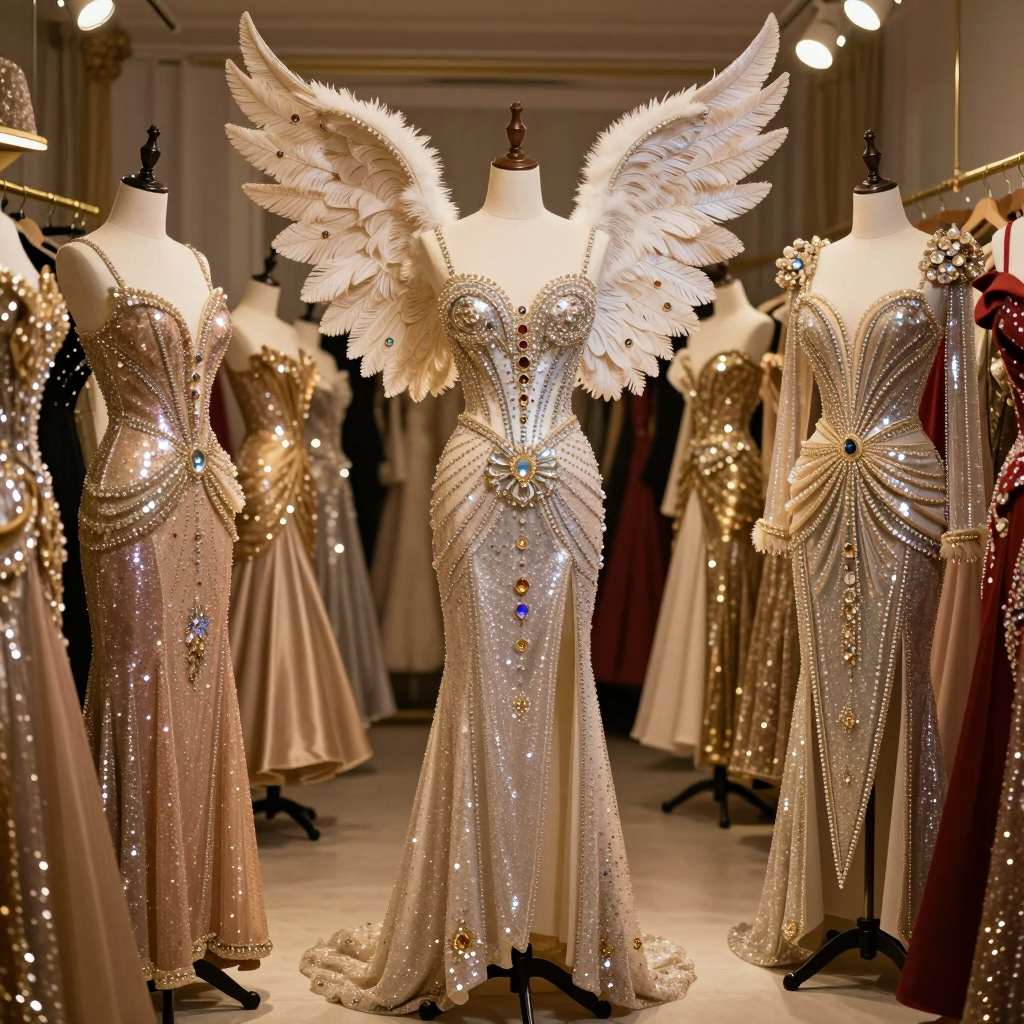
It is clear why the American press called him the “Sultan of Sequins.” His costumes featured sequins and beads, rhinestones, feathers, and sometimes even wings. But glamour for its own sake was never the goal. Bob Mackie’s designs did not erase the wearer’s individuality; they amplified the allure that was already there in the most dramatic way possible.
His philosophy can be summed up in one sentence: rather than trying to turn someone into a different person, make them look more radiant than they ever have before. Cher came to be remembered as a mythic diva, the stages of Diana Ross and Tina Turner became images that defined their eras, and Carol Burnett’s television comedy became a visual legacy—all with Mackie’s touch.
That is why his passing is more than the news of losing a famous designer. A vast lineage stretching from the variety shows of color television and daring award-show red carpets to the radiant camp aesthetic of drag culture is once again being brought into focus alongside him. Bob Mackie did not merely dress stars; he designed the images of the stars that American popular culture would remember.
Bob Mackie: Entering Hollywood with a Single Sketch
Glittering sequins and feathers, bold silhouettes filling the stage. Yet the beginning of all that showbiz glamour was always quiet: a single pencil sketch drawn at a desk. The reason Bob Mackie would eventually become a designer to the stars lay precisely in his extraordinary gift for drawing.
Born in California in 1939, he studied design and drawing at Pasadena City College and the Chouinard Art Institute. Gifted from an early age at observing people and capturing the lines of clothing, he understood fashion not simply as something people “wear,” but as a visual language that reveals a person’s presence.
In the early 1960s, Mackie began working in Hollywood as a costume sketch artist. At the time, his role was to translate a designer’s ideas into drawings that production teams and stars could understand at a glance. But his sketches were more than simple work instructions. They were closer to blueprints for miniature performances, capturing the character’s expression, gestures, and even the embellishments that would come alive beneath the stage lights.
His talent drew attention within the Hollywood studio system, where the legendary costume designer Edith Head was active. Then, in 1966, he was entrusted with creating a new stage image for musical star Mitzi Gaynor. With that opportunity, Mackie took a major step forward—from a “newcomer who could draw well” to a designer who could choreograph a star’s transformation.
The arrival of television became the stage that dramatically expanded his talent. Viewers in the era of color TV wanted images that were sharper, larger, and more dazzling on screen. Bob Mackie understood that demand instinctively. Rather than merely designing clothes to fit the body, he sketched first how they would shine most powerfully amid cameras, lighting, dance, and movement.
In this way, a single sketch grew into iconic looks for television variety shows, Hollywood, Broadway, and concert stages. His career ultimately reveals one essential truth: what transforms a star is not decoration alone, but the eye that recognizes precisely when that person shines brightest.
bob mackie, the sheer fantasy that made Cher a diva
When Cher appeared on the red carpet at the 1988 Academy Awards, people saw more than just a dress. The daring gown, layered with intricate embroidery over sheer fabric, instantly broke through the prim and proper rules of the red carpet at the time. There was exposure, but it was never provocation for its own sake. It felt more like a diva’s declaration: “I will not conform to anyone’s standards.”
The person who designed this moment was bob mackie. He did not try to conceal Cher’s body or place her within the confines of traditional elegance. Instead, he amplified her rebelliousness, humor, sensuality, and overwhelming star power in the clearest way possible. His costumes were not tools for turning a star into someone else, but devices that elevated an already existing persona into something mythic.
Cher and Mackie’s collaboration continued across television variety shows, concert stages, and award-show red carpets. Feathers, sheer fabrics, bold headdresses, and silhouettes that emphasized the body’s contours all became part of Cher’s visual language. As a result, Cher established herself as more than an exceptional singer and actress—she became an instantly recognizable fashion icon.
In particular, the sheer embroidered dress of 1988 shows where today’s culture of “risk-taking red carpets” began. Rather than making the safe choice out of concern for people’s reactions, she chose to make a memorable one. Even with the passage of time, that dress can evoke both an era and a person in a single photograph.
The fantasy Bob Mackie created was not limited to dazzling embellishment. Through clothing, he wrote the narrative of a star—and gave Cher the silhouette of a diva no one else could ever imitate.
bob mackie: Excess Was Not a Flaw but the Language of the Stage
Sequins, rhinestones, feathers, wings, and exaggerated silhouettes that commanded attention at a glance. To some, these elements might have seemed “too flashy,” but to bob mackie, that phrase was practically a compliment approaching perfection. His clothes were not quietly beautiful garments; they were devices designed to make a star’s presence explode the moment the lights came on.
Mackie’s design language was clear. Onstage, what was needed was not the proportions of reality or the restraint of everyday life, but fantasy and spectacle—something that could be read instantly even by an audience seated far away. That was why his costumes were densely embellished with beads and sequins that reflected the light, while feathers, headdresses, and wings made the body’s movements even more dramatic.
“Don’t try to change people. Make them look the best they’ve ever looked.”
This philosophy shows that Mackie’s glamour was never simply a contest in decoration. For Cher, he dressed the majesty of a mythic diva; for Tina Turner, explosive energy; and for Diana Ross, a star quality that was both elegant and overwhelming. His costumes were not ornaments that concealed the star, but visual amplifiers that made the person’s character resonate even more powerfully.
This is why his aesthetic remains alive today. Bold sheer looks on the red carpet, tour costumes worn by pop stars, and the dramatic silhouettes of drag performances all seek the same thing: “a scene more memorable than the ordinary.” The grammar of excess created by bob mackie was not an outdated form of glamour, but a language for an age in which image itself had become performance.
In the end, his feathers and sequins were not merely glittering materials. They were the means by which an ordinary person was transformed into an icon the moment a star stepped onto the stage.
Bob Mackie’s Runway from Television to Drag
Bob Mackie’s designs were never merely frozen images of glamour trapped on old television screens. Born in the variety shows of the color-TV era, his sequins, feathers, and exaggerated silhouettes have continued to move—from the red carpet to today’s drag stages and pop concerts.
The essence of his creations lies in more than sheer extravagance. His clothes were not decorations draped over a star; they were devices that magnified the character already within them. Cher’s daring sheer looks completed her presence as a “diva,” while the stage costumes he created for Tina Turner and Diana Ross visually amplified the force of their performances.
This visual language comes alive even more vividly in drag culture. Rhinestones, feathers, wings, and embellishments that shimmer with the movement of the body have become an essential vocabulary of the diva fantasy built by drag performers. This is also why RuPaul’s Drag Race honored him with a Lifetime Achievement Award. Mackie’s costumes represented camp aesthetics while showing how to express oneself onstage with the greatest possible boldness.
His influence is not nostalgia; it is still unfolding. The fact that a new generation of artists—including Miley Cyrus, Zendaya, and Pink—has connected with his work proves that even as the times change, the power of “one unforgettable outfit” does not disappear. Even in moments when minimalism is in fashion, stages and red carpets still need stories—and Bob Mackie knew better than anyone how to tell those stories through clothes.
Now only one question remains: who, in the next era, will carry forward Mackie’s visual language in their own way—the language that made stars shine brighter rather than attempting to transform them? His runway may not have come to an end. Perhaps it is simply waiting for the next diva and the next stage.
Comments
Post a Comment