Complete Guide to 2026 Consumer Recovery Vouchers: Support Payment Trends from Naju and Haenam Cases
 \n
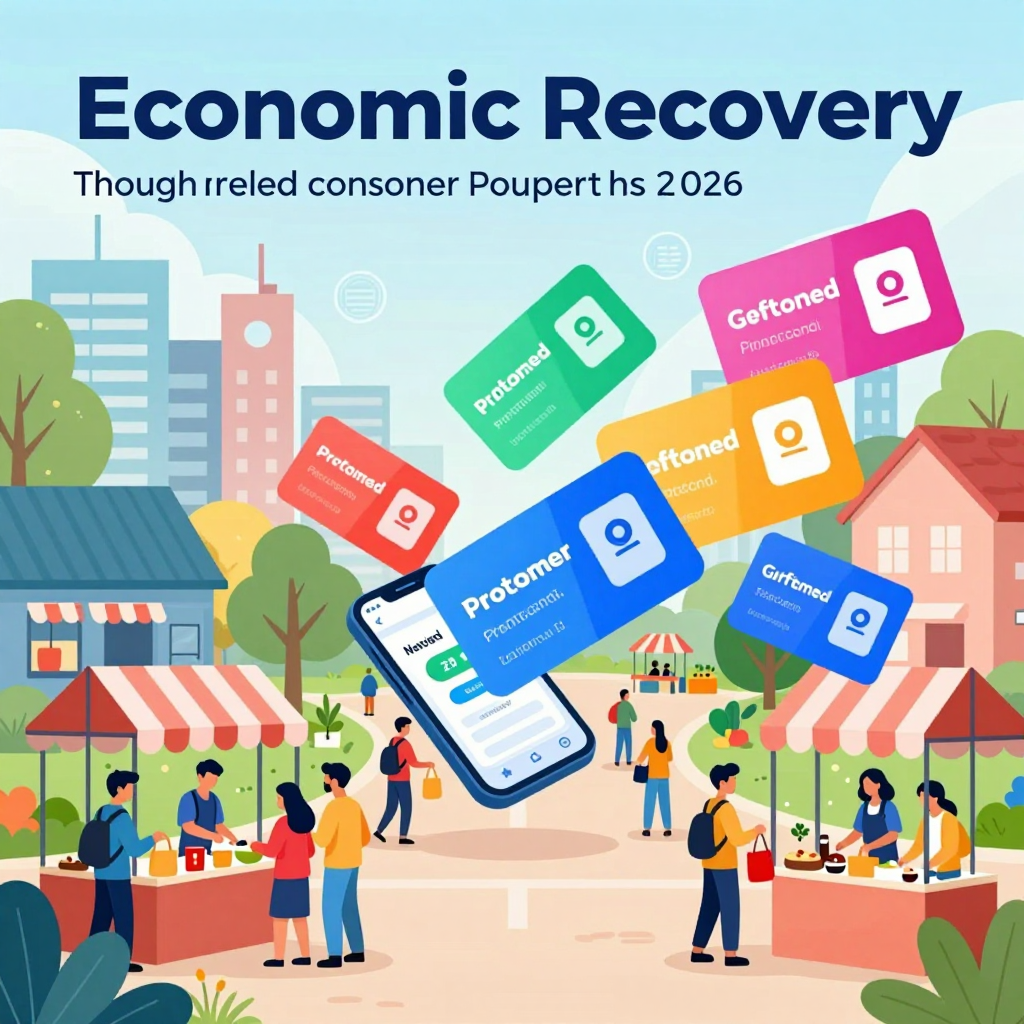
Livelihood Recovery Consumption Coupons: Why Does Your Wallet Move Even When It Isn’t Cash?
One day, 200,000 won appears on your phone. You can use it at convenience stores, neighborhood restaurants, and traditional markets—but not at department stores or large supermarkets. What’s more, any remaining balance disappears after the designated expiration date.
It may feel inconvenient. But this is precisely where the core design of livelihood recovery consumption coupons lies. They are not simply a way of handing out money; they are a policy designed to shape both where and when people spend.
Why Provide Coupons Instead of Cash?
Cash gives recipients the freedom to use it however they choose. However, when the goal is to revitalize the local economy quickly, support funds may be saved or flow out of the region to large online malls and major retailers.
Livelihood recovery consumption coupons address these limitations.
- They are provided as local gift certificates to encourage people to shop at neighborhood merchants.
- They use prepaid cards to set eligible business categories and sales limits.
- They offer mobile coupons to simplify the application, distribution, and spending processes.
In other words, the system eases the burden of living expenses for citizens while increasing the likelihood that small business owners will see the support translate into actual sales.
“Use It Before It Expires” Brings Spending Forward
Coupons generally come with an expiration date. For example, if the support expires at the end of November, people are more likely to bring forward necessary purchases rather than putting them off with the thought, “I’ll use it later.”
The resulting effects are clear. People dine at neighborhood restaurants they had already planned to visit, make long-delayed trips to the hair salon, purchase household necessities, and open their wallets at traditional markets. Coupons are not merely a means of providing discounts—they are a mechanism that creates the timing for consumption.
If cash expands our “freedom of choice,” consumption coupons provide “direction,” guiding spending to take place within the local community.
Restrictions on Where Coupons Can Be Used Are Not an Inconvenience but the Purpose of the Policy
Livelihood recovery consumption coupons are often not designed for use at every store. Their use is limited to card-affiliated merchants below a certain annual sales threshold, local gift certificate merchants, traditional markets, local food stores, and similar businesses.
The purpose of this restriction is not to make consumers endure inconvenience. It is a mechanism to ensure that support funds reach neighborhood commercial districts and small, independent business owners first, rather than already large-scale retailers.
Of course, in places such as rural areas or townships where there are few stores to choose from, additional measures may be needed—for example, allowing exceptions for Hanaro Mart stores or public-style local food outlets. That is because both the policy’s objectives and residents’ actual everyday convenience must be taken into account.
Coupons Have Now Become a Policy Tool Embedded in Everyday Life
In the past, consumption coupons were closer to temporary support measures introduced only during special circumstances. Today, they are expanding into policy tools used throughout daily life, including local gift certificate discounts, mobile local currencies, traditional market gift certificates, and discounts on public delivery apps.
Ultimately, livelihood recovery consumption coupons are not just about how much is provided. They are a local economic strategy that considers who will spend it, how they will spend it, and in which commercial districts. The place a single coupon on your phone sets in motion may ultimately be not the consumer’s wallet, but the sales of businesses in your own neighborhood.
Where and How Should You Spend Naju’s 200,000-Won Livelihood Recovery Consumption Coupon?
At 200,000 won per person, the amount may look like a simple living support payment. However, Naju’s Livelihood Recovery Support Fund is not cash that can be spent freely. Any balance left unused after November 30 will automatically expire, and eligible merchants are limited mainly to small businesses within the region.
In other words, this policy is a Livelihood Recovery Consumption Coupon designed both to ease the burden on household finances and to channel spending toward Naju’s local neighborhood businesses. For residents, it means “200,000 won that must be spent before the deadline,” while for local merchants, it offers an opportunity to boost sales over a short period.
Who Is Eligible and How to Apply
Those eligible are citizens who have continuously maintained resident registration in Naju from July 1, 2026, through the date of application. Marriage immigrants and permanent residents are also included, and approximately 117,000 people are expected to benefit.
- Support amount: 200,000 won per person
- Application period: September 14–October 16
- How to apply: Online or in person at an administrative welfare center in your eup, myeon, or dong
- Support service: Door-to-door application assistance for residents with limited mobility
- Initial application process: A five-day rotation system based on the last digit of the applicant’s birth year during the first week
The support will not be deposited into a bank account as cash. Instead, it will be provided through a prepaid card or mobile Naju Sarang Gift Certificate (CHAK). It is therefore a good idea to decide in advance which option will be more convenient for you before applying.
Where Can You Use the Livelihood Recovery Consumption Coupon? The Key Is ‘Local Small Businesses’
Naju’s support fund is not a card balance that can be used anywhere. Eligible merchants are clearly defined so that spending remains within the local community.
Where it can be used
- Credit card-affiliated businesses in Naju with annual sales of 3 billion won or less
- Naju Sarang Gift Certificate-affiliated businesses
- Hanaro Mart stores serving the daily needs of residents in myeon areas
- Public local-food direct sales stores
By contrast, use may be restricted at large retailers and in certain industries with limited impact on the local economy. Before paying, make a habit of checking for the local currency merchant sign at the store entrance or searching for affiliated merchants through the mobile gift certificate app.
Prioritize Everyday Expenses Before November 30
The most important date is November 30. Once this date passes, any remaining balance will disappear without being refunded or carried over. Rather than losing the benefit while trying to save the 200,000 won, a practical strategy is to divide it among your regular expenses.
For example:
- Use it for meals and coffee at neighborhood restaurants and cafés
- Pay for everyday services such as hair salons, laundromats, and repair shops
- Buy groceries at local supermarkets and traditional markets
- Purchase agricultural products at local-food direct sales stores
- Use it for daily expenses such as children’s school supplies, neighborhood bookstores, and small hospitals or pharmacies
Instead of spending a large amount all at once, spreading it across grocery shopping, dining out, and everyday services makes it easier to use the full amount before the deadline. In particular, during the period after the holiday season when consumer spending tends to decline, this can provide meaningful support to local businesses as well.
More Than Simple Financial Aid: A Local-Economy Consumption Experiment
Naju’s 200,000-won coupon is not simply a policy that puts money into residents’ wallets. There are clear reasons why the payment methods were limited to local gift certificates and prepaid cards, why eligible merchants were restricted to small-business affiliates, and why the usage period was kept short.
When residents use the coupon, the money flows to neighborhood restaurants, markets, hair salons, and local-food stores. This structure helps prevent spending from flowing out to large distribution channels and allows sales and income to circulate within the local community.
Ultimately, Naju’s Livelihood Recovery Consumption Coupon is both a policy that “gives residents 200,000 won” and a policy designed to make that “200,000 won circulate several more times within Naju.” If you receive the coupon, the smartest approach is to check the expiration date first and use it strategically at nearby neighborhood businesses.
The 18% Power of Livelihood Recovery Consumption Coupons Reshaping Chuseok Shopping Baskets
If spending 100,000 won on groceries or gifts means an actual burden of just 82,000 won, where will consumers choose to shop? Ahead of the Chuseok shopping season, Haenam County has combined local gift certificate discounts, cashback, and digital Onnuri gift certificate benefits. This is more than a simple discount promotion—it is a Livelihood Recovery Consumption Coupon strategy designed to draw spending into local businesses.
Haenam Sarang Gift Certificates: Up to an 18% Effective Discount
Haenam County’s key card is the Haenam Sarang Gift Certificate. Its benefits are designed to be felt at every stage, from purchasing the certificate to using it.
- Paper gift certificates: 17% discount upon purchase
- Card-type gift certificates: 15% purchase discount + 3% cashback on the payment amount
- Maximum benefit: An effective discount of approximately 18% when combined
For example, if a consumer spends 100,000 won using a card-type gift certificate, the actual burden can be lowered to around 82,000 won after taking the discount and cashback into account. During periods of heavy spending—such as holiday grocery shopping, dining out, and gift purchases—even a small difference in the discount rate can make a significant impact on consumers.
For consumers, lighter shopping baskets; for local merchants, higher holiday sales.
A discount rate may be just a number, but its impact ultimately flows into the sales of neighborhood businesses.
Focusing Consumer Spending on Traditional Markets Through Digital Onnuri Gift Certificates
The benefits offered through digital Onnuri gift certificates, aimed at traditional markets and small-business sectors, are also worth noting. During a designated period, Haenam County offered digital Onnuri gift certificates at a 10% discount and increased the purchase limit to 1.2 million won.
This approach gives consumers the motivation to “buy now and use it during the holiday.” At the same time, it encourages funds to flow toward local spending destinations such as traditional markets, neighborhood restaurants, and small shops.
Chuseok is a time when spending on groceries, ritual foods, and gifts increases compared with ordinary periods. Concentrating discounts during this window can do more than simply replace existing spending—it may also stimulate additional purchases.
How Discounts, Cashback, and Limited-Time Offers Accelerate Spending
The key feature of Haenam County’s case is that it did not offer each benefit separately. Instead, it combined discount rates, cashback, and limited-time availability into a single design.
| Component | Effect on Consumers | Effect on the Local Economy |
|---|---|---|
| Gift certificate purchase discounts | Immediate reduction in spending burden | Encourages visits to local affiliated merchants |
| Payment cashback | Strengthens motivation for reuse | Expands repeat spending |
| Concentrated operation before and after Chuseok | Speeds up purchase decisions | Boosts Chuseok-season sales |
| Increased Onnuri gift certificate limit | Supports large grocery and gift purchases | Concentrates spending in traditional markets |
In this way, Livelihood Recovery Consumption Coupons differ from simply distributing cash. They are designed around where, when, and how the funds are spent, ensuring that policy resources circulate within the local economy.
Haenam County’s 18% benefit ultimately serves as a mechanism that creates lighter Chuseok shopping baskets for consumers and more tangible holiday sales for neighborhood businesses.
Livelihood Recovery Consumption Coupons Expand to Delivery Apps and EV Charging Stations
Consumption coupons are no longer limited to visiting traditional markets with paper vouchers in hand. Now, they can lower food costs on delivery apps, and even automatically reduce electric vehicle charging fees—without a separate application—when charging begins during designated hours. Livelihood Recovery Consumption Coupons are evolving into a digital policy tool that not only eases household expenses but also connects local small businesses with eco-friendly consumption.
Delivery App Coupons: Lowering Food Costs While Boosting Small-Business Sales
One of the most notable changes is the introduction of discount coupons linked to public delivery apps. The Ministry of SMEs and Startups has proposed directing most of the budget for its win-win delivery app support program toward consumer discount coupons. The goal is not merely to increase app usage, but to help local small businesses—such as restaurants and cafés—recover their sales.
The core benefits are clear:
- Consumers can reduce the burden of food prices and delivery fees.
- Partner businesses can ease the burden of high commissions and advertising costs charged by private platforms.
- Local governments and the central government can analyze policy outcomes using coupon usage data.
Delivery is particularly close to people’s everyday lives compared with dining out. That is why app-based coupons may have a more noticeable impact than vouchers used only during holidays or special events. The system is designed so that the everyday choice of “What should I eat for dinner tonight?” can translate into sales for local restaurants.
The stage for consumption coupons is expanding from offline stores to smartphone screens.
Electric Vehicle Charging Discounts: Automatic Household Support Without Coupons
Electric vehicle charging discounts represent a slightly different form of consumption incentive. Instead of downloading a mobile coupon or submitting a separate application, users can have their charging fees automatically reduced simply by beginning to charge during designated hours.
For example, at public fast-charging stations, starting a charge during daytime hours on weekends or public holidays can result in a discount of up to approximately 32% through reduced electricity usage charges. Since users only need to adjust their charging time, they can avoid the hassle associated with issuing and using coupons.
This policy carries significance beyond a simple discount:
- It lowers transportation and energy costs for electric vehicle users.
- It encourages charging during time periods when demand management is relatively necessary.
- It naturally promotes the use of eco-friendly modes of transportation.
In other words, although electric vehicle charging discounts do not take the traditional form of gift certificates, they demonstrate the broader scope of Livelihood Recovery Consumption Coupons in terms of reducing household expenses and guiding consumer behavior.
The Key Is Not ‘Distribution,’ but the ‘Everyday Experience of Use’
Delivery app discounts and electric vehicle charging fee reductions have one thing in common: they fit directly into consumers’ daily routines. Users receive discounts through an app when they need them, and their costs automatically decrease when they charge at the right time. Rather than requiring consumers to seek out the policy themselves, the policy becomes part of their everyday lives.
Going forward, the competitiveness of consumption coupons is unlikely to be determined by the discount amount alone. How easy they are to use, which living expenses they reduce, and how that spending connects to the local economy will matter even more.
Will the Local Economy Recover Even After the Livelihood Recovery Consumption Coupons Expire?
What if the vitality of local businesses disappeared the moment the coupon usage period ended? Livelihood Recovery Consumption Coupons can quickly ease the burden on citizens’ wallets and boost sales at neighborhood businesses in the short term. However, whether the warmth of that recovery will remain after the powerful incentive of “use it before it expires” disappears is an entirely separate question.
The Bright and Dark Sides of a Short, Powerful Consumption Boost
Coupons issued as local gift certificates or prepaid cards come with designated merchants and expiration dates. Consumers use them before they disappear, bringing a steady stream of customers to neighborhood restaurants, supermarkets, cafés, and traditional markets for a limited period. When the coupons coincide with holidays or local festivals, the increase in sales can be even more significant.
However, it is difficult to view all of this spending as entirely “new consumption.” In some cases, consumers simply replace cash or card payments they had already planned to make for meals and essential goods with coupon payments. If household spending capacity remains unchanged after the coupons are used up, local businesses may return to their previous sales levels.
Coupons can spark consumption, but for that spark to keep burning, the competitiveness of local businesses must rise as well.
Three Barriers the Livelihood Recovery Consumption Coupons Must Overcome
The Barrier of Substitution
If consumers are merely paying with coupons while their total spending does not increase significantly, the policy’s pure economic-stimulus effect may be limited.The Barrier of Fiscal Sustainability
Larger payments per person may create a stronger impact that people can feel, but it is not easy for local governments to secure the same level of funding every year. To prevent the policy from becoming a one-time event, fiscal capacity and spending priorities must be considered together.The Barrier of Local Business Competitiveness
For customers to return even after the consumption coupons expire, fundamental strengths such as price, quality, service, and accessibility must be in place. Simply supporting a means of payment has clear limits when it comes to building long-term customer loyalty.
True Recovery Requires Planning for What Comes After the Coupons
Effective policy does not end with distributing coupons. Based on local currency usage data, policymakers should identify industries and areas where consumer spending is insufficient, then connect that information to small-business digital transformation, reduced delivery-cost burdens, and improvements to the local commercial environment. It is also important to create systems in which spending circulates within the community through initiatives such as local food programs, traditional markets, and public delivery apps.
In addition, prepaid cards, in-person applications, and offline guidance should be provided alongside digital options so that older adults and digitally vulnerable groups are not left behind. The more convenient the system is for consumers, the more coupons can become a tool for changing local spending habits rather than merely serving as financial assistance.
Ultimately, the success or failure of the Livelihood Recovery Consumption Coupons depends less on “how much money was distributed” than on “what remains after the coupons disappear.” When a short-term rebound in sales leads to repeat visits and greater self-sufficiency among local businesses, coupons can finally become more than a one-time benefit—they can serve as the starting point for sustainable livelihood recovery.
Comments
Post a Comment