 \n
Real Madrid vs Inter: Mourinho’s Second European War Began at the Bernabéu
In May 2010, José Mourinho stood atop Europe at the Santiago Bernabéu, leading Inter to glory. It was the completion of a historic treble—Serie A, the Coppa Italia, and the Champions League. To him, the Bernabéu was more than just an away stadium; it was the setting where the brightest moment of his managerial career was etched into history.
Then, in the autumn of 2026, Mourinho returned to the same stage from an entirely different position. He was now the manager of Real Madrid, and the opponent in the opening match of the Champions League league phase was none other than his former club, Inter. Real Madrid vs Inter was more than a clash between European giants—it was a night of reunion, where past glory collided with present ambition.
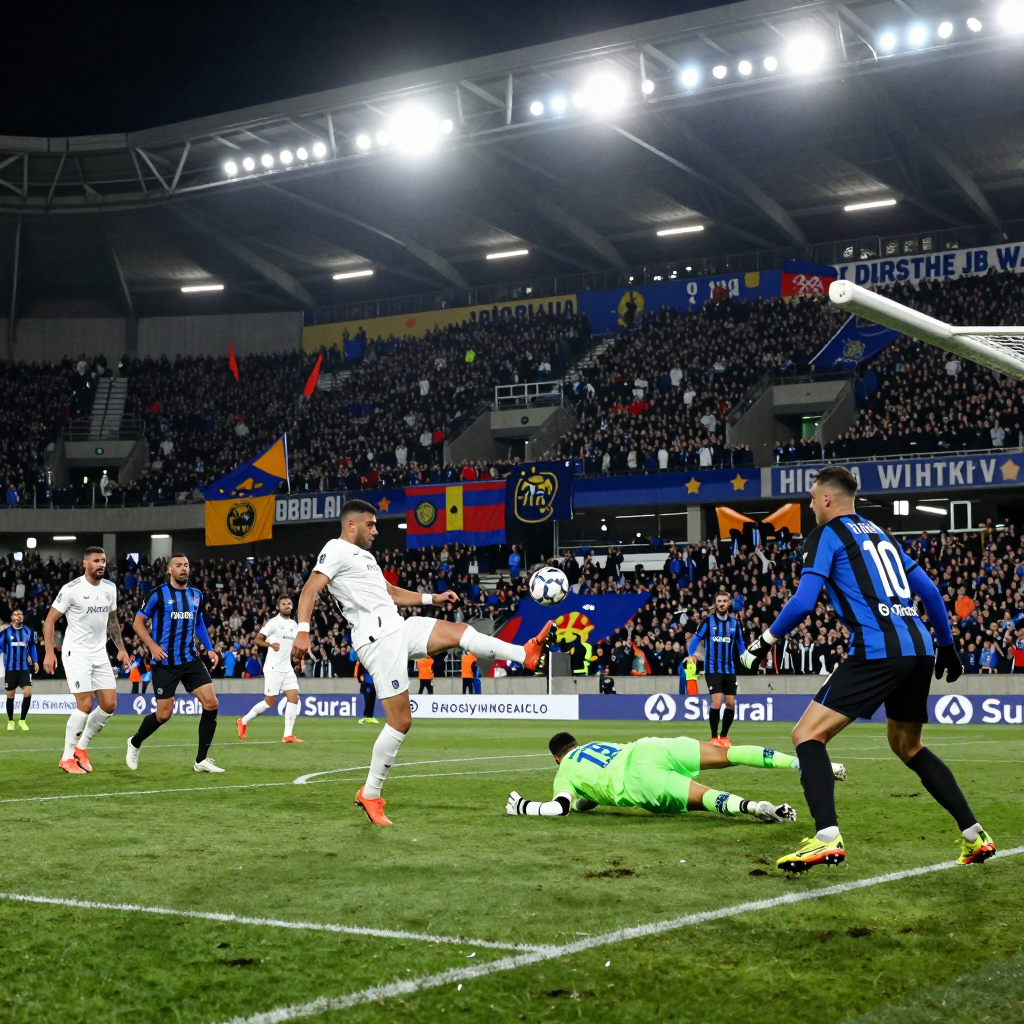
The result was close to a perfect start for Mourinho. Real Madrid took the lead through goals from Kylian Mbappé and Federico Valverde, then held off Inter’s second-half comeback to secure a 2–1 victory, thanks in large part to Thibaut Courtois’ decisive saves. From the spectacular goals to the tense defensive stand in the closing minutes, Mourinho’s return to the European stage was completed in a way that felt unmistakably his.
The victory carried particular emotional significance. The manager who once conquered Europe with Inter at the Bernabéu had now defeated Inter from Real Madrid’s bench. It was not a scene of rejecting the past, but rather a declaration that he intended to carry his history forward with a new team.
Real Madrid’s new European project has only just begun. But if the opening chapter is any indication, the message is clear: at the Bernabéu, Mourinho once again showed the world how to win the biggest matches.
Real Madrid vs Inter: Mbappé’s Debut Goal, Valverde’s Clincher… But the True Protagonist Was Someone Else
Real Madrid sent the Santiago Bernabéu into raptures by scoring twice in the first half. Kylian Mbappé’s Champions League debut goal and Federico Valverde’s second goal made it look as though Mourinho’s European campaign was off to a spectacular start.
Mbappé did not miss Inter’s defensive mistake. Calmly finishing early in the first half, he scored his first Champions League goal in a Real Madrid shirt. It was the most Mbappé-like moment imaginable from a star player on a big night.
Valverde also capitalized on Inter’s uncertainty in the buildup. When the second goal arrived midway through the first half, the momentum swung completely toward Real Madrid. Real Madrid vs Inter no longer looked like a mere close contest; it seemed as though the home side’s pressing and transitions were punishing every mistake Inter made.
But 2–0 was not the end.
In the 76th minute, Carlos Augusto pulled one back, making it 2–1. In that moment, the atmosphere changed. Inter began pushing forward more boldly, while Real Madrid became a team forced to manage the remaining minutes. The first half’s brilliance had faded, replaced by tension inside the Bernabéu.
That was when the true protagonist emerged. Thibaut Courtois.
Late in the match, a dangerous Henrikh Mkhitaryan shot took a deflection and headed toward goal, but Courtois never lost his concentration. His decisive save was more than just a single stop. It was the moment that turned the lead created by Mbappé and Valverde into an actual victory—the moment that decided the match’s ending.
Mbappé made the headlines, and Valverde tilted the balance in Real Madrid’s favor. But amid Inter’s fierce late pressure, the player who preserved all three points was Courtois. Perhaps the most accurate summary of the match can be captured in one sentence:
Mbappé dazzled, but Courtois saved Real Madrid.
real madrid vs inter: From 2-0 to 2-1, Courtois Stops Inter’s Final Comeback
A 2-0 lead looked safe. Mbappé capitalized on a mistake in Inter’s defense, while Valverde turned a buildup error into a goal to put Real Madrid ahead. But the conclusion of real madrid vs inter was far from a one-sided victory. Inter did not collapse. Instead, as the second half wore on, they steadily turned up the pressure and left the Bernabéu increasingly tense.
Carlos Augusto’s 76th-minute goal changed the atmosphere of the match. After the score became 2-1, Inter pushed forward more boldly, while Real Madrid were forced to spend long stretches sitting deep to protect their lead. Although the team had been shaken by two mistakes in the first half, Inter refused to give up the possibility of an equalizer until the very end.
One Deflection, One Save
The most decisive moment came late in the match. Henrikh Mkhitaryan’s powerful shot struck a defender and changed direction on its way toward the Real Madrid goal. It was the most difficult kind of shot for a goalkeeper to face—a moment when both vision and timing can be thrown off at once.
But Thibaut Courtois reacted until the very last second. His save was not simply a stop that denied one shot. It was the moment that effectively sealed the result, preserving all three points for Real Madrid in their opening league-phase match.
If Mbappé created the headline, Courtois completed the victory.
Why Courtois, Not Mbappé, Became the Main Character
Mbappé’s Champions League debut goal was undoubtedly symbolic. But Real Madrid’s victory was not built on the brilliance of their attack alone. Considering the pressure Inter generated in the second half and the chances they created late on, Courtois’s presence was worth more than a goal.
A goalkeeper’s greatness is revealed not when the team is comfortable, but when it begins to wobble. Even after taking a 2-0 lead, Real Madrid never fully controlled the match, and Inter seized the psychological initiative after their goal. Amid that momentum, Courtois held the final line with composed positioning and lightning-quick reflexes.
From Inter’s perspective, the frustration is understandable. Their buildup mistakes in the first half led to two goals conceded, but in the second half they reopened the match completely. For Real Madrid, meanwhile, this game may be remembered as a scene from Mourinho-style European football: take the lead first, withstand the opponent’s response, and rely on a world-class goalkeeper to preserve the victory when it matters most.
In the end, real madrid vs inter was more than a 2-1 scoreline. Inter stayed alive until the final whistle, and Real Madrid survived thanks to one crucial save.
real madrid vs inter: Did Inter Lose to the Press—or to Their Own Mistakes?
The moments that decided this real madrid vs inter clash were not dazzling individual plays, but two painfully direct mistakes. Inter failed to deal with the ball properly during the first-half buildup, and Real Madrid immediately turned the price into goals. Mbappé’s opener and Valverde’s second were both the result of Real refusing to overlook the small lapses of control Inter surrendered in their own defensive third.
On the surface, the assessment that “Inter gave the victory away themselves” is fair. Neither goal came after the opponent had patiently circulated the ball for long periods. Both were born in moments when cracks appeared in Inter’s passing decisions and ball control. In a big match, mistakes like these are more than simple errors. They are closer to handing the opposition a gift capable of changing the entire game plan.
Yet it would be too simple to frame this solely as Inter’s own fault, because Real’s pressing was far too clever. Rather than charging forward recklessly from a high position, Real appeared focused on limiting Inter’s options, preventing them from comfortably connecting progressive passes between the center and the defensive line. Instead of pressing only the player in possession, Real blocked the next passing route and shortened the defender’s time to make a decision.
The purpose of pressing is not always to win the ball. It can also be to force the opponent into choosing a “bad pass.”
Once Inter made their mistakes, Real did not hesitate. Their speed in transition and the positioning of their attackers were outstanding. Mbappé and Valverde, in particular, precisely exploited the spaces left open before Inter’s defense could reorganize. If Inter’s mistakes were the cause, Real’s rapid transitions were the process that turned them into a fatal outcome.
The Warning Inter Must Take
The second half also showed that Inter were not a team that had completely collapsed. After Carlos Augusto’s consolation goal, Inter pushed Real hard and created chances that could have brought them level, including Mkhitaryan’s late shot. Without Courtois’s decisive saves, this match might have been remembered for a very different ending.
Even so, the weight of the defeat is not insignificant. In the Champions League league phase, points dropped in a single match against a top side can affect the entire standings race. Inter did not lose because they were simply inferior to Real; they were reminded that against opponents of the highest level, there is no room to absorb mistakes.
In the end, this match left behind two truths at once. Inter conceded two goals through their own mistakes, while Real Madrid were a team ready to draw those mistakes out and punish them. The 2-1 scoreline in real madrid vs inter was not merely an opening-match result—it was a powerful warning that Inter must reassess both their buildup stability and their ability to manage big matches.
The First Declaration of the New League Phase: What real madrid vs inter Revealed About the Future of the Champions League and Streaming
Real Madrid’s 2–1 victory over real madrid vs inter was more than a simple opening-day win that earned the club three points. In the Champions League league phase—the era replacing the traditional group stage—it felt like a declaration that the competition had entered a new age, one in which heavyweight clubs would face each other from the very first match.
Real Madrid capitalized on Inter’s mistakes in the buildup to score twice, then held on to its lead late in the second half thanks to a crucial save from Courtois. This victory, where brilliance and uncertainty, pressure and patience existed side by side, showed how Mourinho’s European project could function. The ability to get a result even on days when a team cannot completely dominate—that is the first quality demanded of a Champions League title contender.
Worth More Than Three Points
The league phase makes the calculations complicated from the very beginning. Unlike the group stage, where one defeat could effectively mean elimination, it is now crucial to avoid dropping points in major matches in order to finish near the top, secure automatic qualification, and earn a favorable draw.
In that sense, Real Madrid’s home victory sent a powerful message.
- Real Madrid secured three points from the start against one of the most difficult opponents it could face.
- Inter showed plenty of promise, but two mistakes left the club carrying a burden that could last throughout the league phase.
- Mourinho’s Real proved that it could become not merely a team that wins well, but a team that finds a way to win when it matters.
Considering the pressure Inter applied in the second half, this was not a one-sided Real Madrid victory. That is precisely what makes it more significant. A title challenge is not built on beautiful football alone. The team that withstands adversity, absorbs the opponent’s response, and protects its lead until the final whistle is the one that ultimately enjoys the European spring for the longest.
The Champions League Seen from the United States: Big Matches Opening in an App, Not on TV
The match also symbolized a turning point away from the stadium. American fans watched this high-profile clash not through a traditional cable sports channel, but via Paramount+. The broadcasting model of “no TV channel, streaming on Paramount+” is no longer unfamiliar.
The way fans consume the Champions League is clearly changing. Rather than waiting for a fixed broadcast schedule, supporters open an app and watch the match on the device of their choice, in the way they prefer. The stadium now exists not only on the living-room television, but also on phones, tablets, and laptops.
This is not simply a shift in broadcasting platforms.
- Sports content is becoming a major driver of subscriptions for streaming services.
- Big matches are turning into a platform’s “flagship content,” much like a major new film or television series.
- Global fans can share a unified match experience more quickly through digital services than through regional broadcast networks.
The fact that a match like real madrid vs inter has become exclusive streaming content in the U.S. also shows that the Champions League is no longer a competition confined to European nights. European tradition and the American media business have met on a single screen.
Mourinho’s Question—and the Champions League’s Question
The biggest question still hanging over Real Madrid is this: Can Mourinho’s team use this victory as a starting point and go all the way to the top of Europe? Mbappé’s scoring ability, Valverde’s work rate, and Courtois’s shot-stopping remain clear assets for a title contender. However, it remains to be seen how the team will manage the moments of instability that appeared in the second half against Inter throughout the season.
The Champions League faces a question of its own. Will fans naturally embrace the idea of the “Champions League inside an app,” or will issues of accessibility and subscription costs become new barriers?
At least this opening match made one thing clear. At the Bernabéu, the drama of traditional European football continues, while in the United States, that drama is reaching new fans through streaming screens. Real Madrid’s three points were not recorded only in the league-phase standings. They also became the opening scene of the next era toward which the Champions League is heading.
Comments
Post a Comment