The Ultimate Guide to U.S. Labor Day: From Its History to 2026’s Record-High Gas Prices and Retail Discount Battle
 \n
Labor Day: A Holiday, But Not Everyone Gets to Rest
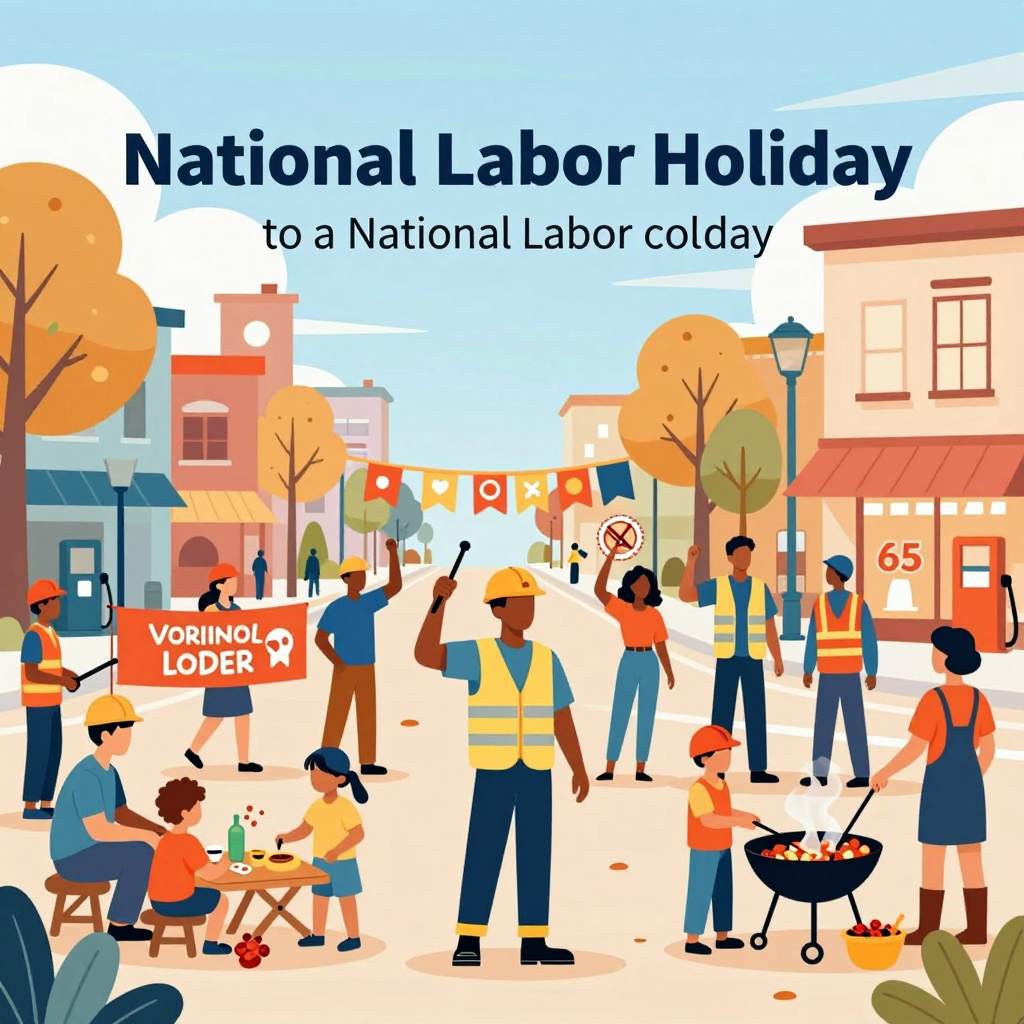
On September 7, 2026, the United States will celebrate Labor Day. In many homes, barbecue smoke will rise as families enjoy the last long weekend of summer. Many will hang flags, set off on trips, or head out to take advantage of holiday shopping deals.
But at that same moment, some people will be heading to work: medical staff in emergency rooms, airline and transportation workers helping people travel long distances, delivery drivers bringing food right to customers’ doors, and service workers keeping hotels and restaurants running. One person’s rest is possible because someone else is holding down the workplace.
Labor Day was created to honor the contributions of workers. Rights that are taken for granted today—such as the eight-hour workday, weekends off, overtime pay, and paid leave—were the result of decades of labor activism and sacrifice. That is why this holiday means more than simply “a Monday without work.”
The problem is that rest is not granted equally to all workers. In industries that cannot shut down—hospitals and care facilities, logistics centers, retail stores, and delivery platforms—work continues even on public holidays. For part-time, non-regular, and platform workers in particular, working on a holiday may be less a choice than a financial necessity.
That is why a question raised by one column lingers: Could the best way to honor labor sometimes be to stop working for a while—and give people the chance to rest fully?
Behind Labor Day’s barbecues and parades lies invisible labor. Truly celebrating this holiday means more than praising the value of work. It means asking whether everyone has the right to work safely, receive fair compensation, and enjoy the rest they deserve.
Labor Day: The History of America’s Workers’ Holiday, Born from a Parade
In 1882, union members gathered in the streets of New York for a massive march. At the time, it was simply a parade—but more than a century later, that movement would become the foundation of Labor Day, a national holiday when people across the United States take a day off and reflect on the value of work.
The weekend, overtime pay, paid leave, and the eight-hour workday that many people take for granted today were not rights granted from the beginning. They were achieved because workers organized and raised their voices against long hours and harsh working conditions.
From a New York Union March to a National Holiday
The idea for Labor Day began with a parade organized by New York labor unions in 1882 to honor their members. Through street marches, rallies, and family-friendly celebrations, workers made their presence and solidarity known.
The event soon spread to other parts of the country. In 1887, Oregon, Massachusetts, New York, New Jersey, Colorado, and other states adopted Labor Day as a state holiday. Then, in 1894, President Grover Cleveland declared Labor Day a federal holiday, establishing it as an official day of commemoration across the United States.
Labor Day Remembers More Than Just a Day Off
Labor Day is observed on the first Monday of September each year. For Americans, it is the unofficial final weekend of summer—a three-day holiday often associated with barbecues, travel, and shopping. Yet at the heart of the holiday lies the history of the labor movement.
The eight-hour workday and weekends off, in particular, were key demands that workers fought for over many years. The struggle to secure “time to work, time to rest, and time for life” played a major role in shaping the everyday work culture we know today.
That is why Labor Day is more than simply a day away from work. For some, it is a long weekend spent with family and at rest. At the same time, it is also a day to reflect on the social efforts and sacrifices that made that rest possible.
Labor Day: A Political Stage Where Economic Performance Clashed with Workers’ Rights
One side says, “Jobs are growing, and the economy is improving.” The other emphasizes that “good jobs are possible only when wages, workers’ rights, and the power of unions are protected.” Although both messages were directed at the same workers, the landscape of Labor Day 2026 was sharply divided.
Labor Day was originally established as a federal holiday honoring workers’ contributions and the achievements of the labor movement. But in 2026, with the midterm elections approaching, the holiday’s symbolism quickly became a stage for political messaging. For politicians, Labor Day was no longer simply a day to offer congratulations; it became a crucial moment to persuade voters that they—not their opponents—understood workers’ lives better.
The Republican Labor Day, Built Around Jobs Data
Republicans placed the August employment figures and broader economic performance at the center of their message. By emphasizing macroeconomic indicators such as job growth, expanding employment, and economic recovery, they sought to frame government policy as delivering results for “working Americans.”
The core of this message was relatively clear: if the economy grows and jobs increase, workers’ lives can improve as well. In other words, Labor Day was presented as a day to assess employment performance.
President Trump’s Labor Day proclamation also used traditional language praising workers’ “hard work, dedication, and unwavering contributions.” While it respected workers as the people who keep the nation moving, the focus was placed less on the labor movement itself and more on the resilience of “working America.”
The Democratic Labor Day, Spotlighting Unions and Wages
Democrats posed a different set of questions. If the number of jobs has increased, how secure are those jobs? Are wages keeping pace with the rising cost of living? Do workers have the environment they need to demand their rights and stand together?
In the Democrats’ Labor Day message, unions and union members, wages, collective bargaining, and the right to organize emerged as key themes. This reflects a view of Labor Day not simply as a day for examining employment statistics, but as a day to consider how much power and protection workers have in the workplace.
The slogan “Workers over billionaires,” heard at Boston’s Labor Day parade, symbolized this direction. Rather than stopping at praising workers’ contributions, it asked who holds wealth and power. Labor Day had expanded into a public forum for discussing inequality, the ultra-wealthy, and the burden of the rising cost of living.
The Same “Workers,” but Entirely Different Questions
Ultimately, the difference between the two camps emerges in the standards they use to view workers.
- The economic performance frame focuses on “how many jobs have been added.”
- The workers’ rights frame asks, “How much respect do workers receive in those jobs?”
Neither perspective alone can fully explain workers’ reality. Even when employment indicators look strong, wages may fail to keep up with the cost of living. And even when jobs are plentiful, problems such as excessive overtime, insecure employment, and insufficient rest may remain. Conversely, strengthening workers’ rights must also be discussed alongside business investment, employment, and the long-term sustainability of local economies.
That is why the political divide surrounding Labor Day 2026 should be understood as more than a simple partisan fight. It has once again exposed a question American society has yet to resolve about work: What makes a good job?
Labor Day: “Workers over billionaires,” Yet Union Power Continues to Decline
At Boston’s Labor Day parade, the chant “Workers over billionaires” rang through the streets. It carried a clear message: the lives and rights of workers should come before the interests of the ultra-wealthy. Meanwhile, Milwaukee hosted Laborfest, a lively event combining a parade, music, and a classic car show. The festival was vibrant, but behind the celebration lies an uncomfortable reality: Wisconsin’s union membership rate is at a record low.
What the Chants in the Streets Say About Labor Day Today
The Boston parade was more than a simple commemorative event. Thousands of participants and labor movement activists brought issues involving wages, inequality, and workers’ rights into the public arena. Mayor Michelle Wu also highlighted workers’ contributions, saying, in essence, that “Boston celebrates working people every day.”
The scene shows that today’s Labor Day is not merely a holiday for honoring the past. It remains a political and social stage that asks, “Who gets to enjoy the fruits of economic growth?” This is why the chant “Workers over billionaires” resonates so powerfully.
The Festival Remains, but Organizing Power Has Weakened
Milwaukee’s Laborfest is a community festival open not only to union members but also to local residents and families. It serves as a reminder that rights now often taken for granted—such as weekends off, overtime pay, and paid leave—were built through workers’ long struggles and sacrifices.
Yet the continuation of the festival does not necessarily mean that unions are gaining influence. Wisconsin’s low union membership rate suggests that unions are finding it increasingly difficult to organize workers on the ground and maintain bargaining power. Even when large crowds gather at Labor Day parades, fewer workers may be joining unions and acting collectively in their everyday workplaces.
Why Is Union Power Declining?
Several factors have converged to weaken unions.
- Changes in the industrial structure: As large manufacturing workplaces have declined and service-sector jobs, platform work, and short-term contracts have expanded, organizing has become more difficult.
- Employment insecurity: Frequent job changes and increasingly fragmented forms of employment make it harder for workers to participate in union activities over the long term.
- The political and institutional environment: Differences in state laws and policies affecting union organizing and bargaining power are also significant.
- Changes across generations and in perceptions: Many workers support labor rights but do not necessarily see union membership as directly connected to their individual careers.
In other words, events like Laborfest play an important role in preserving the history and identity of the labor movement. But they alone cannot stop unionization rates from falling.
The paradox of Labor Day is clear. Festivals celebrating workers continue, while the foundation that enables workers to raise their voices collectively is growing weaker.
The Bigger Question Labor Day Raises
That is why today’s Labor Day goes beyond being a day to “praise workers.” It should be a day to ask whether workers are truly securing better wages, stable jobs, adequate time off, and safe working conditions.
Together, Boston’s chant and Milwaukee’s festival reveal both hope and warning. Public support for the value of work is still alive. But whether that support can be transformed into lasting organizational strength and institutional change will depend on the choices made after the festivities end.
Record Gas Prices and the Discount War: The True Face of Labor Day
The landscape of Labor Day in 2026 was somewhat paradoxical. People who started their cars for “the last trip of summer” were met with average gasoline prices of $4.15 per gallon, an all-time high. According to the American Automobile Association (AAA), this was the first time the average Labor Day gas price had surpassed $4. At roughly $1 higher than the same period last year, the price sharply increased the cost of family outings and long-distance drives.
Yet the appetite for spending became even more pronounced. Rather than stopping their spending amid soaring prices, consumers responded by more actively seeking out discounts.
- 7-Eleven offered sandwich-and-drink combos and snack sets at low prices.
- Restaurant chains such as KFC and Jimmy John’s drew customers with family meals and buy-one-get-one offers.
- Walmart targeted back-to-school and fall shopping demand by discounting Apple products, sneakers, kitchen appliances, and more by up to 40%.
Labor Day weekend has now become not only a time to honor workers’ rights and contributions, but also one of the most important sales periods in the U.S. retail industry after Black Friday. With barbecues, travel, back-to-school preparations, and appliance replacements all converging at once, the “holiday” naturally expanded into a major consumer event.
A Weekend of High Travel Costs and Low-Cost Deals
Rising gas prices placed a direct burden on the American lifestyle, which is heavily dependent on cars. For those who refused to give up their trips, fuel became an even larger expense. Those who cut back on travel tried to enjoy the holiday atmosphere through nearby stores and fast-food discounts instead.
In this environment, low-priced menus and limited-time promotions mean more than simple marketing. As dining and living costs rise, discounts become not a “luxury,” but an option for protecting the household budget. The Labor Day spending landscape also offers a glimpse into how American households are adapting to high inflation.
How Did a Day Honoring Workers Become a Shopping Celebration?
Labor Day began as part of the labor movement. Rights now taken for granted—such as the eight-hour workday, weekends off, overtime pay, and paid leave—were built through years of struggle and organizing by workers.
Modern Labor Day, however, is no longer filled solely with parades and speeches commemorating that legacy. Major retailers launch sales, restaurants roll out special deals, and consumers move from store to store in search of the best prices. A holiday created for workers has, in some ways, become a celebration designed to drive consumption.
Of course, this does not completely erase the meaning of Labor Day. Instead, the sight of record gas prices and fierce discount competition unfolding side by side in 2026 leaves us with an important question: On a day meant to honor labor, are workers themselves getting enough rest? And is the right to rest guaranteed with equal weight to everyone?
Behind the discount flyers and shopping bags are still the retail workers, delivery workers, gas station employees, and healthcare and transportation workers who continue working even on holidays. That is why the true meaning of Labor Day may lie less in “what was bought, and how cheaply,” and more in whether everyone can stop working—even briefly—and recover their lives.
Comments
Post a Comment