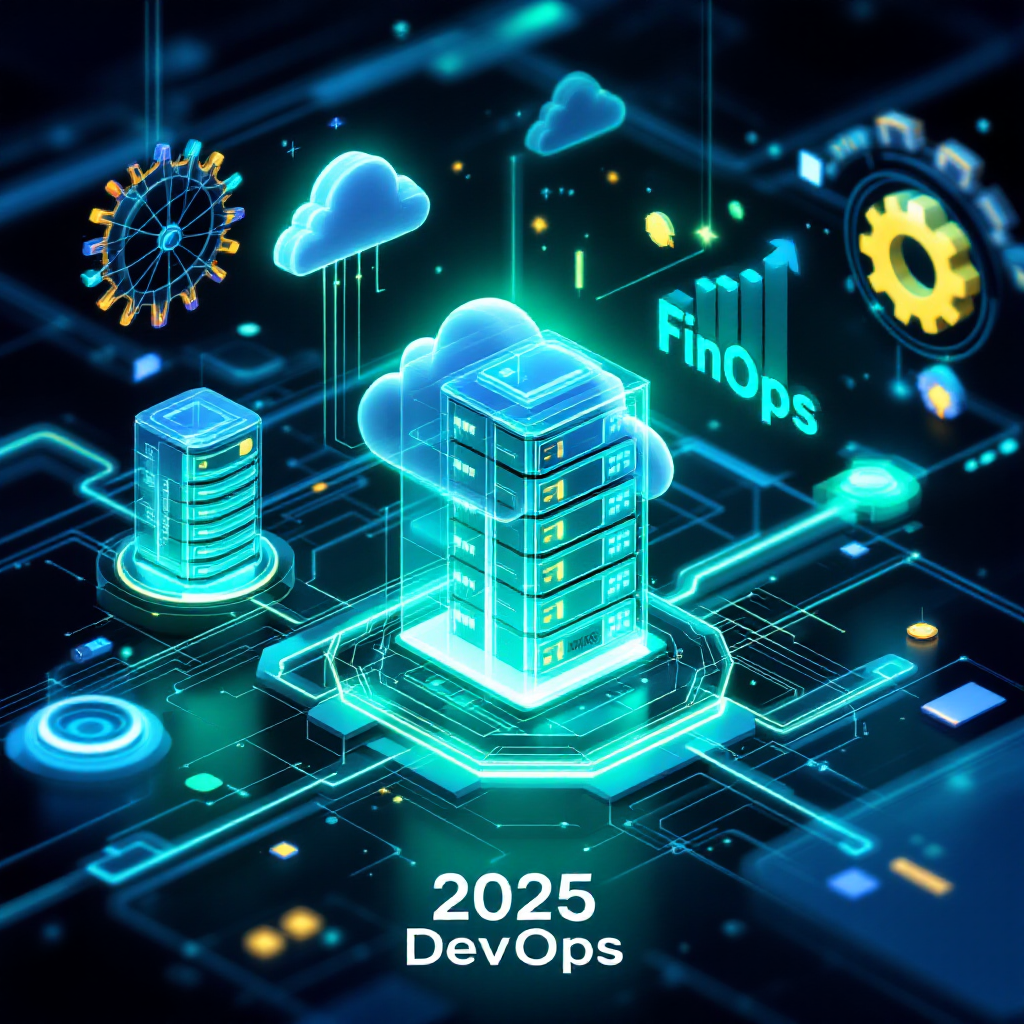
In the Era of Exploding Cloud Costs, What Is the Real Problem with DevOps?
Can the ever-increasing cloud costs each month be solved by simple management alone? In the DevOps world of 2025, a revolutionary technology has emerged to tackle cost issues like never before.
With the spread of cloud computing, companies have gained flexibility and scalability, but they've also faced a new challenge: unexpected spikes in costs. DevOps teams, focused on rapid development and deployment, have often overlooked cost management. The result? An explosive increase in cloud expenses.
The DevOps and Cost Management Dilemma
Traditional DevOps practices have emphasized development speed and operational efficiency. Yet, this approach has led to cost waste due to excessive use of cloud resources and the maintenance of unnecessary instances. DevOps teams now face key challenges:
- Lack of real-time cost visibility
- Balancing development speed with cost optimization
- Understanding complex cloud pricing models
FinOps: The Financial Innovation for DevOps
Enter FinOps (Financial Operations), a breakthrough designed to solve these problems. FinOps integrates financial responsibility into the DevOps philosophy, making cost efficiency a core component of the development process.
Key features of FinOps include:
- Real-time cost monitoring and analysis
- Automated cost optimization algorithms
- Close collaboration between development and finance teams
- Forecasting cloud resource usage and budget management
This enables DevOps teams to track costs in real time and instantly understand how their development decisions impact finances. No more shock-inducing cloud bills at the end of the month.
The Future of DevOps: Perfect Harmony Between Cost and Efficiency
With FinOps, DevOps is evolving from merely "fast development" to "efficient and economical development." Developers can now see how code optimization directly translates into cost savings in real time, leading to better architecture design and resource utilization.
By 2025, the DevOps landscape will be reshaped around FinOps. Cost-efficient companies will gain a competitive edge, and developers’ skills will be judged not only on coding ability but also on cost optimization prowess.
In the era of exploding cloud costs, the real problem for DevOps isn’t just rising expenses. It’s about finding the balance between cost and efficiency, speed and economy. FinOps is the innovative approach to achieving this balance and will be the driving force behind the future DevOps ecosystem.
FinOps: The Intersection of DevOps and Financial Accountability
How can FinOps perfectly complement the 'cost optimization' that traditional DevOps has overlooked? Dive into the new operational paradigm shaped by real-time cost monitoring and automated algorithms.
The Emergence of FinOps
While DevOps has played a pivotal role in enhancing development and operational efficiency, it faced limitations in managing costs within cloud environments. FinOps emerged to bridge this gap. Short for Financial Operations, FinOps is an innovative approach that integrates financial accountability into the DevOps process.
Core Functions of FinOps
Real-Time Cost Monitoring
- Tracks cloud resource usage in real time
- Instantly detects cost overruns and provides alerts
Automated Cost Optimization
- Utilizes machine learning algorithms to predict resource usage
- Optimizes resource allocation through automatic scaling
Enhanced Cross-Team Collaboration
- Facilitates smooth communication between development and finance teams
- Provides integrated dashboards for cost-related decision-making
Budget Management and Forecasting
- Enables precise budgeting for cloud expenditures
- Analyzes and predicts long-term cost trends
The Transformative Impact of FinOps on DevOps
With FinOps, DevOps teams gain the ability to make decisions considering not just development and operational efficiency but also cost effectiveness. This leads to several positive shifts:
- Cost-Centric Architecture Design: Systems can be designed from the outset with cost considerations in mind.
- Resource Optimization: Reduces unnecessary resource usage, ensuring resources are used only as needed.
- Improved ROI: Accurately measures cost-effectiveness for better investment decisions.
- Increased Business Agility: Rapid cost analysis enables swift response to new opportunities.
Strategies for Implementing FinOps
Successful FinOps adoption requires the following strategies:
- Cultural Change: Promote cost awareness across the entire organization.
- Tool Selection: Carefully choose cloud cost management and optimization tools.
- Education and Training: Train team members on FinOps principles and tool usage.
- Gradual Implementation: Start with small projects and expand progressively.
FinOps represents an evolved form of DevOps, pursuing both cost efficiency and operational excellence. It will be a crucial strategy for boosting corporate competitiveness in the cloud era. As DevOps teams gain deeper cost insight through FinOps, they can forge a smarter, more sustainable development culture.
The Evolution of the Latest DevOps Ecosystem: From AI to Security
As the DevOps field rapidly evolves, it is branching into various specialized domains to meet diverse real-world demands. DevOps itself is transforming in response to increasingly complex development environments, incorporating AI, machine learning, and enhanced security. Let’s explore how these changes are actually taking shape.
The Rise of AI/ML-Focused DevOps
With artificial intelligence and machine learning technologies being integrated across businesses, specialized DevOps models have emerged to manage them effectively.
MLOps (Machine Learning Operations)
- Automates development, deployment, and monitoring of machine learning models
- Integrates data pipeline management with model version control
- Examples: Tools like Kubeflow and MLflow
AIOps (Artificial Intelligence for IT Operations)
- Applies AI to IT operations to predict problems and automate resolutions
- Extracts insights through large-scale data analysis
- Examples: Platforms such as Splunk and Datadog
These specialized DevOps models greatly boost productivity in AI/ML projects while enhancing model accuracy and reliability.
DevOps Evolving to Strengthen Security
As cybersecurity becomes increasingly critical, new approaches integrating security directly into DevOps have emerged.
DevSecOps (Development, Security, and Operations)
- An integrated methodology that incorporates security from the earliest development stages
- Implements automated security testing and vulnerability scanning
- Examples: Tools like SonarQube and Veracode for code security analysis
OpsDev (Operations Development)
- An operations-centric development model optimized for cloud environments
- Focuses on infrastructure automation and monitoring
- Examples: Infrastructure as Code (IaC) tools such as Terraform and Ansible
These security-focused DevOps models play a vital role in enhancing application stability and reliability while proactively preventing security incidents.
Expansion of the DevOps Tool Ecosystem
Alongside DevOps evolution, a variety of new tools are emerging to streamline the work of developers and operators in their specialized domains.
- CI/CD Automation: Jenkins, GitLab CI, CircleCI
- Container Orchestration: Kubernetes, Docker Swarm
- Monitoring and Observability: Prometheus, Grafana, ELK Stack
- Infrastructure as Code (IaC): Terraform, AWS CloudFormation
The integrated use of these tools makes DevOps processes more powerful and flexible than ever before.
Conclusion: The Future of DevOps
DevOps is evolving beyond simply uniting development and operations into a comprehensive approach that addresses a range of business needs. By fusing with cutting-edge trends like AI/ML, security, and cloud-native environments, DevOps is becoming increasingly specialized and segmented.
Moving forward, DevOps professionals will need to develop expertise and hands-on skills across these diverse areas. Specializations such as FinOps, MLOps, and DevSecOps will become ever more crucial. This evolution in DevOps will empower organizations to drive innovation faster, more securely, and more efficiently than ever before.
Real-World DevOps Application Cases and Business Value: The Hidden Secrets Behind Success
The remarkable productivity gains and cost savings achieved by major Korean corporations such as LG CNS through the adoption of FinOps and automated DevOps processes have made a huge impact in the industry. Let’s explore how these success stories demonstrate the real business influence of DevOps.
LG CNS’s DevOps Innovation Case
LG CNS built an automated development process based on DevOps in a cloud-native environment, delivering outstanding results.
- Deployment time reduced: Cut deployment from 2-3 days down to under 30 minutes
- Operating cost savings: Achieved over 20% annual cost reduction via cloud resource optimization
- Improved incident response time: Reduced average failure resolution time by 60% thanks to real-time monitoring and automated rollback systems
The DevOps team leader at LG CNS stated, “After adopting FinOps, communication between the development and finance teams became smooth, significantly cutting unnecessary resource waste.”
Naver’s MLOps Success Story
Naver, focusing strongly on AI services, actively integrated MLOps (Machine Learning Operations) to revolutionize AI model development and deployment.
- Model training time shortened: Reduced large-scale language model training time by 40% through distributed training infrastructure
- Improved model version control: Secured 100% experiment reproducibility with Git-based version management
- Enhanced inference service stability: Cut service downtime by 90% using automated A/B testing and rollback systems
Naver’s AI engineering leader evaluated, “With MLOps in place, we drastically shortened the entire cycle from AI model experimentation to service deployment.”
Kakao’s DevSecOps Implementation
Operating security-critical fintech services, Kakao adopted DevSecOps to simultaneously boost both security and development speed.
- Faster vulnerability detection: Automated security scans cut vulnerability discovery time by 70%
- Regulatory compliance cost reduction: Saved 30% annually in regulatory costs through automated compliance checks
- Accelerated security patch deployment: Integrated security patching into CI/CD pipelines cut emergency patch deployment time by 80%
Kakao’s security officer shared, “DevSecOps enabled smooth collaboration between security and development teams, dramatically improving response speed to security issues.”
Summarizing the Business Value
When combined, these cases reveal clear and powerful business benefits from adopting DevOps:
- Enhanced market responsiveness: Rapid deployment and feedback loops enable agile adaptation to market changes
- Reduced operational costs: Automation and optimization boost resource usage efficiency
- Improved quality: Continuous integration and testing enhance product stability
- Increased customer satisfaction: Faster feature releases and bug fixes improve user experience
- Strengthened security: Security-integrated design from early development phases elevates overall system safety
Successfully implementing DevOps demands not only technological innovation but also cultural transformation and close collaboration across teams. Through these changes, companies can adapt swiftly in the fast-evolving digital era and achieve sustainable growth.
The Coming Future: New Growth Engines Driven by DevOps and Cloud Cost Optimization
The DevOps market is expected to face a wave of rapid change after 2025. With the explosive growth of AI and machine learning technologies driving a surge in demand for cloud resources, companies will increasingly focus on efficient cost management and optimization. In this environment, FinOps and MLOps are poised to become core elements of the DevOps ecosystem.
FinOps: A New Paradigm in Cost Efficiency
FinOps is an innovative approach that monitors and optimizes cloud expenses in real time. Beyond merely cutting costs, it aims to maximize business value through close collaboration between development and finance teams. After 2025, FinOps is expected to be fully integrated into DevOps processes, establishing a culture where developers consider cost efficiency from the very stage of writing code.
MLOps: An Essential DevOps Strategy for the AI Era
Along with the surge in AI/ML workloads, the importance of MLOps will also rise significantly. MLOps is a specialized form of DevOps that automates and optimizes the entire lifecycle of machine learning models—from development and deployment to maintenance. Post-2025, MLOps tools and platforms will become even more sophisticated, enabling enterprises to manage and scale AI projects more efficiently.
DevOps Innovation in the Korean Market
Korean IT companies are actively adopting DevOps technologies. Large corporations like LG CNS have already established automated development processes and large-scale server operation systems, and this trend is expected to spread rapidly to small and medium-sized businesses. In particular, the introduction of FinOps is anticipated to play a crucial role in helping Korean companies secure competitiveness in the global market.
The Future of DevOps: Toward Sustainable Innovation
After 2025, DevOps will transcend being a mere development methodology and emerge as a core business strategy. The convergence of FinOps and MLOps, strengthening of security and compliance, and construction of sustainable IT infrastructure will become new challenges for DevOps. Companies that successfully adapt to these changes will secure new growth engines in the rapidly evolving digital era.
The future of DevOps will involve not only technological innovation but also a transformation in organizational culture. Developers, operators, finance professionals, and business leaders will collaborate more closely, enabling companies to establish more flexible and efficient operational systems. Beyond 2025, DevOps will stand as a key element organically connecting technology, business, and people.
Comments
Post a Comment