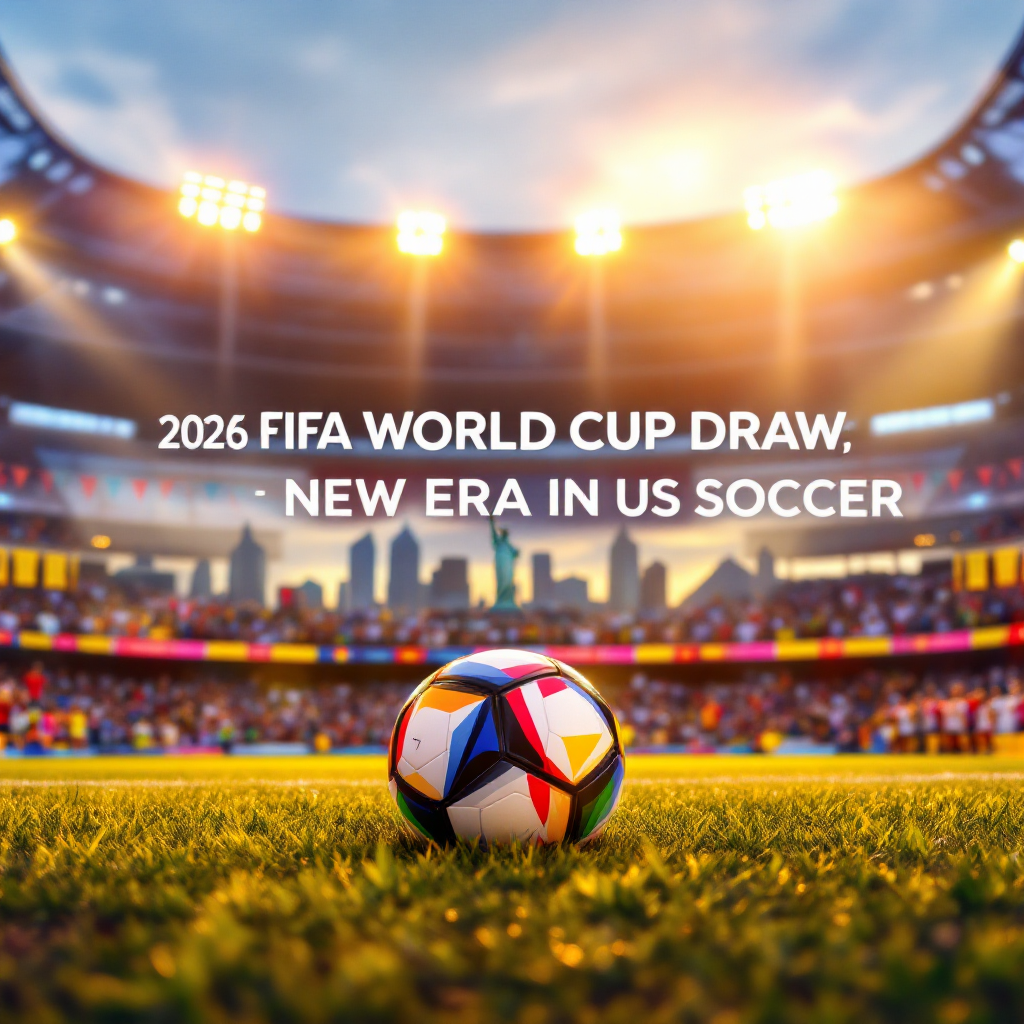
The Historic First Tri-Nation Joint Hosting and the Introduction of 48 Teams in the FIFA World Cup
For the first time ever, the United States, Canada, and Mexico will jointly host the World Cup! With the tournament expanded dramatically to include 48 teams, how will this event reshape the history of soccer?
The Revolutionary Format Change of the FIFA World Cup 2026
Starting June 11, 2026, the FIFA World Cup will unfold in an unprecedented format in soccer history. This is the first World Cup co-hosted by the United States, Canada, and Mexico, and simultaneously the first tournament to expand the participating teams from the traditional 32 to an impressive 48 nations.
This transformation goes beyond merely increasing the scale; it fundamentally overhauls the structure and competition format of the FIFA World Cup. It clearly marks North America’s rise as a pivotal stage in international soccer.
The Meaning and Operation of the Tri-Nation Joint Hosting
The joint hosting by the three North American countries holds significant geopolitical and economic symbolism. The tournament will take place across 16 venues, with a unique feature: all matches from the semifinals onward will be held exclusively in the United States. Notably, the U.S. will utilize 11 NFL stadiums to host World Cup matches, reflecting both the strength of American soccer infrastructure and the growing popularity of the sport, serving as a crucial indicator of North America’s expanding soccer market.
Meanwhile, Canada and Mexico will also contribute venues, promoting regional economic growth and fostering the development of soccer infrastructure throughout North America through this global event.
Structural Overhaul Driven by the Expansion to 48 Teams
Expanding from 32 to 48 teams is a milestone in the World Cup’s history, leading to changes in group stage configurations and providing more nations the dream opportunity to compete on soccer’s grandest stage.
Significantly, four countries—Cape Verde, Curaçao, Jordan, and Uzbekistan—will make their FIFA World Cup debuts in this tournament, marking a historic occasion. The Caribbean island nation of Curaçao, an autonomous country within the Kingdom of the Netherlands with a population of around 160,000, will etch its name in World Cup history. This milestone emphatically showcases how soccer’s globalization and inclusivity continue to expand.
The Growth of Soccer in North America and the Role of the FIFA World Cup
Hosting the 2026 FIFA World Cup is expected to influence the entire North American soccer ecosystem beyond being just a sporting event. The growth of MLS (Major League Soccer), expansion of regional soccer infrastructure, and enhancement of professional training programs will all accelerate centered around the World Cup.
In particular, new stadium constructions and the modernization of existing facilities in the U.S. are progressing vigorously with the World Cup as a catalyst, laying a solid foundation for North American soccer’s development for decades to come.
The Historic Value of FIFA World Cup 2026
With 48 nations taking part, this World Cup will prove soccer’s stature as an authentic global sport. This tournament—where the dreams and passion of soccer fans worldwide will come alive across the United States, Canada, and Mexico—will open a new chapter in the annals of soccer history. We can already look forward to the extraordinary spectacle created by these two historic firsts: the tri-nation joint hosting and the expanded 48-team format.
U.S. National Team’s 32-Year Homecoming and the Secrets of FIFA World Cup Group Draw
After 32 years, the U.S. returns to the World Cup stage—first opponent: South American powerhouse Paraguay! How will the fate of the U.S. team unfold in Group D at the 2026 tournament?
🇺🇸 A Historic Return After 32 Years: The U.S. Hosting the World Cup
For the first time since 1994, the United States will once again stand as host of the FIFA World Cup. This is far more than just an international sports event—it marks a groundbreaking moment in U.S. soccer history. Especially notable is that the U.S. team will play backed by the passionate support of home fans, giving them a significant psychological edge.
Hosting the World Cup on home soil is expected to boost attendance and provide a crucial home advantage. Historically strong at home, U.S. soccer is poised to build an even stronger team dynamic through this rare opportunity.
📋 Group D Draw: The U.S.’ Challengers Revealed
The much-anticipated group stage draw has placed the U.S. team in Group D. The teams in this group are:
- United States (Host)
- Paraguay
- Australia
- Playoff Group C Winner
⚽ Opening Opponent Paraguay: A South American Powerhouse Beyond Expectations
Paraguay, the U.S.’s opening opponent, is no easy rival. Continuing the proud tradition of South American football, Paraguay boasts multiple Copa América titles and a wealth of experience. For the U.S. to claim first place in Group D, a strong showing against Paraguay in the opening game is absolutely essential.
Famed ESPN analyst Gab Marcotti predicts, "The U.S. is likely to top this group," yet Paraguay’s skill and experience serve as a clear warning sign. This means the U.S. team must come fully prepared with rigorous tactical analysis and a fierce determination right from kickoff.
🏆 Competitive Landscape of Group D
Australia stands as a formidable force from the Asian region, with several Round of 16 appearances in past World Cups. In recent years, Australia’s soccer has made impressive strides, making the U.S. versus Australia matchup one of Group D’s most exciting showdowns.
With the addition of the Playoff Group C winner, Group D presents an unpredictable variable. This requires the U.S. team’s preparations to factor in even more uncertainties. Nonetheless, if the U.S. can harness the fervor of home fans and fully leverage the host advantage, securing first place in the group is entirely within reach.
🎯 U.S. Strategies for Group D and Future Outlook
The U.S. Soccer Federation (US Soccer) has already crafted a detailed roadmap toward the 2026 World Cup. Success in managing Group D matches is considered pivotal to the team’s overall performance in the tournament.
From the opening clash with Paraguay, the U.S. must maintain sharp focus, while in the game against Australia, controlling midfield and executing quick flank attacks will be key to seizing momentum. Triumph in Group D will mark the crucial first step toward an ambitious goal: reaching the quarterfinals.
American fans are eagerly counting down to the June 11, 2026, tournament opener in Detroit and all the Group D battles to come. As the World Cup returns home after 32 years, the U.S. team’s performance will hinge on the preparations unfolding right now—and the stakes couldn’t be higher.
🏟️ Where Are the FIFA World Cup Stadiums? An In-Depth Look at 11 U.S. Cities and Their Stadiums
A historic final at MetLife Stadium in New Jersey, and Gillette Stadium in Boston hosting as many as seven matches? Ahead of the 2026 FIFA World Cup, one burning question for North American soccer fans is: In which cities and stadiums will the matches be held? In this section, we take a detailed dive into the major stadiums across 11 U.S. cities, examining their schedules, unique features, and strategic locations.
MetLife Stadium (New Jersey) — The Stage for the Final
MetLife Stadium holds the highest honor as the host of the 2026 FIFA World Cup final. Located in New Jersey, this modern arena seats approximately 82,500 fans and serves as home to the NFL’s New York Giants and New York Jets.
But MetLife’s selection as the final venue goes beyond capacity alone. The New York-New Jersey region boasts one of the densest soccer fanbases on the U.S. East Coast and serves as home turf for MLS powerhouses like New York City FC and New York Red Bulls. This reflects the local community’s passion for the sport and cements MetLife as the perfect stage for hosting soccer’s grandest global celebration.
As the decisive match crowning the tournament’s champion, MetLife Stadium will command the world’s soccer spotlight in mid-July 2026.
SoFi Stadium (Los Angeles) — The Semifinal Stage
Los Angeles’ SoFi Stadium (formerly Dignity Health Sports Park, previously StubHub Center) will host the semifinals. With a capacity of around 27,000, this venue is famed as home to LA Galaxy and stands out as the premier soccer-specific stadium in the western U.S.
LA is home to one of the largest Hispanic communities in the country, known for its deep-rooted soccer fervor. Whenever Mexico’s national team plays here, throngs of passionate fans flood the stands. Considering these geographic and cultural advantages, SoFi Stadium’s role as a semifinal venue is a masterstroke.
Lumen Field (Dallas) — The Quarterfinal Powerhouse
In Dallas, Texas, Lumen Field (formerly AT&T Stadium) is gearing up to host quarterfinal matches. This colossal stadium seats about 80,000 and doubles as home to the NFL’s Dallas Cowboys, boasting some of the nation’s most impressive scale and facilities.
Lumen Field’s selection for quarterfinals underscores Texas’s rising prominence in U.S. soccer. Football (soccer) enthusiasm here is surging, backed by robust infrastructure investments. The recent birth of an MLS team, FC Dallas, exemplifies the region’s accelerating soccer momentum.
Gillette Stadium (Boston) — Hosting a Whopping Seven Matches
Last but certainly not least, the spotlight shines on Gillette Stadium in Boston (to be temporarily renamed “Boston Stadium” during the tournament). This venue leads the pack by hosting seven matches—the most of any stadium nationwide.
Several factors contribute to Gillette’s heavy schedule. With seating for around 65,000, it’s a state-of-the-art stadium and home to the NFL’s New England Patriots. Highlights of Boston’s matches include:
- A Group E game featuring Germany, Curaçao, Côte d’Ivoire, and Ecuador
- One critical quarterfinal match
New England has historically lagged behind in soccer infrastructure compared to other U.S. regions. Gillette’s extensive World Cup presence marks a rapid surge in local soccer enthusiasm, likely to spark growth in youth soccer and embed the sport deeper into the cultural fabric.
The Strategic Network of 11 U.S. Cities’ Stadiums
The selection of stadiums for the 2026 FIFA World Cup is more than just allocation of venues—it’s designed to drive regionally balanced soccer growth across America. Placing the final at MetLife (New Jersey), semifinals at SoFi (Los Angeles), and quarterfinals at Lumen (Dallas) ensures soccer fever spreads coast to coast.
Moreover, the fact that all matches after the semifinals will occur exclusively within the U.S. provides a tremendous home advantage for the American team. At the same time, it showcases the country’s top-tier soccer infrastructure to the world.
Conclusion: A Must-Visit Tour for North American Soccer Fans
The 2026 FIFA World Cup stadiums are more than mere game sites—they are pilgrimage destinations for North American soccer enthusiasts. From MetLife’s climactic final to Gillette’s bustling quarterfinal matches, the unique charm and historic significance of each stadium offer unforgettable experiences no true fan should miss.
Why not start adding these 11 major U.S. city stadiums to your checklist now and plan which matches you’ll witness live? The 2026 FIFA World Cup promises to be a once-in-a-lifetime event that could transform your soccer journey forever.
A New Leap for American Soccer: Innovations in Infrastructure and Player Development
From MLS partnerships with Europe's elite clubs to ambitious new stadium plans! What transformative changes will American soccer undergo starting with the 2026 FIFA World Cup? In this section, we take an in-depth look at the groundbreaking shifts the U.S. soccer scene is implementing to establish true global competitiveness.
🤝 MLS’s Global Strategy: Joining Forces with Europe’s Elite
When discussing the rise of American soccer, one cannot overlook the evolution of Major League Soccer (MLS). As the U.S. prepares to host the 2026 FIFA World Cup, MLS is pushing beyond its domestic league status to become an integral player in the global soccer ecosystem through strategic partnerships.
Notably, clubs like LAFC, Atlanta United, and Seattle Sounders have forged alliances with Europe’s prestigious clubs. This cooperation goes far beyond marketing—it offers tangible benefits such as player exchanges, enhanced development systems, and shared management expertise.
For example, the partnership between LAFC and renowned European clubs opens doors for MLS players to gain valuable experience on the European stage. This exchange directly boosts the competitiveness of the U.S. national team, laying a strong foundation for greater achievements at the 2026 FIFA World Cup.
🏗️ A Surge in Soccer Infrastructure Investment
Winning the bid to host the 2026 World Cup has sparked a construction boom for soccer-specific stadiums across the U.S., with Texas and California leading the charge on new stadium projects.
This infrastructure investment is crucial on multiple fronts:
First, improving stadium quality. Moving away from multi-purpose venues to dedicated soccer stadiums significantly enhances fan engagement and player performance—key factors in elevating MLS’s global standing.
Second, spreading soccer culture regionally. New stadiums naturally drive increased local interest and participation in soccer, fueling grassroots development and expanding the sport’s base nationwide over the long term.
Third, delivering economic impact. The construction of new venues creates jobs, attracts tourism, and revitalizes local businesses, providing a positive boost to regional economies.
👨🏫 Advancing Player Development Systems
For American soccer to truly leap forward, a systematic player development framework is indispensable. Ahead of 2026, both the U.S. Soccer Federation and MLS are rigorously focusing on refining this system.
Collaborations with Europe’s elite clubs provide American teams with advantages such as:
- Strengthening academy systems: Implementing structured, scientific player identification and training modeled on European standards
- Enhancing coaching quality: Sharing expertise and experience from European coaching professionals
- Broadening international experience: Offering young players opportunities to compete in European leagues
Critically, these investments translate directly into stronger performance by the U.S. national team. While already a powerhouse in CONCACAF, the U.S. needs European-level training and competitive experience to elevate its global stature.
🌟 The Transformative Impact of the 2026 FIFA World Cup
The 2026 World Cup is more than a sporting event—it will catalyze an upgrade across the entire U.S. soccer ecosystem. Hosting the tournament brings several key benefits:
- Integration into the global soccer network: Bolstering international prestige as a World Cup host nation
- Boosting youth participation: The tournament’s excitement will inspire greater grassroots engagement nationwide
- Technology transfer and knowledge exchange: Gaining top-tier coaching methods and technical know-how through hosting an elite international event
Most importantly, America’s youth will experience world-class soccer firsthand on home soil, an invaluable factor shaping the future of U.S. soccer.
💼 U.S. Soccer’s “2026 Roadmap” Strategy
The U.S. Soccer Federation has crafted a comprehensive long-term development plan culminating in the 2026 World Cup. This “2026 Roadmap” encompasses infrastructure investments, player development, and cultural expansion.
This strategic vision aims for sustained competitiveness on the global stage beyond 2026—delivering strong performances in front of home fans while ultimately securing America’s status as a premier soccer power.
The 2026 FIFA World Cup is no longer a distant dream for American soccer. The U.S. is actively revolutionizing its soccer infrastructure and player development systems, converging efforts that are set to write an exciting new chapter in North American soccer history. Watching how this transformative journey unfolds on the 2026 World Cup stage promises to be a thrilling experience for every soccer fan.
The 2026 FIFA World Cup and the Future of North American Soccer: A New Era Unfolds
From the U.S. team’s historic opening match to their pursuit of a quarterfinal spot, what hidden significance does this tournament hold for the future of North American soccer? The 2026 FIFA World Cup will transcend the boundaries of a mere sporting event, becoming a historic turning point that drives structural transformation across the North American soccer ecosystem.
The Leap Forward for North American Soccer Brought by FIFA World Cup 2026
Hosting the FIFA World Cup on American soil for the first time in 32 years since 1994 means far more than adding stadiums or increasing participating teams. This tournament offers a fundamental opportunity to reshape soccer culture, infrastructure, and sports marketing nationwide throughout North America.
The decision for the U.S. to host matches across 11 major cities—and to hold all games from the semifinals onward exclusively within the country—is not just a logistical matter. It’s a strategic move aimed at enhancing international trust in American soccer and solidifying the United States’ prominence on the global soccer stage. Especially with the final taking place at MetLife Stadium, it will stand as a powerful testament to the legitimacy of U.S. soccer worldwide.
U.S. Team’s Group D Draw: Realistic Prospects and Challenges
Group D, where the U.S. team has been placed, is already the focus of intense analysis. Facing Paraguay, Australia, and the playoff winner, the United States is seen by ESPN analyst Gab Marcotti as having a “very high chance” of finishing top of the group.
However, this does not guarantee an easy path. Paraguay exemplifies the tactical sophistication of South American soccer, while Australia’s resilient defense has been proven in the AFC Championship. For the U.S. team to truly aim for a World Cup quarterfinal berth, fierce competition must be expected right from the group stage.
MLS and the Overhaul of U.S. Soccer Infrastructure
Winning the bid to host the 2026 FIFA World Cup is poised to directly accelerate the growth of Major League Soccer (MLS). It’s no coincidence that key clubs like LAFC, Atlanta United, and Seattle Sounders are strengthening partnerships with renowned European clubs.
The World Cup will trigger an expedited construction of new dedicated soccer stadiums in Texas and California. While this guarantees a successful tournament in the short term, it will also lead to a qualitative leap in the U.S. player development system long term. Professional-grade facilities combined with exposure to international competition will create a foundation for more American players to break into European clubs.
Synergy with Women’s Soccer: A Balanced Future for North American Soccer
The success of the 2023 Australia-New Zealand Women’s World Cup, coupled with hosting the 2026 men’s tournament, opens exciting new horizons. The “2026 Roadmap” spearheaded by U.S. Soccer emphasizes balanced growth across both men’s and women’s soccer.
This signifies more than simply back-to-back tournaments; it reflects a commitment to building a soccer culture in the U.S. where both men’s and women’s games flourish equally. Ultimately, the U.S. is on track to establishing itself as a powerhouse competitive on the global stage in both men’s and women’s soccer.
The Historic Moment Beginning June 11 in Detroit
Let’s reflect on the significance of opening the World Cup in Detroit, USA. This is more than a matter of timing—it marks the first time the United States will host the tournament’s inaugural match, signaling that American soccer has fully entered the center of the global soccer arena.
Young soccer fans watching the opening match at home, fervently supporting their country on that grand stage, will become an invaluable force fostering the next generation of soccer talent.
Conclusion: The Dawn of a New Chapter for North American Soccer
The 2026 FIFA World Cup symbolizes a profound shift in soccer’s standing across North America. While the U.S. team’s performance in Group D will be decided on the ground in 2026, this event has already begun acting as a catalyst that elevates American soccer infrastructure, player development, and soccer culture to the next level.
The future of North American soccer is far from predetermined. The roar of stadium crowds starting June 2026 will write the next chapter in soccer history.
Comments
Post a Comment