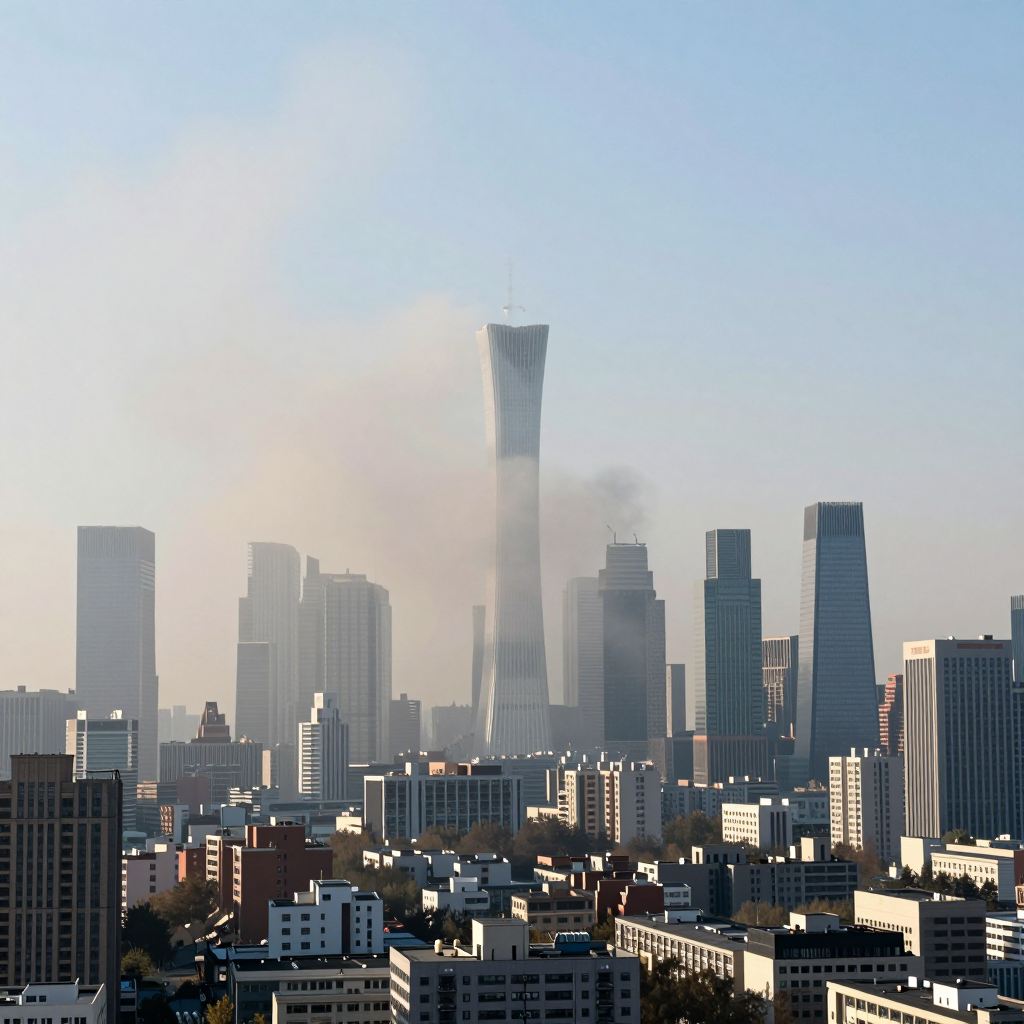
How Is Fine Dust Changing Our Daily Lives?
While the skies over Seoul are gradually becoming clearer, the impact of fine dust on every aspect of our lives remains serious. Just how much progress has been made on the fine dust issue?
Fine Dust Levels Show Signs of Improvement
Starting with some good news: the situation with fine dust in Korea has improved over the long term. Since official measurements began in 1995, Seoul’s fine dust (PM10) levels have fluctuated but have generally shown a declining trend. This reflects the tangible results achieved through environmental policies and changes in industrial structure over the past decades.
However, these statistical improvements do not mean the fine dust problem is solved. Many citizens still endure discomfort caused by high fine dust concentrations, especially as levels fluctuate dramatically depending on weather and seasons.
The Many Areas Affected by Fine Dust
Fine dust impacts much more than just air quality—it touches various facets of our daily lives.
International Diplomacy and Environmental Cooperation
Fine dust has now become a key topic in international diplomatic discussions. As awareness grows that the fine dust problem on the Korean Peninsula crosses national borders, environmental cooperation has become a central issue in diplomacy. This highlights that environmental challenges are no longer isolated national concerns but diplomatic matters directly tied to the everyday lives of citizens.
Connection with Renewable Energy Efficiency
An intriguing research finding reveals that environmental factors like fine dust directly affect solar power efficiency. On days with heavy fine dust, sunlight penetration decreases, creating a vicious cycle where solar energy production drops. This suggests that pollution not only harms the environment but also undermines the transition to clean, renewable energy.
Challenges Ahead
Although the downward trend in fine dust levels is encouraging, truly solving the problem requires identifying root causes, implementing tailored policies region by region, and continuing international cooperation. To genuinely reclaim clean skies, we need concrete results that go beyond improved statistics to improve the real-life experiences of citizens.
Section 2: Is Seoul's Fine Dust Concentration Really Decreasing?
Seoul has been monitoring fine dust since 1995, but what patterns emerge from decades of data on its concentration changes? Let’s uncover the hidden secrets behind the long-term decline trend.
Long-Term Monitoring Records of Fine Dust in Seoul
When discussing Seoul’s fine dust problem, official observation data is indispensable. Since monitoring began in 1995, nearly 30 years of accumulated data serve as a crucial indicator revealing how air quality has evolved objectively.
Seoul’s annual average fine dust (PM10) concentration has fluctuated since the official observations started in 1995, yet it has generally shown a declining trend. This long-term decrease is viewed as a positive sign, suggesting that South Korea’s environmental policies and various efforts to improve air quality have had a measurable impact.
Complex Variability Within the Long-Term Decline
However, simply labeling the trend as a “decline” does not fully capture the reality of fine dust changes. Even amidst the overall downward trend, Seoul’s fine dust levels exhibit significant yearly fluctuations.
Such variability is influenced by diverse external factors, including seasonal changes, climate conditions, and shifts in industrial activities. Therefore, to truly grasp the fine dust issue, it is essential not only to look at the trend but also to explore the specific causes driving these fluctuations.
Future Challenges for Improvement
The fact that Seoul’s fine dust concentration shows a decreasing trend is hopeful. Still, there remains room for improvement when compared to international standards, and sharp seasonal variations continue to affect citizens’ daily lives.
Going forward, more precise air quality monitoring, in-depth analysis of emission sources, and tailored policy development will be indispensable for tackling the fine dust problem more effectively.
3. The Impact of Fine Dust on Environmental Policy and Diplomacy
Fine dust, a problem that has expanded beyond simple air pollution to become a central issue in international diplomatic discourse. Have you ever wondered why environmental cooperation is a critical matter that directly affects the daily lives of citizens?
Environmental Cooperation: No Longer an Option, But a Necessity
In the past, environmental issues were seen simply as local or domestic challenges. However, in modern times, air pollution like fine dust has transcended borders, emerging as a focal point in international diplomacy. Fine dust is no longer an issue confined to individual nations but has become a global challenge demanding regional cooperation.
Especially in East Asia, including the Korean Peninsula, fine dust is at the heart of environmental policy discussions. This shift signifies that in international diplomatic discourse, environmental matters have gained importance equal to that of the economy and security.
The Link Between Citizens' Daily Lives and Foreign Policy
The reason fine dust has risen to prominence as a vital topic in international diplomacy is that it is directly connected to the real lives of citizens. High concentrations of fine dust cause respiratory and cardiovascular diseases, directly affecting public health, which in turn impacts education, economic activities, and overall quality of life.
Therefore, governments must prioritize fine dust reduction as a top national policy goal to protect the health and safety of their people. This naturally expands into cooperative environmental dialogues with neighboring countries. Ultimately, the fine dust issue clearly illustrates how diplomacy addresses practical and life-related concerns.
A Shift Toward an Era of Environmental Cooperation
The emergence of fine dust-related cooperation as a key part of international diplomacy is a forward-looking change. As countries work to reduce fine dust by improving air quality, reforming energy policies, and restructuring industries, these efforts collectively lead to environmental improvements on a global scale.
With fine dust becoming a major issue in international diplomatic discussions, the framework for intergovernmental environmental cooperation is becoming more intricate and effective. In the short term, this brings improvements in public health, and in the long term, it enables the shared goal of preserving a sustainable global environment.
Section 4. Solar Power Generation and Fine Dust: An Unexpected Connection
Is even solar power generation, hailed as a clean energy source, helpless against fine dust? The fact that solar systems, regarded as the future of renewable energy, can suffer decreased efficiency due to environmental pollutants surprises many. In this article, we unveil the invisible enemy influencing renewable energy efficiency—fine dust.
Fine Dust Threatening Solar Power Generation Efficiency
Solar panels need to absorb the maximum amount of sunlight to convert it into electricity efficiently. However, fine dust particles suspended in the atmosphere block sunlight from reaching the panel surface. As fine dust concentration rises, the amount of sunlight penetrating the panels decreases, creating a vicious cycle that leads to a drop in power generation.
Research shows that environmental factors like fine dust directly impact solar power efficiency. In particular, on days with severe fine dust levels, solar power output can drop by more than 20 to 30 percent compared to normal conditions.
The Hidden Variable in Expanding Renewable Energy
As the government increases investment to expand solar power generation in pursuit of carbon neutrality goals, fine dust has emerged as a new challenge. Simply increasing solar installations is not enough to ensure a stable renewable energy supply; improvements in air quality must proceed in tandem.
If environmental policies aimed at reducing fine dust and those promoting solar power expansion work hand in hand, the establishment of a more effective renewable energy system is anticipated. Ultimately, producing clean energy requires one indispensable factor: a clean sky.
Section 5: Fine Dust, What Are the Next Steps for a Solution?
Behind the declining numbers lie new challenges. From sources of origin to health impacts, shall we embark on a journey to explore future strategies for reducing fine dust?
The Light and Shadow of Fine Dust Concentration Improvement
Let's start with some positive news. Fine dust concentrations in major domestic areas, including Seoul, have shown a long-term downward trend. Since official monitoring began in 1995, the fine dust levels have fluctuated but generally followed a downward curve—indicating that decades of environmental policy efforts have borne fruit.
However, behind this progress, mountains of unresolved issues still remain. Simply seeing a decrease in numbers doesn't mean the fine dust problem is solved.
The Importance of Identifying the Causes of Fine Dust
To find fundamental solutions, the sources of fine dust must first be clearly identified. Various factors such as domestic industrial activities, vehicle emissions, transboundary inflows, and sea salt particles interact in complex ways.
Without tailored reduction strategies for each cause, sustainable improvement is difficult to expect. This is why participation from not only the government but also industries and the public is essential.
Assessing Health Impacts and Response Strategies
The effects of fine dust on the human body extend beyond simple respiratory illnesses to include cardiovascular diseases, neurological disorders, and a host of other health threats. Vulnerable groups like children, the elderly, and those with chronic conditions require focused care.
A multi-layered approach is needed—ranging from individual preventive actions to the establishment of broad environmental policies—to minimize health impacts.
Expanding International Cooperation and Environmental Diplomacy
Fine dust is an environmental issue that crosses borders. Leading countries already treat environmental cooperation, including tackling fine dust, as a key topic in international diplomacy—demonstrating that environmental policy is no longer a purely domestic concern.
Strengthening collaboration with neighboring countries in the Korean Peninsula, sharing environmental data, and establishing international standards are critical challenges ahead.
Linking Strategies with Renewable Energy
Interestingly, environmental factors like fine dust directly affect the efficiency of solar power generation. In the era of energy transition, reducing fine dust is not just about environmental protection but also a factor that determines the efficiency of renewable energy deployment.
Therefore, transitioning to low-carbon energy and reducing fine dust should proceed as complementary efforts.
Future Vision: The Need for an Integrated Approach
The next step in tackling fine dust involves integrating source identification, health impact management, international cooperation, and energy policies. It's time to drive structural changes throughout society, beyond isolated responses.
The quality of the air we breathe is determined at the intersection of personal choices, corporate responsibility, government policies, and international collaboration. Now, it’s time to start this journey together.
Comments
Post a Comment