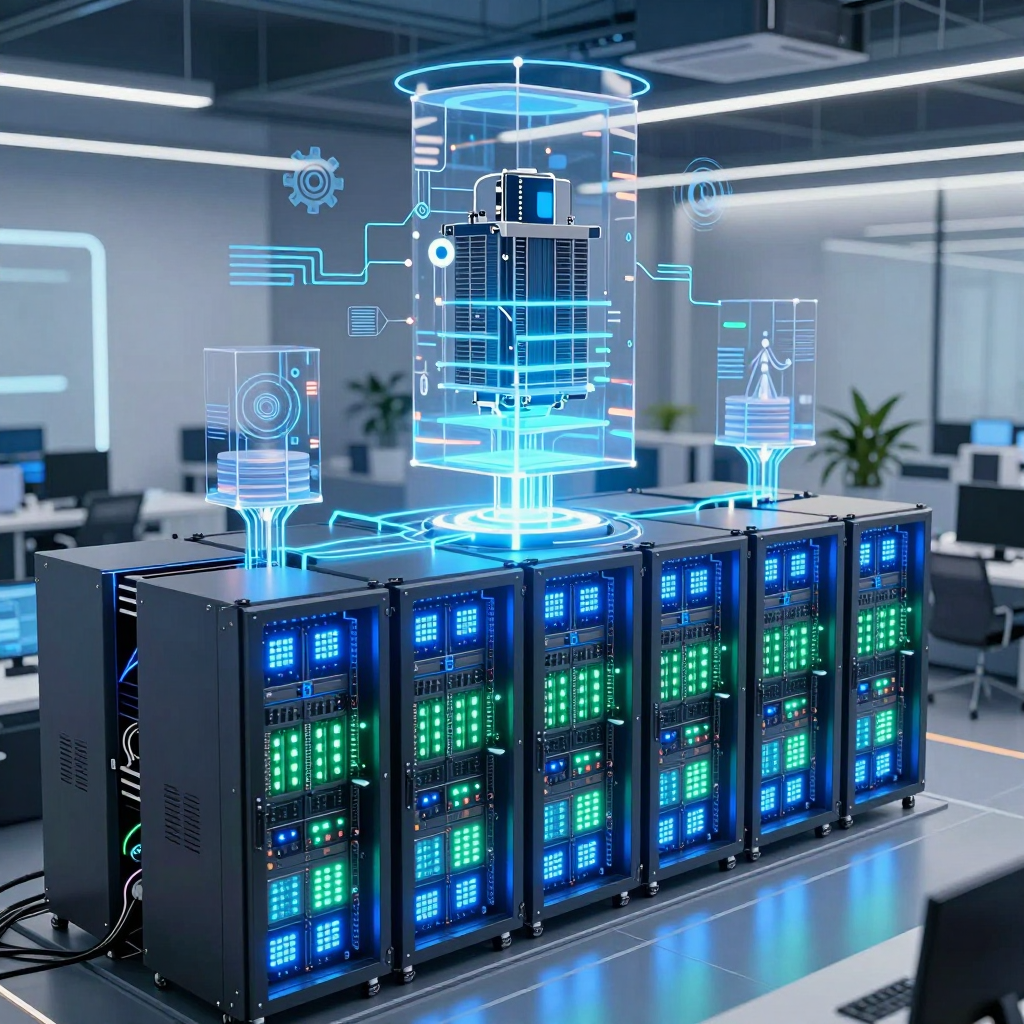
1. Why Is AI Infrastructure the Heart of Software Innovation in 2026?
In an era where AI dominates every industry, AI infrastructure has evolved beyond mere technology to become the key factor determining future competitiveness. What lies behind this transformative shift?
The Rise of AI Infrastructure: The Evolution of Software Infra
Over the past decade, the field of Software Infrastructure has steadily advanced. The widespread adoption of cloud computing, the maturation of container technologies, and the refinement of automation tools have all played vital roles. Yet, Software Infra in 2026 faces challenges and opportunities on an entirely different level—namely, the rapid emergence of AI Infrastructure.
AI Infrastructure doesn’t just mean “infrastructure for AI.” It represents the integration of physical and virtual components essential for building, training, deploying, monitoring, and maintaining large-scale AI models. The explosive growth of generative AI is fundamentally reshaping the traditional paradigms of Software Infrastructure.
Why Is This Moment Decisive?
As generative AI becomes mainstream through massive language models like ChatGPT, Claude, and Gemini, demand for AI adoption by enterprises and organizations has skyrocketed. However, running AI models in practice is far more complex than anticipated. Specialized accelerators such as GPUs or TPUs are indispensable; optimizing data pipelines is critical; and version control alongside performance monitoring must happen simultaneously.
This is where Software Infrastructure shines. While Infrastructure as Code (IaC) previously brought efficiency in managing infrastructure via code, AI Infrastructure demands integrated management of specialized hardware and software stacks. This evolution pushes orchestration tools like Kubernetes and Terraform into new, pivotal roles.
Transformations Brought by Technical Innovation
The maturation of AI Infrastructure is driving two crucial changes in the tech industry.
First, cloud service providers are reshaping their shared responsibility models. Traditional Software Infra focused mainly on infrastructure security and performance. However, AI workloads require a comprehensive approach that integrates security of training data, optimization of learning processes, and post-deployment monitoring — all managed in unison.
Second, there is a revolutionary lowering of barriers for enterprise AI adoption. Automated orchestration tools that manage complex large language model (LLM) deployments establish a foundation enabling organizations of any size to harness generative AI.
The Factor Deciding Future Competitiveness
The reason AI Infrastructure stands at the center of Software Infra in 2026 is crystal clear. While having excellent AI models is vital, the organizations that truly secure competitive advantage are those equipped with an infrastructure system capable of efficiently building, reliably operating, and continuously improving those models.
At a time when AI is no longer optional but essential, robust AI Infrastructure transcends being just a technical investment; it becomes a strategic asset upon which organizational survival and prosperity depend. This precisely explains why AI Infrastructure is the innovation epicenter of Software Infrastructure in 2026.
Section 2: The Hidden Layers of AI Infrastructure: From Physical Hardware to Governance
Cutting-edge accelerators like GPUs and TPUs are just the beginning. How do the five layers that complete AI infrastructure interlock to create optimal performance?
The Five Core Layers Constituting AI Infrastructure
The evolution in Software Infrastructure has now entered the AI era. Unlike traditional cloud infrastructure, AI Infrastructure is not simply a collection of computing resources. It is an intricately woven ecosystem of physical and virtual components essential for building, training, deploying, monitoring, and maintaining large-scale AI models.
To understand this, we must explore the five layers that make up AI infrastructure.
Layer 1: Physical Layer – The Crucial Role of Specialized Hardware
The physical layer, which forms the foundation of AI infrastructure, is where the biggest difference lies compared to conventional Software Infrastructure. Specialized accelerators like GPUs (Graphics Processing Units) and TPUs (Tensor Processing Units) are the heart of this layer.
General-purpose CPUs found in typical cloud servers cannot handle the massive parallel processing required for training and inference of large AI models. Specialized accelerators such as NVIDIA’s GPUs and Google’s TPUs are optimized for matrix operations, boosting AI model performance by tens to hundreds of times. High-performance interconnects and servers with ample memory bandwidth also belong to this layer.
Layer 2: Virtualization Layer – The Intersection of Flexibility and Efficiency
On top of the physical resources sits the virtualization layer. Technologies like Docker containers abstract and standardize the environment for AI workloads.
This layer plays a vital role. It eliminates the notorious "it worked on my machine" problem by guaranteeing the same environment as AI models move from development to production. It also enables efficient sharing of limited physical resources across multiple AI projects.
Layer 3: Orchestration Layer – The Power of Automation
To effectively manage these virtualized resources, the orchestration layer is indispensable. Kubernetes automates the deployment, scaling, and management of containerized AI workloads in this layer.
Infrastructure as Code (IaC) tools like Terraform also fall here. By defining infrastructure setups declaratively, resources needed for AI model training can be provisioned programmatically. This means that a single line of code change can seamlessly adjust the number of GPUs, eliminating complex manual operations.
Layer 4: Security and Identity Layer – The Foundation of Trust
Security in AI infrastructure is not optional—it’s mandatory. Identity and Access Management (IAM) tools strictly control who can access which AI models and data.
Encryption technologies safeguard the valuable intellectual property of models during training and secure data in transit. Compliance tools ensure adherence to industry-specific regulations like GDPR and HIPAA. This layer is especially critical when AI models handle sensitive data.
Layer 5: Monitoring and Governance Layer – Visibility and Control
The final layer oversees and manages the entire system through monitoring and governance. It tracks performance metrics in real time, identifies bottlenecks, and visualizes training progress.
Cost tracking systems are also a crucial part of this layer. By breaking down GPU usage hours, data transfer volumes, and storage expenses, organizations can clearly understand the ROI of AI infrastructure investments.
Synergy Across Layers: Completing a True AI Infrastructure
These five layers unleash their real value when they operate in harmony. While traditional Software Infra’s IaC paradigm focuses on infrastructure management itself, AI Infrastructure demands integrated management of specialized hardware and software stacks.
The orchestration layer automates resource allocation, the security layer protects it, and the monitoring layer optimizes performance. Even the most powerful GPUs at the physical layer cannot be fully leveraged without virtualization and orchestration. Conversely, no level of automation can compensate for weak security and governance, which expose risks.
When these five layers interconnect organically, organizations can efficiently manage complex LLM deployments and maximize generative AI’s potential. This is precisely the differentiator for companies that will thrive in the Software Infra era of 2026.
3. The Evolution of the Cloud Paradigm: How AI Infrastructure is Changing the Software Infra Market Game
How is the traditional Infrastructure as Code transforming in the era of AI infrastructure? Discover the disruptive impact of cutting-edge technologies on the shared responsibility model of cloud service providers.
A Fundamental Shift in the Software Infra Paradigm
Over the past decade, Infrastructure as Code (IaC) has established itself as the foundational paradigm in Software Infrastructure. The concept of managing infrastructure through code revolutionized automation and reproducibility in system operations. However, the AI infrastructure era of 2026 is advancing this paradigm to an entirely new level.
The emergence of AI infrastructure signifies more than just a new technology—it represents a fundamental transformation of the entire Software Infra ecosystem. While traditional cloud infrastructure focused on the abstraction and management of general-purpose computing resources, AI infrastructure raises a novel question: how can we efficiently operate specialized physical assets like GPUs and TPUs along with high-performance servers?
Redefining the Shared Responsibility Model Driven by AI Infrastructure
The shared responsibility model traditionally proposed by cloud providers was straightforward: providers handle infrastructure security and availability, while customers manage application security and data governance.
However, the rise of AI infrastructure is blurring these boundaries. Building, training, deploying, and monitoring large-scale AI models demands not only infrastructure security but also securing training data, optimizing training performance, and governing deployed models.
With new Software Infra components such as security and identity layers and monitoring and governance layers entering the scene, the responsibility-sharing structure between cloud providers and customers is becoming increasingly complex. This shift is not merely a technological innovation—it signals a transformation of the cloud business model itself.
Lowering Barriers and Sparking Democratization
Interestingly, this growing complexity is paradoxically lowering the entry barriers to enterprise AI adoption. Orchestration tools like Kubernetes and Terraform have advanced to the point where they can automate the deployment of complex large language models (LLMs).
This creates new roles within Software Infra. Beyond traditional DevOps engineers, there is now a demand for infrastructure engineering expertise specialized in AI workloads. As organizations of all sizes harness generative AI through automated tools, the democratization of AI technology is accelerating at an unprecedented pace.
Forward-Looking Software Infra Investment Strategies
To succeed in the cloud market of 2026, understanding AI infrastructure is no longer optional—it’s imperative. Regardless of an organization’s size or industry, evaluating whether its Software Infra strategy aligns with the AI era is crucial.
In particular, organizations investing in AI infrastructure that integrates resource abstraction through container technologies, automated orchestration, and enhanced security and governance frameworks are poised to seize leadership in the next-generation Software Infra market.
Section 4: Transformation in the Industrial Landscape: AI Infrastructure Lowers the Enterprise Barrier
The complex deployment of large-scale AI models is now entrusted to automation tools. It’s time to explore how the maturity of AI infrastructure accelerates AI adoption from small businesses to major enterprises.
The Democratization of Industry Triggered by AI Infrastructure Maturity
As of 2026, the rapid maturation of AI infrastructure is fundamentally reshaping how companies adopt generative AI. Just 2 to 3 years ago, building and deploying large language models (LLMs) was exclusive to tech giants like Google, OpenAI, and Meta. The massive GPU/TPU resources required, complex infrastructure setups, and lack of specialized personnel acted as formidable entry barriers.
However, the maturity of AI infrastructure is dramatically lowering these barriers. The most critical catalyst has been the advancement of automation technologies in software infrastructure. Orchestration tools like Kubernetes and Terraform automate complex resource provisioning, enabling companies to drastically reduce the time and cost of building infrastructure.
Removing the Entry Barriers for Enterprise AI Adoption
The most direct impact of AI infrastructure maturity lies in eliminating the entry barriers to enterprise AI adoption. Previously, deploying AI models in production required navigating a complicated process:
- Configuring and optimizing GPU/TPU resources at the physical layer
- Maintaining consistency between development and production environments via container technologies
- Setting up orchestration for automated resource provisioning
- Managing security and compliance during model training and deployment
- Building systems for performance monitoring and cost tracking
When all these steps depended on manual expert work, small and medium businesses or startups found entry impossible. Today’s AI infrastructure environment handles most of this complexity through a variety of automation tools and managed services.
An Era of AI Democratization Beyond Scale
Thanks to the maturation of software infrastructure, AI is now accessible regardless of organizational size. This transformation is clearly visible on the ground:
Strategic Expansion by Large Enterprises
Large organizations are shifting towards structures where a central AI infrastructure team provides standardized templates and automation tools, allowing individual business units and teams to freely develop and deploy AI models. This significantly accelerates innovation.
AI Experimentation Opportunities for SMEs
Management AI infrastructure services from cloud providers (e.g., AWS SageMaker, Google Vertex AI) enable teams of just dozens of people to operate enterprise-grade AI systems. This drastically lowers upfront capital investment requirements.
Rapid MVP Development for Startups
Startups no longer need to build massive infrastructure from scratch; the ‘elastic scaling’ model allows them to expand resources only as needed.
A New Paradigm of Shared Responsibility Model
Alongside AI infrastructure maturation, an important shift has emerged in the evolution of the shared responsibility model between cloud providers and enterprises.
Unlike the traditional Infrastructure as Code (IaC) paradigm—which clearly separated the responsibilities of provisioning and managing infrastructure resources—the AI infrastructure environment demands more nuanced collaboration:
- Infrastructure Security: The responsibility of cloud service providers
- Data Security: Joint responsibility between enterprises and providers, including encrypting training data and controlling access
- Model Performance Optimization: Covering everything from GPU/TPU resource allocation to optimizing training algorithms
- Regulatory Compliance: Applying industry-specific regulations and AI ethics standards
This signifies an evolution from simple infrastructure management to jointly overseeing the entire lifecycle of AI workloads.
Tangible Changes on the Ground
This technological maturation is producing concrete business outcomes on the front lines:
Reduced Deployment Time: AI model deployments that once took months now take weeks, thanks to automation tools eliminating most manual configurations.
Optimized Operating Costs: Instead of provisioning maximum capacity for peak seasons, resources now scale only when needed—significantly improving cost efficiency.
Accelerated Cross-Organizational Collaboration: Standardized AI infrastructure platforms facilitate teamwork across multiple teams within an organization, making infrastructure a non-bottleneck.
Future Outlook
The maturation of AI infrastructure is far from complete. Going forward, increasingly automated and intelligent software infrastructure environments will empower companies to experiment with and leverage AI even more freely. Ultimately, this heralds a shift where generative AI becomes an everyday tool not just for a handful of tech giants, but for organizations across all sectors.
Section 5: The Power to Seize the Future: A Complete Understanding and Strategy for AI Infrastructure Technology
Only companies that truly understand AI infrastructure will emerge victorious in the market. From the physical layer to security and orchestration, this section offers a deep analysis of core technical theories and success strategies, forecasting the future.
The Rise of AI Infrastructure: A New Paradigm in Software Infrastructure
If you had to name the most decisive technology shaping the Software Infra market in 2026, without a doubt, it is AI Infrastructure. This is not merely an evolution of cloud infrastructure. It represents the full integration of physical and virtual components necessary to build, train, deploy, monitor, and maintain large-scale AI models.
The explosive growth of generative AI is not a challenge limited to tech companies alone. Traditional enterprises must also undergo fundamental infrastructure innovation to adapt to the AI era. This is precisely why AI Infrastructure has become the top priority in the Software Infrastructure domain in 2026.
The Five-Layer Structure of AI Infrastructure: Mastering the Technical Core
While based on traditional cloud infrastructure layers, AI Infrastructure features a structure optimized for the unique demands of AI workloads. A deep understanding of each layer is the first step toward success.
First: The Physical Layer – The Importance of Specialized Hardware
The foundation of AI Infrastructure lies in the physical layer. This layer houses specialized accelerators such as GPUs (Graphics Processing Units) and TPUs (Tensor Processing Units), alongside high-performance servers. It is an architecture fundamentally different from traditional CPU-centric infrastructures.
Training large language models requires an enormous amount of computation. Generic processors simply cannot handle this, making GPUs optimized for parallel processing and TPUs designed specifically for AI computations indispensable. When adopting AI Infrastructure, a company’s first consideration must be the capability of this physical layer.
Second: The Virtualization Layer – Efficient Resource Abstraction
Above the physical hardware sits the virtualization layer, centered around container technology like Docker. Containers encapsulate applications and their dependencies in isolated environments, enabling consistent execution across varied environments.
This layer is especially crucial for AI workloads, which require managing diverse machine learning frameworks and library versions. Containerization eliminates inconsistencies between development and production environments, enabling reproducible deployment of AI models.
Third: The Orchestration Layer – Intelligent Automation
Orchestration tools such as Kubernetes and Terraform govern this layer. They manage complex AI workloads efficiently through automated resource provisioning, load balancing, and auto-scaling.
The maturation of AI Infrastructure is directly tied to the advancement of this orchestration layer. Manually managing complex LLM deployments is no longer practical. Automated orchestration empowers organizations of any size to harness generative AI, lowering the entry barriers for enterprise AI adoption.
Fourth: The Security and Identity Layer – The Foundation of Trust
This layer comprises IAM (Identity and Access Management), encryption, and compliance tools. Security in AI workloads surpasses traditional infrastructure security standards.
The training process of AI models involves massive volumes of sensitive data—personal information, trade secrets, medical records—all potentially part of the training datasets. Thus, a multi-layered security framework from access control and encryption to audit logs is essential. This complexity explains why Software Infrastructure security responsibilities have become increasingly intricate.
Fifth: The Monitoring and Governance Layer – Visibility and Control
The final layer focuses on performance monitoring and cost tracking systems. Given the immense computational resources AI Infrastructure consumes, cost management is paramount.
Monitoring tools track metrics such as GPU utilization, memory usage, and network bandwidth in real time. Equally important are AI-specific metrics like training progress, inference latency, and error rates. Through these measures, companies can maximize infrastructure efficiency and prevent unnecessary cost wastage.
The Evolution of the Software Infra Paradigm: How AI Infrastructure Differs from Traditional Systems
The emergence of Infrastructure as Code (IaC) was revolutionary—it fundamentally changed how infrastructure could be defined and managed through code.
However, AI Infrastructure takes IaC a step further. Beyond defining servers and networks in code, it demands integrated management of specialized hardware (GPUs/TPUs) and software stacks. Performance optimization of models, data pipeline management, and version control are all considered critical components of the infrastructure itself.
This evolution also impacts the shared responsibility model traditionally held by cloud service providers. Whereas providers secured infrastructure and enterprises secured applications, AI workloads require joint management of infrastructure security as well as data security and performance optimization during model training. The boundaries of responsibility have grown more complex.
AI Infrastructure Strategy for Enterprises: A Practical Roadmap
Having grasped AI Infrastructure, concrete strategic planning is essential.
First: Conduct a Current State Assessment – Accurately evaluate existing Software Infra capabilities, including GPU availability, containerization maturity, and orchestration tools.
Second: Adopt a Phased Implementation – Instead of building everything at once, start with pilot projects. Develop AI Infrastructure around specific AI models or departments, then scale lessons learned across the organization.
Third: Cultivate Talent – Technical infrastructure experts alone won’t suffice; infrastructure engineers with strong AI/ML understanding—AI Infrastructure specialists—are crucial. Balance internal training and external recruitment.
Fourth: Establish Cost Management Systems – Given the expenses inherent in AI Infrastructure, robust cost tracking, budget management, and ROI measurement must be embedded from the outset.
Future Competitiveness of Companies Preparing for 2026 and Beyond
Companies that deeply understand and implement AI Infrastructure will secure significant competitive advantages.
First, rapid model deployment speed: automated orchestration enables swift delivery of new AI models into production.
Second, cost efficiency: optimal resource utilization and scaling on demand reduce infrastructure expenses.
Third, security and compliance: multi-layered security frameworks protect sensitive data and meet industry regulations.
Fourth, organizational AI democratization: by lowering complex technical barriers, the entire organization can drive innovation powered by AI.
The maturation of AI Infrastructure is not just a technological upgrade; it has become a strategic asset that determines a company’s survival and prosperity. In this very moment, companies with profound understanding and actionable strategies around AI Infrastructure will emerge as market leaders beyond 2026.
Comments
Post a Comment