 \n
\n
1. The New Era of Personal AI Agents: The Emergence of Clawdbot
What if there were an AI that operates autonomously 24/7 on your own device without relying on the cloud? That imagination is now a reality. The advent of Clawdbot is completely transforming the paradigm of personal AI agent technology.
Clawdbot: A User Sovereignty-Based Personal AI Assistant
Until now, nearly all AI services we’ve experienced depended heavily on the cloud. Data was stored on corporate servers, and we had no full control over the processing. But Clawdbot upends this entire structure.
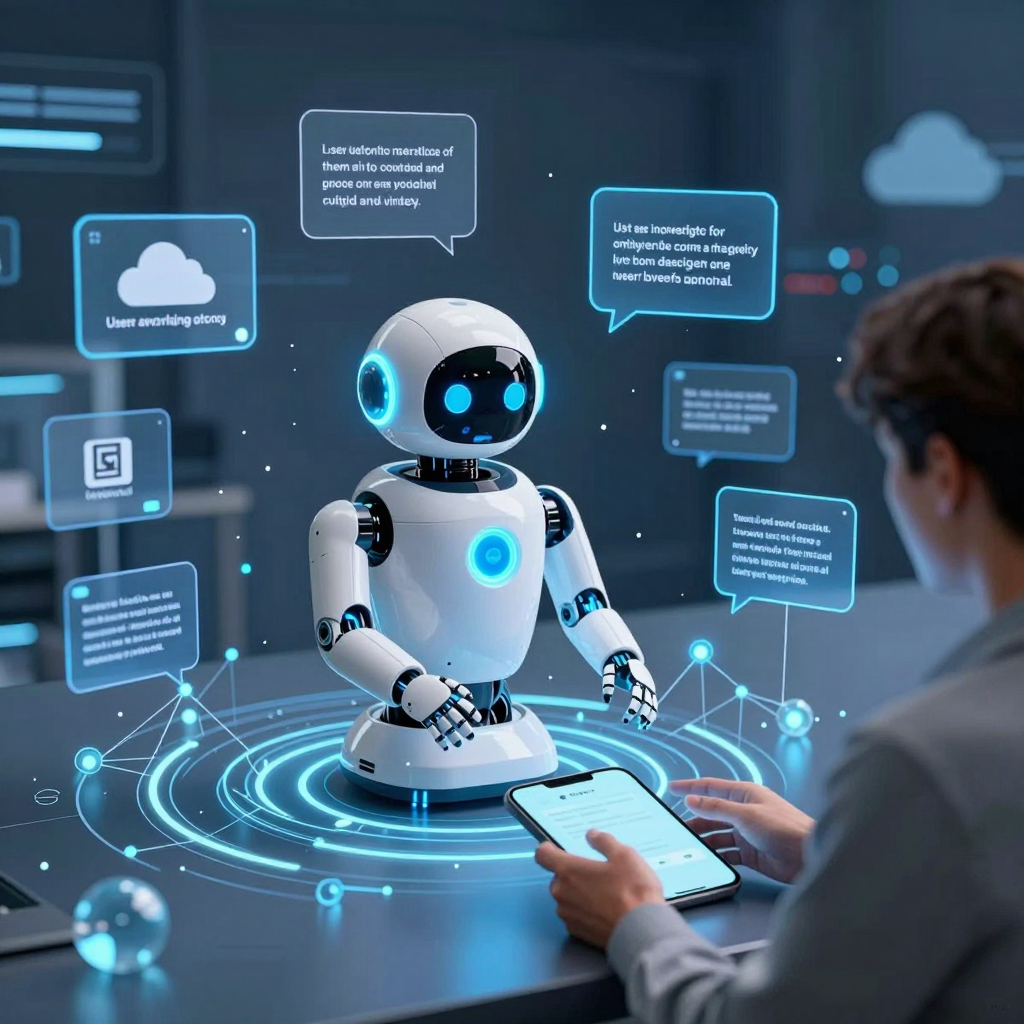
Clawdbot is an open-source, locally executable personal AI assistant—an autonomous AI agent that runs directly on your device 24/7. From Mac Minis to personal computers, your device itself becomes the AI’s brain. This is more than just a technical innovation; it fundamentally redefines the relationship between humans and AI with a user-sovereignty-first design.
Clawdbot’s Revolutionary Three-Layer Architecture
The reason behind Clawdbot’s powerful performance lies in its sophisticated architecture, composed of three core layers.
The first layer: Communication Layer connects with all the messaging platforms you already use. Supporting over 13 platforms—including Telegram, Discord, WhatsApp, Slack, Signal, iMessage, and Microsoft Teams—it lets you interact with the AI naturally through your preferred channels.
The second layer: Routing and State Management Layer acts as the brain of the system. It analyzes every incoming message, routes it to appropriate AI models like Claude or GPT, and continuously maintains the execution context. This way, Clawdbot never loses track of the context even in complex conversational flows.
The third layer: Local Execution Environment is where the actual actions happen. It transforms abstract AI commands into concrete tasks and executes them directly on your device. Thanks to this layer, Clawdbot goes beyond a simple response engine to performing real work.
Agentic AI: Autonomous Digital Team Members at Work
Clawdbot’s most groundbreaking feature is its autonomy as agentic AI. Unlike conventional chatbots or assistants that only respond to your questions, Clawdbot autonomously executes multi-step tasks.
Here’s how it works: when you issue a natural language command, the large language model (LLM) analyzes it and creates a detailed execution plan. Then, it calls on relevant skills and system tools to complete each step and reports back the results. It’s like a highly capable team member taking your instructions and accomplishing the job end-to-end.
What’s especially remarkable is its self-improvement capability. When Clawdbot detects shortcomings in its abilities, it writes its own code, installs new skills, and tests them—expanding its functions. It’s not a static tool but a continuously evolving digital entity.
Persistent Memory That Understands All Your Work
One key reason Clawdbot surpasses simple AI assistants is its persistent memory. By remembering all interactions, completed tasks, and your personal data, it enables handling complex long-term projects and personalized support without repetitive explanations.
For example, you no longer need to explain the status of a project you requested last month every single time. Clawdbot recalls the entire context and can take appropriate actions with just a single command. This is the difference between a mere chatbot and a real team member.
Infinitely Expandable Skill System
Clawdbot’s power also stems from its modular skill library. You can programmatically grant access to various tools like Gmail, Calendar, code editors, and browser controls.
What’s even more exciting is the community-driven expansion. Through platforms like ClawdHub, users can share and utilize skills made by others—making Clawdbot’s functionality infinitely expandable. You simply find and install features tailored to your specific needs from the community.
Core Differences from Cloud AI
The differences between traditional cloud-based AI services and Clawdbot are fundamental:
Data location: Cloud AI stores all your data on corporate servers; Clawdbot keeps everything on your device. This significantly reduces security risks and gives you full control over your data.
Latency: No time lost on cloud round-trips. Clawdbot runs directly on your device, enabling near-instant responses.
Offline operation: Even without an internet connection, once set up, Clawdbot can continue performing basic tasks.
Cost transparency: You directly manage your API subscriptions for Claude, ChatGPT, CoPilot, etc., so costs are clear and transparent with no hidden fees or unexpected bills.
Starting a Personal AI Revolution with Clawdbot
Clawdbot is not just software—it’s regarded as a foundational prototype for the next era of human-computer interaction. By combining persistent memory, tool integration, and a user-centric open-source model, it has proven effective autonomous AI agency is now possible.
With Clawdbot running 24/7 on your device, AI is no longer a distant presence beyond the cloud. It becomes your personal team member—a digital entity functioning just like a real colleague. The new era of personal AI agents is now ready to begin.
2. Clawdbot Architecture: The Secret of Distributed Autonomy
Supporting over 13 messaging platforms from Telegram to Slack while handling all execution and state management locally may seem straightforward, but it is actually the result of highly sophisticated technical design. Clawdbot's unique three-layer architecture is the core mechanism that enables this kind of distributed autonomy.
Understanding Clawdbot’s Architecture Through Its Three Core Layers
The innovation of Clawdbot lies in organizing complex technology into a clear, tiered structure. Like a well-structured organization chart, each layer has a distinct role while working organically together.
Communication Layer: A Multichannel Input/Output Interface
The first layer, the communication layer, is where Clawdbot meets the user. By supporting more than 13 messaging platforms—including Telegram, Discord, WhatsApp, Slack, Signal, iMessage, Microsoft Teams—users can interact with the AI agent on their preferred channel. This means far more than just supporting multiple channels.
The value of the communication layer lies in diversity and accessibility. Whether at work with Slack, personal time on Telegram, or family chats via iMessage, users can engage with Clawdbot aligned with their lifestyle. The unique features of each platform (voice messages, file sharing, reaction emojis, etc.) are fully supported, minimizing experience gaps across channels.
Routing and State Management Layer: Intelligent Traffic Control
The second layer acts as an intelligent command center that analyzes messages received from the communication layer and routes them to the optimal AI model. When a user’s message arrives at Clawdbot, this layer decides:
- Which AI model to use (Claude, GPT-4, etc.)
- What the context from previous conversations is
- The current status of ongoing tasks
- Which skills and tools should be accessed
At the heart of this layer is continuous memory management. All interactions, task records, and user data are stored locally, enabling Clawdbot to remember user preferences, prior decisions, and long-term project progress. Like a dedicated assistant leveraging years of accumulated know-how, Clawdbot never starts every new conversation from scratch.
This state management layer also handles multitasking and priority adjustment. When a user requests multiple tasks simultaneously, it judges their priority and determines execution order. Complex projects can keep some tasks on hold while using results from completed tasks as input for subsequent ones.
Local Execution Environment: The Stage for Real Action
The third layer is where every plan transforms into real action. Running directly on the user’s computer (mainly a Mac Mini), the local execution environment enables Clawdbot to actually “do” things.
At this layer, Clawdbot can:
- Read, write, and organize emails
- Control web browsers to search for information and automate workflows
- Execute scripts and handle system tasks via terminal/command line
- Access the file system to organize, back up, and sync documents
- Call APIs from various applications
Its most critical feature is complete autonomy. Free from cloud dependence, there is virtually no latency, and users can continue basic operations even when offline (with proper setup). More importantly, all personal data and work records stay local and never transmit to external servers.
How the Three Layers Collaborate: The Real Working Principle of Autonomous AI
To understand how these three layers collaborate, consider a concrete example with Clawdbot’s architecture in action.
Imagine you send a message on Slack saying, “Organize this week’s meeting schedule and email the attendees.”
- The communication layer receives the message from Slack.
- The routing and state management layer analyzes the request, activates the appropriate AI model (e.g., Claude), and loads previous meeting notes and email templates.
- The local execution environment kicks off the actual tasks:
- Accesses the calendar app to find meetings for the week
- Extracts the attendee list
- Checks each attendee’s preferred contact method
- Crafts and sends personalized notification emails via the email client
- Sends a completion report back to Slack
Throughout this process, Clawdbot references past work records to automatically apply your favored email tone, frequently used meeting rooms, and coordination styles with specific team members.
Scalability of Clawdbot Architecture: The Skill System
Another strength of the three-layer design is its limitless scalability. The local execution environment can dynamically add new functions through a modular skill library. Skills for nearly all popular applications—Gmail, Google Calendar, Notion, GitHub, Shopify—already exist or can be developed by users themselves.
Even more fascinating is its self-improvement capability. When Clawdbot detects it lacks a necessary skill for a task, the AI model recognizes this gap and writes code on the spot to install the new skill. It’s like an employee building the exact tool they need when none exists.
Data Privacy and Security: The Three-Layer Defensive Line
From a security standpoint, Clawdbot’s three-layer architecture offers compelling advantages. Because all data processing happens solely on the local device, risks of central server hacking are eliminated. Each layer can be designed to operate with the minimum required permissions, and users can monitor and control the behavior of every layer at any time.
However, since the local execution environment has nearly full access to the user’s device, careful deployment and management are crucial. It’s best to review the code before trusting Clawdbot, grant only necessary permissions, and regularly check execution logs.
Conclusion: The Future of Distributed Autonomy
Clawdbot’s three-layer architecture transcends mere technical design—it represents a paradigm redefining the relationship between AI and humans. Supporting diverse channels without cloud reliance while continuously learning to act like a true teammate signals the future evolution of personal AI. This is exactly why Clawdbot is recognized as an “autonomous AI agency” rather than just a simple chatbot.
Agentic AI Innovation: Multi-step Autonomous Task Execution
Traditional AI assistants remain passive, simply responding to user queries. But clawdbot completely overturns this paradigm. Beyond merely reacting to commands, it autonomously analyzes and plans tasks, and even writes code itself to expand its capabilities—truly functioning as a self-directed AI agent.
How Clawdbot’s Agentic Operation Works
Agentic AI refers to an intelligent system that doesn’t just respond to user requests but independently plans and executes multi-step tasks to achieve a given goal. Clawdbot stands as the most refined example of such agentic AI.
When a user issues a natural language command, Clawdbot’s internal large language model (LLM) follows this process:
- Command Analysis: Carefully analyzes the user’s request to identify the ultimate goal and necessary intermediate steps.
- Execution Planning: Determines a logical sequence and required resources to accomplish the goal.
- Skill Invocation: Utilizes registered skills and system tools to execute each step sequentially.
- Result Verification and Reporting: Validates outcomes and reports back to the user.
For instance, upon receiving a simple command like, “Could you summarize this week’s important meetings and prepare related materials?”, Clawdbot automatically carries out a complex chain of tasks: searching meeting invitations in the email client, checking schedules on the calendar, locating relevant documents and organizing them by folders, and gathering the latest information via web searches when needed.
Self-Improvement Capability: The Evolving Freedom of AI
Clawdbot’s most groundbreaking feature is its self-improvement capability, which goes far beyond simple task automation.
When it recognizes lacking functionalities during task execution, Clawdbot writes its own code to address these gaps. It develops new skills, tests them, and adds them to its own skill library—much like a team member who creates necessary tools when faced with unsolvable problems.
For example, if requested to perform a specific document format conversion that existing skills cannot handle, Clawdbot codes the conversion routine itself, tests it, and registers it as a new skill. So next time the same task is requested, it immediately executes it with this new skill.
This fundamentally distinguishes it from existing AI systems. Existing cloud-based AIs rely on developers to add new features through updates; Clawdbot automatically evolves to meet specific user demands.
Enhanced Task Performance through Persistent Memory
This autonomous task capability is made even more powerful by its persistent memory system.
Clawdbot remembers all interactions, completed tasks, and user data, shining especially in complex, long-term projects. For example, it recalls conversations with a particular client from last month, the current status of ongoing projects, and personal preferences and habits—allowing it to provide more accurate and personalized results by understanding the full context when new requests arrive.
Users don’t need to re-explain scenarios like with simple chatbots. A straightforward request like “Can you update me on the progress of that thing we talked about yesterday?” prompts Clawdbot to grasp the context and deliver necessary information.
Real Task Execution through Tool Integration
Where Clawdbot’s agentic power truly shines is in actual task execution.
Clawdbot has access to nearly every application a user might manually operate:
- Reading, composing, and auto-sorting emails via the email client
- Conducting research, monitoring, and automation through a web browser
- Running complex scripts on the terminal/command line
- Organizing, backing up, and syncing documents across the file system
By combining these tools, it fully automates multi-step workflows. For example, the command “Collect last quarter’s sales data, create an analysis report, and email it to the team leader” results in Clawdbot automatically gathering data from multiple sources, writing analysis code, generating the report, and sending the email—all without manual intervention.
Endless Possibilities with an Expandable Skill System
Clawdbot’s multi-step autonomous task execution continually expands through a modular skill library.
It supports adding skills for tools like Gmail, Google Calendar, code editors, and browser controls. Moreover, platforms like ClawdHub allow users to share and leverage skills created by the community. This means Clawdbot’s capabilities are not static; they constantly grow as the community contributes new skills, enabling it to tackle ever more complex tasks.
A New Definition of Human-Computer Collaboration
Ultimately, Clawdbot’s agentic AI innovation signifies AI’s evolution from a mere tool to a digital entity functioning as an actual team member.
Users only need to present goals, and Clawdbot autonomously handles all intermediate steps. It self-develops missing functionalities and logically decomposes and executes complex multi-step tasks. This is the true essence of how a “personal AI agent” operates.
Section 4. Real-World Applications: From Emails to Smart Homes, the Versatility of Clawdbot
With continuous memory, modular skills, voice recognition, and real-time UI manipulation—let’s explore concrete examples of how Clawdbot becomes an innovative assistant for individuals, teams, developers, and households. The reason Clawdbot evolves beyond a simple chatbot into a genuine productivity tool lies in these practical and diverse use cases.
Automating Your Personal Assistant Role with Clawdbot
Imagine waking up and saying, “Can you organize today’s schedule and summarize important emails?” Clawdbot automatically filters messages received in Gmail, checks your calendar for conflicts, and organizes information according to your personal priorities. This is the essence of Clawdbot’s personal assistant capabilities.
Clawdbot automatically handles the following tasks for you:
- Email management: auto-sorting, duplicate removal, priority-based summaries, and drafting replies
- Calendar and schedule coordination: booking meetings, resolving time conflicts, and sending automatic attendee notifications
- Travel planning: flight searches, hotel reservations, route optimization, and expense tracking
- Personal finance monitoring: expenditure categorization, budget oversight, and automated transfers
- Habit tracking: monitoring workouts, managing diets, and analyzing sleep patterns
Thanks to Clawdbot’s core feature of continuous memory, these tasks accumulate and become increasingly personalized over time. You never have to repeat yourself—just saying “Manage it like last month?” lets Clawdbot precisely understand and execute your preferences and patterns.
Using Clawdbot for Teams and Companies: Redefining Automation
Beyond individual assistance, Clawdbot fundamentally transforms operational efficiency for small teams and businesses.
Customer support automation is a prime example. When Clawdbot receives customer inquiries via Slack or Discord, it automatically searches relevant documents, reviews past support histories, and assigns the right personnel if necessary. It handles repetitive questions independently and escalates only complex issues to human agents.
Internal document management and project timeline coordination work similarly. When a new document is shared with the team, Clawdbot classifies it automatically, notifies relevant members, and checks integration with project schedules. Expense report processing becomes even simpler. Upon receiving scanned receipts and expense data, Clawdbot categorizes them, reviews compliance with company policies, and forwards them to managers for approval.
Thanks to its modular skill system, Clawdbot’s functions can be extended to meet specific organizational needs. You can find existing enterprise-grade skills on community platforms like ClawdHub or develop and install customized skills whenever necessary.
The Developer’s Collaborator: From Code to Deployment
For developers, Clawdbot functions as more than just an assistant—it acts as a collaborative developer.
When you ask, “Can you track down this bug?” Clawdbot fetches relevant code from the repository, analyzes error logs, and identifies potential causes. If needed, it writes patch code, runs tests, and commits to branches automatically once all tests pass.
Even more impressive is its self-improvement capability. When Clawdbot realizes it lacks the necessary tools or libraries to complete a task, it autonomously writes, installs, and validates required code and resources—dramatically boosting development productivity:
- Writing and reviewing code: creating functions, refactoring, improving styles
- Bug fixing: diagnosing issues, drafting patches, validating tests
- Deployment automation: triggering builds, setting environments, monitoring releases
- Infrastructure management: server configuration, applying security patches, log analysis
Home Assistant: The Intelligent Manager of Your Smart Home
In household settings, Clawdbot’s use becomes even more personalized and intuitive.
Shared calendar management provides a clear view of every family member’s schedule, prevents double bookings, and automatically coordinates group activities like weekend outings and family gatherings. Using voice recognition, you can naturally ask, “Do we have milk in the fridge?” and command, “Order the missing items online,” where Clawdbot searches online markets and completes the purchase autonomously.
Smart home IoT control is Clawdbot’s true strength. You can command all connected devices—lights, thermostat, security system, coffee machine—using natural language. A single sentence like “I’m home. Turn on the living room lights and set the temperature to 22 degrees” controls multiple devices simultaneously. Moreover, leveraging continuous memory, a simple “Set it like lately” command recalls your past settings and applies them instantly.
Automatic organization of family photos and documents was once time-consuming. Clawdbot automatically sorts images by date, people, and location, removes duplicates, and backs up important documents. Requests like “Sort and back up this year’s family photos in chronological order” complete within seconds.
ElevenLabs-Powered Voice Interaction and Live Canvas Real-Time UI Manipulation
Technical innovations elevate Clawdbot’s versatility even further. The always-on voice recognition and natural voice responses powered by ElevenLabs enable fully conversational interactions without typing. Supported across macOS, iOS, and Android versions, you can talk with Clawdbot hands-free anytime, anywhere.
Even more impressive is the Live Canvas interface and A2UI (Agent-to-UI) rendering capability. When Clawdbot handles tasks requiring visual content, it instantly displays and allows manipulation of results on screen. For example, during design work, a request like “Change the background color to blue” results in immediate visual updates. Its Chrome/Chromium automation feature supports web scraping, data collection, and simulating user interactions.
What Clawdbot Enables and Why It Matters
Ultimately, Clawdbot is “truly usable” for reasons far beyond the obvious. Its continuous memory enables learning, modular skills provide extendibility, support for 13+ messaging platforms ensures seamless interaction, and voice with real-time UI control makes it intuitive.
From personal assistant to enterprise automation, developer collaborator to smart home manager—Clawdbot transforms AI from a simple Q&A tool into a digital entity that functions like a real team member. The era is no longer “What can AI do?” but “How can I integrate AI into my life?”
The Future of Customized Local AI: The Direction Proposed by Clawdbot
If you believed that the era of cloud-based AI assistants would continue indefinitely, the emergence of Clawdbot forces a fundamental reconsideration of that assumption. This technology goes beyond security concerns to enable user sovereignty, instantaneous responsiveness, and even offline functionality. It is not just an alternative; it is a concrete example of how the relationship between AI and humans might evolve in the future.
The Paradigm Shift Brought by Clawdbot
Over the past decade, advancements in AI technology have mainly centered around cloud-based approaches. Data was uploaded to powerful central servers, processed there, and the results were delivered back for use. While convenient, this meant surrendering control over one’s own data.
Clawdbot reverses this trend. As a local AI agent running directly on the user’s device, all personal data and task history remain solely on the user’s own computer. This is more than a technical difference; it marks a turning point that completely redefines the relationship between AI technology and privacy.
The Combination of Instantaneity and Autonomy
One of the biggest weaknesses of cloud-based services is network latency. The process of sending a request, having the cloud server process it, and receiving the response inevitably consumes time. Especially for complex or multi-step tasks, this delay has long been criticized for degrading the user experience.
Clawdbot enables immediate responses through local execution. When a message arrives, its routing and state management layer directs it to the right AI model and the local execution environment swiftly converts commands into actual tasks—all on the user’s device. This creates experiences where voice recognition is always active and generated voice replies sound natural and seamless.
More importantly, Clawdbot empowers autonomous decision-making. Upon receiving user commands, it doesn’t merely respond but independently plans and executes multi-step tasks. For example, if requested to organize emails, it automatically performs all necessary steps and even installs new skills on its own to cover any missing capabilities.
Independent Operation in Offline Environments
Another fundamental problem with cloud-based services is network dependency. When internet connectivity is lost, all functions become disabled. Users can’t use their digital assistants on flights, in remote areas, or during network outages.
Clawdbot’s local execution architecture frees users from these constraints. After initial setup, it can perform basic tasks without internet access. Managing personal files, organizing calendars, and writing notes—all typical everyday work—can be handled offline, offering a truly personalized digital assistant accessible anytime, anywhere.
Realizing User Sovereignty and Transparency
When using cloud-based AI services, the true cost is often unclear. Users struggle to understand where and how much API expenses are spent, how their data is handled, and what risks they are exposed to throughout the process.
Clawdbot allows users to directly manage their own Claude, ChatGPT, and CoPilot API subscriptions. This goes beyond mere convenience—representing full control and transparency. Users choose which AI models to use, have exact cost awareness, and know precisely where their data goes. This embodies genuine user sovereignty.
Personalized Expansion and Community-Centered Ecosystem
Clawdbot’s real power lies in its modular skill system. Users selectively grant access to tools like Gmail, calendars, code editors, or browser control according to their needs. Even more innovative is the community platform ClawdHub, where users can share and leverage skills they’ve created themselves.
This signifies a shift from corporate-centric AI development toward an open-source, community-driven ecosystem. Individual users’ ideas and technologies combine to create more powerful functions, forming a virtuous cycle whose benefits return to all.
A New Balance of Security and Responsibility
Of course, Clawdbot’s high level of autonomy and system access requires careful security considerations. The AI agent’s ability to perform almost all tasks on a user’s device also means exposure to risks from erroneous commands or attacks.
However, this is not a weakness but a key feature of Clawdbot. Giving users full control simultaneously grants them responsibility. Decisions about what permissions to grant and what commands to issue rest entirely with the user. This shifts users from passive dependents of corporations to proactive managers of their own digital environments.
The Future of the AI–Human Relationship
The deepest significance of Clawdbot goes beyond technology. It transforms AI from a mere tool into a digital entity functioning like a real team member. With continuous memory, it can collaborate on long-term complex projects and, through self-improvement, increasingly meet user needs accurately as a true partner.
This offers a new answer to the age-old question: “Will AI take away human jobs?” Instead, Clawdbot reorients the question to: “Can AI become each person’s personal assistant, developer collaborator, or home assistant?” And the answer is already showing it can.
Conclusion: Standing on the Foundation of the Next Era
Clawdbot is more than a technological product. It is a prototype laying the foundation for the next era of human-computer interaction. By combining user sovereignty, immediate responsiveness, offline independence, and genuine autonomy, this approach clearly demonstrates the future evolution path for personal AI agents.
As more users run local AI agents like Clawdbot on their own devices, we will truly enter an age of AI tailored to the individual. This will not merely be a technological evolution, but a fundamental transformation in how humans actively design and manage their digital lives.
Comments
Post a Comment