Perfect Guide to Fully Utilizing the 2026 Year-End Tax Adjustment Simplification Service: 4 Deduction Items You Don't Want to Miss
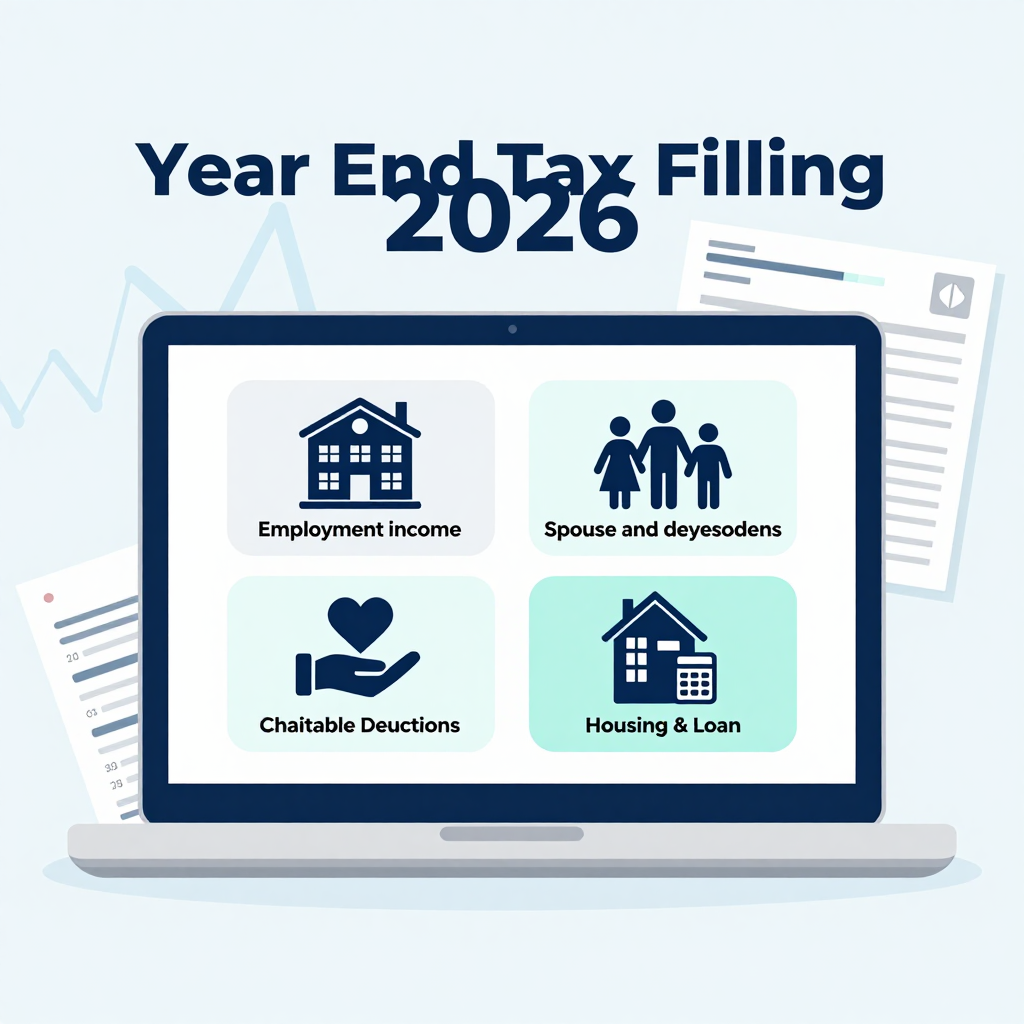
1. 2026 Year-End Tax Adjustment Simplification Service Has Begun! Are You Missing These Crucial Deadlines?
Did you know that if you miss the submission deadline for the Year-End Tax Adjustment Simplification Service, which started January 15, you could lose the tax refunds you deserve?
Every year, countless employees scramble through the year-end tax adjustment season and often overlook key deadlines. Especially since the submission deadline for this simplification service is a critical turning point for determining your tax refund, it’s essential to know the schedule in advance and prepare accordingly.
Don’t Miss These Key Dates for the 2026 Year-End Tax Adjustment Simplification Service
This year’s simplification service officially opened on January 15. But before diving in, there are important dates you cannot afford to forget.
3 Critical Dates You Must Remember
Step 1: Submission Deadline – January 7 at 10 PM
The most important deadline is January 7 at 10 PM. You must submit all your documents by this time to ensure your information is correctly reflected in the simplification service. Missing this deadline means you’ll face the hassle of manually entering additional data later.
Step 2: Service Launch – From January 15
After submitting your documents, the simplification service kicks off on January 15. Starting this day, you can conveniently review and verify data collected in advance by the National Tax Service from your employer, financial institutions, and insurance companies—all in one place.
Step 3: Corrections and Additional Submissions – January 15 to January 18, 8 PM
While reviewing the data provided through the simplification service, you might find missing or incorrect information. If so, you have until 8 PM on January 18 to submit any corrections or additional documents.
What Happens If You Miss These Deadlines?
Many employees tend to neglect the simplification service schedule and only discover missed deductions during the comprehensive income tax filing in May. This leads to extra document preparation and correction filings, making early thorough preparation a much more efficient approach.
Most importantly, if you miss the January 7, 10 PM deadline, the data automatically gathered by the National Tax Service won’t be properly reflected, forcing you to input details manually.
Start Now!
With the Year-End Tax Adjustment Simplification Service already live, make sure to check these three things today:
- Confirm that necessary documents from your employer, financial institutions, and insurance companies are ready.
- Verify that family member information and address updates are current.
- Mark the official simplification service schedule on your calendar.
The National Tax Service emphasizes, “Checking once more during the year-end tax adjustment maximizes your benefits and reduces the inconvenience of making additional corrections during May’s income tax filing.” This year, be meticulous with the simplification service deadlines and receive your rightful tax refund hassle-free!
Section 2. Deduction Items You Didn’t Know About: How Much Have You Been Missing?
From young workers at small businesses to men facing career breaks, are you fully aware of the hidden deduction items you must not miss this year’s year-end tax settlement? Now that the year-end tax settlement simplification service is up and running, this is the perfect moment to reclaim the benefits you might have overlooked. Every year, countless employees let rightful tax refunds slip away. In this section, we will thoroughly uncover the most commonly missed deduction items emphasized by the National Tax Service.
Small Business Employee Income Tax Reduction: If You Don’t Apply, You Get Nothing
Young employees at small businesses can receive a 90% income tax reduction for five years from their date of employment (capped at 2 million KRW per year). Here’s the crucial point: even if you meet the conditions, if you fail to submit the reduction application, you won’t receive this benefit at all.
From this year onward, there’s even more reason to pay attention. Men experiencing career breaks are now included in the reduction eligibility. Those aged 60 and above, persons with disabilities, and workers with career interruptions can get a 70% income tax cut for three years. If you fall into these categories, don’t delay—submit your reduction application to your company without hesitation.
Basic Spouse Deduction: You Can Claim It Even If Your Spouse Has Income
One of the biggest misconceptions is this: “If my spouse has income, I can’t claim the basic deduction.” This is simply not true.
What matters is whether your spouse’s annual earned income is 1 million KRW or less (if only employment income, total wages must be 5 million KRW or less). For example, if your spouse receives a monthly childcare leave allowance of 1.2 million KRW, that adds up to about 14.4 million KRW annually. However, the taxable income amount may differ, so precise calculation is essential.
If you meet the criteria, it’s not just about claiming the basic spouse deduction. You can also deduct credit card usage and medical expenses under your spouse’s name. When checking information through the year-end tax settlement simplification service, make sure not to overlook this part.
Donation Deductions: You Can Carry Them Forward for Up to 10 Years
Don’t give up if you weren’t able to fully utilize your donation deductions in a single year. Unclaimed donation amounts can be carried forward and deducted for up to 10 years.
Pay special attention to the years 2021–2022. Since donation deduction rates were temporarily higher during this period, any carried-forward donations from these years will retain the deduction rates applicable at that time. You can think of this as enjoying the same benefit as if you claimed it now.
Here’s another important tip: even if donations don’t appear in the simplification service, providing receipts directly from donation organizations to your company still makes them deductible. Keeping your paperwork thorough can unlock additional benefits.
Residential Officetels and Jeonse Loans: You Could Be Eligible Too
Many think housing deductions only apply to apartments. However, employees living in residential officetels or dormitory-type residences paying monthly rent can also claim monthly rent tax credits.
The same goes for jeonse (long-term deposit rental) loans. If you took out a loan to afford a jeonse deposit, you should claim the deduction on the principal and interest combined. A commonly missed point: deductions still apply even if you transfer your jeonse loan to another bank. Refinancing to reduce interest rates won’t cost you your tax credit benefits.
Right now, as the year-end tax settlement simplification service goes live, this moment might be your last chance to increase your tax refund. One thorough check could mean the difference of hundreds of thousands or even millions of KRW. Review the items above again and make sure you haven’t missed any deductions!
3. Spouse and Dependent Deductions: Essential Tips Not to Miss in Year-End Tax Adjustments
Don’t assume that deductions are impossible just because your spouse has income. You must verify their annual income amount and even their credit card usage to maximize your refund.
When the year-end tax adjustment season arrives, many employees get confused about spousal deductions. Especially if your spouse receives childcare leave benefits or other income, it’s a common but risky mistake to hastily conclude, “Since my spouse has income, I cannot claim deductions.” This is a dangerous misunderstanding.
The Real Criteria for Basic Spousal Deductions
The key is your spouse’s annual income amount. Even if your spouse receives 1.2 million KRW monthly from childcare leave benefits, what truly matters is whether their annual income amount is 1 million KRW or less. In cases where the income is from wages only, the spouse qualifies for the basic deduction if their total annual salary is 5 million KRW or less.
Now that the simplified tax adjustment service has launched as of January 15th, it’s more important than ever to accurately check your spouse’s income details. Carefully review the income data shown in the simplified service, and if your spouse meets the criteria, confidently claim the basic deduction.
Also Claim Credit Card and Medical Expense Deductions Under Your Spouse’s Name
If you qualify for the basic spousal deduction, don’t forget additional benefits you can claim. These include expenses charged to your spouse’s credit card and medical costs.
Many employees miss out because they don’t realize these spouse-named expenses are deductible. If your spouse is eligible for the basic deduction:
- Credit Card Usage: Credit cards, debit cards, and cash receipts used by your spouse are all included in the deduction.
- Medical Expenses: Not only your spouse’s medical expenses but also medical costs your spouse paid on behalf of dependents can be deducted.
When you use the simplified year-end tax adjustment service to check credit card usage, always remember to include credit card statements under your spouse’s name.
Checklist to Double Check Before Claiming Spousal Deductions
Make sure you verify the following before claiming deductions:
- Is your spouse’s annual income amount for 2025 1 million KRW or less?
- If they have wage income, is the total salary 5 million KRW or less?
- Are there any credit card expenses under your spouse’s name?
- Are there any medical expenses that your spouse paid?
Reviewing these points one by one while cross-checking with the simplified tax adjustment service data can lead to a much larger refund than expected.
Section 4. Deductions for Donations and Housing Expenses: A Decade-Long Tax-Saving Opportunity?
Did you know that donations can be carried forward and deducted for up to 10 years, and that even monthly rent paid for gosiwons or jeonse loans qualify for tax credits? Many employees overlook these hidden benefits despite using the simplified year-end tax settlement service. In this section, we reveal strategies to save taxes over 10 years through donation and housing expense deductions.
Donation Deductions: A Second Chance Over 10 Years
It’s easy to think that if you don’t use up your donation deductions within one year, they’re lost forever. However, undeducted donations can be carried forward and deducted for up to 10 years—a fact many are unaware of.
Pay special attention to the years 2021–2022. During this period, donation deduction rates were temporarily higher, meaning any carryforward donations from those years can still benefit from the original elevated deduction rates. This presents a golden opportunity to maximize your tax refund.
Furthermore, don’t despair if your donations don’t appear in the simplified year-end tax settlement service. If you obtain receipts directly from donation organizations and submit them to your employer, you can still claim those deductions. This simple step ensures you don’t miss out on any donation tax credits.
Housing Deductions Apply to Office-Style Apartments and Gosiwons, Too
Many mistakenly believe housing deductions apply only to apartments. In fact, employees living in residential officetels or gosiwons who pay monthly rent can also claim monthly rent tax credits. The key is to verify that the residence is used for actual dwelling purposes.
When applying for housing deductions, distinguish between the data automatically retrieved by the simplified year-end tax settlement service and any additional documents you need to prepare and submit.
Jeonse Loan Interest and Principal Deductions Stay Intact Even After Refinancing
If you have a jeonse deposit loan, you are eligible for deductions on the repayment amount, which combines both principal and interest. A commonly missed point: even if you refinance your jeonse loan with another bank, the deduction remains valid.
Don’t worry that refinancing to reduce interest burdens will forfeit your deduction benefits. You can continue claiming deductions on principal and interest repayments after refinancing, making it a smart decision to secure better loan terms.
A Quick Check Through Year-End Tax Settlement Simplification Is Your Best Investment
Now that the simplified year-end tax settlement service is live, carefully reviewing your donation and housing expense deductions is crucial. By checking just once, you can uncover missed benefits and make the most of carryforward deductions available over a decade. This small effort can translate into tax refunds worth hundreds of thousands of won.
The Great Benefits and Joy of Tax Savings from One Last Check
The National Tax Service emphasizes the power of 'one more review'! With just this one confirmation, you won’t miss out on any tax refunds and can even reduce the hassle of filing your comprehensive income tax return in May.
The Year-End Tax Settlement Simplification Service Is Just the Beginning, Not the End
Many employees simply accept the information provided by the Year-End Tax Settlement Simplification Service without question. However, as the National Tax Service stresses, this is only the starting point. The simplification service does not automatically include all deduction items.
To receive the rightful tax refund, you must personally verify and submit additional items not covered by the simplification service—such as income tax reductions for employees at small and medium-sized enterprises, carryover deductions for donations, and spouse basic deductions. This process may seem cumbersome, but one precise review can make a difference of hundreds of thousands or even millions of won in your refund amount.
How One Check Reduces Double Burden
When the comprehensive income tax return season arrives in May, many workers discover the deduction items they missed during the year-end tax settlement. This means they must prepare additional reports, organize corrections, and submit everything again to the tax office—a real inconvenience.
However, thorough preparation during the year-end tax settlement can prevent all these troubles upfront. By carefully reviewing your deduction items during the Year-End Tax Settlement Simplification Service period, you will rarely need to make further corrections in May. Ultimately, ‘one more review’ is a wise choice that goes beyond simple tax savings to reducing administrative burdens.
Now Is the Golden Time for Confirmation
The Year-End Tax Settlement Simplification Service, launched on January 15, allows corrections and submission of additional documents until 8 PM on January 18. This period is the golden opportunity for your final review.
- Carefully examine the information provided by the simplification service
- Confirm that no deduction items are missing
- Thoroughly check spouse deductions, donations, housing cost deductions, and more
- Submit any necessary documents immediately
These small efforts combined can maximize your tax refund.
The Joy of Tax Savings Belongs to Those Who Are Prepared
The National Tax Service advises, "Just one more check during the year-end tax settlement will increase your benefits and reduce the inconvenience of making additional corrections during the May comprehensive income tax filing." This is not merely administrative guidance but a warm piece of advice to help workers protect their rightful benefits.
Access the Year-End Tax Settlement Simplification Service now and begin your final review. Experience the joy of receiving your rightful tax refund while minimizing unnecessary administrative burdens.
Comments
Post a Comment