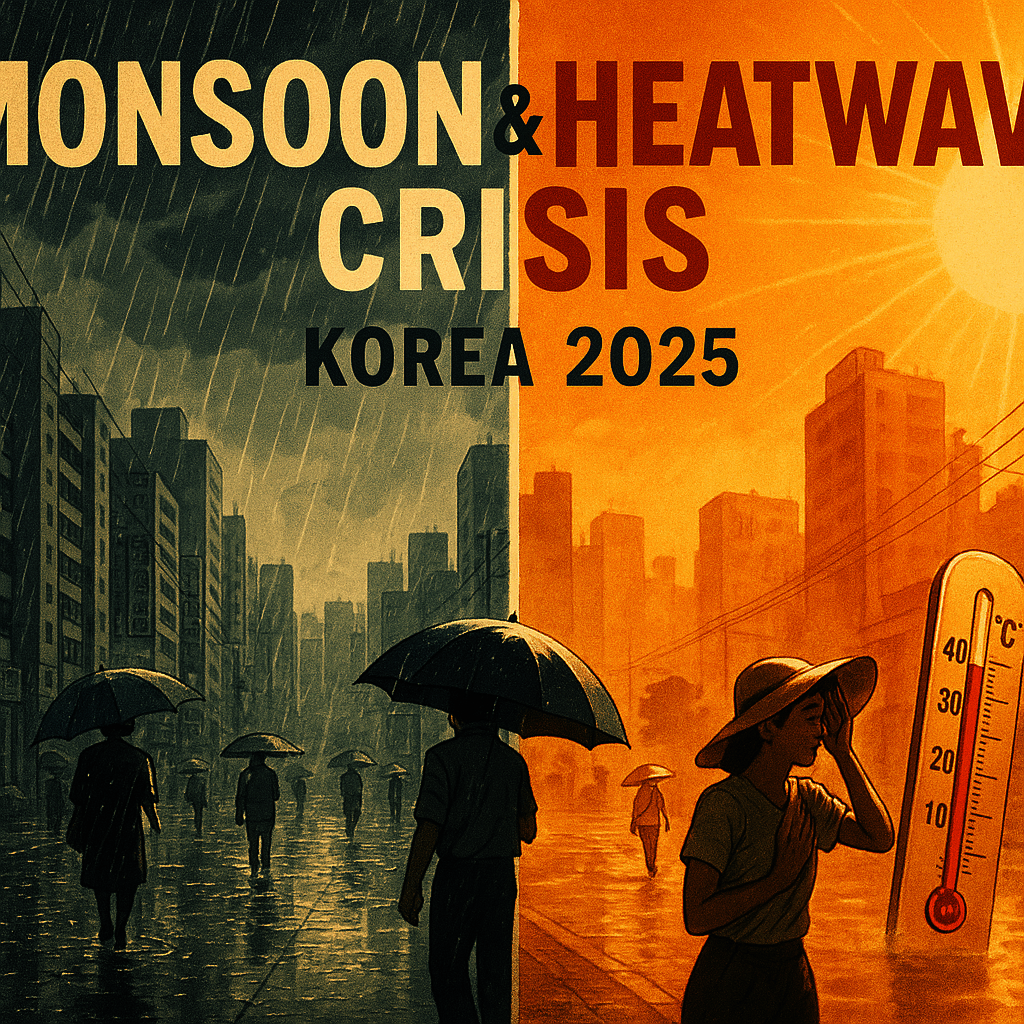
This Summer, Weather Anomalies Rewrite the Record
“Monsoon and heatwave at the same time?” In the summer of 2025, South Korea is facing an unprecedented meteorological phenomenon. What changes will hit our daily lives if torrential rains and record-breaking heatwaves strike all at once?
This summer, the weather on the Korean Peninsula is exhibiting more unpredictability than ever before. Traditionally, temperatures tend to drop somewhat during the monsoon season, but 2025’s weather is turning that conventional wisdom completely upside down. In Seoul, even during the weekend when the monsoon began, the highest temperature of the year soared to 34.2°C. This goes beyond just a hot day—it signals the grave reality of climate change.
These abnormal weather conditions directly impact our everyday lives. The combination of heavy rain and sweltering humidity is causing increased fatigue and physical strain. Especially in the Seoul metropolitan area, hourly rainfall exceeding 30mm is forecasted, raising serious concerns about floods and other natural disasters.
Such extreme weather phenomena pose more than mere inconvenience—they are direct threats to our health and safety. High temperatures and humidity increase the risks of heatstroke, dehydration, and various respiratory illnesses. At the same time, the dangers of flooding and landslides from intense rainfall cannot be overlooked.
Weather experts warn that these events could be signs of climate change triggered by global warming. The outlook predicts that extreme weather patterns like these could become more frequent in the future. Hence, urgent preparation is essential not only on an individual level but also through long-term social and national strategies.
In this era of unusual climate, we must establish more rigorous weather monitoring and rapid response systems. Equally, participating in small daily actions to mitigate climate change is vital. Now is the time for all of us to raise awareness about weather and climate and strive for a sustainable future.
Monsoon Bombardment in the Seoul Metropolitan Area: The Double Threat of 30mm/hr Torrential Rain and Heatwaves
The weather in the Seoul metropolitan area is displaying extreme patterns. Amidst continuous torrential rain exceeding 30mm per hour, Seoul recorded a scorching 34.2°C, presenting a paradoxical phenomenon of a 'monsoon in the heatwave.' How can we explain these extreme weather patterns?
The Uneasy Coexistence of Monsoon Rains and Heatwaves
The simultaneous occurrence of heavy monsoon rains and heatwaves can be attributed to the effects of climate change. Due to global warming, increased moisture in the atmosphere forms intense rain clouds, while high temperatures persist. As a result, the metropolitan area has faced an overwhelming volume of rainfall in a short period.
The Danger of Torrential Rain Exceeding 30mm per Hour
Rainfall over 30mm per hour places tremendous stress on urban drainage systems. This amount can quickly flood roads and low-lying areas, posing heightened risks especially within the dense urban landscape of the metropolitan region. Under such weather conditions, avoiding outdoor activities is advisable, and if necessary, carrying umbrellas and waterproof gear is essential.
The Interaction Between Heatwaves and Monsoon Rains
The sweltering 34.2°C far exceeds the average monsoon season temperatures. Such high heat increases atmospheric moisture content, generating even stronger rain clouds. Conversely, heavy rain temporarily lowers temperatures but, once the rain stops, increased humidity raises the perceived temperature, creating a vicious cycle.
Precautions and Preparedness
Extreme weather conditions like these demand special attention to personal safety and health. When venturing outside, it’s important not only to bring an umbrella but also extra clothing. Indoors, managing humidity with dehumidifiers and proper ventilation is crucial. Additionally, staying hydrated and using cooling systems are vital to withstand the heatwave.
These weather patterns in the metropolitan area signal climate change’s growing impact, with such extremes expected to become more frequent. Therefore, alongside individual preparedness, urgent improvements in urban infrastructure and comprehensive climate change response strategies are imperative.
How to Protect Yourself from Fatigue and Health Issues in Persistently Hot and Humid Weather?
With soaring humidity levels and rising perceived temperatures, ongoing fatigue is taking a toll on many. Experts warn of the “dread of 90% humidity” and emphasize tailored strategies to safeguard your health this summer. What warning signs should you watch for in your daily life?
The Impact of Hot and Humid Weather on Our Bodies
During the rainy season, hot and humid conditions exert various effects on our bodies. High humidity especially escalates the perceived temperature, intensifying heat stress. Key health risks that may arise include:
- Increased risk of dehydration
- Rising chances of heatstroke and heat exhaustion
- Weakened immune system
- Sleep disturbances
- Worsening mold allergies
Health Management Tips for Hot and Humid Weather
Manage Your Hydration
- Drink water regularly before you even feel thirsty.
- Avoid caffeinated and alcoholic beverages; instead, make appropriate use of electrolyte drinks.
Optimize Indoor Environment
- Use air conditioning and dehumidifiers to keep indoor humidity below 60%.
- Ensure regular ventilation to circulate fresh air indoors.
Exercise Wisely
- Avoid outdoor workouts in hot and humid conditions; choose light exercises indoors.
- Stay hydrated and take adequate breaks during physical activity.
Prevent Sick Building Syndrome
- Keep the temperature difference between indoors and outdoors within 5°C.
- When running air conditioning, ventilate for 10 minutes every 2 hours.
Take Care of Your Skin
- Shower frequently to keep your skin clean.
- Wear lightweight, breathable clothing to facilitate sweat evaporation.
Recognizing Weather-Related Health Warning Signs
If you experience any of the following symptoms in hot and humid weather, rest immediately and seek medical help if necessary:
- Severe headaches or dizziness
- Nausea or vomiting
- Rapid and shallow breathing
- Extreme fatigue or lethargy
- Skin feeling hot and dry
These signs may be early warnings of heatstroke or dehydration and require urgent attention.
With proper care and vigilance, you can enjoy a healthy and energetic summer despite the sweltering humidity. Being sensitive to weather changes and consistently monitoring your physical condition is crucial above all else.
Weather Reversals and Our Preparedness: Survival Strategies Amid Monsoon and Heatwaves
As forecasted by the Meteorological Agency, the monsoon rains and relentless heatwaves are expected to persist. How should we respond to these extreme weather swings? Let’s explore practical strategies to minimize their impact on our daily lives and ensure a safe summer.
Preparing for the Monsoon: A Battle Against Water
- Check Drainage Systems: Regularly clean the drainage around your home to prevent blockages.
- Stock Up on Waterproof Gear: Prepare umbrellas, rain boots, and waterproof bags in advance.
- Control Indoor Humidity: Use dehumidifiers and ventilate regularly to prevent mold growth.
Combating the Heatwave: Fighting the Heat
- Stay Hydrated: Drink water regularly before you even feel thirsty.
- Maintain Cooling Devices: Clean air conditioner filters and keep the temperature between 26-28°C.
- Be Cautious When Going Outdoors: Use sunscreen, carry a parasol, and wear loose-fitting clothes.
Lessons from Climate Change: Living in Harmony with the Weather
This summer’s extreme weather vividly highlights the urgency of climate change. Beyond personal preparedness, it underscores the importance of long-term eco-friendly habits.
- Save Energy: Reduce unnecessary electricity use to lower greenhouse gas emissions.
- Practice Recycling: Cut down on plastic usage and participate actively in waste separation.
- Choose Eco-friendly Transport: Whenever possible, use public transportation or bicycles.
Our efforts to adapt to changing weather are more than just coping with temporary discomfort—they are investments in a sustainable future. This summer, why not turn the challenge of extreme climate into an opportunity to rethink our lifestyles? By preparing and acting together, no weather will ever intimidate us.
Comments
Post a Comment