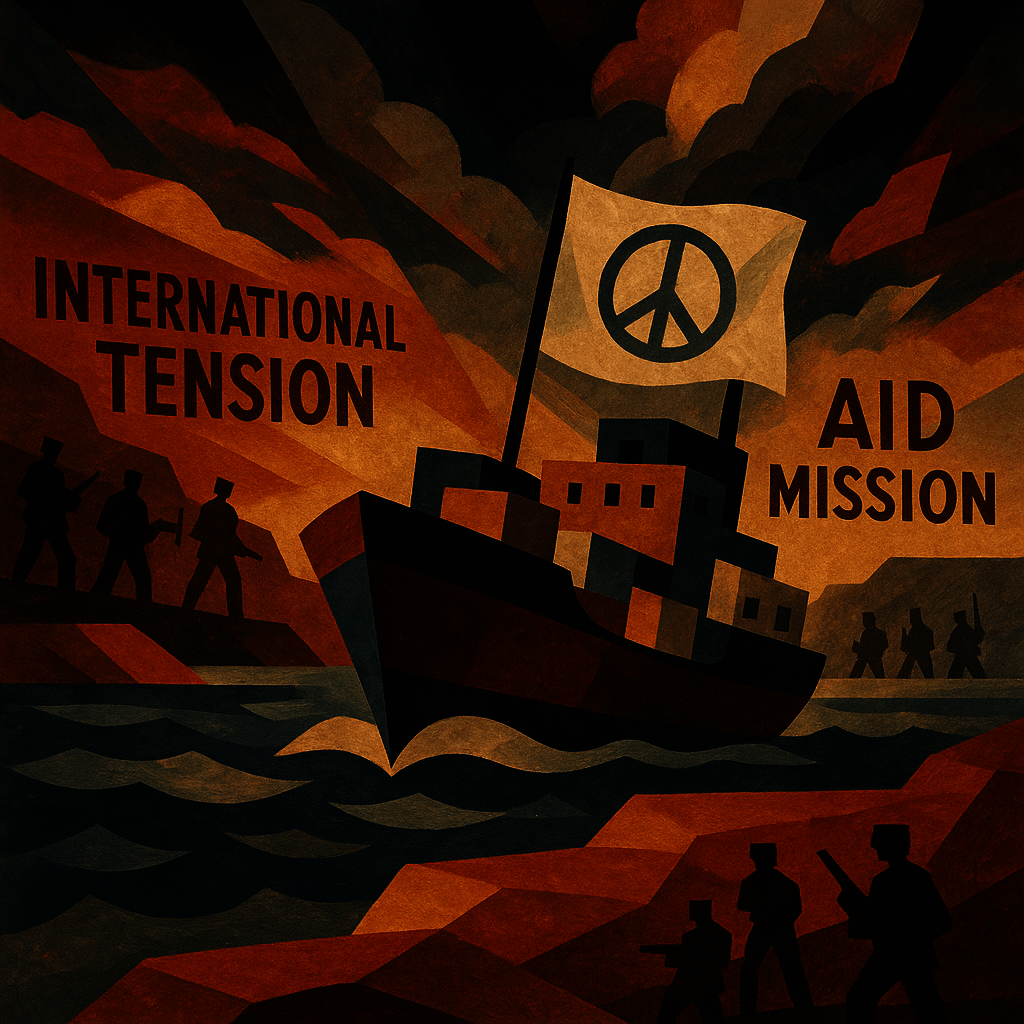
Sailing Through the Storm: Greta Thunberg Appears in the Gaza Strip
One environmental activist has now set sail towards a critical point. Why is the world’s attention focused on the Gaza relief ship carrying Greta Thunberg?
In June 2025, Sweden’s young climate activist Greta Thunberg once again captured global attention. This time, instead of climate change, she shocked the international community by boarding a humanitarian relief flotilla bound for the Gaza Strip.
Greta Thunberg’s New Challenge
Greta Thunberg joined the Gaza relief flotilla led by the Freedom Flotilla Coalition. The mission of this flotilla is to challenge Israel’s blockade on Gaza and deliver desperately needed humanitarian aid. Carrying medical supplies, food, and educational resources, these vessels embody more than just material transport—they convey a powerful political message.
Israel’s Hardened Response and International Law Debate
The Israeli government considers this flotilla a threat to national security. It has warned of military action and announced the arrest of all those aboard, including Greta Thunberg. This tough stance has drawn criticism from the international community for blocking humanitarian aid and suppressing peaceful protest, sparking controversies over potential violations of international law.
The Fusion of Environmental and Human Rights Movements
Greta Thunberg’s latest action stands as a symbolic example of the intersection between environmental activism and human rights advocacy. Highlighting the intertwined nature of the climate crisis and human rights issues, it introduces a new global environmental movement strategy. This marks a shift from single-issue activism to a multifaceted approach, drawing worldwide focus on how Greta Thunberg’s efforts will unfold.
Greta Thunberg’s bold move compels the international community to reconsider responses to humanitarian crises and political conflicts. The world is watching closely to see what changes this courageous young activist’s decision will ignite.
The Freedom Flotilla Coalition’s Mission – Humanitarian Aid and Political Challenge with Greta Thunberg’s Involvement
Is the mission of this fleet merely an act of goodwill, or is it a global message against Israel’s ironclad blockade? The supplies aboard the Gaza aid ship carry a significance far beyond their material value.
The Freedom Flotilla Coalition’s Gaza aid mission, while ostensibly focused on humanitarian relief, is laden with complex political implications. The involvement of Greta Thunberg has drawn heightened attention to this mission, which carries multilayered meanings:
- The Urgency of Humanitarian Aid
- Delivering essential medical supplies, food, and educational resources
- Attempting to improve the harsh living conditions of Gaza’s residents
- Delivering a Political Message
- Expressing international criticism of Israel’s blockade policies
- Drawing attention to the human rights and freedoms of Palestinian people
- Raising Issues of International Law and Human Rights
- Asserting the right to peaceful navigation
- Highlighting the legal and moral issues surrounding the obstruction of humanitarian aid
- Linking Environmental and Human Rights Movements
- Emphasizing the interconnectedness of the climate crisis and human rights through Greta Thunberg’s participation
- Presenting a multidimensional approach from the global civil society
This mission goes beyond merely delivering supplies; it sends a powerful message to the international community. Greta Thunberg’s involvement amplifies the impact of this message, stirring the engagement of youth worldwide.
Ultimately, the Freedom Flotilla Coalition’s mission pursues the dual objectives of humanitarian aid and political challenge. It raises a vital question about how the international community will uphold humanitarian values amid complex geopolitical conflicts.
Military Tensions and the World’s Attention: Israel’s Warning and Arrest Threats Targeting Greta Thunberg
The Israeli military is on the move. A warning aimed at Greta Thunberg, the global icon of the environmental movement, and the looming possibility of an actual arrest operation—what will happen next?
News broke that Greta Thunberg has boarded a humanitarian aid flotilla heading to the Gaza Strip, provoking a swift and tough response from Israeli authorities. Israel has warned of military action against the flotilla and has even mentioned the potential arrest of Greta Thunberg herself.
Israel’s Stern Response and Its Implications
The Israeli government labels this flotilla a "national security threat." They have declared that if the flotilla attempts to approach Gaza waters, military measures will be taken to forcibly prevent entry. This is not just an empty threat but a serious warning that could lead to real action.
Greta Thunberg: From Environmental Activist to Political Actor
Greta Thunberg’s latest move highlights that her activism is expanding beyond environmental issues into human rights and political conflicts. This marks a shift from a single-issue movement to a multi-faceted approach, presenting new challenges and questions to the international community.
Global Reactions and the Road Ahead
With Israel’s hardline stance and Thunberg’s involvement, this incident has captured worldwide attention. The international community now faces a critical moment to reconsider complex issues such as balancing humanitarian aid and national security, the right to peaceful protest, and adherence to international law.
Greta Thunberg’s fate, along with the future of the flotilla, remains uncertain. One thing is clear: this episode stands at the crossroads of not just political confrontation, but also the intricate intersection of environment, human rights, and international relations. What unfolds next will serve as a turning point in reshaping the values and priorities of the global community.
Human Rights, Environment, and a New Frontline in International Law: Greta Thunberg’s Gaza Aid Efforts
Amid rising tensions surrounding the Gaza Strip, environmental activist Greta Thunberg stands at the forefront. Beyond mere humanitarian aid, this episode is creating new ripples at the intersection of international human rights and environmental activism. Why has this endeavor taken on such profound significance?
The Intersection of Human Rights and the Environment
Greta Thunberg’s involvement in the Gaza relief flotilla symbolically links environmental and human rights movements. By emphasizing the interconnectedness of the climate crisis and human rights issues, she introduces a fresh strategy for global environmental activism. This marks a pivotal shift from focusing on isolated issues to adopting a multifaceted, integrated perspective on world challenges.
The Clash Between International Law and Humanitarianism
Israel’s threats of military response starkly illuminate the tension between international law and humanitarian principles. The restriction of peaceful navigation rights and the necessity for humanitarian aid under the guise of national security raises fundamental questions about how the international community should address humanitarian crises amid political conflict.
Redefining the Role of Global Civil Society
Thunberg’s actions demonstrate that environmental activists can actively engage in broader social and political issues. This could redefine the role of global civil society, opening the door for activists across environmental, human rights, and peace domains to collaborate in tackling complex international problems.
The Power of Media and International Public Opinion
Notably, Greta Thunberg’s participation has drawn international media attention to Gaza’s situation. This highlights how the influence of a prominent public figure can play a crucial role in raising awareness of humanitarian crises and shaping global public opinion.
This event transcends ordinary relief efforts to forge a new frontline where human rights, environmental concerns, and international law converge. Greta Thunberg’s actions pose a vital challenge to the global community on how to respond to increasingly complex international issues.
The New Role of Global Civil Society: What Greta Thunberg’s Challenge Left Behind
Beyond a single issue, the expansion of solidarity—and where environmental and human rights movements are headed. Now, no one can ignore this powerful wave.
Greta Thunberg’s recent actions have introduced a new paradigm for environmental activists. By joining the Gaza humanitarian aid flotilla, having previously focused solely on the climate crisis, she cemented the inseparable link between environmental and human rights issues worldwide.
The Power of Solidarity: From Single Issues to Complex Approaches
Thunberg’s actions demonstrate that the role of global civil society is no longer confined to one problem. As awareness grows that climate change, human rights, and peace are deeply interconnected, activists’ methods of solidarity are evolving.
A New Model of Activism: Flexibility Beyond Boundaries
Thunberg’s transformation can serve as a model for future activists. By expanding her focus from environmental issues to human rights and international politics, she highlighted the necessity of a holistic approach to complex global challenges.
Rethinking International Responses: New Horizons of Cooperation and Conflict
Thunberg’s challenge urges the international community to reconsider how it addresses humanitarian crises and political conflicts. As environmental activists’ political engagement increasingly influences global issue resolution, governments and international organizations must seek new models of cooperation with civil society.
A Challenge Toward the Future: The Age of Integrated Approaches
Thunberg’s journey heralds the dawn of a new era where environmental, human rights, and peace movements fuse together. Activists must now respond to global challenges with broader perspectives and multifaceted approaches—paving the way for more effective and sustainable change.
Greta Thunberg’s courage and innovative approach have opened new possibilities for global civil society. As we face ever more complex and interconnected problems, the lessons she leaves behind inspire us to tackle these issues through stronger, more effective solidarity.
Comments
Post a Comment