Targeting the Heart of Global Expansion: Japan vs. Indonesia
Why are numerous Korean companies turning their focus to Japan and Indonesia as we approach 2030? These two countries stand as captivating targets at opposite ends of the Asian market spectrum. Let’s delve into the irresistible allure of these two distinct markets—once conquered, there's no turning back.
Japan vs. Indonesia: Contrasting Market Characteristics
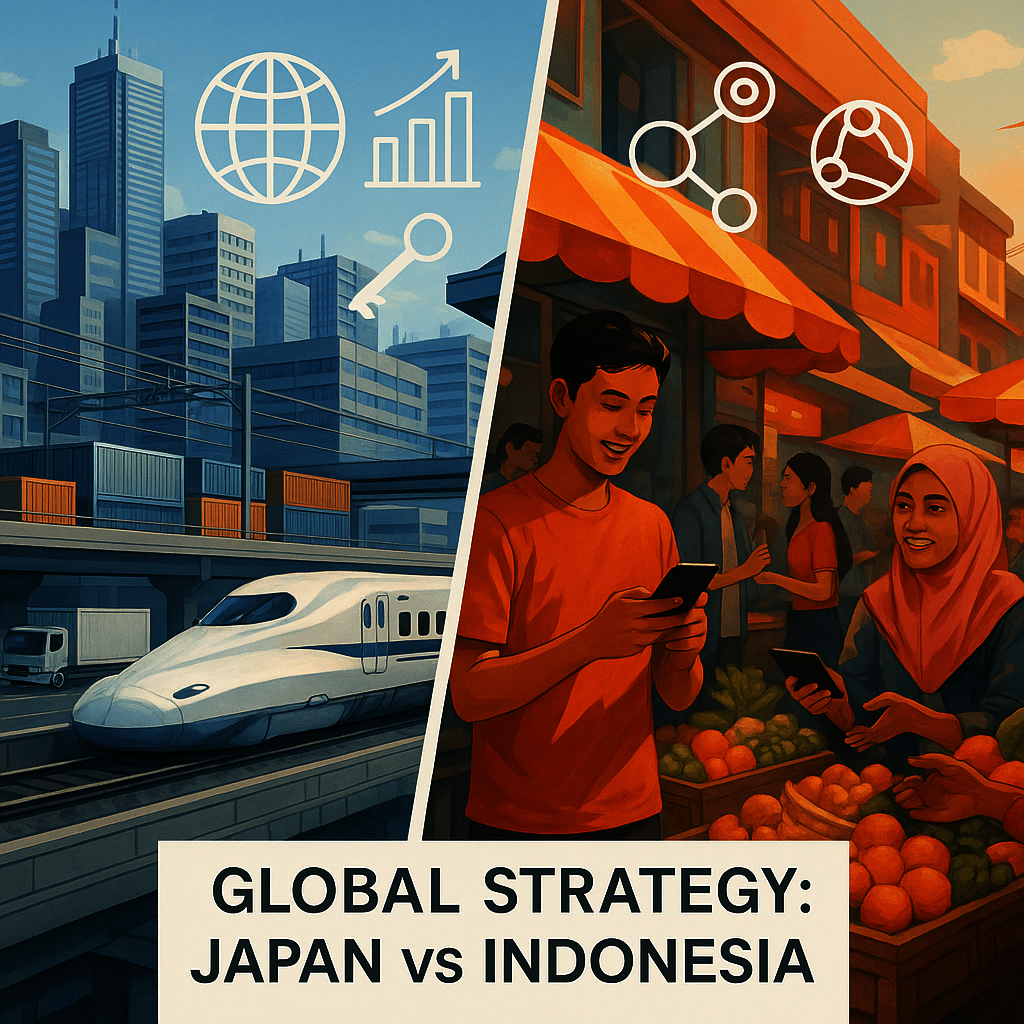
Japan and Indonesia present completely contrasting market features. Japan is a mature consumer market, boasting high purchasing power and demanding quality standards. In contrast, Indonesia is a rapidly growing emerging market characterized by a youthful population and explosive growth in the digital economy.
Japan: Maximizing Efficiency and Quality
Success in the Japanese market demands near-perfect service. Logistics efficiency is especially crucial, with many companies adopting innovative systems to cut delivery times down to 1-2 days. Meeting the high expectations of Japanese consumers is both the entry barrier and the key to success.
Indonesia: Pioneering the Land of Growth
With over 270 million people and a swiftly expanding middle class, Indonesia is an irresistibly attractive market. The surge in mobile-centered digital consumption makes online platform strategies particularly effective. Given its regional diversity, a segmented approach is essential.
Global Strategy Toward 2030
Many companies aim for significant achievements in the global market by 2030, including Japan and Indonesia. Japan serves as a stable base camp guaranteeing steady profits, while Indonesia opens doors to explosive growth opportunities as a new frontier. Striking a balanced approach to both markets will be the key to global success.
Japan versus Indonesia—each market seduces global companies with its own unique charm. Maturity and dynamism, stability and growth—all in stark contrast. Only those companies that can conquer these two contrasting markets simultaneously will truly rise as global players.
The Clash of Maturity and Growth: Japan vs. Indonesia Market Strategies
One is a highly developed market, the other an emerging market bursting with limitless potential. What do consumers in Japan and Indonesia truly want, and what strategies do companies use to approach them?
Japan: A Mature Market Pursuing Perfection
The Japanese market is known for having the most demanding consumers in the world. To succeed here, keep these points in mind:
- Quality First: Japanese consumers demand the highest quality. The completeness of a product determines the fate of the brand.
- Fast Delivery: As demonstrated by Musinsa, delivery within 1-2 days is now standard. Logistics efficiency is a key competitive advantage.
- Meticulous Customer Service: In Japan, the spirit of ‘Omotenashi’—genuine and heartfelt service—is crucial.
Indonesia: An Emerging Power with Limitless Potential
On the other hand, Indonesia is a blue ocean on the verge of explosive growth:
- Mobile-Centric Strategy: Indonesia is a mobile-first market. Services optimized for mobile are a must.
- Price Competitiveness: While quality matters, affordable pricing is the key to market entry.
- Localization: A country rich in diverse cultures and languages. Tailored regional strategies are the secret to success.
Japan vs. Indonesia: A Differentiated Approach is Essential
Understanding and adapting to the differences between the two markets is the core of a global strategy:
- Japan: Focus on building brand trust and delivering a flawless customer experience.
- Indonesia: Concentrate on pricing strategies targeting the growing middle class and digital marketing.
Successful companies precisely grasp the characteristics of these two markets and deploy strategies tailored to each. If you can conquer both Japan and Indonesia, the dream of dominating the Asian market will be closer than ever.
Logistics and Branding: Who Wins Between Japan and Indonesia?
In the global market, logistics and branding strategies are key to success. Especially, the contrasting market environments of Japan and Indonesia present fascinating challenges for companies. In Japan, ultra-fast delivery within 1-2 days is said to be the key to success, while in Indonesia, platform innovation takes the spotlight—but why is that?
Japan: Speed Equals Competitiveness
In the Japanese market, logistics efficiency is directly linked to brand value. Take the case of Musinsa, which shortened its delivery time from a week to just 1-2 days. This improvement is not merely about faster shipping; it’s an innovation in customer experience. It meets the high expectations of Japanese consumers while boosting trust in the brand.
- Ultra-fast delivery: The core to increasing customer satisfaction
- Logistics optimization: Balancing inventory management and cost reduction
- Technology investment: Predictive shipping powered by AI and big data
Indonesia: Platforms Dominate the Market
In contrast, innovation in platforms determines success in Indonesia. With its vast territory and diverse regional characteristics, Indonesia values accessibility and convenience more than just fast delivery. A digital platform strategy tailored to mobile-centric shopping patterns is the key to winning.
- Mobile-first: Optimizing the shopping experience on smartphones
- Localization strategy: Differentiated approaches for Java island and outer regions
- Social commerce: Strengthening marketing through influencers
Winning Conditions: Flexibility and Localization
To succeed in Japan versus Indonesia, companies need agile strategies that fit each country’s unique traits. Japan demands a flawless logistics system, while Indonesia requires building an innovative platform. Yet, the bigger challenge lies in harmoniously combining these two elements.
Ultimately, the winner in logistics and branding strategies will be the company that deeply understands the local market and delivers tailored solutions. Watching global companies’ moves in Japan and Indonesia offers important clues to predict the future trends of the Asian market.
MUSINSA’s Dual-Faced Strategy for 2030: Japan vs. Indonesia
How will MUSINSA seize both stability and growth simultaneously? Witness the dramatic choice unfolding between Japan’s “surefire profits” and Indonesia’s “challenge and future”! In MUSINSA’s global strategy toward 2030, Japan and Indonesia form two pivotal pillars.
Japan: The Symbol of Stability
For MUSINSA, the Japanese market represents a “reliable source of revenue.” Leveraging a mature consumer base and advanced logistics infrastructure, MUSINSA employs the following strategies:
- Ultra-fast delivery system: Cutting down delivery time from one week to just 1-2 days
- Quality-focused marketing: Offering product lines that meet Japan’s high consumer expectations
- Localized customer service: Applying Japan’s unique culture of meticulous customer care
Indonesia: The Key to Future Growth
On the other hand, Indonesia symbolizes “challenge and future.” Targeting its youthful population and rapidly growing digital economy, MUSINSA pursues innovative approaches such as:
- Mobile-centric platform: Developing apps tailored to Indonesia’s high smartphone usage rates
- Reflecting local trends: Designing products that capture Indonesia’s distinctive fashion culture
- Region-specific strategies: Differentiated marketing that considers characteristics of big cities like Jakarta and rural areas
Japan vs. Indonesia: The Secret to Balanced Growth
MUSINSA’s “Japan vs. Indonesia” strategy isn’t just about expanding markets—it’s a savvy leap toward becoming a global powerhouse. By stabilizing profits in Japan and boldly investing in the promising Indonesian market, this two-pronged approach will be the linchpin of MUSINSA’s 2030 global ambitions.
Will this dual-faced strategy crown MUSINSA as “Korea’s pride” in the global fashion arena? Success in Japan and Indonesia will undoubtedly be the measure of MUSINSA’s worldwide triumph.
How to Survive in the Global Market: A Comparison of Japan vs. Indonesia Strategies
You are the CEO of a global company. Before you lie two massive markets: Japan and Indonesia. How can you succeed in these two vastly different markets? Let’s explore why understanding consumers, tailoring strategies, and having insightful foresight into change are essential.
Understanding Consumers: Beyond Cultural Differences
Although Japan and Indonesia are geographically close, their consumer cultures are worlds apart. Japanese consumers prioritize quality and brand trust, whereas Indonesian consumers favor price competitiveness and convenience. Grasping these differences and offering products and services tailored to each market is the first step toward success.
Tailored Strategies: One Size Does Not Fit All
As seen in the case of Musinsa, Japan’s strategy focused on maximizing logistics efficiency to reduce delivery times. Meanwhile, in Indonesia, leveraging digital platforms is crucial. This highlights the need to develop customized strategies suited to the unique traits of each market.
Insight into Change: Predict the Future
To survive in the global market, you must not only understand the present but also forecast future shifts. In Japan’s mature market, innovation that creates new needs is essential. In Indonesia’s growing market, capturing rapidly evolving consumer trends is key.
Conclusion: Flexibility and Adaptability Are Central
The contrasting characteristics of the Japan and Indonesia markets pose both challenges and opportunities for global companies. The key to success lies in comprehending each market’s unique demands and responding with agility. Only companies that deeply understand consumers, craft tailored strategies, and continuously monitor ever-changing market trends can become true winners on the global stage.
Comments
Post a Comment