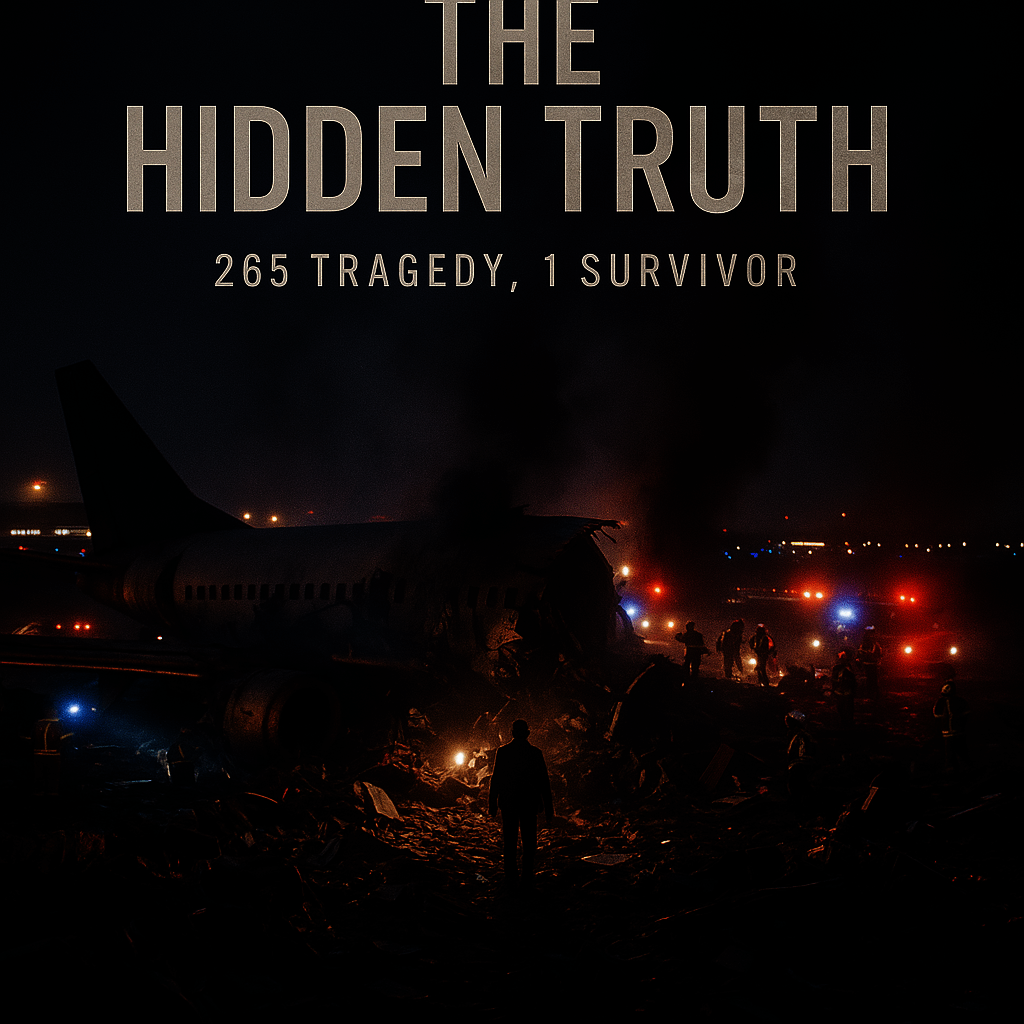
Dawn of Destiny: The Air India Dreamliner Crash
The Boeing 787 Dreamliner, once hailed for its "cutting-edge safety"—crashed into the ground within just 30 seconds, turning the night sky of June 12, 2025, into a tragedy. How did this unprecedented disaster happen?
Air India Flight 171 was a routine flight from Ahmedabad, India, to London. Carrying 230 passengers and 12 crew members, the flight was preparing to greet a peaceful dawn. But fate was merciless.
Just 30 seconds after takeoff, the plane suddenly lost control. In an instant, it plummeted into the Megani Nagar area, its tail colliding with buildings. This shocking accident claimed at least 265 lives and caused damage on the ground as well.
This 11-year-old Dreamliner was Air India’s pride. But on that day, that pride shattered into pieces. It marked the deadliest tragedy for Air India since 1985 and was the first fatal crash involving a Boeing 787.
The miraculous story of the sole survivor, Vishwashi Kumar Ramesh, was the only glimmer of hope amid this tragedy. Seated in 11A, he was injured but managed to live.
Now, all eyes are focused on uncovering the cause of the crash. Was it a technical malfunction? Human error? Or an unforeseen external factor? Air India, Boeing, and the global aviation industry are striving to answer these critical questions.
This disaster reminded us once again of the importance of aviation safety. It was a tragic lesson showing that neither cutting-edge technology nor decades of experience can sometimes withstand the will of fate.
The Untold Story Behind the Tragedy: The Mystery of Air India Flight 171’s Sole Survivor and Its Passengers
Onboard Air India Flight 171 were 242 passengers—yet astonishingly, only one survived. This incredible survival tale centers on 40-year-old British-Indian man, Vishwashi Kumar Ramesh. Why was he the lone survivor?
The Secret of Seat 11A
Ramesh’s seat, 11A, was located at the front of the aircraft. This position likely played a crucial role in his survival. Aviation safety experts speculate:
- Impact absorption: Seats at the front may have endured less force than those at the rear.
- Escape ease: Proximity to emergency exits could have enabled swift evacuation.
- Rescue accessibility: The aircraft’s front section might have suffered less damage, making rescue operations more feasible.
However, these remain hypotheses—the exact survival mechanism awaits further investigation.
The Mystery of the Passenger List
Air India Flight 171’s passengers consisted of:
- Indians: 169
- British: 53
- Portuguese: 7
- Canadian: 1
What hidden stories lie among this multinational crowd? Businesspeople, students, tourists—all journeying to London with their own hopes, their fates abruptly altered in an instant.
Ramesh’s Eyewitness Account
After rescue, Ramesh testified, “The plane shook violently just after takeoff, and the next moment, everything went dark.” His vivid testimony promises vital clues to uncovering the cause of the crash.
Questions Left Unanswered
- Why weren’t the other passengers rescued?
- Were there other ‘safe’ seats besides 11A?
- Was there any VIP onboard?
Air India Flight 171’s tragic crash leaves many questions unanswered. Upcoming investigations will hopefully reveal the truth behind this catastrophe—and through it, teach us valuable lessons for safer air travel in the future.
The Shocking Aftermath: What Changes Now for Air India and Boeing?
After 40 years, Air India has faced a major accident, marking the first significant loss of life since the introduction of the Boeing 787—this incident’s impact on the aviation industry is beyond imagination. How will the future of air safety transform?
Air India’s Crisis and Challenge
Air India now faces a severe crisis. Its safety record, which stood unblemished for 40 years without a major accident, has been shattered. This issue extends beyond a single airline, threatening the credibility of India’s entire aviation sector.
- Complete overhaul of the safety management system
- Strengthening crew training programs
- Enhancing crisis response protocols
Air India is expected to devote all efforts to restoring safety through these measures.
Controversy Over Boeing 787’s Safety
The Boeing 787 Dreamliner has been known as a pinnacle of cutting-edge technology. However, this accident raises serious questions about its safety.
- Reassessment of aircraft structure and materials
- Inspection of flight control systems
- Improvement of emergency response capabilities
Boeing now stands at a critical crossroads, tasked with resolving these challenges to restore the 787’s reputation.
Changes in International Aviation Regulations
This accident presents major challenges to international aviation regulatory bodies as well.
- Shortening intervals for aircraft safety inspections
- Tightening standards for aging aircraft management
- Mandatory emergency simulation training
These changes are expected to apply globally, demanding higher safety standards from airlines worldwide.
Shift in Passenger Safety Awareness
Passenger attitudes toward safety are also likely to undergo significant change due to this event.
- Growing interest in emergency evacuation procedures
- Increased emphasis on safety records when choosing airlines
- Anticipated rise in adherence to in-flight safety rules
Such shifts could serve as positive pressure, compelling airlines to prioritize safety even more.
The Air India Flight 171 accident sends shockwaves through the entire aviation industry. The question now is whether this tragic event will open a new chapter in air safety—it's time to watch closely as the changes unfold.
The Ultimate Truth Awaiting Revelation: The Remaining Mysteries of Air India Flight 171
The cause remains shrouded in mystery, and questions continue to multiply. With the world’s attention fixed, what decisive clues will the black box and debris reveal? And the secret of seat 11A… Will the ultimate answers emerge from the investigation report?
The Key to the Mystery: The Black Box
Following the tragic crash of Air India Flight 171, investigators are working tirelessly to uncover the cause. The most critical piece of evidence, the black box, is currently undergoing thorough analysis. This device contains flight data and cockpit voice recordings, allowing reconstruction of the aircraft’s condition and the crew’s conversations just before the accident.
The Enigma of Seat 11A
Seat 11A, where the sole survivor was seated, still raises many questions. Did this seat’s location play a pivotal role in survival? Aviation safety experts are meticulously examining the aircraft’s structure and impact absorption mechanisms. The findings could significantly influence future aircraft design.
Air India and Boeing: What Are Their Responsibilities?
This accident has sparked doubts about Air India’s safety management system and the Boeing 787 Dreamliner’s reliability. Depending on the investigation’s outcome, both companies may face tremendous accountability. A strengthened regulatory framework for aviation safety across the industry is also anticipated.
Outstanding Questions
- Did weather conditions contribute to the accident?
- Were there any issues with the pilot’s judgment or actions?
- Were there oversights during aircraft maintenance?
- Was the airport’s emergency response system adequate?
Answers to these questions will be unveiled in the final investigation report. Until then, we must continue questioning and striving toward the truth. The tragedy of Air India Flight 171 reminds us once more of the critical importance of aviation safety.
Comments
Post a Comment