2025 Alaska Tsunami Warning: Lessons from the 7.3 Magnitude Earthquake and Coastal Safety in the USA
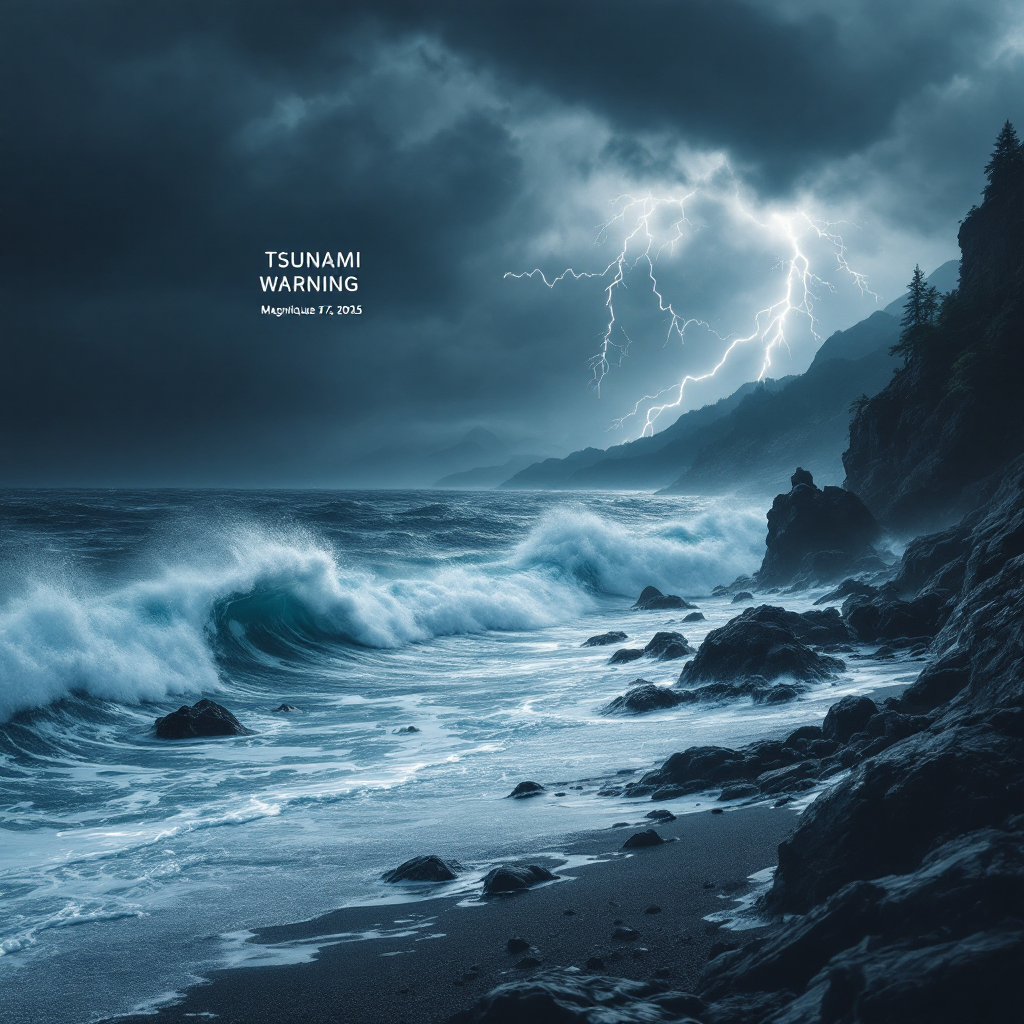
The Moment of the 2025 Alaska Megathrust Earthquake: What Warned Us of the Danger?
On July 16, 2025, a powerful 7.3 magnitude earthquake struck the southern coast of Alaska, instantly capturing global attention. Along with this quake came an immediate tsunami warning, delivering a critical message about the forces of nature and human response capabilities.
Alaska’s Tsunami Threat: A Moment’s Response Can Mean the Difference Between Life and Death
Right after the earthquake hit, the National Tsunami Warning Center (NTWC) swiftly issued a tsunami alert. This targeted the southern coast of Alaska and the Alaska Peninsula shoreline, particularly the Pacific coast stretching from Kennedy Entrance to Unimak Pass. This rapid response played a decisive role in preparing for potential disaster.
Evolution of the Warning System: Precision in Risk Assessment
Interestingly, the initial tsunami warning was downgraded to an advisory over time and ultimately lifted entirely. This serves as a compelling example of the accuracy and flexibility inherent in modern warning systems. Observations at Sand Point recorded wave heights of only up to 0.2 feet (about 6 cm), confirming that the risk of a large-scale disaster was low.
The Historical Context of Alaska Tsunamis
The 2025 event holds a significant place in Alaska’s seismic and tsunami history. Though milder compared to the catastrophic 9.2 magnitude quake in 1964, this incident reinforced the reality that Alaska remains vulnerable to earthquakes and tsunamis.
Lessons Learned and Future Preparedness
This incident underscored the vital importance of early warning systems and the need for their continuous improvement. It also reaffirmed the necessity of long-term disaster preparedness plans that consider Alaska’s geological position on the Pacific “Ring of Fire.”
The Alaska tsunami event became a pivotal moment for reevaluating our preparedness for natural disasters. Moving forward, we must invest in developing more precise and faster warning systems alongside advancing scientific technologies to protect lives and property to the fullest extent possible.
The Unfolding of the Alaska Tsunami Warning and Its Unexpected Outcome
On July 16, 2025, a magnitude 7.3 earthquake struck the southern coast of Alaska, immediately triggering a tsunami warning. However, the tsunami that was ultimately recorded reached a height of only 0.2 feet (about 6 cm). While this small figure brought relief to many, it also raised questions: was it truly necessary to activate such a large-scale alert system for such a minor wave?
The True Meaning of the Tsunami Warning
The value of Alaska’s tsunami warning system cannot be measured solely by the height of the waves. Its core lies in speed and prevention. The instant issuing of a warning right after the earthquake enables preparation for the worst-case scenario and plays a decisive role in minimizing loss of life.
The Importance of Early Response: The true size of a tsunami is difficult to predict immediately. For safety, issuing a rapid warning is essential.
Data Collection and Analysis: The warning system allows continuous data gathering, providing invaluable information for more accurate predictions in the future.
Strengthening Community Awareness: Regular warning drills heighten disaster preparedness among local communities and enable effective action when real emergencies occur.
Big Lessons from Small Waves
Although Alaska’s tsunami measured only 0.2 feet, the incident carries vital lessons beneath its modest surface.
System Efficiency: The warning system operated swiftly and adjusted flexibly according to the situation.
Advances in Science and Technology: Precise measurements and rapid information dissemination showcase the achievements of modern science and technology.
Need for Continuous Improvement: This experience offers an opportunity to enhance the accuracy and efficiency of tsunami warnings even further.
Alaska’s tsunami warning system is not merely about forecasting large waves. It is a critical safety net that protects lives amid uncertainty. Behind the tiny 0.2-foot wave lies the dedicated effort of countless scientists and engineers, as well as a well-prepared community. This will serve as invaluable experience in facing greater threats in the future.
Earthquakes and Tsunamis in Alaska’s History: A Comparison with the 2025 Event
Alaska is widely known as a region where earthquakes and tsunamis pose constant threats. The magnitude 7.3 earthquake and Alaska tsunami alert on July 16, 2025, served as a stark reminder of the area’s unique geological characteristics. But how did this event differ from past major earthquakes?
The 1964 Great Earthquake: Alaska’s Worst Disaster
On March 27, 1964, a colossal magnitude 9.2 earthquake struck Alaska, marking the largest in North American history. The ensuing tsunami impacted not only the Alaskan coast but also the U.S. West Coast and Hawaii, claiming over 250 lives. The Alaska tsunami at that time reached heights of up to 67 meters, causing devastating damage to Anchorage.
The 2023 Earthquake: Progress in Preparedness
The magnitude 7.2 earthquake near the Alaska Peninsula in 2023 was similar in scale to the 2025 event but caused no major reported damage. This illustrated significant advancements in earthquake preparedness systems and building technologies.
The 2025 Event: A Triumph of Efficient Early Warning Systems
The July 2025 earthquake and Alaska tsunami alert revealed several unique features when compared to past incidents:
Swift Issuance and Cancellation of Warnings: The tsunami warning was promptly issued immediately after the earthquake and quickly lifted as the threat diminished, indicating major improvements in early warning system efficiency.
Accurate Risk Assessment: The tsunami height observed at Sand Point was precisely predicted at 0.2 feet (about 6 cm), preventing unnecessary fear and confusion.
Targeted Regional Responses: Washington State and Canada’s west coast were deemed not at risk, avoiding unwarranted warnings in those areas.
Deeper Understanding of Subsea Earthquake Mechanics: The hypothesis that this quake resulted from horizontal movement of the oceanic plate reflects enhanced geological knowledge of the Alaska region.
Though the 2025 event did not match the 1964 earthquake’s magnitude, precise forecasting and efficient response systems minimized damage. This offers a compelling demonstration of how far Alaska’s tsunami preparedness technology and systems have advanced.
The Power and Limits of Early Warning Systems: The Current State of Alaska Tsunami Response
The magnitude 7.3 earthquake that struck the southern coast of Alaska on July 16, 2025, left us with crucial lessons. Thanks to the swift collaboration between the National Tsunami Warning Center (NTWC) and the United States Geological Survey (USGS), an immediate tsunami warning was issued, playing a vital role in preventing a potential disaster. However, we cannot rest on these achievements. Let’s explore the challenges we may face in actual Alaska tsunami scenarios and outline the tasks ahead.
Achievements of the Early Warning System
- Rapid Information Delivery: The tsunami warning was issued immediately after the earthquake, securing crucial evacuation time for residents.
- Accurate Risk Assessment: Quick adjustment from an initial tsunami watch to an advisory helped prevent unnecessary panic.
- Location-Specific Information: Warnings focused on southern Alaska and the Alaska Peninsula allowed for efficient allocation of resources.
Limitations and Challenges of the Current System
- Risk of False Alarms: Frequent warnings due to excessive caution can dull residents’ vigilance.
- Response in Remote Areas: Timely information delivery and evacuation support remain challenging for Alaska’s vast regions and isolated villages.
- Preparation for Complex Disasters: Integrated response systems are needed to address cascading events like landslides and volcanic eruptions accompanying an Alaska tsunami.
Preparing for the Future: Our Tasks
- Developing AI-Based Prediction Systems: Building more accurate tsunami forecasting models utilizing big data and artificial intelligence.
- Community-Based Response Training: Conducting regular evacuation drills that encourage voluntary participation from local residents.
- Strengthening Infrastructure: Enhancing physical preparedness through tsunami-resistant building designs and expanded shelters.
- Expanding International Cooperation: Establishing shared information networks and joint response frameworks with Pacific Rim countries.
Preparing for Alaska tsunamis goes beyond simply improving warning systems. It requires a comprehensive approach where technology, education, infrastructure, and international collaboration dynamically intertwine. We must remember that everything we prepare now can save precious lives in the future. While remaining humble before the forces of nature, it is time to confidently continue advancing our preparedness capabilities.
Lessons for the Future: Challenges and Prospects of the U.S. Coastal Disaster Preparedness System
The 2025 Alaska tsunami crisis left critical lessons for the disaster preparedness system along the U.S. coastline. As research continues to ensure the safety of the Washington state and Canadian coasts, what changes will these lessons inspire moving forward?
Enhancing Disaster Preparedness Through Alaska’s Tsunami Experience
Strengthening Early Warning Systems
- Proven efficiency of collaboration between NTWC and USGS
- Emerging need to shorten alarm issuance times and optimize real-time data analysis
Developing Region-Specific Response Strategies
- Considering unique characteristics of Alaska, Washington, and Canada
- Crafting differentiated evacuation plans based on coastline shape and population density
Creating Predictive Models Using Advanced Technology
- Research on tsunami prediction models powered by AI and big data
- Establishing real-time monitoring systems for underwater terrain changes
Fortifying Coastal City Infrastructure and Educating Residents
Improving Earthquake-Resistant Design and Tsunami Barriers
- Reassessing coastal city infrastructure based on Alaska’s case
- Designing eco-friendly and effective tsunami defense structures
Expanding Disaster Education Programs for Residents
- Conducting regular evacuation drills and disaster response training
- Developing multilingual education materials tailored for vulnerable groups
Building Community-Based Disaster Response Networks
- Strengthening cooperation among local residents, government, and NGOs
- Developing real-time information sharing platforms utilizing social media
Establishing a Pacific Coast Safety Net Through International Cooperation
Expanding U.S.-Canada Joint Research Projects
- Creating tsunami risk maps for the Pacific Northwest coast
- Developing joint warning systems and response manuals
Sharing Information Among Pacific Ring of Fire Countries
- Building a real-time earthquake data sharing network
- Exchanging the latest research findings and technologies at annual international conferences
Reevaluating Tsunami Risks Amid Global Climate Change
- Studying the impact of sea level rise on tsunami effects
- Establishing long-term coastline change predictions and response strategies
The Alaska tsunami event of 2025 marked a pivotal moment to elevate the disaster preparedness system for the U.S. coastal regions. With enhanced prediction systems, effective response strategies, and international cooperation, the safety of the U.S. and Canadian coastlines is expected to improve significantly. While we must remain humble before nature’s threats, we can equally prepare for a safer future powered by science and technology.
Comments
Post a Comment