The Science of Lightning: Safe Evacuation and Recent Heavy Rainfall Trends in South Korea Explained by the 15-Second Rule
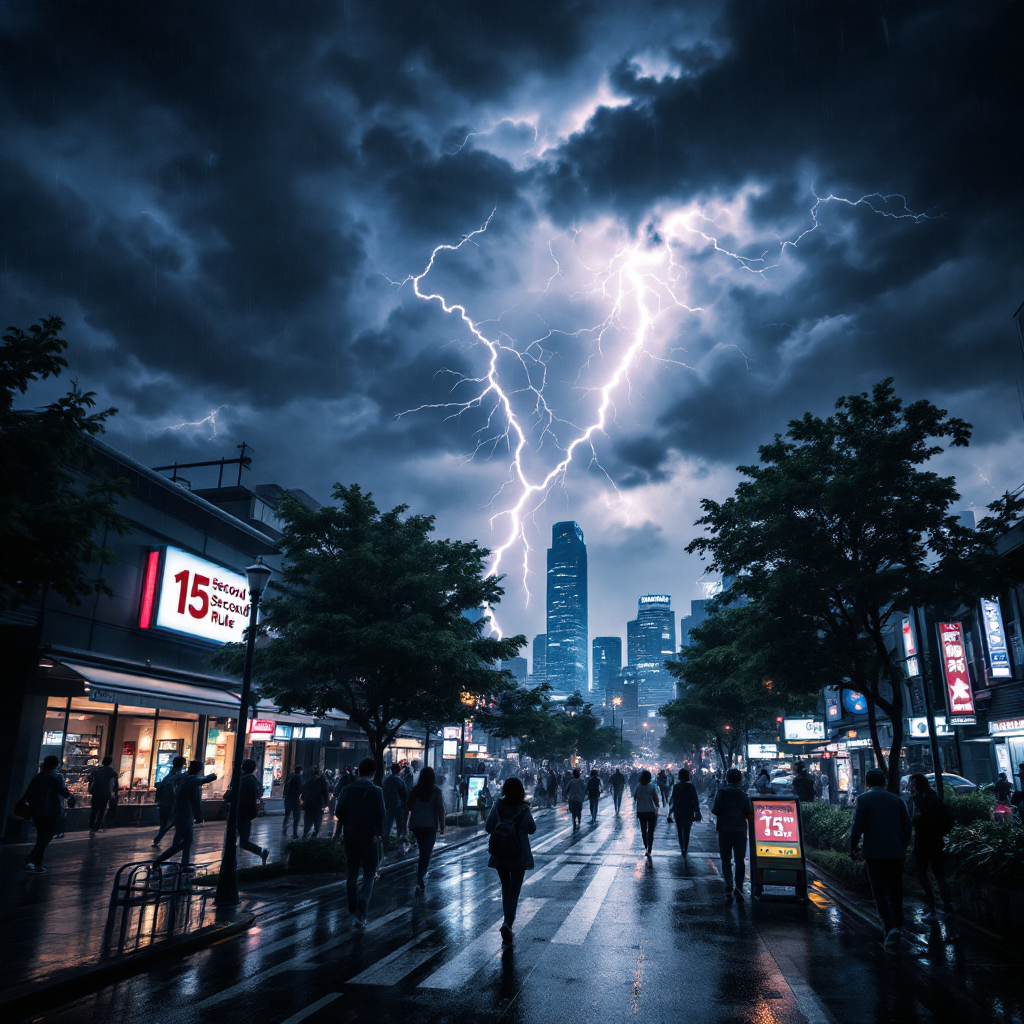
The Mystery of Lightning: Nature’s Gift of Light and Sound
Lightning that splits the sky—are you aware of the scientific secrets hidden within it? How do tiny ice particles and water droplets colliding inside clouds create this grand natural electric spectacle? Lightning is more than just a natural phenomenon; it’s a breathtaking display unveiling the wonders of science.
Lightning results from a complex charge separation process occurring inside clouds. Ice grains and water droplets within clouds constantly rise and fall, colliding with each other. The friction generated by these collisions causes positive charges to accumulate at the cloud’s top and negative charges at the bottom. This built-up voltage difference eventually leads to a powerful discharge—the very phenomenon we call lightning.
The light from lightning reaches our eyes in an instant, but the thunder’s roar arrives a bit later. This delay is due to the difference in the speeds of light and sound. Using this principle, the “15-second lightning-thunder rule” allows us to roughly estimate where the lightning struck. By timing the seconds between seeing lightning and hearing thunder, you can gauge how far away the lightning occurred.
While lightning showcases nature’s marvels, it is also a dangerous force. For safety, one should immediately seek shelter indoors whenever lightning is observed. Particularly, if lightning and thunder occur repeatedly within 15-second intervals, it signals a highly hazardous situation that demands urgent action.
In this way, lightning is a unique phenomenon where scientific principles, safety precautions, and nature’s beauty coexist. The next time you witness lightning painting the sky, why not ponder the fascinating world of science hidden within?
The 15-Second Rule: The Hidden Way to Calculate the Distance Between Lightning and Thunder
What should you do if you see lightning and hear thunder within 15 seconds? This simple rule can be a lifesaver, helping you stay safe. The "15-second rule" estimates the distance of a lightning strike by measuring the time gap between the flash and the sound of thunder.
The Speed Difference Between Lightning and Thunder
Lightning travels at the speed of light, so you see it almost instantly. Thunder, however, travels at the speed of sound, reaching your ears after a delay following the lightning flash. By using this difference in speed, you can roughly calculate how far away the lightning struck.
The Principle Behind the 15-Second Rule
Here’s how the 15-second rule works:
- Start counting in seconds from the moment you see the lightning until you hear the thunder.
- Divide that time by 3, and you get an approximate distance in kilometers to the lightning strike.
For example, if you see lightning and hear thunder 15 seconds later, the lightning struck roughly 5 kilometers away.
How to Use It for Safety
Applying this rule in real life means:
- If you hear thunder within 15 seconds of seeing lightning, the strike occurred within 5 kilometers.
- This signals you’re in a dangerous zone, so you should immediately move to a safe place.
- The safest shelter is indoors or inside a vehicle.
Important Precautions
- Lightning is unpredictable, so never let your guard down even if the interval is longer than 15 seconds.
- Avoid using umbrellas—they can be extremely dangerous during thunderstorms.
- Check weather forecasts before outdoor activities, and postpone plans if thunderstorms are predicted.
Knowing the 15-second rule is a powerful tool for protecting yourself from lightning strikes. Still, the best approach is prevention: stay vigilant about weather reports and seek shelter indoors on days when thunderstorms are expected.
The Power of Lightning Amid Torrential Rain and Strong Winds: A 2025 Domestic Field Report
Imagine a scene where more than 200mm of torrential rain and thunderous lightning strike simultaneously—something almost beyond belief. From July 16 to 17, 2025, the entire nation experienced this extreme weather event. Lightning split the sky as if it were tearing apart, and within just 10 minutes, the rain soaked everyone to the bone.
Regional Rainfall Analysis
- Southern Gyeonggi Province: Record-breaking rainfall exceeding 200mm
- Chungcheong Region: Intense downpours between 150mm and 200mm
- Gangwon Province: Variable rainfall ranging from 50mm to 150mm
- Jeolla Region: Comparatively lighter precipitation between 30mm and 100mm
These severe weather conditions caused massive disruption to daily life. The saying “If it rains, run” lost its meaning as countless citizens had to seek shelter from the sudden downpour and lightning strikes.
The Power of Lightning and Safety Guidelines
Lightning is a breathtaking natural phenomenon but can be extremely dangerous. Experts stress the “Lightning-Thunder 15-Second Rule”: if you hear thunder within 15 seconds of seeing lightning, you must immediately move to a safe location. Using umbrellas is absolutely forbidden, and the safest shelters are inside buildings or vehicles.
The Crucial Role of Real-Time Weather Information
This incident underscored once again the vital importance of real-time weather updates. Many citizens described the event on social media as a “storm of a lifetime,” but in reality, the situation was perilous. Promptly checking information and following safety protocols during lightning and heavy rain events is paramount.
This extreme weather event may be influenced by climate change and could recur in the future. Therefore, raising public safety awareness alongside advancing precise weather forecasting technologies will become increasingly essential.
How Lightning Transforms Everyday Life: Social Impact and Personal Stories
"When it rains, I run." This familiar phrase perfectly captures how lightning and heavy downpours influence our daily lives. Sudden storms with lightning bring changes far beyond just grabbing an umbrella.
Crop Damage and Economic Impact
Lightning-accompanied heavy rain can cause severe damage to crops. Storms during harvest time hit farmers hard, leading to rising agricultural prices that affect consumers at the checkout counter.
The 'Life Storm' Trend Spreading on Social Media
Recently, the phrase "life storm" has gained popularity on social networks, metaphorically comparing personal struggles to lightning and storms. It’s a fascinating phenomenon where real weather events influence emotional expression.
Shifts in Outdoor Activities
Lightning directly disrupts outdoor plans. Picnics in parks, hiking, and camping trips are often canceled or postponed, impacting not only individual schedules but also the revenue of related businesses.
The Growing Importance of Safety Awareness
As awareness of lightning dangers increases, a culture of safety compliance is emerging. Checking real-time weather updates has become routine, and seeking shelter during lightning strikes is now second nature.
In these ways, lightning profoundly affects our daily routines, the economy, and culture. Understanding and preparing for weather phenomena will only become more crucial in the future.
Wise Choices for Staying Safe: Lightning Safety Tips and Using Weather Information
Did you know that when lightning strikes, the smartest move is to take cover inside a building instead of grabbing your umbrella? Lightning is a stunning natural phenomenon, but it can also be deadly. Don’t worry, though—real-time weather updates can become your secret weapon for survival.
Lightning Safety Tip: Remember the 15-Second Rule
If the time between seeing lightning and hearing thunder is 15 seconds or less, immediately seek shelter in a safe place. Why 15 seconds? Lightning travels at the speed of light, so you see it instantly, but thunder moves at the speed of sound. This time difference helps you estimate how close the lightning is. Fifteen seconds means it’s about 5 kilometers away—a dangerously close distance.
Safe Shelter: Say No to Umbrellas, Yes to Buildings!
The safest place during a lightning storm is inside a building or a vehicle. Using an umbrella can actually increase your risk, so avoid it. If you’re outdoors, stay away from tall trees and utility poles, and move to lower ground as quickly as possible.
Real-Time Weather Info: Your Smart Life-Saver
Thanks to modern technology, accessing real-time weather updates has never been easier. Check your smartphone apps or national weather websites to get advance warnings of thunderstorms with lightning. Especially if you’re planning outdoor activities, make it a habit to check the weather before you head out.
Lightning Safety: Small Actions Make a Big Difference
Lightning is unpredictable, but with proper precautions and quick action, you can greatly reduce the risks. Keep the 15-second rule in mind, rush to safe shelter, and use real-time weather information. These three steps will significantly boost your safety.
There’s no need to fear lightning—but being smart about how you respond is crucial. Why not start putting this knowledge into practice today for your safety? Now, doesn’t lightning seem a little less scary?
Comments
Post a Comment