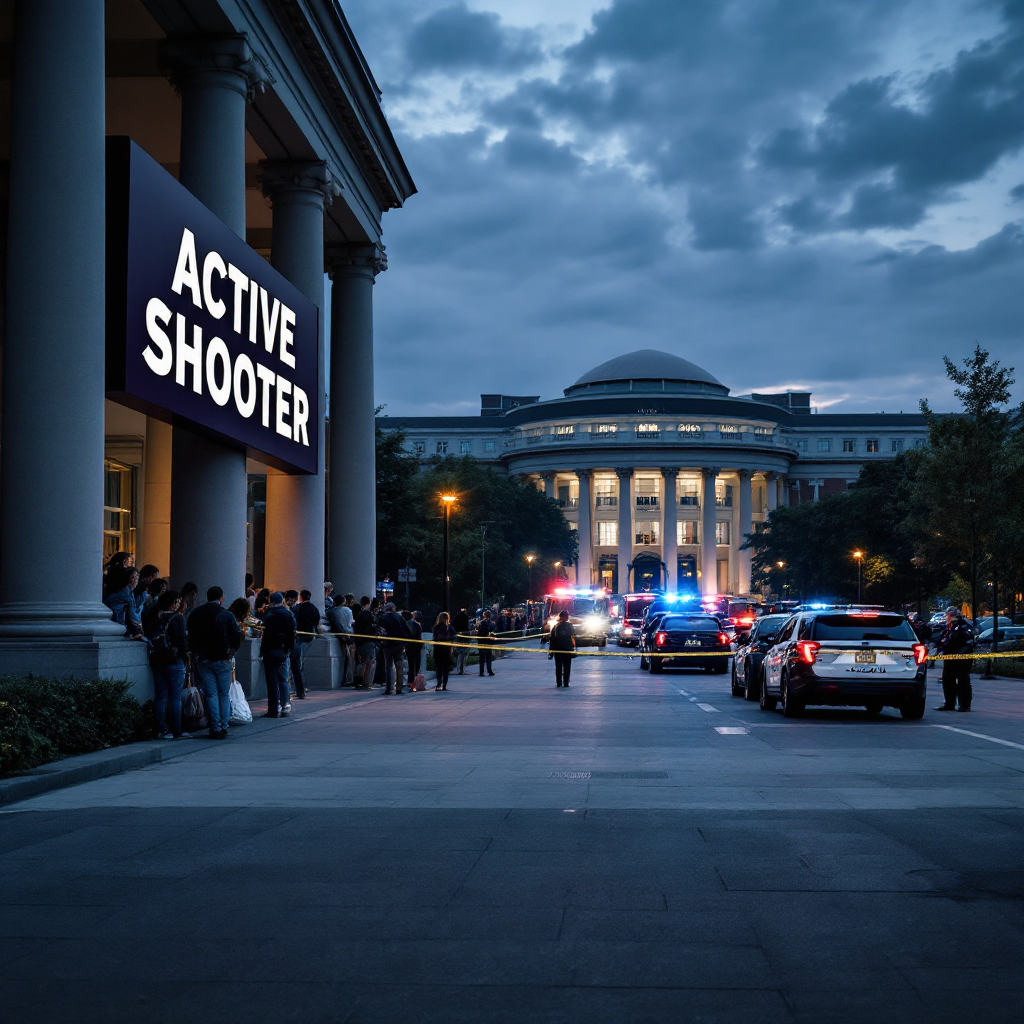
Shocking Shooting Incident on Emory University Campus
On Friday afternoon, sudden gunshots echoed across the prestigious Emory University campus. How did this incident unfold, and what chaos did it bring to the campus?
On August 8, 2025, Emory University's campus in Atlanta, Georgia, was plunged into shock. What started as a peaceful Friday afternoon quickly turned into fear and confusion for students and staff as gunfire shattered the calm.
The shooting occurred near the CDC (Centers for Disease Control and Prevention) headquarters located on Emory's campus, with the area around Emory Point CVS being the primary scene. An eyewitness at the site described the gunfire as "like a series of fireworks bursting in succession."
Emory University authorities responded swiftly, immediately issuing a "RUN, HIDE, FIGHT" emergency alert and directing all students and staff to shelter in place. This protocol is the standard response adopted by U.S. universities during active shooter situations.
Police arrived promptly after receiving reports. According to ABC News, officers located the suspect and exchanged gunfire during a standoff. Georgia Governor Brian Kemp expressed gratitude on social media for the brave actions of first responders.
The incident affected not only Emory University but also the nearby CDC headquarters. CDC employees reported finding bullet marks on windows of several buildings.
The Emory University shooting has once again spotlighted the issue of campus safety in American universities. The harsh reality that institutions of higher learning—meant to be sanctuaries of knowledge—are targeted by gun violence underscores a pressing challenge facing American society.
Testimonies of Emory University Survivors: Moments of Gunfire and Fear
Gunshots bursting one after another like fireworks. Voices holding their breath behind locked doors. On August 8, 2025, the tense reality of the shooting that shook Emory University’s campus is vividly brought to life through the survivors’ firsthand accounts.
"It was like fireworks" – Voices from the Scene
Brandy Giraldo, Chief Operating Officer at General Muir Deli, described the situation as follows: "Suddenly, gunshots erupted one after another, just like fireworks." At that moment, store employees instinctively locked the doors and sought refuge inside. The peaceful routine of Emory University’s campus instantly turned into a vortex of terror.
Startling Testimonies from CDC Employees
Shocking events also unfolded at the CDC (Centers for Disease Control and Prevention) building adjacent to Emory University’s campus. Several CDC workers testified that they heard bullets striking the windows of their building. This was harrowing evidence that the shooting extended beyond the campus and into surrounding areas.
Moments of Silent Evacuation
Students and staff at Emory University received emergency alerts with instructions to "RUN, HIDE, FIGHT." Many locked themselves in classrooms, libraries, and dormitories, holding their breath as they awaited rescue. One student recalled, "I tried to act as we had trained, but everything was different in reality. It was truly terrifying."
Standoff Between Police and Suspect
According to ABC News reports, a shootout ensued between responding police officers and the suspect. During this confrontation, nearby buildings sustained additional damage, and the entire campus was engulfed in heightened tension.
The fear and intensity experienced by the survivors of the Emory University shooting serve as a stark warning about safety issues on American college campuses. Their testimonies urgently highlight the critical need for strengthened security measures and emergency response systems moving forward.
Emory University's 'RUN, HIDE, FIGHT' Protocol: Real-World Application and Effectiveness
How effective was Emory University's rapidly issued 'RUN, HIDE, FIGHT' alert system? And how did this protocol come to be? This incident offers an in-depth look at crisis response systems in American universities.
The Origin of the 'RUN, HIDE, FIGHT' Protocol
The 'RUN, HIDE, FIGHT' protocol was developed by the U.S. Department of Homeland Security following the Virginia Tech shooting in 2008. This simple yet powerful guideline significantly increases survival chances during a crisis.
- RUN: Escape the area as quickly as possible.
- HIDE: If escape is impossible, find a secure place to hide.
- FIGHT: As a last resort, confront the attacker.
Emory University's Swift Response
In this incident, Emory University immediately issued the 'RUN, HIDE, FIGHT' alert as soon as an active shooter situation was reported. The warning was broadcast across the campus through SMS, emails, sirens, and multiple communication channels.
The Protocol’s Impact
- Rapid Information Delivery: Emory community members quickly recognized and responded to the situation.
- Minimized Chaos: Clear instructions reduced panic and enabled organized action.
- Increased Survival Rates: Appropriate evacuation and hiding minimized casualties.
Areas for Improvement
No system is flawless. Emory University and other U.S. colleges should consider the following enhancements:
- Regular Training: Conduct realistic simulation drills to prepare for real-life scenarios.
- Multilingual Support: Develop alert systems in multiple languages for international students.
- Psychological Support: Establish long-term trauma care and mental health support post-incident.
Conclusion: The Need for Continuous Advancement
Emory University’s implementation of the 'RUN, HIDE, FIGHT' protocol can be deemed largely successful. Yet, campus safety demands ongoing refinement and dedication. Taking lessons from this event, we hope that universities across the United States continue to build safer and more effective crisis response systems.
National Security Implications of the Emory University Shooting Near the CDC
What hidden threats to U.S. national security does the recent shooting near the CDC—a vital hub of public health—pose beyond being a mere campus incident?
The shooting at Emory University, given its strategic location, carries significant national security implications. The fact that it occurred adjacent to the CDC (Centers for Disease Control and Prevention) suggests that this incident may represent a potential threat far beyond typical campus violence.
Public Health Security Threat: The CDC is a cornerstone institution responsible for America’s public health. A shooting in this vicinity endangers CDC personnel’s safety and ultimately risks disrupting the normal functioning of the national public health infrastructure.
Concerns Over Terrorism Links: Although no ties to terrorism have been confirmed so far, any violent act near a critical facility like the CDC invariably prompts investigations into possible terrorist involvement.
Information Security Risks: Housing sensitive medical information and research data, the CDC could face significant security vulnerabilities amid the chaos caused by such a shooting.
International Impact: As a global center for public health collaboration, threats to safety in the CDC’s vicinity could have ripple effects on international cooperative efforts.
Testing Response Systems: This event serves as a critical test for the crisis response capabilities of Emory University, the CDC, and federal agencies, offering invaluable lessons for handling even graver security challenges ahead.
The Emory University shooting clearly transcends campus safety concerns, demanding attention to numerous facets of national security. This incident is likely to spur stronger safety partnerships between university campuses and critical national facilities moving forward.
The Future of Safety in U.S. Universities: Lessons from the Emory University Incident
The Emory University shooting raises critical questions: Is perfect safety on college campuses truly achievable? And how can academic freedom and openness be preserved while striving for this goal?
The lessons from this incident are clear. Safety is never a goal achieved once and for all; it is a continuous journey requiring relentless effort and improvement. Emory University’s swift response was commendable, yet it also unveiled more challenges ahead.
Key challenges that U.S. universities must prepare for include:
- Technological Innovation and Safety: Building preventive systems leveraging AI and big data
- Enhanced Psychological Counseling: Expanding programs to identify and intervene in potential risks early
- Community Engagement: Cultivating a safety culture that involves students, staff, and local communities together
- Flexible Response Systems: Developing tailored approaches for diverse crisis situations
The Emory University incident leaves us with a pressing task: finding the balance between the two values of “safety” and “freedom.” Pursuing absolute safety risks infringing on the openness and liberty essential to university life, while excessive freedom can endanger safety.
Ultimately, the future of campus safety depends on harmoniously integrating these two values. Through the Emory incident, we’ve been reminded that safety extends beyond mere physical security—it is deeply intertwined with the culture and values of the entire university community.
Moving forward, U.S. universities will continue their long journey to resolve these challenges, creating academic environments that are both safer and freer. The Emory University incident stands as a pivotal milestone on that path.
Comments
Post a Comment