Legendary Chimpanzee Researcher Jane Goodall Passes Away at 91: An Icon of Science and Environmental Conservation
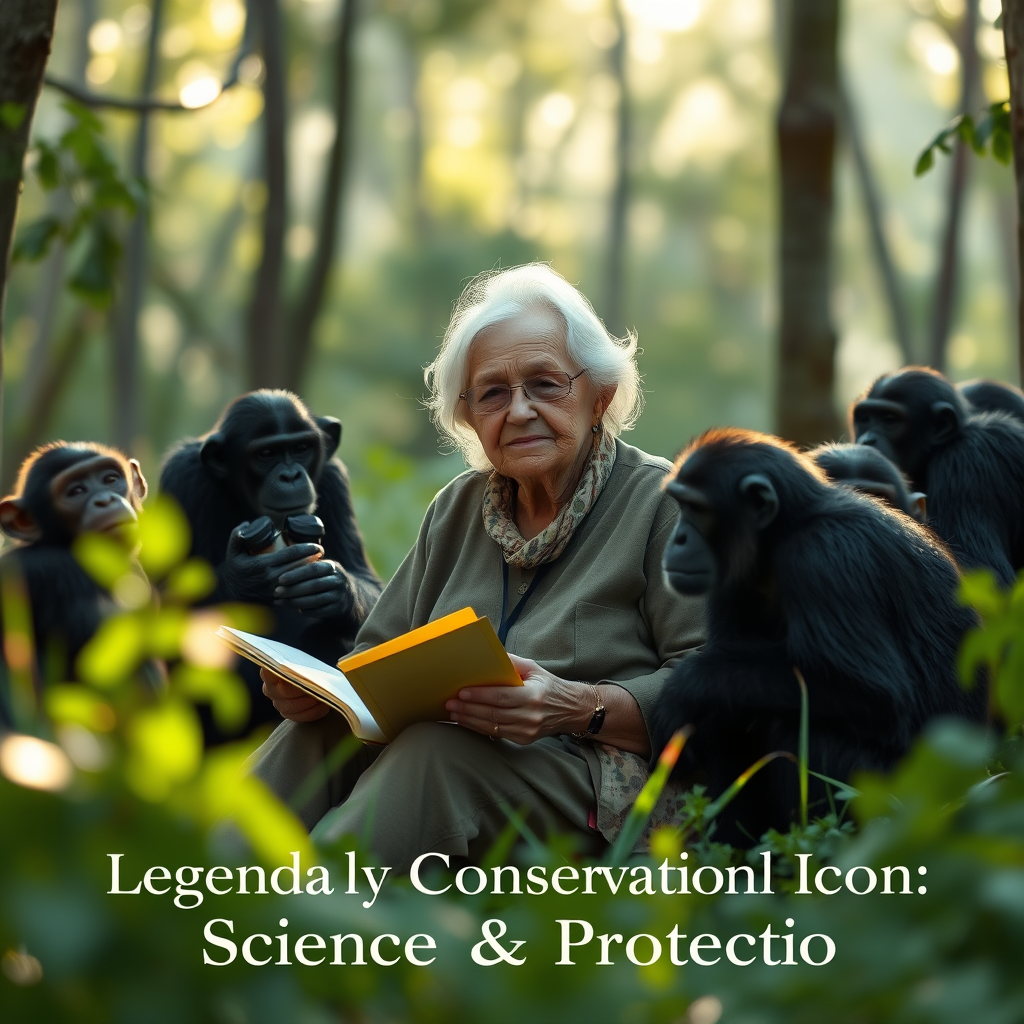
A Life with Chimpanzees: The Legacy of Jane Goodall That Changed the World
Jane Goodall, who passed away at the age of 91, left an indelible mark on the global scientific and environmental communities. Why is she remembered as a pioneer in chimpanzee research and a world-renowned environmental activist? Her life itself was a revolution.
In 1960, Goodall was the first to discover that chimpanzees could use and even create tools. This revelation shocked the scientific world at the time and was hailed as one of the greatest achievements of 20th-century scholarship. It shattered the existing boundaries between humans and animals.
With little formal education, Goodall journeyed to Africa and embarked on an astonishing path that led her to earn a PhD from Cambridge University in pursuit of her lifelong mission. Her passion and perseverance inspired countless people and helped ignite global interest in environmental conservation.
Through founding the Jane Goodall Institute and running the Roots & Shoots youth program, she became more than just a researcher—she emerged as a global environmental advocate. Her concrete conservation efforts in Africa sparked real and tangible change.
Goodall’s accomplishments earned her worldwide recognition, including prestigious honors such as the Tyler Environmental Achievement Award and the Order of the British Empire. Her legacy continues to influence both the scientific world and environmental movements.
Jane Goodall’s life went beyond mere scientific research; it offered profound insights into coexistence between nature and humanity. Her passion and dedication remain an enduring source of inspiration for many, fueling ongoing efforts to build a better world.
The Tool-Making Chimpanzee: The Scientific Revolution Discovered by Jane Goodall
In 1960, a young researcher named Jane Goodall made a groundbreaking discovery at Gombe National Park in Tanzania that astonished the world. She was the first to observe that chimpanzees could use and make tools. This moment sent shockwaves through the scientific community and completely transformed our understanding of the relationship between humans and animals.
Goodall witnessed chimpanzees inserting long grass stalks into termite mounds to fish out termites. Even more astonishing was her observation that the chimpanzees stripped leaves off twigs to create these tools. Until then, tool use and creation had been considered a uniquely human trait.
The significance of this discovery is profound:
- Redefining Humanity: Tool use was no longer seen as an exclusively human characteristic.
- Changing Perceptions of Animal Intelligence: It proved that chimpanzees’ cognitive abilities were far more advanced than previously thought.
- Broadening Evolutionary Perspectives: The similarities between humans and chimpanzees became even more evident.
- Highlighting the Importance of Animal Protection: The value of chimpanzees was reassessed, increasing the urgency for their conservation.
Jane Goodall’s revolutionary discovery is not just a scientific fact—it fundamentally altered how we view nature and animals, sparking new discussions on environmental conservation and animal rights. Her research marked a pivotal turning point, prompting us to rethink our relationship with animals and our responsibilities as members of the Earth’s ecosystem.
Igniting the Flame of Environmental Protection: Jane Goodall’s Global Movement
The name Jane Goodall is remembered not just as a pioneer in chimpanzee research. She transformed her research experience into a leading global movement for environmental protection. But how did one scientist build a huge conservation organization with branches in 19 countries?
The Jane Goodall Institute: From Science to Action
Founded in 1977, the Jane Goodall Institute became the core pillar realizing Goodall’s vision. Beyond being a simple research center, it expanded its influence worldwide through concrete conservation efforts and educational programs. Goodall’s passion and dedication resonated deeply with many, fueling the institute’s rapid growth.
Roots & Shoots: Awakening Youth Environmental Consciousness
One of Goodall’s most groundbreaking projects is the Roots & Shoots youth program, launched in 1991. Starting from a conversation with just 16 Tanzanian youths, this program now operates actively in over 100 countries. What is the secret behind its success?
- Action-Oriented Approach: Encourages young people to identify problems in their communities and seek out solutions themselves.
- Global Network: Provides a platform for youth worldwide to share experiences and ideas.
- Inspirational Leadership: Jane Goodall’s own life and philosophy serve as a powerful role model for young people.
Commitment to Sustainable Change
Goodall’s environmental movement is not about short-term achievements. She pursues long-lasting and sustainable change. For example, through the TACARE project, she sought ways to improve local communities’ quality of life while protecting the environment simultaneously. This approach perfectly reflects her philosophy that environmental conservation and human development need not conflict but can coexist.
Jane Goodall’s global movement has created a powerful current that goes beyond merely protecting the environment — it transforms humanity’s consciousness and shapes a better future. Her passion and vision continue to ignite new sparks of environmental protection around the world at this very moment.
Jane Goodall’s Genuine Conservation Efforts in the Heart of Africa
From chimpanzee rehabilitation centers to community reforestation and women’s education, how did Dr. Jane Goodall turn theory into reality? Her dedicated efforts went beyond mere research to create tangible change.
In 1992, Dr. Goodall established the Tchimpounga Chimpanzee Rehabilitation Centre in the Republic of Congo. This center provides a safe haven for over 100 orphaned chimpanzees, focusing on their rehabilitation and protection. It stands as a powerful example of how her research transcended observation to actively improve the lives of these chimpanzees.
Taking things further, in 1994 she launched the TACARE (Take Care) project. This initiative aims to protect and expand chimpanzee habitats through reforestation efforts around Tanzania’s Gombe National Park. But Dr. Goodall’s vision didn’t stop there.
She realized that environmental conservation is deeply connected to the lives of local communities. As a result, the TACARE project also began offering educational scholarships to women in the area. This highlights Dr. Goodall’s insight that environmental protection and community development must go hand in hand.
Dr. Jane Goodall’s efforts are significant because they represent a holistic approach encompassing not just chimpanzee research, but entire ecosystems and local communities. She demonstrated that conservation is not just an animal issue, but a matter of how humans and nature coexist.
Throughout her life, Goodall has masterfully combined theory and practice to carry out truly meaningful environmental conservation. Her work continues to inspire environmental activists worldwide and reminds us all of the profound importance of living in harmony with nature.
The Legacy of Jane Goodall: A Continuing Beacon of Hope and Activism
Jane Goodall’s philosophy and legacy live on in countless honors and the hearts of tens of thousands around the globe, continuing to inspire humanity for generations to come. Her legacy transcends mere scientific achievements, embodying a message of hope for environmental preservation and the future of humankind.
Seeds of Environmental Stewardship Spread Worldwide
The Jane Goodall Institute, founded by Dr. Goodall, operates branches in 19 countries, tirelessly advancing her philosophy through ongoing environmental protection efforts. Notably, the Roots & Shoots program is active in over 100 countries, nurturing future generations of environmental leaders. This remarkable expansion reflects the enduring reach of Goodall’s vision.
A Harmonious Blend of Science and Compassion
Jane Goodall is celebrated for her unique approach that seamlessly combines scientific observation with profound human empathy. Her research methods continue to influence future studies in animal behavior and ecology. The insights gained from her connection with chimpanzees offer a groundbreaking paradigm for understanding the relationship between humans and nature.
Linking Peace and Environmental Conservation
Dr. Goodall asserted that environmental protection and peace are deeply interconnected. This philosophy is set to play a crucial role in shaping international cooperation and sustainable development policies moving forward. Her message underscores the idea that solving environmental challenges is intrinsically tied to achieving peace and prosperity for humanity.
The Power of Everyday Action
Jane Goodall believed that small personal actions accumulate to create significant change. This belief instills a sense of responsibility and determination to act in many around the world. Her legacy delivers a hopeful message: we all have the power to contribute through simple, everyday efforts toward safeguarding our environment.
Jane Goodall’s life and achievements exemplify the perfect harmony of science, environmental advocacy, and humanitarianism. Her legacy will continue to inspire us for years to come, serving as a driving force behind efforts to build a better world.
Comments
Post a Comment