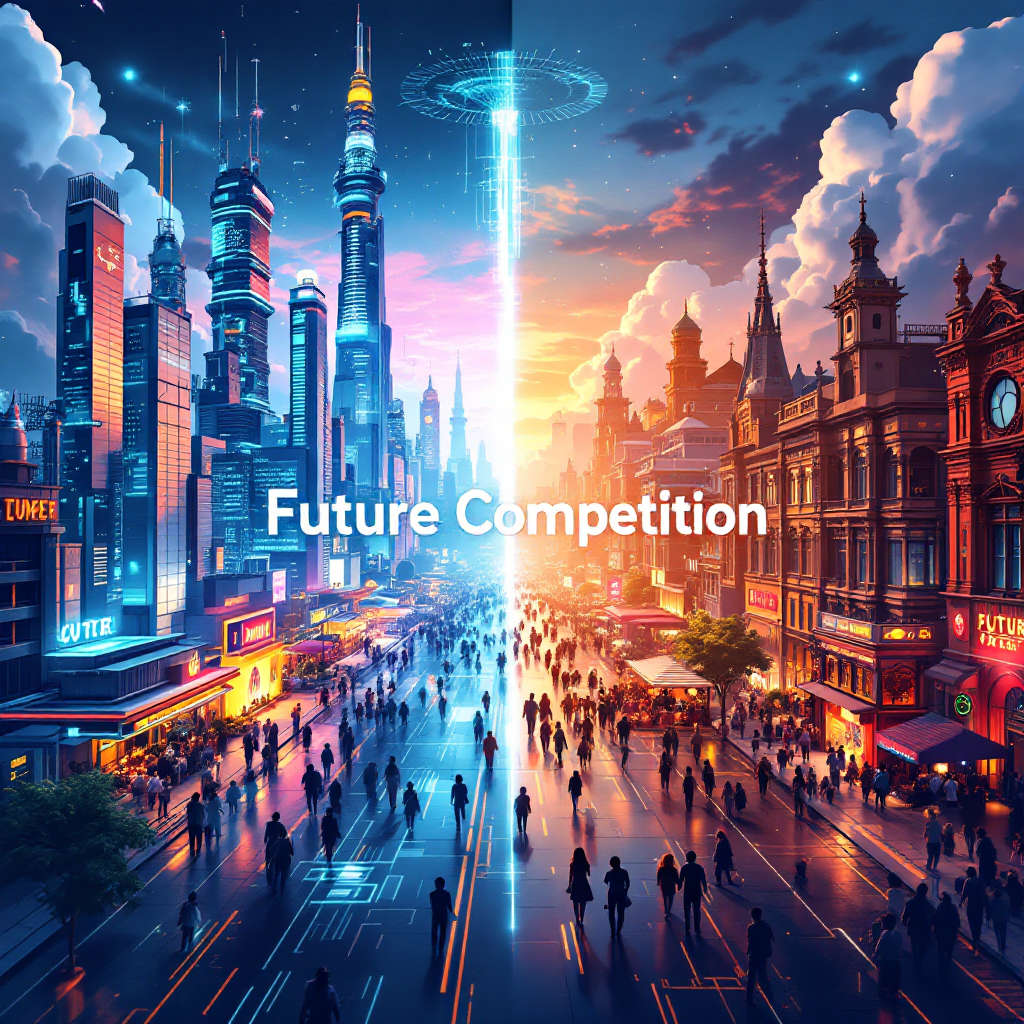
Ulsan vs. Gwangju: The Industrial Capital vs. The City of Memories, Two Metropolitan Cities with Unique Charms
Are you curious about the secrets of Ulsan and Gwangju, two metropolitan cities that embody distinct identities beyond a simple city comparison? As Korea’s representative metropolitan areas, Ulsan and Gwangju captivate our attention with their own unique allure.
Ulsan, fittingly nicknamed the “Industrial Capital,” is a city lined with massive factories such as Hyundai Heavy Industries and SK Innovation. As the heart of shipbuilding, petrochemicals, and the automotive industry, it has long been a steadfast pillar of the Korean economy. Yet recently, Ulsan is embracing a new transformation. Under the slogan “From Industrial Capital to AI Capital,” the city is reinventing itself as a futuristic hub through the fusion of cutting-edge technology and traditional industries.
On the other hand, Gwangju is known as the “Holy Ground of Democracy” and the “City of Culture.” Holding the historic significance of the May 18th Democratic Uprising, it draws tourists with its vibrant cultural events and festivals. Events like the nostalgic Chungjang Festival and the Gwangju Biennale perfectly showcase Gwangju’s rich cultural identity.
Ulsan versus Gwangju—a stark contrast that reflects the diversity of Korean society. Why not dive into the irresistible charms of these two cities where industry meets culture, and tradition blends with innovation? Let’s take a closer look at the unique allure of Ulsan and Gwangju, each walking its own distinct path.
Ulsan vs. Gwangju: A Glimpse into Urban Identities through Population and Administrative Districts
What does it mean that Gwangju’s Buk-gu district surpasses Ulsan’s Nam-gu by a whopping 110,000 residents? This fascinating statistic offers a crucial clue to understanding the character and developmental trajectories of these two cities.
Urban Characteristics Reflected in Population Distribution
The high population density in Gwangju’s Buk-gu suggests it is a well-developed urban core, rich in residential and commercial functions. In contrast, Ulsan’s population is more evenly spread across its districts, reflecting its nature as a city with expansive industrial complexes that lead to dispersed residential areas.
Administrative Districts and Directions of Urban Development
Ulsan’s administrative divisions are designed to efficiently manage its large factories and industrial zones. Notably, Nam-gu houses major shipyards like Hyundai Heavy Industries, underscoring the city’s industrial-centric urban planning.
Meanwhile, Gwangju has evolved around Dong-gu, which includes the historic heart of Chungjang-ro, and Buk-gu, a population-dense area. This pattern reveals how Gwangju has developed as a city grounded in culture, history, and residential living.
Ulsan vs. Gwangju: Contrasting Urban Identities
These differences in population and administrative layout reflect the distinct identities of Ulsan and Gwangju. Ulsan, known as the ‘Industrial Capital,’ features a city structure optimized for efficient production and logistics, whereas Gwangju, the ‘City of Culture,’ showcases a harmonious blend of historical heritage and residential environment.
In conclusion, population statistics and administrative structures carry meanings far beyond mere numbers. They provide valuable insights into how Ulsan and Gwangju have cultivated their unique strengths and characteristics, and hint at the directions these cities are headed in the future.
Industry and Economic Structure: Ulsan vs. Gwangju, a Clash of Tradition and Innovation
The industrial and economic landscapes of Ulsan and Gwangju offer a microcosm of South Korea’s economy itself. Ulsan, once a powerhouse of traditional manufacturing, is now emerging as a leader in cutting-edge technology, while Gwangju evolves into a tourism-centric city rooted in history and culture. The transformations of these two cities serve as crucial indicators for predicting the future of Korea’s economy.
Ulsan: A Bold Leap from Industrial Hub to AI Capital
Long hailed as the "heart of Korea’s industry," Ulsan has been home to giants like Hyundai Heavy Industries and SK Innovation. But this city is now redefining itself with an ambitious vision. At the '2025 Ulsan Industrial Festival,' Mayor Kim Doo-kyum’s declaration of a "leap from an industrial hub to an AI capital" is far more than a slogan.
- Establishment of AI-powered smart factories
- Promotion of eco-friendly energy industries
- Creation of a bio-healthcare cluster
These groundbreaking initiatives showcase Ulsan’s transformation into a city perfectly aligned with the era of the Fourth Industrial Revolution.
Gwangju: A Future City Blending Culture and Innovation
In contrast, Gwangju, carrying the spirit of the May 18 Democratic Movement, pursues development centered on culture and the arts. Cultural events like the nostalgic Chungjang Festival have grown beyond mere tourism attractions to become pillars of the city’s identity.
- Fostering of cultural content industries
- Development of eco-friendly automotive industry clusters
- Advancement of renewable energy industries through the Energy Valley project
Gwangju is crafting a unique economic ecosystem by harmonizing culture with high-tech industries.
Ulsan vs. Gwangju: Balancing Cooperation and Competition
While their strategies differ, both cities share a common goal: sustainable growth and improved quality of life for their citizens. If Ulsan’s AI expertise and Gwangju’s cultural content can merge into a collaborative synergy, it could spark a powerful new engine for Korea’s economy.
The future that Ulsan and Gwangju will shape is far more than a story of two cities. It symbolizes the trajectory of Korea’s economy and offers a significant model for the direction local cities should take. The bold challenges of Ulsan and Gwangju—preserving the strengths of traditional industries while fearlessly embracing innovation—are a story we must watch unfold together.
The True Essence of Ulsan vs. Gwangju Revealed Through Culture, Tourism, and Sports
From Gwangju, the city steeped in the roots of the May 18 Democratic Uprising, to Ulsan, home of Korea’s largest industrial festival, and the fiery clashes between their football teams — the hidden stories within! On the stages of culture and sports, Ulsan and Gwangju reveal their authentic selves.
Gwangju, Where History and Culture Breathe
Gwangju is a city that holds the profound historical significance of the May 18 Democratic Uprising. The Geumnam-ro area has transcended past pain, gaining new vitality through cultural events like the “Memory of Chungjang Festival.” This festival, themed around the 70s and 80s era as well as “Memories of Fairy Tales,” perfectly showcases Gwangju’s unique cultural identity.
Moreover, the Gwangju Biennale has established the city as an international cultural hub. The harmonious blend of tradition and modernity in Gwangju’s cultural events leaves a deep impression on visitors from around the world.
Ulsan, Where Industry and Nature Coexist
In contrast, Ulsan is revealing a fresh side beyond its image as the “industrial capital.” Since its inception in 1967, the Ulsan Industrial Festival has evolved from a mere industrial event into a cultural festival involving local residents and businesses alike. Particularly, the 2025 Ulsan Industrial Festival drew attention with various programs integrating AI technology.
The Taehwa River National Garden symbolizes Ulsan’s natural beauty. It stands as an excellent example of how this industrial city is developing in harmony with nature.
The Passion Unfolding on the Field: Ulsan vs. Gwangju
The rivalry between the two cities extends to the football pitch. The showdown between Ulsan Hyundai FC and Gwangju FC in the K League is much more than a game; it is a battle of regional pride. As the saying goes, “The more desperate team wins in Ulsan vs. Gwangju,” their matches are always fierce and dramatic.
As of 2025, Ulsan Hyundai fights to escape the relegation zone, while Gwangju FC aims to break free from the lower split, making their contests more thrilling than ever. This sporting rivalry fosters a healthy competitive spirit between the cities and acts as a positive catalyst for their development.
Ulsan and Gwangju each shine with distinctive cultural, tourism, and passionate sports scenes. This rich diversity undoubtedly serves as a vital driving force behind the growth of Korea’s regional cities.
Ulsan and Gwangju Moving Forward: Lessons in Balanced Development
If the development strategies of Ulsan and Gwangju, centered around industry and AI, and culture and education respectively, point toward a new path for the growth of Korean regional cities, then where might this journey end? The competition and collaboration between Ulsan and Gwangju will serve as a crucial indicator of the future of local urban development in South Korea.
Ulsan: Realizing a Future City through the Fusion of AI and Industry
Ulsan is striving to transform itself from the "City of Industry" into the "City of AI." By integrating artificial intelligence technologies into its traditional manufacturing base, it is building an innovative industrial ecosystem, including smart factories. This goes beyond merely boosting productivity—it aims to enhance the overall efficiency and quality of life throughout the city.
- Advanced smart city projects underway
- Establishment of AI research centers based on industrial data
- Combining eco-friendly energy industries with AI
Gwangju: Cultivating Creative Talent through the Fusion of Culture and Education
Meanwhile, Gwangju is reinforcing its identity as a cultural city and focusing on nurturing creative talent by linking culture with education. Cultural events like the "Chungjang Festival of Memories" have evolved beyond simple tourism attractions to become dynamic platforms for local youth entrepreneurship and innovation.
- Operating culture-based startup incubating programs
- Launching projects that merge AI art with traditional arts
- Fostering global talent through international cultural exchange programs
Ulsan vs. Gwangju: From Competition to a Model of Coexistence
While their development strategies differ, both cities ultimately pursue the shared goal of balanced growth that leverages their unique regional strengths. There is ample potential for new synergy by blending Ulsan’s industrial technology with Gwangju’s cultural arts.
- Running youth exchange programs between Ulsan and Gwangju
- Joint promotion of projects combining industrial technology and cultural arts
- Sharing policies and cooperating for balanced regional development
The future strategies of Ulsan and Gwangju extend beyond the advancement of two cities—they offer vital lessons for other regional cities in Korea. By nurturing their distinct identities while pursuing forward-looking development, these two cities are setting a new paradigm for urban growth throughout South Korea.
Comments
Post a Comment