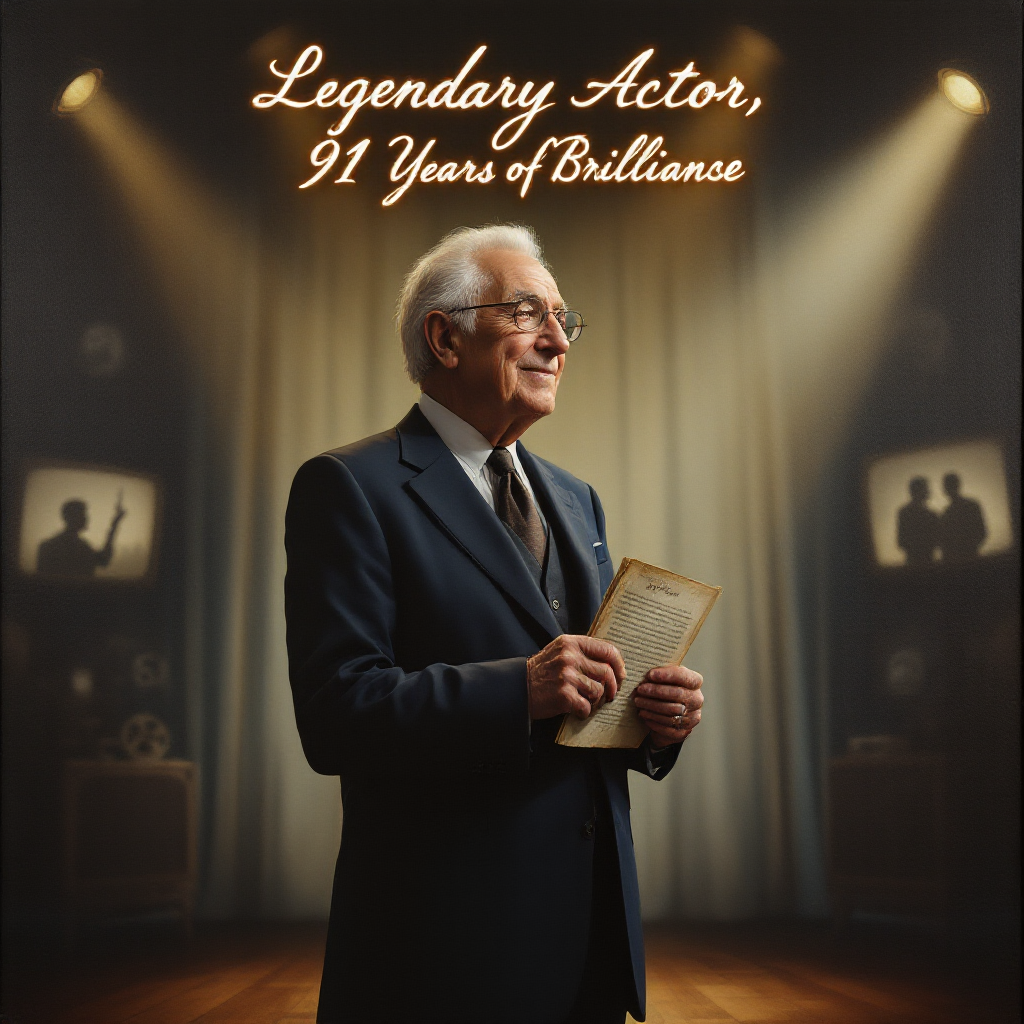
The Eternal Active Actor, Lee Soon-jae’s Final Farewell
At the age of 91, Lee Soon-jae has left our side. What emotions do his life and acting leave with us? On November 25, 2025, news of the passing of Lee Soon-jae, a living legend in Korean theater and drama and known as the “oldest active actor,” struck not just the entertainment world but touched many hearts as if a chapter in Korean cultural history had closed.
Lee Soon-jae: A 70-Year Companion of Korean Broadcasting History
Lee Soon-jae’s career intersects closely with modern Korean history itself. Born in 1934 in Hoeryong, North Hamgyong Province, he witnessed liberation during his elementary years and endured the Korean War’s pain while in his first year of high school. Later, he entered Seoul National University’s Philosophy Department. Inspired by Laurence Olivier’s performance in “Hamlet” during his college years, Lee Soon-jae decided to become an actor, debuting in 1956 with the play “Beyond the Horizon.”
Lee Soon-jae truly began to shine from 1965 onward. As a first-generation exclusive actor for TBC, he launched full-scale broadcasting activities and was celebrated as the “last surviving actor active since the dawn of Korean TV industry.” Even when TBC shut down in 1980 due to media consolidation under the Chun Doo-hwan government, Lee Soon-jae moved to KBS and MBC, maintaining his place through the transformations of Korea’s broadcasting landscape.
Lee Soon-jae’s Acting Spectrum: Over 140 Dramas
Lee Soon-jae’s work volume is astonishing. He appeared in more than 140 major TV dramas alone, and including minor roles, there were times he acted in over 30 productions per month, showcasing a prolific and unwavering dedication. His acting evolved with the times.
During the golden age of historical dramas in the 1970s and 80s, he steadily appeared in classics such as “Sorrow of the Crown Princess,” “Queen Inmok,” and “Storm,” helping lay the foundation of Korean period dramas. In 1991-1992, in “What is Love,” he played a patriarchal father figure in a drama that captured a peak viewership rating of 65%. Notably, in his 70s, Lee Soon-jae shed his dignified image by playing the character “Yadong Soon-jae” in the popular sitcoms “High Kick!” and “High Kick Through the Roof,” winning fans across a new generation.
The Challenge at 90: “A Lifetime of Acting Is Still Not Enough”
What is most astonishing about Lee Soon-jae is that he remained active well past 90 years old. In 2023, he starred as the lead in a play based on Shakespeare’s “King Lear,” setting the record as the “oldest King Lear.” Up until just before suspending activities due to health issues in October 2024, he was still passionately acting in the play “Waiting for Godot” and appearing in KBS dramas.
At the KBS Drama Awards held on December 31, 2024, Lee Soon-jae received the grand prize with support from his juniors. His acceptance speech, “Acting should be judged by acting,” became a famous phrase reflecting the lifelong philosophy that guided his craft. At the Baeksang Arts Awards, he also said, “Art is forever incomplete,” adding, “Only at 90 do I begin to truly understand the taste of acting.”
A Legacy Left in Korean Arts and Culture
Lee Soon-jae’s passing represents more than just the loss of one actor—it marks the end of an era in Korean drama history. Standing on stage and screen for nearly 70 years, contributing to the growth of Korean drama, he also took the stage alongside newcomers even at 90, offering encouragement without hesitation.
The epithet “The Eternal Active” he earned symbolizes a spirit of relentless challenge and passion beyond mere age. Lee Soon-jae’s life was lived with the mindset that “a lifetime of acting is still not enough,” pouring his best into every moment—a timeless lesson that will remain in the hearts of Korean theater and drama forever.
An Actor's Journey Through 70 Years: Lee Soon-jae and the History of Korean Drama
From the dawn of Korean broadcasting through liberation and war, how did one actor grow alongside the very history of Korean dramas? Lee Soon-jae’s life is more than a personal story—it is a condensed chronicle of modern Korean history.
An Artistic Dream Blossoming in History
Born in 1934 in Hoeryong, North Hamgyong Province, Lee Soon-jae grew up amid the turbulence of Korea’s modern history. At four, he moved to Seoul with his grandparents, witnessing liberation firsthand while selling goods at Namdaemun Market as a child. As a high school freshman, he bore the harrowing realities of the Korean War.
Despite such upheaval, Lee Never lost sight of his artistic dream. He entered Seoul National University’s Philosophy Department, where a hobby of watching movies led to a life-changing moment: witnessing Laurence Olivier’s “Hamlet.” This inspired his leap from philosophical thought into the world of acting—the first step of a remarkable journey.
Seventy Years Alongside Early Korean Broadcasting
Debuting in 1956 with the play “Beyond the Horizon,” Lee Soon-jae has devoted nearly seven decades to stage and screen. In 1965, he began his official broadcasting career as a first-generation contracted actor with TBC. Known as the “last surviving actor active since the infancy of Korean TV,” Lee has been a living thread woven through the tapestry of Korea’s television history.
As Korean broadcasters grew, so did Lee. When TBC shuttered during media consolidation under the Chun Doo-hwan government in 1980, he did not falter. Moving to KBS and MBC, he relentlessly pursued his craft, embodying pure passion for acting through every era’s change.
Over 140 Dramas and Countless Challenges
Lee Soon-jae’s filmography alone marks a milestone in Korean drama history. Starring in over 140 prominent dramas—and sometimes juggling more than thirty projects in a single month—he embodies an actor’s relentless dedication to his art.
In the golden age of historical dramas during the 1970s and ’80s, he laid the foundation of Korean period pieces with roles in “Samo-gok,” “Queen Inmok,” “Sangno,” “Pungun,” and “Doklipmun.” Later, he carried heavy presence in masterpieces like “Heo Jun,” “Sangdo,” and “Yi San.” As the core of the 1991 drama “What Is Love,” which soared to a 65% peak rating, he helped create a landmark in Korean TV history.
An Ageless Spirit of Challenge
Lee’s true greatness lies in his ability to reinvent himself with age. In his seventies, he boldly shed his solemn image to showcase comic talents in “Unstoppable High Kick” and “High Kick Through the Roof.” His “Adult Lee Soon-jae” character even won over young fans, highlighting the sheer breadth of his acting range.
Far beyond his eighties into his nineties, Lee’s daring never ceased. In 2022, he performed in four plays simultaneously and made his commercial theater directorial debut with Anton Chekhov’s “The Seagull.” In 2023, he set the record as the “Oldest King Lear” in the Shakespeare classic’s Korean production. Up until October 2024, shortly before pausing activities due to health, he displayed his relentless acting spirit starring in “Waiting for Godot” and the KBS drama “Nonsense.”
A Record of an Era Achieved by One Actor
Lee Soon-jae is not merely a long-standing actor; he is a living archive of Korean drama’s birth, growth, and transformation. A master who perfected his craft through constant challenge and innovation, his artistic dream, born amid liberation and war, has become inseparable from 70 years of Korean drama history itself.
The Acting Spectrum of Lee Soon-jae: Hundreds of Dramas and Stage Performances Marked by Constant Transformation
Was there ever a time when he appeared in over 30 works a month? It’s hard to believe, but looking at the prolific career of actor Lee Soon-jae, it is no exaggeration. With over 140 major drama appearances and countless minor roles, his filmography is nearly uncountable. What’s even more astonishing is not just the sheer number of works but the completely different acting sides he displayed in each one. From dignified noblemen in historical dramas to quirky comedic characters, Lee Soon-jae captivated audiences with a fresh challenge every time.
The Backbone of Historical Dramas in the 1970s and 1980s: The Pinnacle of Graceful Acting
The 1970s and 1980s were the golden era of Korean historical dramas. During this period, Lee Soon-jae steadily built the foundation of Korean historical drama by appearing in significant works like Samogok, Lady Inmok, Sangno, Pungun, and Doklipmun.
His acting at the time was characterized by solemnity and elegance. Playing Joseon dynasty noblemen or high-ranking officials, he added his own profound interpretation, earning strong trust among historical drama fans. Even after the 1990s, in masterworks like Heojun (1999), Sangdo (2001), and Yi San (2007), he contributed substantial supporting roles that added weight to each piece. Historical dramas were undoubtedly the most important stage in Lee Soon-jae’s acting life.
The Patriarch in “What Is Love?”: The Birth of a Father Reflecting an Era
Aired from 1991 to 1992, What Is Love? stands out as one of Lee Soon-jae’s signature works. Here, he portrayed the patriarchal father “Daebal’s Father,” effectively embodying the generational conflicts and family changes in Korean society at the time. The drama achieved peak ratings of 65%, firmly proving Lee Soon-jae’s value as an actor and becoming a landmark in Korean drama history.
Reinvention in His 70s: The “High Kick” Series and a New Comedy Realm
Lee Soon-jae’s true transformation began in his 70s. While most actors retreat to older roles as they age, he boldly ventured into new genres. In Unstoppable High Kick (2006) and High Kick Through the Roof (2009), he broke expectations by playing the eccentric and humorous character “Yadong Soon-jae.”
Shedding his previous dignified image entirely, his comedic acting won him a fresh fan base ranging from children to adults. This was more than just a late-career appearance—he was recognized for pioneering a completely new acting domain in his 70s. Lee Soon-jae proved that an actor’s age is not a barrier but a beginning of new challenges.
Spirit of Challenge in His 80s and 90s: Last Fighting Spirit on Stage
In his 80s and 90s, Lee Soon-jae took on even bolder challenges. In 2022, he simultaneously staged four plays and appeared as a supporting actor in the Russian master Anton Chekhov’s The Seagull, while directing his first commercial play.
In 2023, he made history as the oldest King Lear in a production adapted from Shakespeare’s masterpiece. This was not merely an elderly actor’s appearance but an artistic experiment showing how a 90-something-year-old actor interprets and expresses Shakespeare’s classic.
Up until shortly before pausing activities in October 2024 due to health reasons, Lee Soon-jae stayed on stage with the play Waiting for Godot and appeared in the KBS drama Gae Sori, never letting go of his craft until the very end.
The Evolution of Lee Soon-jae’s Acting: A Life Beyond Genres
Looking back at Lee Soon-jae’s filmography, he was an actor who never confined himself to a single genre. He mastered the solemnity of historical dramas, the warmth of family dramas, the humor of sitcoms, and the depth of theater.
This is no easy feat. Actors face the challenge of maintaining their own “color” while adapting to entirely new roles each time. What allowed Lee Soon-jae to continue his career for nearly 70 years was undoubtedly his relentless spirit of challenge and thorough devotion to each role.
Though the era of appearing in over 30 works a month has passed, the hundreds of dramas and stage moments Lee Soon-jae left behind will continue to shine as invaluable treasures in the history of Korean theater and drama.
Unstoppable Challenge and Passion at 90: The Active Spirit of Lee Soon-jae
Even in his 90s, Lee Soon-jae roamed stages and broadcasts, famously saying, "A lifetime of acting is still not enough." What is the profound resonance his active spirit leaves us? It’s not merely about living long. It is the spirit of an artist who views every moment as a step toward perfection, constantly refining himself without pause.
Defying Age in Acting: Stage Achievements in His 80s and 90s
Entering his 80s and 90s, Lee Soon-jae continued his remarkable presence in theater and drama. In 2022, he took on the challenge of performing in four plays simultaneously, pushing the limits of his physical and mental endurance. He also balanced a supporting role and his debut as a commercial theater director in Anton Chekhov’s masterpiece, The Seagull.
Notably, his 2023 role in King Lear marked a historic milestone. Taking the lead in this Shakespearean classic, Lee earned the title of “Oldest King Lear.” On this stage, he flawlessly portrayed the madness, turmoil, and profound introspection of old age, earning high praise from theater critics.
Unyielding Activity until the Final Moments: Passion in 2024
Until temporarily stepping back due to health in October 2024, Lee Soon-jae was still juggling two projects: the play Waiting for Godot and the KBS drama Gaesori. Even past 90, he rehearsed with the intensity of a rookie actor and delivered his best performance on set.
The 90-Year-Old Grand Award Ceremony: Purity of Acting Philosophy
At the KBS Drama Awards on December 31, 2024, Lee Soon-jae’s appearance moved many hearts. Supported by younger actors as he ascended the stage, his brief but powerful acceptance speech was:
"Acting should be judged by acting itself."
This single sentence encapsulated over 70 years of devotion to the purity and integrity of his craft. Refusing to be judged by age, appearance, or fame, he insisted on being evaluated solely by the essence of acting itself — the creed of a true artist.
The Mindset of “A Lifetime of Acting Is Still Not Enough”
Even at 90, Lee Soon-jae often said: "A lifetime of acting is still not enough." At the 2022 Baeksang Arts Awards, he shared a more detailed insight:
"Art is the process of moving toward completion. Only now, at age 90, do I feel I am beginning to taste the true flavor of acting."
This was not mere humility. For an actor with nine decades of experience to say he’s just starting to grasp the essence reveals the infinite depth of the art of acting. And it means he was ready to delve even deeper, body and soul, well past 90.
Silent Teaching to Young Actors
What did Lee Soon-jae impart to rookie actors he met as a 90-year-old veteran? His presence was the answer. When younger actors complained about their stamina, he rehearsed with even greater intensity. Struggling with new character interpretations, he offered dozens of insights honed by 70 years of experience.
Most importantly, his active spirit conveyed this message to the next generation: “There is no retirement in an actor’s life.” Age is not an excuse, but an asset. There is always something left to learn.
The Essence of an Active Spirit: Continuous Self-Innovation
Watching Lee Soon-jae’s activities in his 90s reveals the true meaning of being “active.” Regardless of age, he prepared impeccably for every stage, fully embodied each role, and approached every performance and shoot with the care of a debut.
Lee Soon-jae was not just “an actor still working,” but an artist who embraced every moment as an opportunity for growth. That is why, even past 90, he stood on stage with moist eyes clutching the script, ready to give his all.
Section 5: Art Forever Unfinished — The Legacy Left by Lee Soon-jae
"The process of striving for completion is art itself." This single sentence encapsulates Lee Soon-jae’s 70-year acting journey. Even past the age of 90, he was known for saying, "Even if I act for my entire life, it’s still not enough." More than just an actor, he became a legendary beacon that forever illuminated Korea’s cultural and artistic landscape. Let’s explore how Lee Soon-jae’s pursuit of the “philosophy of incompletion” carved an everlasting footprint in Korean theater and drama.
Relentless Pursuit of the Unfinished: Lee Soon-jae’s Artistic Philosophy
At the 2022 Baeksang Arts Awards, Lee Soon-jae left a profound remark: "Only now, at the age of 90, do I begin to taste the true flavor of acting." Despite decades of experience, these words reveal his humility—never once considering his art complete.
This philosophy was far from mere rhetoric. In fact, even past 80, Lee eagerly embraced new challenges. In 2023, he starred as the “oldest King Lear” in Shakespeare’s play, and until just before pausing his activities due to health issues in October 2024, he simultaneously appeared in theater and television, constantly refining his craft.
Lee Soon-jae’s attitude stems from his creed that “Art is forever unfinished.” To him, completion meant death; as long as he lived, relentlessly exploring fresh horizons was the true mission of an artist.
A Mentor to Younger Actors: Illuminating Youth
One of Lee Soon-jae’s most precious legacies is his devotion to mentoring younger generations. Even beyond 90, he shared the stage with newcomers, offering generous advice. This went beyond simple acting guidance—it was the transmission of artistic philosophy and passion.
His acceptance speech at the 2024 KBS Drama Awards on December 31, where he said, “Acting should be judged by acting itself,” became the greatest gift to his juniors. This was a powerful message affirming that actors should be evaluated solely by their pure craft, regardless of age, appearance, or popularity.
Lee Soon-jae believed age could be an asset for an actor. More importantly, he trusted that the wealth of experience and insight gained over decades could become a torch to light the path for younger actors.
An Eternal Beacon in Korean Theater and Drama
Lee Soon-jae’s legacy is more than a list of performances. The very image of him as the “eternal active artist” sends an enduring message to Korea’s cultural arts world.
As the last surviving actor active since the dawn of Korea’s TV industry, Lee embodied the history of Korean broadcasting. Beginning as a contracted actor in TBC’s first class of 1965, his journey paralleled the growth of Korean drama. Through crises and challenges — like the shutdown of TBC during the 1980 media consolidation — he continuously adapted, moving stages yet never ceasing to act.
His life philosophy inspires future artists with the message that age is not the end of art, but a new beginning. His versatility, from capturing children’s hearts as “Yadong Soon-jae” in ‘Unstoppable High Kick’ in his 70s, to tackling Russian classical plays in his 80s, to embracing fresh works annually well into his 90s—this passion constitutes an immortal treasure of Korea’s cultural arts.
“Even a Lifetime of Acting Is Not Enough”: His Path Toward Completion
Lee Soon-jae’s oft-repeated phrase, “Even a lifetime of acting is not enough,” holds a paradoxical truth. Having appeared in over 140 dramas and countless theater productions over more than seven decades, he still felt incomplete.
This is the true spirit of an artist. For Lee Soon-jae, acting was not a goal to be achieved but a lifelong journey to be pursued. Like a master craftsman discovering new depths in the same craft every day, he sought something new in every role.
Honoring a Maestro of Culture and Arts
Lee Soon-jae’s passing marks the closing of an era in Korean theater and drama. Yet, his philosophy that “art is forever unfinished” and his creed that “the process of striving for completion is art” will shine eternal.
Younger actors have learned from his life: to remain humble before art regardless of age, and to continuously seek new heights even after reaching success. He proved it was possible to take on new roles at 90, practice alongside newcomers, and draw ever closer to the essence of art.
We pray that Lee Soon-jae’s final “stage” is a celestial one. The passion and philosophy he left behind will continue to illuminate the hearts of countless creators and audiences in Korea’s cultural arts world.
“Art is forever unfinished. The process of striving for completion is art.”
May these words become an everlasting beacon in Korean culture and arts. 🌟
Comments
Post a Comment