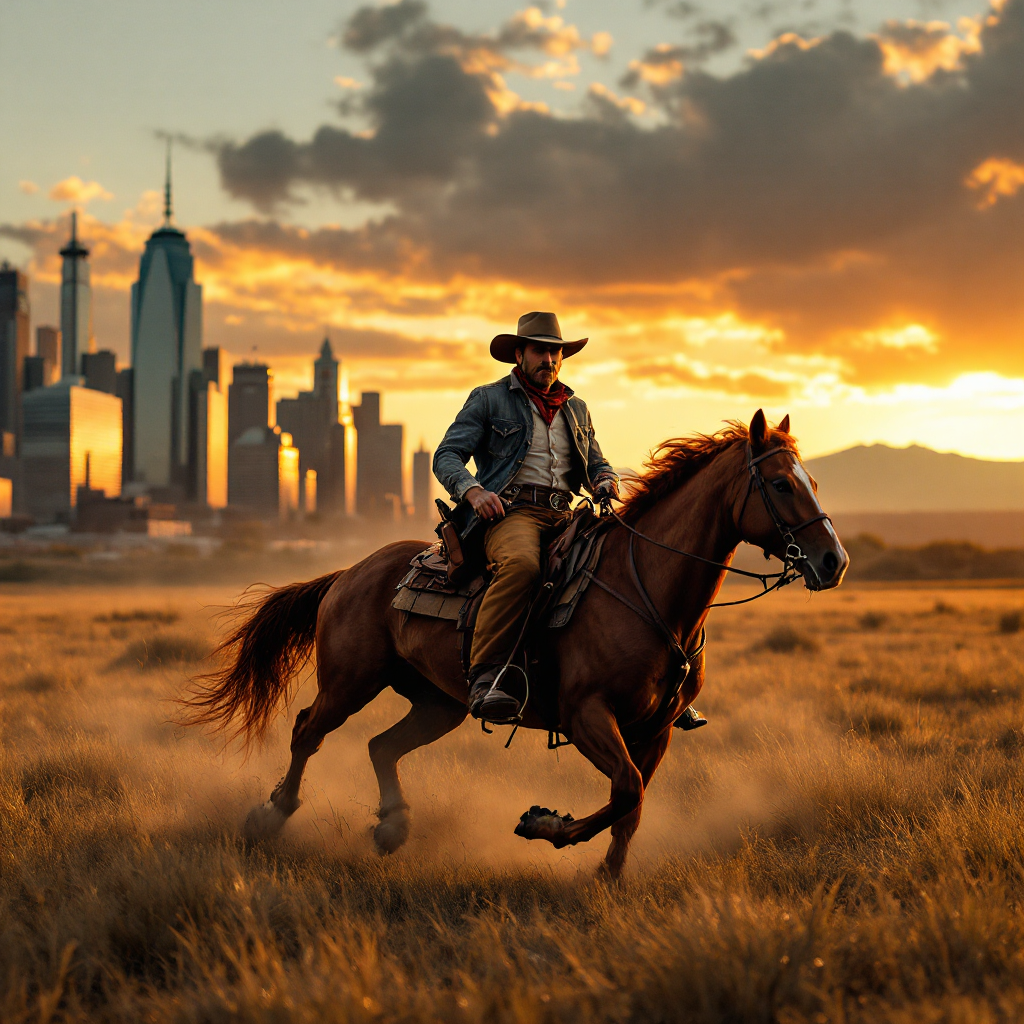
Cowboys: More Than Just a Symbol
Why are Americans drawn to “cowboys” beyond their role as mere cattle herders? How have cowboys evolved into icons of freedom, adventure, and the American spirit?
What Cowboys Represent in the American Ideal
The word “cowboy” goes far beyond simply meaning a person who manages cattle. From the 19th-century Western frontier era to the present day, cowboys have taken their place in the collective American imagination as avatars of freedom and symbols of pioneering spirit. Traversing vast plains and shaping their own destinies, cowboys embody the independent individuals Americans have come to identify with.
The power of this image lies in its close connection to the founding ideals of America. Self-determination, independence, and the drive to push boundaries are core American values—and cowboys have served as the most intuitive embodiment of these principles.
The Gap Between Historical Reality and Myth
What’s fascinating is the striking contrast between the historical reality of cowboys and their cultural symbolism. Historically, about 25% of cowboys were Black, with many others of Mexican or Native American heritage. These were real laborers who chose this profession often after emancipation or as a means of survival on the Western frontier’s margins.
Yet in American popular culture, cowboys have predominantly been portrayed as white men. This historical distortion emerged inevitably through the mythologizing of cowboy culture and simultaneously reveals the racial issues embedded in American society. Today, cultural critics and historians are working to bridge this gap, restoring the true diversity of the cowboy legacy.
The Living Spirit of Cowboys in Modern Culture
Today, the image of the cowboy has evolved into diverse forms. The NFL’s Dallas Cowboys, dubbed “America’s Team,” have become a sports franchise valued at $10 billion. Western culture continues to be reinterpreted in movies and music, and cowboy style finds new life in fashion and social media among younger generations.
While expressed differently across fields, cowboys share a core value: the pursuit of freedom and authenticity. Just as the Outlaw Country Movement of the 1970s saw singers reject mainstream norms to sing “working-class stories,” the cowboy spirit today symbolizes defiance against convention and the quest for genuine expression.
Why Cowboys Still Resonate So Strongly
As of 2025, cowboys remain central to American culture for a simple reason: this symbol tells a story of how individuals can shape their own lives. For modern people facing economic hardships, social constraints, and personal struggles, the message that “you can carve your own path like a Western pioneer” offers powerful comfort and inspiration.
Similarly, businesses and marketers continue to leverage the cowboy image because it embodies traits of freedom, independence, and reliability. From fashion to finance, the cowboy persona still strikes emotional chords and influences consumer choices as a compelling tool.
Ultimately, the reverence and passion for the cowboy symbol endure because it is not just a relic of the past. It is a living cultural construct constantly reinterpreted and infused with modern meaning. Within this symbol converge individual dreams, societal aspirations, and hopes for the future.
The Western Frontier Era: The Untold History of Cowboys
When we think of 'cowboys' in American history, the common image is that of white men herding cattle across vast, barren plains. However, the reality of historical cowboys is strikingly different from our expectations. Did you know that about 25% of cowboys in history were African American? Even more astonishing is the truth about how conflicts with Native Americans shaped cowboy culture.
Cowboys in the 19th-Century Western Frontier
The history of cowboys truly took off in the mid-to-late 19th century, especially after the Civil War, centered in the American Southwest. According to Dictionary.com, the term “cowboy” first appeared in documents between 1715 and 1725 and is simply a combination of “cow” and “boy.” Yet, this seemingly simple job title evolved into one of the most iconic symbols in American culture through a complex historical backdrop.
Cowboys of Many Faces: African American, Mexican, and Native American
Historians and investigations by Smithsonian Magazine reveal a largely unknown fact: about a quarter of cowboys during the Western frontier era were African American. Most of these men chose this occupation after gaining freedom from slavery following the Civil War. For those seeking liberty and economic opportunity, cowboy work offered a rare path out of society’s constraints.
Mexican cowboys also made up a significant portion. Due to the geographic proximity of Texas and the Southwest to Mexico, many Mexican livestock experts engaged in cattle herding, passing down skills and cultural traditions that today form the foundation of cowboy heritage. Native American cowboys existed as well, but they have been largely overlooked in historical records.
Conflict with Native Americans: The Dark Shadow Over Cowboy Culture
The rise of cowboy culture has long been remembered as a tale of exploration and freedom, but in reality, it was shadowed by the seizure of Native lands and tragic clashes. The Dakota War of 1862 stands as a prime example.
This war illustrated the harrowing conditions faced by Native Americans during westward expansion. The Dakota people were starving, forced into smaller and smaller territories by government relocation policies. In this desperate situation, government trader Andrew Jackson Myrick made a notorious statement: “If they are hungry, let them eat grass or their own dung.” This remark transcended mere insult, symbolizing systemic oppression and disregard for Native people.
These conflicts reveal the dark tragedies hidden behind the romanticized concept of the Western frontier. The expansion of cowboy activities and the growth of cattle ranching inevitably destroyed Native Americans’ basis for survival, leaving irreversible scars on history.
Understanding the True Meaning of Cowboy Culture
As we reassess the image of cowboys today, it is crucial to recognize the historical facts accurately. The story of cowboys is more than a romantic saga of freedom and pioneering; it is a complex narrative shaped by people of diverse races and classes. At the same time, the tragedies endured by Native Americans must not be ignored.
The presence of African American cowboys, the contributions of Mexican livestock experts, and the conflicts with Native Americans—all of these elements together shaped the history of the American West. Only by acknowledging this complex history can we truly deepen our understanding of cowboy culture and view the light and shadows of American history with balance.
Dallas Cowboys and Sports Icons Captivating American Culture
Beyond just a sports team, the Dallas Cowboys have shaped fashion and culture worldwide. Let’s explore why they’re beloved and revisit a critical moment they recently missed in a key game.
Dallas Cowboys: NFL’s Cultural Icon
When Americans hear “cowboys” today, the first thought is likely the NFL’s Dallas Cowboys. As of November 2025, the Dallas Cowboys have risen far above being a mere sports franchise—they’re a core symbol of American culture. According to Forbes, the Cowboys rank among the NFL’s most valuable teams, boasting a staggering worth of about $10 billion.
Their status isn’t built on performance alone. Nicknamed “America’s Team,” their logo and uniforms have become globally popular fashion statements. The Cowboys’ name and image, embodying Texas’s pioneering spirit, perfectly align with American ideals of freedom and bravery.
Recent Game: A Heartbreaking Miss in a Decisive Moment
On November 4th, during Monday Night Football against the Arizona Cardinals, Dallas Cowboys fans faced disappointment. Losing 27-17, the Cowboys now hold a season record of 3 wins, 6 losses, and 1 draw.
Running back Javonte Williams stood out with 83 yards on 15 carries, proving to be the offensive powerhouse for the team. However, a turnover at the Cardinals’ 37-yard line just five minutes before the final whistle erased their chance at victory—a rare and pivotal moment underscoring the razor-thin margins in sports.
High 5 analysis highlighted key players like Kyler Murray (Cardinals QB), Dak Prescott (Cowboys QB), and Marvin Harrison Jr. (Cardinals WR). Though Dak Prescott is the Cowboys’ ace quarterback leading their offense, the Cardinals’ formidable defense kept the team from sealing a win that night.
Standing Tall as a Fashion and Cultural Icon
What catapults the Dallas Cowboys beyond sports fame is their brand power. Their iconic blue-and-white uniforms and star logo are beloved not only by sports fans but also fashion enthusiasts worldwide.
Cowboys merchandise is deeply embedded in popular culture. Celebrities around the globe proudly wear Cowboys gear when attending games, crossing cultural and geographical boundaries. This phenomenon vividly illustrates the Cowboys’ potent status as a cultural brand powerhouse.
Modern Evolution Rooted in Historical Legacy
Intriguingly, the Cowboys’ success taps into the legacy of the historical cowboy spirit. The 19th-century Western pioneers’ values of freedom, independence, and boldness still resonate strongly within the modern Cowboys fanbase.
Their imagery transcends romantic myths to become a symbol of positive identity for today’s sports lovers. By reinterpreting this historical heritage in a contemporary light, the Dallas Cowboys ignite the American spirit with every game.
Global Influence and What Lies Ahead
In 2025, the Dallas Cowboys’ reach extends far beyond the U.S. In the digital age, social media spreads their news worldwide in real time, steadily growing an international fan base.
Despite a challenging season, the Cowboys remain one of the NFL’s most captivating teams. This resilience signals that their long-standing cultural prominence is unshaken by any single season’s results. As their performance rebounds, the impact of the Dallas Cowboys is set to become even more powerful internationally.
Section 4: Cowboys in Film and Music: The Meeting of Tradition and Modernity
From spaghetti westerns to outlaw country, how have cowboys been continuously reinterpreted across various artistic realms of American culture? To answer this, we must delve deeply into how film and music have transformed the cowboy image.
Cowboys in Film: The Emergence and Impact of Spaghetti Westerns
In the 1960s and 1970s, the revolution in film culture came with spaghetti westerns. This genre, created by Italian directors, dismantled the clear-cut moral divides of traditional American westerns and portrayed cowboys on screen with much more complexity and darkness. Starring Clint Eastwood, The Good, the Bad and the Ugly stands as a hallmark of this genre, presenting a realistic cowboy far from simple heroic tales.
The significance of spaghetti westerns lies in their critical examination of the mythologizing process of the cowboy image. While Hollywood films had previously cast cowboys as heroes on the side of justice, the cowboys in this new genre were portrayed in gray shades. They pursued rewards, crossed moral boundaries, and often faced tragic ends.
Cowboys in Modern Film: Reexamining Historical Context
Since the 2000s, cowboys in film have undergone another transformation. Recent works like The Power of the Dog (2021) and Django Unchained (2012) have critically reworked traditional cowboy narratives while shedding light on the complex historical backdrop of the western frontier era.
In particular, Django Unchained links slavery and racial issues to the western genre, bringing marginalized historical stories to the forefront. As mentioned in the preliminary content, roughly 25% of actual historical cowboys were Black—a fact the film reflects. Contemporary filmmakers strive to expose the historical truths hidden behind the romantic cowboy image.
Cowboys in Music: The Spirit of the Outlaw Country Movement
If films led the visual reinterpretation of cowboys, music expressed their inner world. The 1970s outlaw country movement, led by artists like Walker Hayes, Waylon Jennings, and Kris Kristofferson, broke away from traditional country music frameworks to capture grittier, more authentic stories of the West.
At the core of this musical movement was the spotlight on the lives of real working-class people. Cowboys sung about by outlaw country artists were not heroes of film or legend, but everyday individuals battling through tough realities. They sang of hard lives, love and loss, the conflict between freedom and constraint, reinterpreting the cowboy image from a profoundly humanistic perspective.
The influence of outlaw country continues today. Modern country musicians inherit this tradition by framing their storytelling within the context of “working-class stories,” proving that the cowboy spirit is not just a relic of the past but a living cultural asset.
The Interaction of Film and Music: Layering the Cowboy Image
Intriguingly, film and music have interacted to enrich the cowboy image. Many western films used country music as their soundtrack, while cowboy stories in music have drawn inspiration from film. Through this mutual influence, cowboys evolved from mere occupational figures into emblematic presences woven into the fabric of American culture.
Reinterpretation in the Digital Age: New Arenas of Expression
Entering the 2020s, the rise of social media and streaming platforms has opened new avenues for expressing cowboy culture. On TikTok and YouTube, clips of western films and country music are being reedited and reinterpreted, making the cowboy accessible to new generations. This digital reinvention reinterprets traditional cowboy culture with contemporary sensibilities while preserving its essential values.
By exploring how the cowboy image has transformed over time through the twin arts of film and music, we uncover meanings beyond mere cultural shifts. Cowboys have served as tools for artists of every era to express their zeitgeist. At the same time, they remain timeless cultural icons symbolizing humanity’s universal ideals of freedom, independence, and the spirit of challenge.
The Cowboy Spirit in the Digital Age: Unchanging Freedom and Challenge
As cowboy culture experiences a revival on TikTok and Instagram, from the American Quarter Horse to Texas hunting traditions, what does the cowboy represent in American identity today? In 2025, the traditional Western pioneer spirit is far from being just a museum relic. Instead, it is being reborn in new forms through digital platforms, captivating millions of people worldwide.
The Revival of Cowboy Culture in Social Media
Modern cowboys no longer only mean cattle herders driving livestock. In the social media era, ‘Cowboy Culture’ has taken on an entirely new dimension of life. Hashtags like #CowboyStyle, #WesternFashion, and #RodeoLife generate millions of pieces of content on TikTok and Instagram, mesmerizing audiences all over the globe.
Notably, on TikTok, short-form videos centered on cowboy attire and lifestyle have gone viral. Young creators reinterpret traditional cowboy culture in a modern way while still embodying its core spirit of freedom and independence. This signifies that the cowboy is not a concept confined to a specific time and place, but a universal value that resonates across generations.
Cowboy Aesthetics in Modern Fashion Trends
With social media’s growing influence, traditional Western attire like cowboy boots, Stetson hats, and denim jackets have transcended mere functionality to become global fashion trends. From luxury brands to mainstream clothing companies, everyone is reinventing the cowboy style with a contemporary twist.
This phenomenon is far from a simple nostalgic trend. Rather, it reveals a deep yearning among modern people for the authenticity and independence symbolized by cowboys. Within the hustle of urban life, individuals seek the free spirit of Western pioneers and express this desire through fashion.
American Quarter Horses and the Continuity of Tradition
To truly understand modern cowboy culture, one cannot overlook the American Quarter Horse, which still stands alongside cowboys. With over 6 million registered horses, these animals are more than just beasts — they are living symbols of the cowboy spirit.
The mission of the American Quarter Horse Association, "to preserve the breed’s lineage and identity and to promote lifelong enjoyment," is profoundly meaningful. It shows that cowboy culture is not a mere historical artifact but a living tradition extending into the present and future. From rodeos and equestrian sports to ranching work, these horses continue to play a central role.
The Sustained Cowboy Spirit in Texas Hunting Culture
The end of the Western pioneer era did not mean the demise of the cowboy spirit. Hunting culture in Texas and the Southwest clearly demonstrates this continuity. From traditional hunting techniques like “Rattling” to modern wildlife management, hunters in this region still carry on the cowboy ethos.
This culture is not just about hunting skills but reflects a lifestyle in harmony with nature. The hunting practices across Texas’s vast prairies serve as a bridge connecting historical tradition with contemporary necessities—showcasing how resilient and adaptable the cowboy spirit truly is.
The Evolving Meaning of the Cowboy in the Digital Age
Ultimately, modern cowboys symbolize the preservation of tradition while moving boldly toward the future. From 15-second TikTok videos and Instagram lifestyle content to the American Quarter Horses at rodeos, the cowboy spirit is continuously expressed in new forms.
This is one of the most powerful aspects of American culture: respecting the past while embracing the future, upholding tradition without resisting change. It is why the cowboy has remained central to American culture for over 170 years. Even in the digital age, the cowboy spirit continues to inspire all who pursue freedom.
Comments
Post a Comment