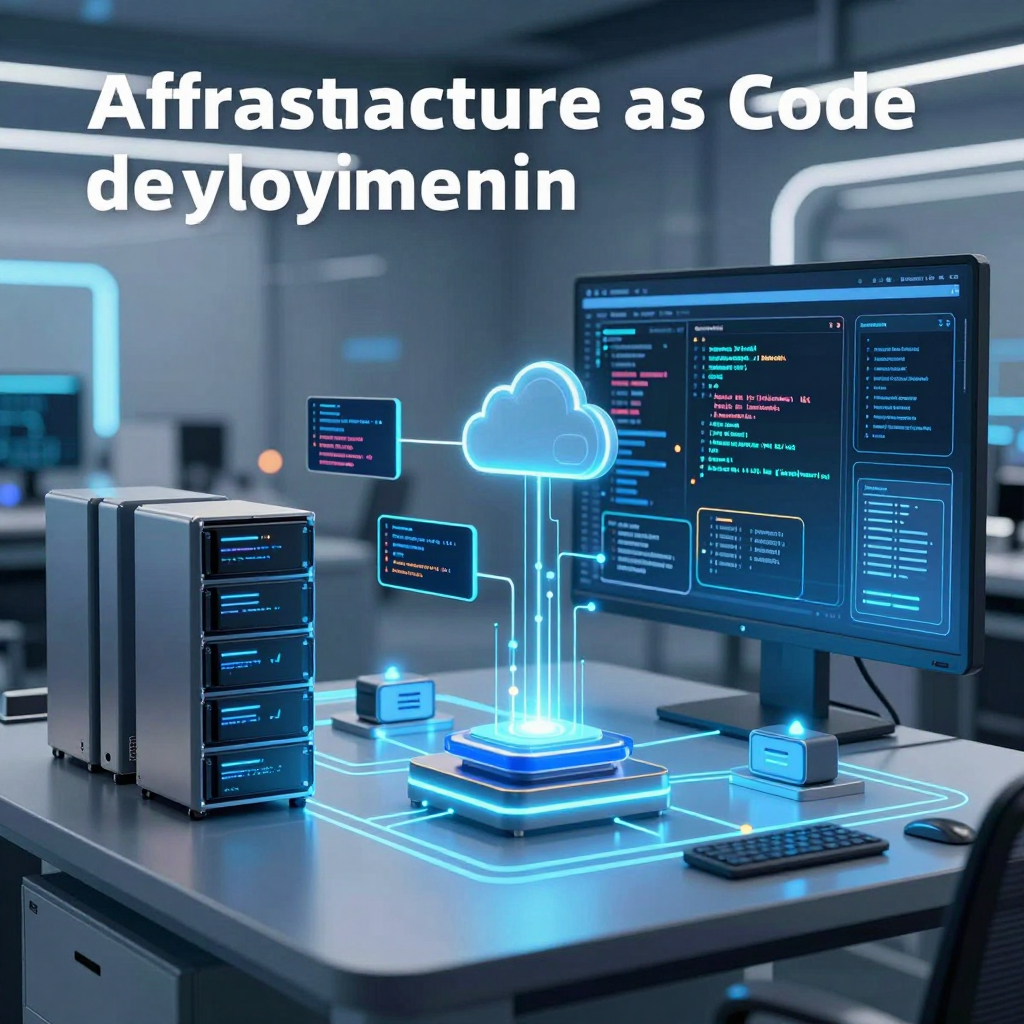
The Dawn of the Infrastructure Revolution: The Rise of Infrastructure as Code (IaC)
How did Infrastructure as Code (IaC), the technology that reshaped software infrastructure in 2025, revolutionize the paradigm of infrastructure management? To answer this, we first need to understand what Infrastructure as Code truly is and why it has become such a pivotal technology.
The Game Changer in Software Infrastructure: Defining IaC and Its Significance
Infrastructure as Code is more than just a technical concept; it is a fundamental innovation that has transformed the philosophy of modern software infrastructure management. IaC defines infrastructure through code, enabling developers and operations teams to provision necessary resources via automated processes. This completely overturns the traditional manual approach to infrastructure setup and has become an indispensable foundation in today’s Software Infrastructure environment.
The Automation Revolution: A Complete Makeover of Infrastructure Deployment
From Manual Labor to Automation
In the past, software infrastructure operations involved manually configuring servers, networks, and storage. Administrators had to individually log into servers to input settings, install various libraries, and apply security policies. This process was not only time-consuming but also prone to human error—posing serious risks.
With the advent of IaC, everything changed. Now, resources can be provisioned instantly without waiting, through fully automated workflows. When a developer writes the infrastructure specifications in code, the system automatically creates and configures all required resources. This breakthrough has dramatically accelerated development speed in DevOps environments while maximizing business agility.
Time Savings and Enhanced Reliability
Automated infrastructure deployment goes beyond saving time; it profoundly boosts the reliability of Software Infrastructure. Infrastructure deployed with the same code guarantees consistent configurations every time, minimizing discrepancies between development and production environments. As a result, the notorious “It works on my machine” problem belongs to the past.
The Necessity of IaC in Cloud-Native Environments
Managing Dynamic and Complex Cloud Environments
Cloud infrastructures differ radically from traditional on-premises setups. Designed to adapt dynamically to real-time demand through automation, distributed resources, and usage-based consumption models, cloud environments are ever-changing.
For example, when traffic surges, the system automatically spins up additional servers; when traffic drops, unnecessary resources are eliminated. Within this fluid structure, IaC serves as the essential backbone for managing complex cloud environments. Without IaC, managing such dynamism efficiently and harnessing the full benefits of Software Infrastructure would be impossible.
Unified Management of Multi-Cloud Environments
Modern enterprises adopt multi-cloud strategies, employing platforms like AWS, Azure, and Google Cloud simultaneously. IaC enables consistent management of infrastructure across these diverse platforms. This reduces vendor lock-in, facilitates cost optimization, and makes implementing disaster recovery and high availability far more seamless.
Continuous Security and Operational Automation
Automating Security Patches and Updates
Software Infrastructure management has evolved beyond merely handling hardware and software—it now automates continuous infrastructure updates and security patches. With IaC, organizations can define regular security updates at the code level and consistently apply them across all environments.
This minimizes risks from security vulnerabilities and more effectively satisfies compliance requirements. Particularly in cloud-based Software Infrastructure, such automated security management becomes a critical mechanism for safeguarding data and ensuring system integrity.
Operational Efficiency and Cost Optimization
Automated infrastructure management significantly reduces the operational team’s burden. Instead of repetitive manual tasks, automated scripts handle infrastructure deployment, monitoring, and maintenance, allowing teams to focus on strategic, high-value work. Moreover, automatic cleanup and resource optimization help dramatically cut cloud expenses.
The Business Impact Brought by IaC
By adopting Infrastructure as Code, companies have become capable of responding to business demands much faster. The wait time for infrastructure setup before starting new projects has vanished, enabling swift adaptation to market changes and enhancing competitive advantage.
Additionally, infrastructure defined as code supports version control, allowing tracking of changes and rapid rollback to previous versions when issues arise. This improves the stability and predictability of Software Infrastructure operations.
As of 2025, Infrastructure as Code is no longer an optional technology. For organizations aiming to build and operate modern Software Infrastructure, adopting IaC is essential, and the capability to leverage it effectively has become a key determinant of competitive edge.
2. Automated Processes: Code, Not Humans, Manage the Infrastructure
The era of manual labor is over. How has the automated workflow enabled by Infrastructure as Code (IaC), which allows for instant resource provisioning, impacted development speed?
A Fundamental Shift in Software Infrastructure
In the past, infrastructure management involved mostly manual tasks such as server setup, network configuration, and database installation. Operations teams had to check off each item on a checklist, sometimes spending days or even weeks. However, with the advancement of Infrastructure as Code (IaC) technology, the software infrastructure landscape has been completely transformed.
Now, infrastructure is defined as code, and automated workflows provision necessary resources instantly. When developers write the desired infrastructure configuration as code, the system automatically deploys and configures it on the cloud platform. There is virtually no waiting time, and the process is repeatable and consistent.
Revolutionary Improvements in Development Speed
With the adoption of IaC automation, development teams have seen a dramatic boost in productivity. For instance, where setting up a test environment for a new feature once took days, it can now be done in mere minutes. Developers no longer need to ask, “When will the server be ready?”
This transformation has made the DevOps culture a practical reality. Development and operations now communicate in the same language—code—and collaborate swiftly through automated pipelines. The entire cycle from bug discovery to fix and deployment is shortened, meaning new features reach users faster than ever before.
Concrete Benefits of Infrastructure as Code
Managing software infrastructure as code is not just about speeding up deployments. Infrastructure configurations are version-controlled, go through code review processes, and become testable. In case of problems, earlier versions can be restored immediately, and it’s easy to track what changes were made, when, and by whom.
Moreover, automated workflows drastically reduce human errors. Incidents caused by misconfigurations or omissions decline sharply, directly enhancing system stability and reliability. Operations teams are liberated from routine tasks and can focus on more strategic and creative work.
Perfect Harmony with the Cloud-Native Era
Modern cloud infrastructure is not static. Designed to adapt dynamically to real-time demand through automation, distributed resources, and consumption-based models, IaC is no longer optional but essential. To consistently manage and scale the intricately intertwined cloud resources, a code-based automated approach is indispensable.
Manual processes simply cannot keep pace with such dynamic environments. Therefore, the key to a successful cloud transition lies in the adoption and establishment of automated IaC workflows.
3. Perfect Harmony with Cloud-Native Environments: The Future of Software Infrastructure
How is Infrastructure as Code (IaC) revolutionizing the cloud ecosystem by responding to real-time demand within distributed resources and usage-based consumption models? To answer this, we must grasp the essence of modern Software Infrastructure management.
The Dynamic Nature of Cloud-Native Environments and the Role of IaC
Cloud infrastructure is no longer static. Modern cloud environments, designed on automation, distributed resources, and usage-based consumption models, are built to adapt instantly to shifting business demands. Within this dynamic ecosystem, Infrastructure as Code has evolved beyond a mere tool to become the foundational backbone of the cloud landscape.
Through IaC, Software Infrastructure managers can define and version-control every element of complex cloud environments—including networks, storage, computing resources, and security policies—using code. This has dramatically enhanced the reliability and reproducibility of cloud infrastructure management.
Key Mechanisms for Real-Time Demand Response
Traditional infrastructure deployment often took days from request to actual resource provisioning. However, with automated IaC workflows, developers and operations teams can provision required resources instantly without waiting.
The driving mechanisms behind this transformation are:
Automated Provisioning: IaC tools interpret defined code to automatically configure the necessary infrastructure. Integrated with cloud APIs, they enable complex infrastructure stacks to be deployed within minutes without manual intervention.
Elastic Resource Management: Distributed cloud resources are dynamically allocated and released based on usage. IaC explicitly defines this elasticity, reliably managing automatic scaling in response to traffic fluctuations.
Cost Optimization: In usage-based consumption models, automatically releasing unused resources directly cuts costs. By increasing resource allocation transparency through IaC, waste is proactively prevented.
The Practical Significance of Software Infrastructure Innovation
Today, Software Infrastructure management transcends simply overseeing hardware and software. It is evolving towards automating continuous infrastructure updates and security patches while maintaining system stability and performance.
This evolution directly impacts corporate competitiveness. Development speeds have soared in DevOps environments, operational workloads have decreased, and system stability has improved. As a result, organizations can respond to business demands faster and more flexibly.
The perfect synergy between cloud-native environments and IaC is a pivotal element enabling modern enterprises' digital transformation. Beyond technological progress, it fundamentally reshapes organizational agility and innovation capabilities.
Section 4. Practical Innovation: Automated Security and Sustainable Infrastructure Management
Not just simple system administration, but the evolution of IaC enabling automated updates and security patches—how does this play a role in strengthening corporate competitiveness? The answer lies at the very heart of modern companies’ digital transformation strategies.
A Paradigm Shift in Software Infrastructure Management
In the past, managing software infrastructure involved continuous manual labor and human intervention. Infrastructure deployment took days, and security patches were applied reactively only during emergencies. However, with the advent of Infrastructure as Code (IaC), this landscape has fundamentally changed.
Today, IaC technology enables not only code-based infrastructure but fully automated deployment and continuous security management. Developers and operations teams can provision all required resources instantly with just a few clicks, while security patches and system updates run automatically through automated pipelines without the need for separate intervention.
Automated Security: From Reactive Defense to Proactive Prevention
Automated security management in software infrastructure goes beyond mere efficiency improvements—it fundamentally enhances an organization’s security posture. In an IaC environment, security policies are defined as code, ensuring all infrastructure changes automatically comply with these policies.
For instance, when a new security vulnerability emerges:
- The security policy is updated within the code,
- Automated pipelines deploy patches across all environments simultaneously, and
- Automated validation processes verify policy compliance before deployment.
This approach drastically reduces response times to security incidents and guarantees consistent adherence to regulatory requirements.
Realizing Sustainable Infrastructure Management
Automation through IaC directly connects to environmental sustainability. By defining software infrastructure as code, organizations achieve:
Efficient Resource Management
Cloud-based IaC environments allocate only the resources needed based on usage. Automated scaling promptly releases resources when demand drops, preventing unnecessary energy consumption.
Consistent Infrastructure Standardization
Code-driven definitions ensure all environments adhere to uniform standards, eliminating resource waste caused by inconsistencies between development, testing, and production environments, while enabling predictable performance management.
Automated Maintenance
Continuous infrastructure updates and security patches are automated, minimizing system downtime and significantly reducing long-term maintenance costs.
Concrete Benefits for Strengthening Corporate Competitiveness
The automated management style of IaC enhances competitiveness across multiple dimensions:
Accelerated Development Speed
Reducing infrastructure provisioning time allows development teams to respond faster to business needs, shortening product release and feature update cycles—securing a competitive edge in the market.
Increased Operational Efficiency
Automation dramatically reduces manual operational tasks, freeing teams to focus on strategic initiatives.
Risk Reduction
Consistent automated processes minimize human errors and ensure predictable system operations. The likelihood of security breaches also significantly decreases thanks to proactive automated defenses.
Cost Optimization
Eliminating unnecessary resource use and improving operational staff efficiency lowers the total cost of ownership.
The Future of Software Infrastructure Management
Starting in 2025, IaC automation is no longer optional but essential. In cloud-native environments, automation, distributed resources, and usage-based consumption have become foundational design principles, with IaC serving as the indispensable backbone for managing complex infrastructure.
To achieve true digital transformation, companies must go beyond merely adopting IaC tools. They need to deeply embed automated security and sustainable management principles within organizational culture and operational processes. This is the core of securing lasting competitive advantage.
Section 5. Building the Future with IaC: Why Your Infrastructure Must Evolve Now
Automation in infrastructure management is no longer optional—prepare your IT environment for tomorrow with a comprehensive guide covering everything from the technical theory of IaC to the latest trends.
A Fundamental Paradigm Shift in Software Infrastructure
The way enterprises manage IT infrastructure today is completely different from the past. Whereas infrastructure engineers once manually configured servers and set up networks one by one, the modern Software Infra landscape is rapidly embracing an era of automation powered by Infrastructure as Code (IaC). This transformation is not just a passing tech trend; it has become a critical factor that defines corporate competitiveness.
The Evolution of Automated Infrastructure Management: The Power of IaC
Zero Wait Time, Instant Provisioning Era
Traditional infrastructure deployment involved long wait times—requesting resources and provisioning could take days or even weeks. However, automated workflows based on IaC have resolved these issues at their core.
When developers or operations teams write and deploy code, the automated process provisions required resources instantly without any wait time. This breakthrough has dramatically accelerated development speeds in DevOps environments and drastically shortened response times to business demands. The phrase “Please wait while your infrastructure is ready” is now relic of the past.
Version Control and Reproducibility Secured
Another major advantage of IaC is that defining infrastructure as code enables rigorous version control. In manual approaches, tracking what changed and when was difficult or impossible. With IaC, every infrastructure update is recorded through version control systems like Git, allowing easy rollback to previous states whenever needed.
Moreover, identical infrastructure can be consistently reproduced across multiple environments, preventing issues caused by discrepancies between development and production setups.
The Inseparable Bond Between Cloud-Native Environments and IaC
Modern cloud infrastructure is not fixed physical hardware. The cloud is designed on core principles of automation, distributed resources, and usage-based consumption models, dynamically adapting to real-time demand.
Traditional infrastructure management methods simply cannot keep up in such environments. To unlock the full flexibility of the cloud, code-driven automated management is essential. IaC simplifies the complexities of cloud environments and empowers enterprises to maximize scalability and reliability.
Automating Security and Compliance
A vital evolution in Software Infra management is the automation of security patches and updates. Previously, security vulnerabilities required manual patching by administrators—an error-prone and time-consuming process prone to missed systems and delays.
With IaC-powered automation, security patches can be codified and automatically applied across all environments. This ensures consistent adherence to security compliance and accelerates response to threats. Additionally, every change is documented in code for audit purposes, simplifying regulatory compliance.
Maximizing Business Agility
Ultimately, adopting IaC is not just a technology choice—it’s a strategic move to boost business agility through infrastructure.
Launching a new product line? Development can begin immediately without infrastructure delays. Facing a traffic surge needing resource expansion? Automated scaling handles it seamlessly without downtime. Encountering unexpected failures? Reproducible infrastructure configurations enable rapid recovery.
Why You Must Start Now
Today’s Software Infra is swiftly being reshaped around IaC. Leading cloud platforms like AWS, Azure, and Google Cloud now provide IaC tools such as Terraform, CloudFormation, and Ansible as foundational infrastructure components. This means IaC has become a mandatory capability, not a mere option.
If your organization still relies on manual infrastructure management, now is the time to change. By embracing IaC, you accelerate development cycles, enhance operational stability, and strengthen security. The future of IT demands automated infrastructure management as the default. Prepare your IaC-based infrastructure transformation today to stay ahead in tomorrow’s competitive landscape.
Comments
Post a Comment