How Does the World Welcome the New Year?
Though the entire world marks a fresh beginning simultaneously, why are New Year’s traditions so uniquely diverse across countries? The way we celebrate New Year's Eve goes beyond merely honoring the change of time—it reflects the values and beliefs cherished by each culture.
Around the globe, people greet the new year by pursuing different ideals such as luck, health, reconciliation, and adventure. While Australia rings in the new year with dazzling fireworks and beach parties, other cultures embrace entirely different ways to welcome the year ahead.
European Traditions of New Year's Eve
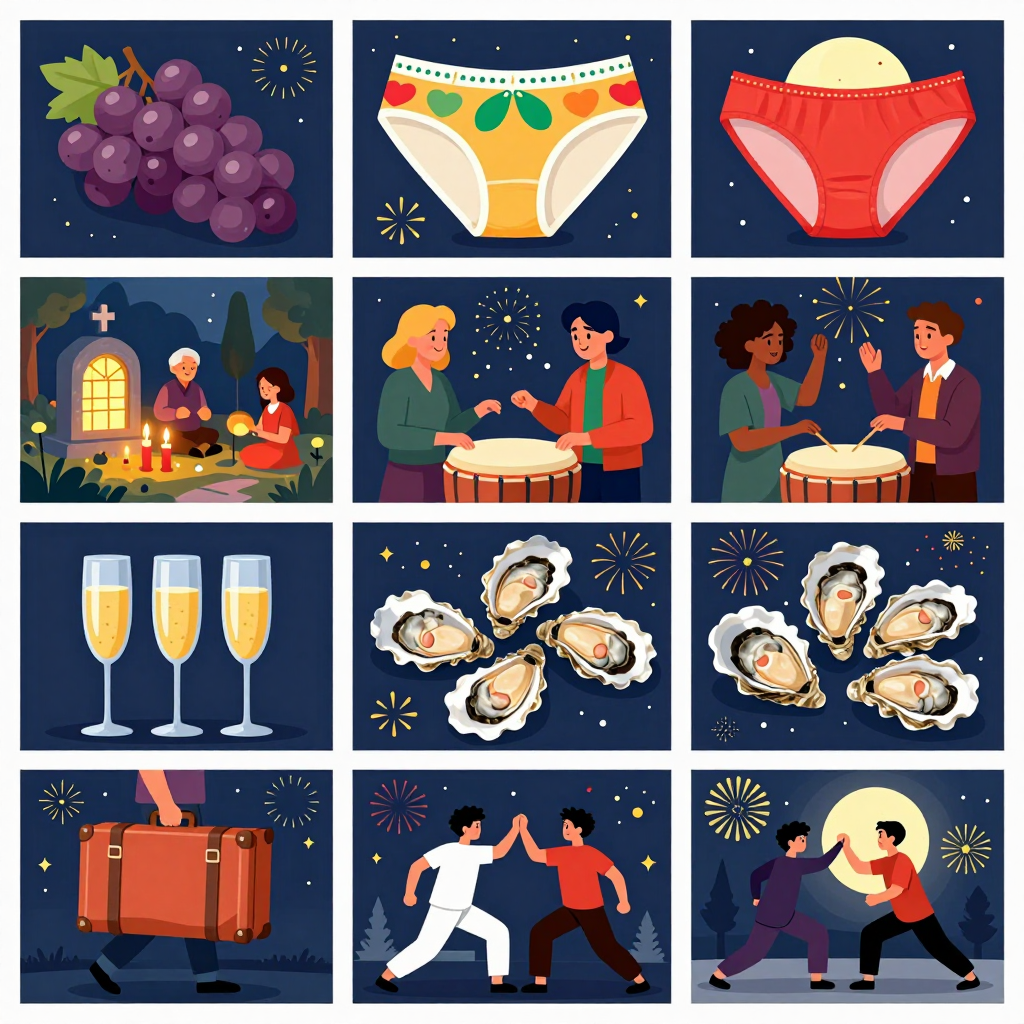
In Spain, as midnight approaches, people try to eat 12 grapes within 12 seconds. Each grape represents one month of the new year, and this tradition is more than a race—it’s a ritual meant to invite good fortune for the upcoming year. Successfully completing this challenge is believed to bring luck throughout the months ahead.
In Italy, wearing colored underwear is a popular custom—red symbolizes love, yellow represents wealth, and white stands for peace. People choose colors according to their personal wishes. In France, the new year is celebrated more elegantly with oysters and champagne.
In Ireland and Eastern Europe, a noisy tradition involves banging pots and pans just before midnight to chase away bad luck.
South American Traditions of New Year's Eve
In Chile, the gates of cemeteries open on New Year’s Eve, allowing families to visit. People light candles at their ancestors’ graves just before midnight and sometimes spend the night there in deep respect.
Peru has a dramatic tradition where a supervised fistfight with a judge settles grievances from the past year. After the fight, everyone reconciles, symbolizing washing away conflicts.
Across many parts of South America, carrying an empty suitcase is a unique custom. This represents a wish for abundant travel and adventure in the new year, expressing a thirst for new experiences and opportunities.
These diverse rituals clearly reveal what each culture holds most dear when welcoming the new year. Far from being just an end-of-year event, New Year's Eve is a vibrant celebration that embodies the values and hopes of peoples around the world.
Section 2: From Spain to Italy: Fascinating Traditions
From Spain’s belief that eating 12 grapes within 12 seconds brings good fortune to Italy’s tradition of wearing lucky-colored underwear, what lies behind these hidden meanings? The New Year's Eve customs across Europe are unique rituals deeply rooted in each country’s history and culture.
Spain: The Challenge of Eating 12 Grapes in 12 Seconds
Spain’s New Year's Eve tradition is both unique and captivating. As midnight approaches, Spaniards challenge themselves to eat 12 grapes in 12 seconds. This tradition goes beyond a simple game; it is a ritual to wish for a lucky year ahead.
Each grape symbolizes one month of the upcoming year, and those who successfully complete the challenge believe their year will be filled with good luck. Peeling and eating the grapes rapidly is surprisingly difficult, leading many to laugh and enjoy the challenge together.
Italy: Expressing Wishes Through Colored Underwear
In Italy, there’s a tradition of wearing colored underwear on New Year's Eve. This is not just a fashion statement but a meaningful custom to express personal wishes for the new year.
Each color holds a special significance:
- Red: Symbolizes love and passion, chosen by those hoping for a joyful romantic year.
- Yellow: Represents financial wealth and prosperity, favored by people expecting economic success.
- White: Signifies peace and health, selected by those wishing for a calm and stable year.
Italians choose colors according to their desires, consciously welcoming the new year with personal intentions. This practice reflects individual priorities and values, making it both a personal and culturally meaningful tradition.
The Meaning Behind Europe’s New Year's Eve Traditions
Spain’s energetic grape-eating challenge and Italy’s color-coded customs share a common goal: to actively express one’s desires at the start of the new year and demonstrate the will to turn those wishes into reality. These rituals reveal that New Year's Eve is not merely a celebration of the passing year but a conscious cultural ceremony marking a fresh beginning.
Passed down through generations, these traditions have become cherished family and community rituals, each carrying its own unique significance.
Section 3: South America's Unique New Year's Eve Rituals
Curious about Chile's cemetery visits to spend time with ancestors and Peru's extraordinary fistfights to resolve past conflicts? South America's New Year's Eve traditions go beyond mere celebration—they are meaningful rituals that embody community emotions and cultural values.
Chile: Lighting Candles at Midnight in the Cemetery
In Chile, New Year's Eve is a special night connecting the living with the departed. As cemetery gates swing wide open, families gather at their ancestors’ graves to light candles just before midnight. Some even welcome the arrival of the New Year right there in the cemetery, spending the night in the company of their forebears.
This tradition transcends simple mourning—it reaffirms family continuity. Chilean culture warmly blurs the lines between life and death, choosing to start the New Year together. Beneath the candlelight, families revive memories of their ancestors and wish for peace throughout the coming year.
Peru: Resolving Conflicts Through Judged Fistfights
Peru’s New Year's Eve marks the past in a remarkable way. In certain regions, conflicts and grievances from the previous year are settled through judged fistfights. These bouts are not reckless brawls; they are strictly supervised, governed by rules designed to minimize physical harm.
Surprisingly, once these fierce fights conclude, adversaries embrace in reconciliation. This unique Peruvian philosophy channels emotions through the body, allowing individuals to confront and clear the past, preparing for a fresh start. Rather than ignoring or suppressing problems, the ritual seeks true forgiveness through confrontation and overcoming.
Across South America: Embracing New Beginnings with Suitcases
Throughout many parts of South America, a tradition sees people carrying empty suitcases during New Year's Eve. This custom hopes to invite ample travel and adventures in the year ahead. The suitcase becomes more than a mere item—it symbolizes hope and an open heart toward the future.
Seeing families and friends strolling the streets with suitcases in hand captures a shared community dream. Each person’s desires for new journeys and changes blend into a collective celebration of fresh possibilities.
South America's New Year's Eve customs reveal profound attitudes toward death, conflict, and the future. Within these rituals lives the warm human spirit that honors the past, heals present relationships, and joyfully embraces what lies ahead.
Section 4. Celebrating New Year's Eve with the Sounds and Flavors of Europe
From Ireland, where the clanging of pots and pans chases away bad luck, to France, where champagne and oysters ring in the new year, what messages do these traditions convey? Europe's New Year's Eve customs go far beyond simple celebrations—they embody the profound philosophies and values of each culture.
Driving Away Bad Luck with Noise in Ireland and Eastern Europe
An intriguing tradition found both in the east and west of Europe involves a powerful ritual just before midnight on New Year's Eve. In Ireland and several other regions, people bang pots and pans with all their might. This noise is not merely a festive gesture, but a sacred act intended to dispel the negative energy and bad luck of the past year.
The metallic clangs resonate through homes and streets alike, creating a massive collective uproar throughout towns—symbolizing a cleansing of all negativity as the new year dawns. This strongly reflects Europe's fervent desire to shake off the past and embrace a fresh beginning.
France’s Elegant New Year’s Eve Celebration
France welcomes the new year in one of Europe’s most refined ways. Rather than through loud noise, the French celebrate with delicate flavors—oysters and champagne take center stage.
Oysters symbolize love and prosperity in French culture, while the golden bubbles of champagne embody hope and joyous festivity. In savoring these delicacies together, the French honor the elegance of the year gone by while wishing for abundance in the year ahead.
The Deeper Message Behind Europe’s New Year’s Eve Traditions
While Ireland’s lively noise-making and France’s graceful tasting appear worlds apart on the surface, they share a common message at heart. Europe’s New Year’s Eve customs all express a break from the past and a heartfelt yearning for a fresh future.
Whether banging pots or sipping champagne, each culture marks the boundary of time in its unique way, performing rituals to open a new chapter. These diverse expressions illustrate the universal human desires that transcend cultures and regions—a powerful hope for change, liberation from misfortune, and eager anticipation of a prosperous future.
Section 5: Learning the Meaning of New Year's Eve from Diverse Traditions
As different cultures welcome New Year's Eve with hopes for luck, reconciliation, adventure, and love, can we not make our own fresh start even more special through these values? Exploring unique New Year's traditions around the world reveals fresh perspectives we may have overlooked.
The World's Values Embodied in New Year's Eve
New Year's Eve customs worldwide go beyond mere celebration rituals, clearly reflecting the life values each culture pursues. Spain’s grape-eating tradition embodies the heartfelt wish to bless each of the 12 months, while Italy’s practice of wearing colored underwear expresses specific hopes for love, wealth, and peace. These traditions show that welcoming the New Year is not just a change of date but a ceremony wishing for genuine transformation in one’s life.
The Meaning of Reconciliation and Purification
Chile’s cemetery visits and Peru’s fistfights emphasize New Year's Eve as a turning point to sort out the past and embrace the future. Lighting candles for ancestors in Chile reminds us of family bonds, while Peru’s regulated fistfights carry a will to resolve conflicts clearly and reconcile afterward. Ireland’s tradition of banging pots and pans to chase away bad luck fits the same theme, viewing New Year's Eve as a moment to cleanse away past negativities.
Openness to Adventure and Fortune
The South American custom of carrying an empty suitcase awakens the importance of one’s mindset when greeting the New Year. It symbolizes an open heart toward new experiences and adventures and conveys the insight that how actively we welcome the New Year shapes our journey throughout it. France’s celebration of New Year's Eve with oysters and champagne also reflects a value of savoring life’s precious moments with elegance.
Designing Your New New Year's Eve
Now inspired by traditions from other cultures, we can create our own meaningful New Year's Eve. Try eating grapes while wishing for each month, or wear underwear in your favorite color as a promise for specific goals. Clear away last year’s conflicts, open your heart to new adventures, and share the moment with loved ones. The start of the new year becomes not just a celebration but a precious ritual reaffirming how we will live the coming 365 days.
Comments
Post a Comment