Breaking News: Japan's 7.6 Magnitude Earthquake - Concerns Over Direct Impact on U.S. Economy, Evacuation Order for 90,000 People
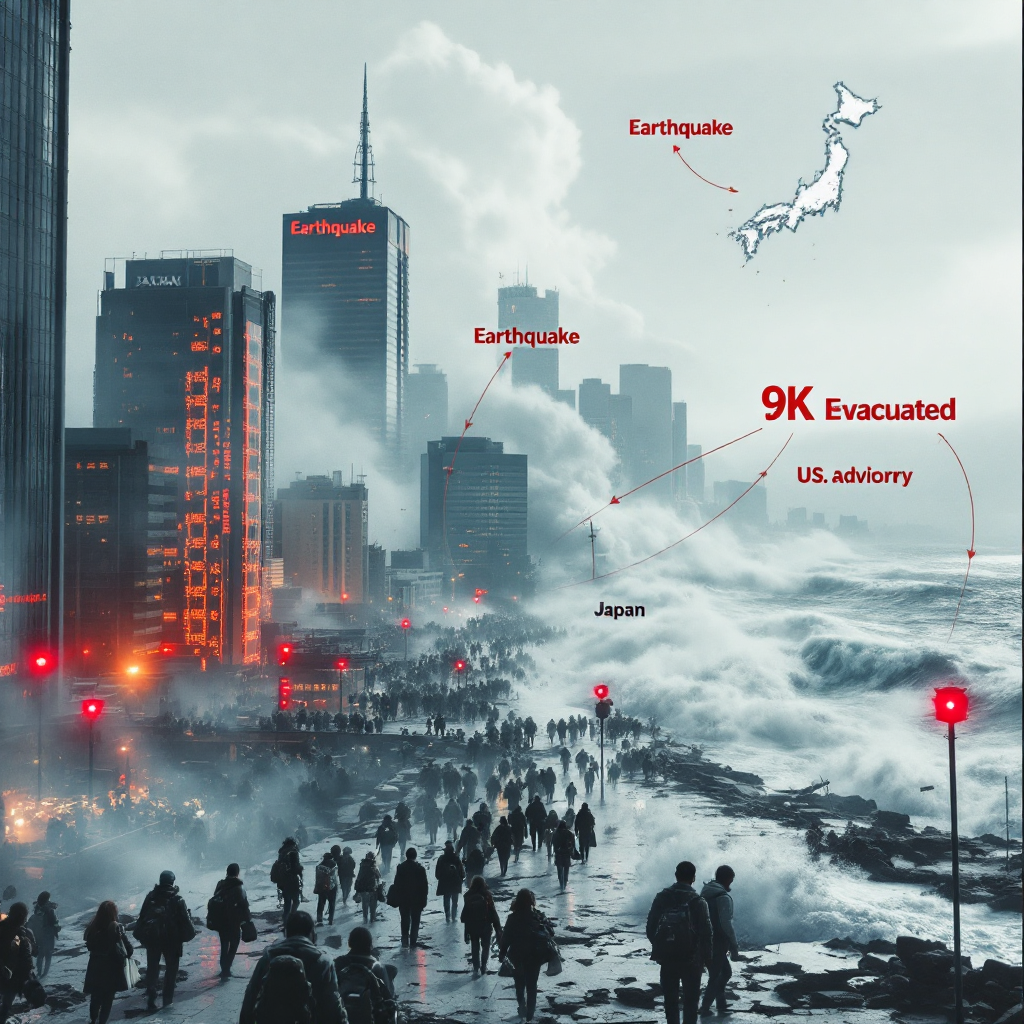
Japan's Massive Earthquake Sends Shockwaves Around the Globe
A powerful quake measuring magnitude 7.5 to 7.6 has struck northeastern Japan, prompting evacuation orders for 90,000 residents. Just how far-reaching will the aftermath of this disaster prove to be?
On December 8, a strong tremor off the northeastern coast of Japan has gripped the entire world with tension. News of the Japan earthquake quickly became a global headline, with reports from Guardian News and ABC News confirming a 7.5 to 7.6 magnitude quake in the Pacific Ocean approximately 80 kilometers from the Japanese mainland. The hardest hit was the Tohoku region near Fukushima, where severe shaking was recorded. Dramatic CCTV footage capturing swaying buildings and streetlights has led experts to describe this as the largest natural disaster since the colossal 9.0-magnitude Great East Japan Earthquake in 2011.
Swift Response: The Japanese Government’s Rapid Action
Immediately after the quake, the Japan Meteorological Agency (JMA) issued a “tsunami warning”, directing 90,000 residents in Fukushima and Miyagi prefectures to evacuate urgently. This prompt measure prioritized the protection of citizens’ lives above all else.
Fortunately, two hours later, the tsunami threat diminished and the warning was downgraded to a “tsunami advisory.” Ultimately, the tsunami observed measured less than one meter, causing no significant damage. This quick and decisive adjustment of alerts is being hailed as a model of effective disaster management.
Nuclear Safety: Eyes of the World
Fukushima Daiichi Nuclear Power Plant automatically shut down upon detecting the earthquake, and Tokyo Electric Power Company (TEPCO) officially confirmed there was no radiation leakage. Yet, the vivid memories of the 2011 tragedy keep the international community vigilant and watchful of developments.
This Japan earthquake not only proved the resilience and efficiency of Japan’s earthquake response system but also exposed vulnerabilities within the global supply chain. Given Japan’s crucial role in the world economy, the ripple effects of this disaster are crossing the Pacific, impacting the United States and the entire globe in tangible ways.
Initial Response of the Japanese Government: From Tsunami Warnings to Nuclear Plant Safety During the Japan Earthquake
While alert levels were rapidly adjusted and nuclear reactors safely shut down automatically, a palpable tension reminiscent of past tragedies lingers. How swift and flawless was Japan’s governmental response really?
🚨 Evacuation Order for 90,000 Residents: A Critical Decision During the Golden Hour
Immediately following the 7.5–7.6 magnitude Japan earthquake that struck the northeastern coast on December 8, the Japan Meteorological Agency (JMA) sprang into action. They issued a “tsunami warning” targeting some 90,000 residents of Fukushima and Miyagi prefectures, ordering immediate evacuation from coastal areas.
This decision was grounded in the harrowing lessons learned from the 2011 Great East Japan Earthquake, where approximately 16,000 lives were lost to the subsequent tsunami. Prioritizing human life over potential criticism of “over-warning,” the government chose a policy that leaned toward caution. The time between warning issuance and evacuation completion directly influenced public trust, showcasing the brilliance of Japan’s swift communication system.
⬇️ Downgrade to Level 2 Warning: A Science-Based Cautious Judgment
About two hours after the quake, situation evaluations shifted. The actually observed tsunami was smaller than predicted. With waves measuring less than 1 meter, the JMA lowered the alert to a “tsunami advisory.”
This was not merely a technical recalibration but a vital example of managing public trust. Maintaining an excessive warning risked inducing “over-warning fatigue,” potentially dulling citizens’ responses in true emergencies down the line. Japan’s transparent and rapid updates have become a benchmark for international disaster response organizations such as FEMA.
☢️ Automatic Nuclear Reactor Shutdown and Safety Confirmation: Preventing a Repeat of the 2011 Nightmare
The Fukushima Daiichi nuclear plant initiated automatic shutdown procedures the moment the Japan earthquake was detected. This confirmed that the safety systems installed since the 2011 disaster were fully operational. Tokyo Electric Power Company (TEPCO) quickly issued an official statement declaring “no radiation leaks,” while the International Atomic Energy Agency (IAEA) is actively monitoring the situation on-site.
Yet, the nuclear meltdown triggered by the 9.0 magnitude quake in 2011 remains vivid in the global consciousness. Although the current quake’s smaller magnitude offers relief, nuclear safety remains a shared concern among Pacific Rim nations. American residents in the area are closely watching IAEA statements as they track developments.
✅ Achievements in Rapid Response and Challenges Ahead
Achievements: Japan’s initial response to the Japan earthquake earned high praise. From warning issuance and alert adjustments to nuclear safety verification, every step was handled transparently and swiftly. Institutional and technological improvements borne from past tragedies successfully prevented large-scale damage this time.
Challenges: Nonetheless, global supply chain disruptions have already begun. While warnings and evacuation orders were accurate, damage to industrial infrastructure caused by the Japan earthquake is a separate issue. U.S. automakers and semiconductor firms have already detected supply chain troubles, which will be explored in the next section.
Japan’s rapid government response stands as a model for disaster management, yet in today’s interconnected global economy, domestic measures alone aren’t enough. Supply Chain Resilience has now emerged as a matter of national security.
The Hidden Crisis in the U.S. Economy and Industry: Supply Chain Collapse Triggered by the Japan Earthquake
Japan is a crucial supplier of parts essential to the U.S. automotive and semiconductor industries. What crisis awaits the American market if this earthquake cripples the just-in-time system?
Exposure of the Global Supply Chain’s ‘Hidden Weakness’
The Japan earthquake on December 8th is more than just a natural disaster. It brutally exposed the vulnerabilities within the global supply chain that lies at the heart of the U.S. economy.
As one of the U.S.’s top five trading partners, Japan holds a dominant position in the global economy. Especially in the fields of automotive parts, semiconductor materials, and LCD panels, Japan supplies over 30% of the global market — not just a figure, but a lifeline for the American manufacturing ecosystem.
The Automotive Industry’s ‘Critical Dependence’ Problem
Automakers in Detroit, Michigan, depend on Japanese parts for as much as 40% of their needs. Engine parts, transmissions, sensors, and more, supplied by giants like Honda and Nissan, are indispensable to U.S. car production.
The supply disruption caused by the Japan earthquake has dealt a direct blow to the “just-in-time” production system. This innovative approach was designed to deliver parts exactly when needed to reduce warehousing costs. Ironically, this very system’s fragility means even minor supply chain tremors can halt entire production lines.
According to the Wall Street Journal, the supply disruption triggered by this earthquake is expected to be the largest since the COVID-19 pandemic in 2023, with the S&P 500 industrial index projected to drop by 1.2%.
Ripple Effects on the Semiconductor and Materials Industries
Equally serious is the impact on semiconductors and advanced materials. Japanese firms like Shin-Etsu Chemical supply critical chemical materials essential for chip manufacturing worldwide.
Disruptions in these supplies don’t just mean production delays; they threaten to slow down foundational industries underpinning the global digital economy. At a time when demand for AI chips and high-performance processors is surging, these shortages directly undermine the competitiveness of the U.S. tech sector.
The Start of Long-Term Economic Fallout
The supply chain ripple effects caused by the Japan earthquake are far from short-term. Recovery in Japan’s Tohoku region may take months or even years. During this period, U.S. companies face three tough choices:
First, urgently invest in securing alternative suppliers;
Second, accept production disruptions and pass increased costs onto consumers;
Third, bear added expenses from stockpiling inventory.
Whichever path they choose, it translates to additional costs for American consumers and businesses, likely fueling inflationary pressures.
The Urgent Need for Structural Reform
This Japan earthquake sends us a vital message. While global supply chain optimization has trimmed costs, transitioning to a resilient system has been delayed.
U.S. companies can no longer afford heavy dependence on a single country. Beyond a “China+1” strategy, moving toward a “Japan+1” strategy — and even broader diversification — is essential. Expanding supply chains across countries like India, Vietnam, and Mexico is no longer optional; it’s imperative.
Disasters know no borders. Today’s tremor in Japan could be tomorrow’s crisis in America.
This incident reminds us once again of the deep interdependence in the global economy and the very real risks it entails.
Flight Suspensions Due to the Japan Earthquake and Urgent Responses in the U.S. Travel Market
The FAA’s emergency flight suspensions and cruise cancellations are significantly disrupting the daily lives of Americans. How should travel plans be adjusted? Let’s take a closer look at the chaotic scenes right after the earthquake struck.
🛫 FAA’s Emergency Action: Massive Suspension of Flights to Japan
Immediately following the Japan earthquake on December 8, the U.S. Federal Aviation Administration (FAA) took swift action. It ordered a temporary halt to all U.S. flights bound for Japan—especially those operated by All Nippon Airways (ANA) and Japan Airlines (JAL). This decision went beyond simple precaution, triggering a ripple effect throughout the entire U.S. transportation system.
Over 50 flights from San Francisco International Airport (SFO) and Los Angeles International Airport (LAX) were delayed or canceled, directly impacting thousands of passengers. With the holiday season approaching, the confusion and frustration among travelers who had already confirmed their reservations were substantial.
Current Situation:
- Over 50 flights delayed or canceled at San Francisco and Los Angeles airports
- Chain reaction delays caused by temporary disruptions among major airlines
- Airlines urgently managing passenger reassignment and accommodation arrangements
⚓ Major Cruise Industry Schedule Cancellations
Equally notable is the cruise industry’s proactive response. Leading cruise lines such as Princess Cruises and Royal Caribbean have completely canceled all itineraries stopping along the northeastern coast of Japan.
This goes beyond canceling leisure or entertainment activities. Thousands of travelers who had already paid deposits suddenly faced unexpected cancellations. Travelers who booked to experience Japan’s classical culture and scenic coastlines were especially disappointed.
Cruise Industry Status:
- Full cancellation of all northeastern Japan coastal stops
- Processing refunds and alternative route arrangements for passengers
- Concerns about multi-billion dollar losses for the cruise tourism sector
📋 U.S. State Department Issues Travel Alert
The U.S. State Department officially issued a Level 2 Travel Alert for Japan (Exercise Increased Caution). This is not the highest warning level but strongly advises travelers to be vigilant.
Approximately 120,000 Americans are estimated to be staying in Japan, and the State Department urged all of them to exercise caution due to ongoing uncertainties following the earthquake. Especially for those currently traveling, following official Japanese government guidelines and having the U.S. embassy’s contact information readily available is crucial.
State Department Recommendations:
- Level 2 alert urging careful travel decisions
- Safety reminders for roughly 120,000 Americans residing locally
- Emphasis on following official Japanese government instructions
💳 Airlines’ Flexible Change Policies: The Time to Check is Now
Fortunately, major airlines have implemented flexible rebooking policies to minimize disruption caused by the Japan earthquake. United Airlines and Delta are allowing flight changes without penalties, and American Airlines has adopted similar measures.
American travelers now have several options:
- Reschedule: Postpone travel until earthquake impacts stabilize
- Reroute: Change flights to other regions in Japan or nearby Asian countries
- Request Refund: Apply for refunds as per each airline’s policy
🔍 Key Actions Travelers Must Take Immediately
Affected American travelers should follow this checklist to manage their disrupted plans:
Step 1: Contact Airlines
- Reach out directly to the airline printed on your ticket via phone or website to understand change policies
- Clarify specifics of flexible policies, including refund eligibility and deadlines
Step 2: Review Travel Insurance
- Check if you have Trip Cancellation Insurance
- Prepare required documents and understand the claims process
Step 3: Reassess Accommodations
- Verify cancellation policies of hotels or lodgings booked
- Explore options for refunds or rescheduling deposits
Step 4: Monitor Official Japanese Government Updates
- Keep an eye on real-time seismic updates from the Japan Meteorological Agency (JMA)
- Check safety information provided by the Japan National Tourism Organization (JNTO)
📱 Practical Advice: Alternative Plans for Replanning Your Trip
If you decide to postpone your Japan trip due to the earthquake, consider using this chance to build an even better travel itinerary.
Short-Term Alternatives:
- Temporarily switch your trip to nearby countries like South Korea or Taiwan
- Opt for Southeast Asia destinations such as Thailand or Vietnam
- Delay your trip by 3 to 6 months to wait for earthquake recovery
Long-Term Alternatives:
- Reschedule for next spring’s cherry blossom season
- Take advantage of special travel deals in areas affected by the earthquake where prices might drop
- Monitor upcoming Japanese government travel discount programs
Conclusion: Opportunity Amid Crisis
The Japan earthquake dealt a significant blow to the U.S. travel market, but the swift responses from airlines and government agencies have helped contain the situation. Don’t be discouraged by changed travel plans. Instead, see this as a chance to plan more carefully and strategically.
When the situation stabilizes and Japan returns to normal tourism conditions, your visit will become an even more precious and meaningful experience. For now, checking airline policies, reviewing travel insurance, and organizing a step-by-step replanning process is the smartest way forward.
Global Disaster Response and Future Strategies: What the U.S. Must Learn from the Japan Earthquake
The Japan earthquake that struck on December 8 was more than a mere natural disaster—it starkly exposed the current state of global disaster response systems. In particular, Japan’s government’s rapid warning system and advanced technology offer profound lessons for U.S. disaster response frameworks. Let’s explore how this Japan earthquake event should reshape America’s future disaster preparedness strategies.
🎯 Japan’s Rapid Alert System: A Benchmark Model the U.S. Must Adopt
Japan’s "J-Alert" system boasts world-class technology that delivers warnings to citizens up to 10 seconds before an earthquake occurs. In the recent Japan earthquake response, the Japan Meteorological Agency (JMA) immediately issued evacuation orders to 90,000 people and quickly downgraded the alert to an “advisory” within two hours after assessing the risk. This agility strikes a delicate balance—prioritizing public safety while preventing unnecessary panic.
The United States Geological Survey (USGS) has already been benchmarking Japan’s alert system by building the "ShakeAlert" system in California and Oregon. However, the current U.S. system only provides a 3 to 5-second warning after an earthquake begins, highlighting an urgent need for upgrades toward a proactive early warning system like Japan’s.
🤖 AI-Driven Tsunami Prediction: The Future of Disaster Response
According to MIT Technology Review, AI-based tsunami prediction models improved accuracy by 70% compared to those used during the 2011 Great East Japan Earthquake. In the recent Japan earthquake, only minor tsunamis under one meter occurred, largely thanks to this sophisticated AI prediction system that helped avert major damage.
The U.S. is investing in early tsunami warning systems powered by machine learning algorithms. Pacific coast states like Washington, Oregon, and California are collaborating with Japan to share earthquake data and predictive models to enhance their own systems. This exemplifies how international disasters underscore the necessity of cross-border technological cooperation.
⚠️ The Wisdom of Avoiding “Over-Warning Fatigue”
Another vital lesson from Japan’s response to the earthquake is the prevention of “over-warning fatigue,” where excessive alerts dilute public vigilance. By swiftly downgrading the initial “tsunami warning” to an “advisory,” Japan curbed unnecessary fear while maintaining critical awareness.
The U.S. Federal Emergency Management Agency (FEMA) is closely studying this case. Historically, America has struggled with either overly frequent alerts or thresholds so high that real threats went unheeded. Japan’s rapid tiered alert adjustments present an optimal model that boosts both trust in information and public responsiveness. FEMA is now considering adopting similar protocols.
🌐 Global Supply Chain Vulnerabilities: The Need for a “Japan+1” Strategy
The recent Japan earthquake exposed hidden vulnerabilities in the U.S. economy, revealing that over 30% of American automotive and semiconductor industries depend on Japanese parts. Notably, Detroit automakers exhibit a 40% reliance on Japan—a glaring structural concern.
Ensuring “supply chain resilience” has become a survival imperative for U.S. businesses. Moving beyond the earlier “China+1 strategy” aimed at reducing dependency on China, the U.S. now must evolve toward a “Japan+1” strategy to diversify reliance beyond Japan. This strategy entails not just supplier diversification but also strengthening domestic production capacity alongside cultivating stable international partners.
💼 Practical Steps for Businesses and Government
Building on lessons from the Japan earthquake, U.S. companies should:
At the corporate level:
- Develop multinational sourcing for Japanese parts
- Establish emergency supply chain activation plans
- Diversify suppliers to mitigate risks
At the government level:
- Increase investment in disaster response technology development
- Build real-time information-sharing systems with Pacific Rim countries including Japan
- Reinforce disaster preparedness of domestic advanced industry infrastructures
🔮 The Core of Future Disaster Response: International Cooperation and Technological Innovation
Ultimately, the most crucial message from the Japan earthquake is that “disasters know no borders.” What America must learn from Japan extends beyond cutting-edge technology: swift decision-making, transparent information disclosure, and science-based alert systems—all harmonized—are essential ingredients for becoming a true leader in disaster response.
To better face future crises, the U.S. must creatively adapt Japan’s systems to fit its own geopolitical and technological context, rather than merely imitating them. This approach will not only bolster America’s economic stability but also enhance the resilience of global supply chains as a whole.
Comments
Post a Comment