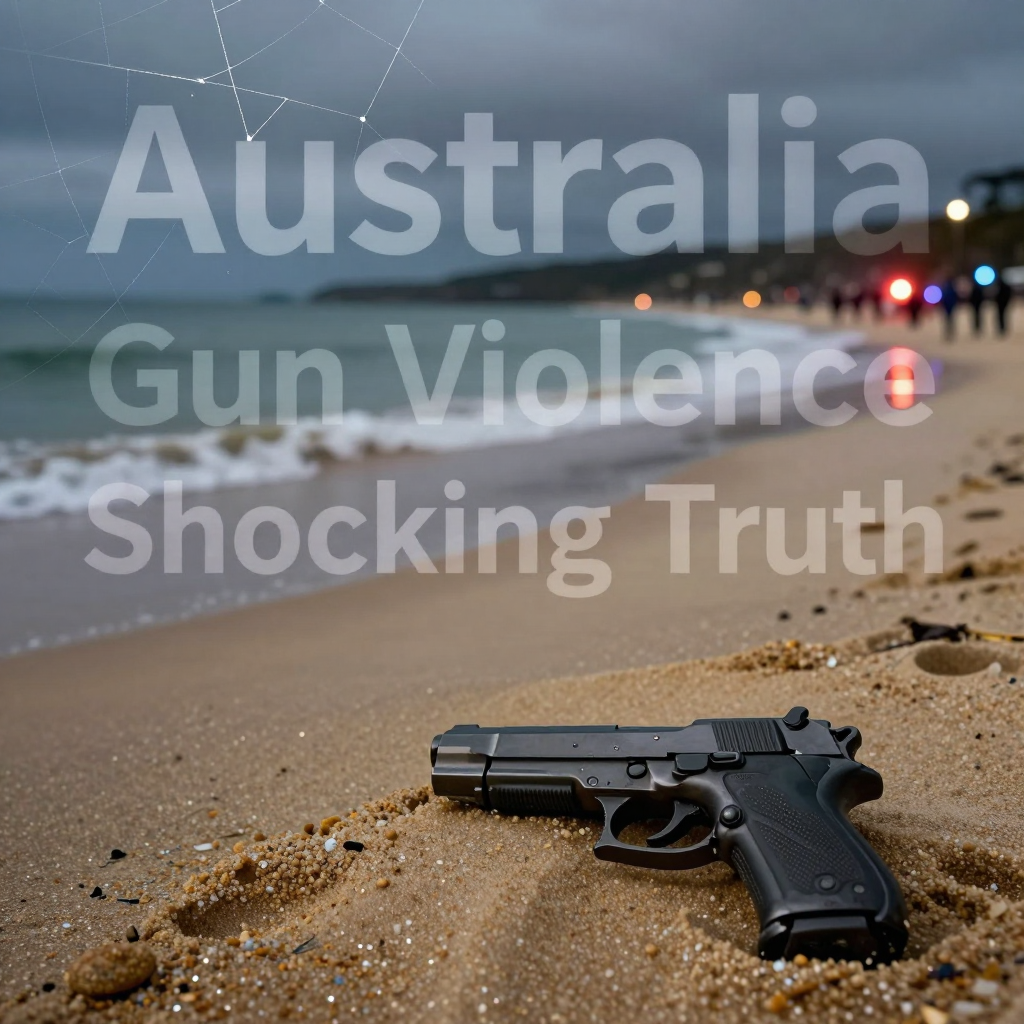
1. The Moment Peace Shattered: 10 Minutes of Hell at Bondi Beach
On that day when an ordinary routine instantly turned into a horrific tragedy, why did the myth of Australia as a "safe nation" crumble? At 6:45 PM on December 15, 2025, a tragedy unfolded at Sydney’s iconic resort, Bondi Beach, sending shockwaves across the globe.
A Nightmare at the Surfer’s Paradise
The world-famous Bondi Beach lost its tranquility that day. Known for its blue waters and white sands, this place transformed into hell in just ten minutes. Suspected to be a man in his 50s and his 24-year-old son, the assailants began indiscriminately firing guns, resulting in the deaths of 15 citizens and injuries to around 40 more.
That day, Bondi Beach was more than just a tourist spot. A grand Hanukkah festival was taking place, gathering over 1,000 Jewish residents in one place. This fact indicated that the Australian mass shooting was not a mere crime but bore the clear mark of a hate crime.
Australian Mass Shooting: Terror Beyond Simple Crime
The true shock of this Australian mass shooting lies not just in the scale but in its nature. Evidence found in the suspects’ vehicle revealed the grave essence of the incident: two Islamic State (IS) flags and improvised explosive devices were discovered inside.
Australia’s Joint Counter-Terrorism Team immediately launched an intense investigation into the suspects’ links to IS. This was no ordinary mass shooting—it demanded official recognition as an act of terrorism.
Heightened Social Tensions After the Gaza War
Even more troubling is the social backdrop against which this incident occurred. Statistics presented by the Executive Council of Australian Jewry (ECAJ) reveal severe fractures within Australian society.
In the 12 months following the outbreak of the Gaza War in October 2023, there were a staggering 1,654 anti-Jewish hate crimes recorded in Australia. This figure is roughly three times the total annual number before the war.
These statistics make one thing clear: the Australian mass shooting is not just a security issue but reflects deep-rooted conflicts in a multicultural society. The accumulated hatred and extremism within society finally exploded into tragedy.
The Moment the Myth of ‘Safe Australia’ Fell Apart
Ironically, Australia had been one of the world’s strictest countries on gun control. Since the 1996 Port Arthur massacre, in which 35 people died, the introduction of the “National Handgun Act” imposed severe restrictions on gun ownership.
So what does it mean that this mass shooting still occurred? It strongly signals that we must reconsider what “safety” truly means. The absence of guns alone does not guarantee security, and superficial tightening of regulations cannot stop extremism and hatred brewing beneath societal surfaces.
The 10 minutes of horror at Bondi Beach is not just Australia’s problem. It is a universal challenge facing modern multicultural societies and a stark warning urging us to fundamentally redefine the meaning of “safety.”
When Hate Spreads Through Guns: The Fine Line Between Australia’s Mass Shooting and Terrorism
What warnings do the shadows of hate crimes and international extremism behind mass shootings hold for our society? The tragedy that unfolded on December 15, 2025, at Sydney’s Bondi Beach in Australia reveals complex layers far beyond a simple gun incident.
The True Nature of the Australian Mass Shooting: The Realization of Hate Crimes
The Bondi Beach event shocked the world not just by its scale. The heart of this transformation of a peaceful, surfing-famous beach into a living hell in just 10 minutes lies in the ideological backdrop of hate and terrorism.
The acts committed by the suspects clearly bear the marks of a ‘hate crime.’ At the time, a Hanukkah celebration was underway at the beach, gathering over 1,000 members of the Jewish community. The indiscriminate shooting by a father in his 50s and his 24-year-old son took 15 lives and injured over 40 others. This was not mere violence; it was an organized terror attack targeting a specific religious group.
Links to International Extremism: Alleged Ties to ISIS
What makes this Australian mass shooting even more alarming is the connection between the suspects and international extremist groups. The items found in their vehicle paint a chillingly clear picture:
- Two flags of the Islamist extremist group ISIS
- Improvised explosive devices (IEDs)
These pieces of evidence suggest not personal madness but the execution of an organized extremist ideology. The ongoing intensive investigation by Australia’s joint counterterrorism task force into possible ISIS links serves as a stark warning about how this incident may tie into global terrorist networks.
Surging Anti-Semitism in Australia Following the Gaza War
What’s even more frightening is that this is by no means an isolated occurrence. Data from the Executive Council of Australian Jewry (ECAJ) clearly highlights the deepening social conflicts within Australia.
Trend of hate crimes since the outbreak of the Gaza war in October 2023:
- Anti-Jewish crimes in 12 months: 1,654 cases
- Annual average prior to the war: under 500 cases
- Increase: over threefold
These numbers are more than statistics. They offer concrete evidence of how quickly underlying tensions and anger in multicultural societies can escalate. They reveal the mechanism through which international political turmoil directly converts into local hate crimes.
The Danger When Hate Meets Firearms
The most critical lesson the Australian mass shooting delivers to the international community is this: When hate and guns combine, their destructive power far surpasses expectations.
Viewed individually:
- Hate may exist (freedom of expression, political opinions)
- Gun ownership can be regulated (legal restrictions)
But when combined:
- Hate manifests as concrete violence
- Guns become the most effective instruments of hate
- Innocent civilians turn into victims of ideology
The Warning to Our Society
The Bondi Beach mass shooting sends a clear warning to every multicultural society worldwide: No matter how strict gun laws are, tragedies will recur if internal societal hate and conflicts remain unresolved.
Of particular concern is the rapid spread of extremist ideologies. The process by which international political events transform into local hate crimes within months—and ultimately culminate in mass casualty terror attacks—exposes the dangers of today’s information flow and ideological spread.
To build a safer society, we must go beyond gun control and urgently develop social mechanisms that address the root causes of hate crimes and block the early spread of extremism.
Flaws in the 'Safe Nation': Why Firearms Increased Despite Strict Gun Control
Why did Australia's firearm numbers double after the Port Arthur massacre despite stricter laws? This question encapsulates the core paradox in understanding Australia's mass shooting incidents.
The Paradox Begins: Firearms Double after Tighter Regulations
Following the 1996 Port Arthur shooting that claimed 35 lives, the Australian government introduced the world’s toughest gun control law, the National Handgun Act. This law imposed extremely strict eligibility criteria for gun ownership, strengthened storage regulations, and even dictated the types of guns individuals could possess. Both the Australian government and the international community hailed this policy as a successful example.
So, why didn’t the number of firearms decrease after the implementation of this policy? On the contrary, from 2 million guns in 2001, the number has risen to approximately 4 million today—exactly double. This means that not only did the tightened regulations fail to curb the rise in firearms, but the number of guns within legal boundaries has continuously increased.
Hidden Problem 1: Legal Loopholes Created by State-by-State Regulatory Differences
Australia is a federal system, meaning each state can set its own firearm policies. Even if strict regulations are enforced federally, if some states have relatively lenient rules, the effectiveness of regulation is greatly weakened.
In fact, some Australian states more freely grant gun ownership licenses for farming, hunting, and sports shooting purposes. There have been cases where residents from states with strict regulations travel to states with looser laws to purchase firearms and then return home, exploiting legal loopholes. This strongly underscores the need for a unified regulatory framework nationwide.
Hidden Problem 2: The Unpredictable Risks of ‘Legal’ Gun Owners
One of the most shocking facts in the recent Australian mass shooting is that the suspect’s father, in his 50s, had held a valid gun license for the past decade. He legally owned six firearms under Australian law.
This highlights a fundamental limitation of strict regulation systems. No matter how thorough the background checks and identity verifications are, it’s impossible to perfectly predict changes in a person’s psychological state or sudden radicalization into extremist ideologies. Someone who posed no problem at the time of license issuance can fall into extremism over time, and proactively detecting this is extremely challenging.
Hidden Problem 3: Expansion of Illegal Firearm Distribution Channels
Despite Australia’s stringent regulations, illegal firearm distribution channels have continued to exist. There are guns smuggled in from overseas, illegal weapons modified from legal firearms, and recently, even firearms manufactured individually using 3D printing technology.
The advancement of 3D printing presents a new challenge in the history of gun control. Just a few years ago, the idea of individual firearm production was speculative, but now it’s a reality. Therefore, no matter how strict legal regulations are, it’s difficult to fully respond to such technological changes.
Beyond Regulation Limits: The Need for a Multi-Layered Approach
Australia’s case shows that while gun control is essential, it is insufficient on its own. The increase in firearm numbers does not simply mean regulatory failure; it signals the presence of various social factors that gun control alone cannot address.
True safety cannot be achieved by relying solely on the tool of gun regulation. Unified national policies to reduce regulatory disparity among states, continuous monitoring systems for legal gun owners, social mechanisms to detect and block the spread of extremist ideologies, and proactive efforts to resolve conflicts in a multicultural society—all are necessary.
The Australian mass shooting clearly reveals how fragile the myth of Australia as a ‘safe nation’ really is. And this is not just Australia’s problem; it is a challenge every country around the world must confront.
Gun Control Alone Is Not Enough: What the Australian Mass Shooting Reveals About Deep-Seated Conflict and Hatred
What lies beneath the hatred and conflict deeply rooted in our society—issues that cannot be solved by simply tightening laws? The Australian Bondi Beach mass shooting offers a clear answer to this question. When nearly 30 years of strict gun control built since the 1996 Port Arthur massacre was shattered, it became evident: the problem is not the gun itself, but the deep-seated human heart wielding it.
The Shock of the Australian Mass Shooting: Revealing the Limits of Regulation
It was natural for the Australian government to announce stricter gun control measures immediately after the incident. However, experts make it clear: merely strengthening laws cannot provide a fundamental solution.
What stands out in this tragedy is that the perpetrator—a man in his 50s—had legally held firearm licenses for the past decade. He was a model citizen legally owning six guns. Yet he committed a crime that claimed 15 lives. This is undeniable proof that laws alone cannot control everything.
The Root Cause of Hate Crimes: Beyond Guns
The true issue behind the Australian mass shooting lies in the nature of the event itself. This was not random violence—it was a hate crime. The presence of ISIS flags and improvised explosive devices found in the suspect’s vehicle clearly indicate that specific religious groups were targeted.
Statistics from the Executive Council of Australian Jewry (ECAJ) paint an even more troubling picture. Since the outbreak of the Gaza War in October 2023, there have been 1,654 anti-Semitic attacks in 12 months—approximately three times the annual total before the war.
What does this figure signify?
It means that hatred against specific religious communities is rapidly spreading within Australian society. No matter how many gun laws are tightened, as long as such hateful sentiments exist, violence can manifest in other forms at any time.
Multicultural Society’s Conflict: Failure of Integration Policies
Australia is globally recognized as a successful multicultural nation. Yet, this tragic event starkly exposes how fragile that image truly is.
Success in multiculturalism is not achieved by mere coexistence. For people from different backgrounds to live together harmoniously, the following are essential:
- Building a culture of mutual understanding and respect
- Eliminating discrimination and prejudice against minority groups
- Early detection and mediation of religious and cultural conflicts
- Active policies promoting social integration
Had Australia invested sufficiently in these areas over the past decades, the statistics showing a threefold increase in anti-Semitic crimes following the Gaza War would likely never have surfaced.
The Spread of Extremism: Lack of Early Warning Systems
The suspect’s ISIS connections uncover another serious problem—the spread of extremist ideology and the absence of effective response mechanisms.
With the rise of online communities and social media, extremist beliefs spread rapidly across borders. Extremists who were once difficult to identify now connect, reinforce their convictions, and ultimately act on them.
Does our society have a system capable of detecting such warning signs early?
Police surveillance alone is insufficient. An integrated early warning system involving communities, religious organizations, educational institutions, and online platforms is urgently needed.
Limits of Legal Reinforcement, and What Is Needed
Australia already enforces some of the world’s strictest gun control laws. Yet, the occurrence of tragedies like this sends a clear message.
Strengthening gun control is necessary but not sufficient.
- Illegal gun trafficking will persist
- Advancements in 3D printing technology increase the risk of homemade firearms
- Most importantly, hatred and conflict that give rise to the need to wield guns must be addressed
What is needed, therefore, is:
- A fundamental review of social integration policies — moving beyond simple coexistence toward genuine mutual understanding
- Hate crime prevention systems — raising society’s awareness against discrimination and prejudice
- Blocking the spread of extremism — establishing monitoring and mediation both online and offline
- Strengthening community-based responses — fostering grassroots initiatives alongside government policies
Conclusion: It’s Time to Look Beyond Guns
The greatest lesson from the Australian mass shooting is simple: a safe society cannot be built by law alone.
What we must do is not only limit access to firearms but also eradicate the hatred and conflicts in society that drive people to pick up guns in the first place. This is the true path to building a genuinely safe society.
Global Lessons and the Future: Finding the True Solution for a Safe Society
“Guns are just tools; the real threat lies within” — The tragic event at Bondi Beach, Australia, which claimed 15 lives, leaves the world with a simple yet powerful message. The Australian mass shooting forces us to fundamentally reconsider what a ‘safe society’ truly means.
The Australian Mass Shooting Proves the Truth: ‘Regulation Alone Is Not Enough’
Since the 1996 Port Arthur massacre, Australia has implemented some of the world’s strictest gun control policies. From licensing, background checks, and firearm registration to storage regulations, a multilayered system of control was established and praised as a ‘model case’ internationally.
So why did this mass shooting still happen? It reveals the stark reality of the limits of gun control. Among the suspects was a man in his 50s, a legally licensed gun owner. He had held his permit for ten years and owned six firearms legally. This exposes how even the strictest regulatory systems struggle to predict and prevent the extreme ideologies and hatred hidden deep within individuals.
Multicultural Conflict: The Real Threat Beyond Regulation
What demands closer attention is that this was not a mere ‘gun crime’ but an act of hate crime. The suspects deliberately targeted Bondi Beach during a Jewish festival. Statistics show anti-Semitic crimes in Australia have tripled since the Gaza conflict — not just numbers, but a warning sign of deep-seated conflicts faced by multicultural societies.
The fact that the suspects carried ISIS flags signals the localization of global extremism. Through the internet and social media, extremist ideologies can reach individuals anywhere in the world.
The Era of a ‘Comprehensive Approach’ for a Safe Society
International security experts draw these lessons from the Australian mass shooting:
First, multilayered responses to hate crimes
Alongside gun control, society needs infrastructures to track and counter the spread of extremist ideologies. This system should involve not only law enforcement but also education, religious institutions, and community organizations working together.
Second, strengthening social integration policies
In multicultural societies, proactive policies are essential for peaceful coexistence among diverse backgrounds. The rise of anti-Semitic sentiment behind the Australian shooting highlights a social divide that gun control alone cannot heal.
Third, building early-warning systems
Mechanisms to detect and intervene early in the spread of extremist thought are vital. Networks of intelligence agencies, educational institutions, and healthcare professionals must collaborate to identify and respond to warning signs.
The Future Safety Paradigm: The Era of ‘Inclusive Security’
The Australian mass shooting poses a fundamental challenge for 21st-century developed nations. Safety is no longer just about controlling weapons. True safety is achieved only when social cohesion, inclusivity, resilience against extremism, and coexistence within diversity operate in unity.
Many advanced countries have benchmarked Australia’s policies, but the true lesson is clear: institutional regulations are necessary but insufficient.
Lessons We Must Learn
The tragedy at Bondi Beach symbolizes the common challenges faced by multicultural societies around the globe:
- Continuous strengthening of gun control remains necessary but cannot guarantee safety alone.
- Societal resources must be concentrated on blocking the spread of hate and extremism.
- Genuine investments and policies for diversity and inclusion are urgently required.
- Community-based early intervention is as crucial as national-level responses.
The true meaning of the Australian mass shooting is not the collapse of the ‘myth of a safe nation.’ It is a powerful call to redefine what safety means. The safe society we must strive for is not one without guns, but one where different people trust and live together in harmony.
This is the true lesson Australia’s tragedy leaves for the world.
Comments
Post a Comment