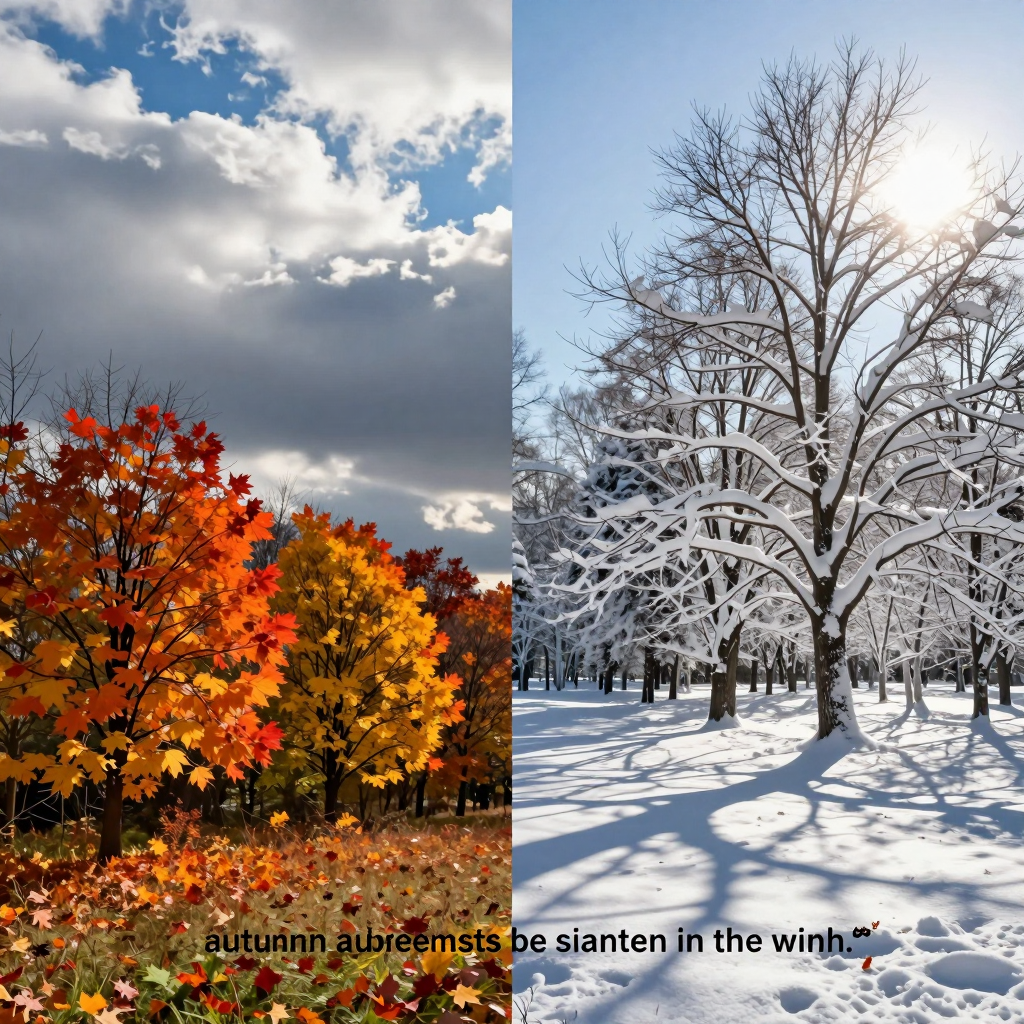
Unveiling the Hidden Secrets of Weather Within the Seasons
We feel it every day but rarely understand the seasonal changes in weather—what mysterious mechanisms truly govern our daily lives?
Everyone has probably muttered while gazing out the window, “It’s a bit chilly today,” or “The weather’s been so changeable lately.” Yet, few realize that these fluctuations aren’t just simple temperature shifts but intricate natural phenomena shaped by Earth’s orbit and atmospheric currents. By grasping the distinct weather characteristics that emerge with each season, we can adapt more effectively to our environment and design our daily lives more wisely.
The Paradox of Winter Weather: Brightness Amid Darkness
When winter arrives, we instinctively associate it with darkness. From December through February, the sun’s midday altitude dips lowest, shortening days and lengthening nights. Typically, during winter, the sun rises around 7 to 8 a.m. and sets between 5 and 5:40 p.m.
Surprisingly, however, East Asian winters boast high sunlight hours. Thanks to persistent high-pressure systems, clear days abound, with Seoul averaging a bountiful 450 to 500 hours of sunshine. This occurs because the sun’s low angle allows rays to penetrate deeply indoors. Understanding this, Korean and Chinese architects have developed south-facing buildings with distinctive eaves to maximize this solar advantage.
Yet winter precipitation patterns differ starkly by region. The continental interior experiences dry, low rainfall, while coastal areas influenced by ocean currents endure wetter, cold-humid conditions. The eastern coast of the Korean Peninsula and Japan’s Hokuriku area, buffeted by warm currents, encounter frequent heavy snowfalls. Thus, even within the same winter, weather can vary dramatically.
The Unpredictability of Autumn Weather: Nature’s Whimsy
Autumn’s weather—marking the shift from summer to winter—is notably more volatile than that of summer or winter. When fluids like air heat up, molecular motion speeds up; as they cool, it slows, stabilizing the atmosphere. This physical principle results in greater variability from January to July compared to August through December.
Temperature shifts in autumn contrast sharply with spring’s patterns. While spring generally sees a warming trend, autumn often brings sudden temperature drops. Particularly as the season transitions to winter, strong continental high-pressure surges unleash gusts and rapid cooling, rendering autumn’s unpredictability nearly as extreme as spring’s. This explains the popular saying that autumn requires “the cost of an extra set of clothes.”
How Seasonal Weather Shapes Our Lives
Seasonal weather differences impact far more than just temperature—they deeply influence daily routines, architecture, agriculture, and culture. Winter’s abundant sunlight promotes indoor activities and psychological vitality, while autumn’s fickle weather sharpens our sensitivity to nature’s rhythms.
Now, we can appreciate that the weather we encounter daily arises from remarkably sophisticated natural mechanisms. Instead of passively accepting seasonal shifts, understanding the scientific principles beneath them empowers us to plan our lives with even greater wisdom.
Winter: The Harmony of Dazzling Sunshine and Cold Winds
Though the coldest season, East Asian winters boast exceptionally high sunlight hours. How has this paradoxical winter weather shaped our homes and lifestyles?
The Paradox of Winter Weather: Sunshine Amidst the Cold
Winter, spanning from December to February, features the lowest solar altitude at noon and the coldest average temperatures. While these low temperatures lead us to bundle up and rely heavily on heating, surprisingly, the weather during this period is remarkably clear.
Thanks to high-pressure systems, winter skies remain mostly sunny. In Seoul, for example, the region enjoys an impressive 450 to 500 hours of sunlight on average—a figure that ranks among the highest throughout the year. The cold air reduces humidity, minimizes cloud formation, and allows abundant sunshine to flood down.
Wisdom from the Low Solar Angle
Another defining feature of winter weather is the sun’s low position in the sky. Typically, the sun rises around 7 to 8 a.m. and sets between 5 and 5:40 p.m., resulting in short days but allowing sunlight to penetrate deep inside buildings.
Architectural traditions in Korea and China have skillfully utilized this climatic trait. By orienting buildings due south and designing distinctive eaves, they maximize the entry of the low-angle winter sunlight indoors. This clever architectural approach boosts heating efficiency and brings brightness to the dark winter days.
Regional Variations in Winter Precipitation Patterns
Winter precipitation patterns vary dramatically by region. Inland continental areas experience low precipitation and dry weather, while coastal regions affected by western ocean currents or warm currents tend to receive more precipitation.
Notably, areas directly influenced by warm ocean currents—such as the eastern Korean Peninsula and Japan’s Hokuriku region—experience cold, humid winters with frequent heavy snowfall. Even within the same winter season, these local differences have inspired tailored lifestyles and architectural styles that suit each region’s characteristics.
Winter Weather and Our Way of Life
Winter weather shapes much more than the atmosphere; it profoundly influences our lives. The dazzling sunshine uplifts our spirit, while the biting cold encourages us to adapt carefully to our environment. The architecture and lifestyle culture born from these cold, clear winter days continue to deeply impact the design of our living spaces and daily routines today.
Section 3: The Hidden Science Beneath the Ever-Changing Autumn Sky
As temperatures shift rapidly and gusty winds sweep through this season, why is autumn weather just as unpredictable as spring? To uncover the answer, we need to delve into the fundamental nature of the atmosphere.
The Moody Nature of Autumn Weather
Compared to summer or winter, autumn is one of the most weather-variable seasons. This phenomenon stems from physical principles. All fluids, including the atmosphere, experience increased molecular motion when heated, becoming more turbulent, but as they cool, molecular motion diminishes and conditions stabilize. Due to these characteristics, overall volatility tends to be higher from January through July than from August to December.
Autumn’s Distinct Temperature Fluctuations Versus Spring
While spring weather trends steadily toward warming, autumn follows a completely different pattern. Sudden temperature plunges are frequent, forcing us to adapt to prolonged and drastic temperature shifts. Especially as autumn transitions into winter, the push of continental high pressure brings violent gusts and sharp cold spells, intensifying autumn’s unpredictable temperament.
Listening Closely to Nature’s Signals
Autumn’s unstable weather goes beyond mere meteorological events; it compels us to respond sensitively to nature’s shifts. As leaves fall and chilly winds blow, we must attentively observe weather changes and adjust our clothing and plans accordingly. This process enriches our everyday wisdom and deepens our connection with the natural world.
Section 4: Diverse Regional Precipitation Patterns and the Influence of Nature
The stark contrast between inland continental and coastal winter precipitation phenomena—this anomaly carries profound implications beyond mere weather differences, deeply affecting nature and human life. Why does the same season unfold with entirely different weather depending on the region?
Regional Variations in Winter Precipitation: Nature’s Climate Imbalance
Winter precipitation patterns reveal dramatic regional disparities. Across the continent, specifically the eastern coastal regions of China, precipitation is notably scant, dominated by dry weather. In contrast, areas along the western continental coasts or those influenced by warm currents exhibit abundant rainfall and cold, humid conditions.
These differences arise from natural mechanisms involving temperature contrasts between the land surface and atmosphere, as well as the effects of oceanic warm and cold currents. Weather changes are never random; they result from the intricate interplay of each region’s geographic location and maritime conditions.
Concentrated Heavy Snowfall Regions: Eastern Korean Peninsula and Japan’s Hokuriku Area
The eastern Korean Peninsula and Japan’s Hokuriku region are infamous for concentrated heavy snowfall in winter. This is due to their exposure to warm ocean currents. As warm seawater evaporates, it supplies moisture; when this moisture meets cold air descending from the continent, it unleashes immense snowfall.
Such extreme weather phenomena are far from mere meteorological events. They decisively shape local residents’ lifestyles, architectural designs, road infrastructure, and agricultural systems.
The Uneven Distribution of Nature and Its Significance for Humanity
The disparity in regional precipitation patterns implies an uneven distribution of resources. Dry areas and humid zones coexist, directly impacting water resources, agricultural productivity, and daily living habits.
What’s fascinating is humanity’s ability to understand and adapt to these natural characteristics. In regions prone to heavy snow, roofs are designed to withstand the snow’s weight, while areas with scarce rainfall implement meticulous water resource management. Weather patterns fundamentally shape how our civilizations and cultures develop.
Viewed this way, regional winter precipitation differences represent both a challenge and an opportunity posed by nature to humanity. By accurately interpreting this natural message, we can lead wiser, more sustainable lives.
Section 5: The Profound Resonance of Seasonal Changes in Our Lives
We have long thought of seasonal changes merely as shifts in temperature. Yet, there is something we've been overlooking. Weather changes are not just about layering or shedding clothes; they profoundly influence nearly every aspect of our lives—from architecture to culture to agriculture.
How Winter Weather Shaped Architectural Culture
An intriguing fact about winter weather reveals itself in East Asia: during the season when the sun’s midday altitude is at its lowest, this region actually enjoys high levels of sunlight. This natural phenomenon goes beyond simple mystery—it became the foundation of our ancestors’ architectural wisdom.
Architects in Korea and China designed buildings to harness the low winter sun, allowing sunlight to penetrate deeply into interiors. South-facing structures and distinctive eaves were not mere aesthetic choices but practical designs inspired by a deep understanding of weather patterns. The efforts of ancestors to invite warm sunlight indoors amid the bitter cold established a lasting architectural culture.
Seasonal Weather Variations and the Cycle of Agriculture
Weather characteristics have also dictated our agricultural methods. Differences in winter precipitation patterns across regions directly shaped crop cultivation techniques. The dry climate of continental interiors contrasts sharply with the humid conditions along continental west coasts, forming crucial factors in regional farming strategies.
In areas influenced by warm currents, such as the east coast and Japan’s Hokuriku region, heavy winter snowfall is frequent. Despite these challenging conditions, local farmers have, over centuries, developed and passed down optimal cultivation methods adapted to their unique climate.
The Unpredictable Weather of Autumn and Cultural Sensitivity
Autumn stands out as a season with far more capricious weather than summer or winter. This instability is no accident but a reflection of nature’s essence. Unlike spring’s gradual warming, autumn often experiences sharp drops in temperature. When continental high pressure systems surge, sudden gusts and chilling cold sweep in—changes that have deeply shaped the cultural sensitivity of our people.
Such whimsical autumn weather has attuned us to respond keenly to nature’s shifts, inspiring expressions across literature, art, music, and diverse cultural forms.
Wisdom Learned from Seasonal Weather: Coexisting with Nature
Understanding differences in seasonal weather transcends simple knowledge accumulation. It mirrors how adeptly we have adapted to our natural environment and how we can continue to coexist harmoniously.
The abundant winter sunlight invigorated our spirits; autumn’s unpredictable weather sharpened our awareness of nature’s rhythms. These weather traits shaped our architecture, agriculture, and culture. Ultimately, seasonal change permeates every aspect of our lives, and grasping this truth is the very first step toward living wisely in harmony with nature.
Comments
Post a Comment