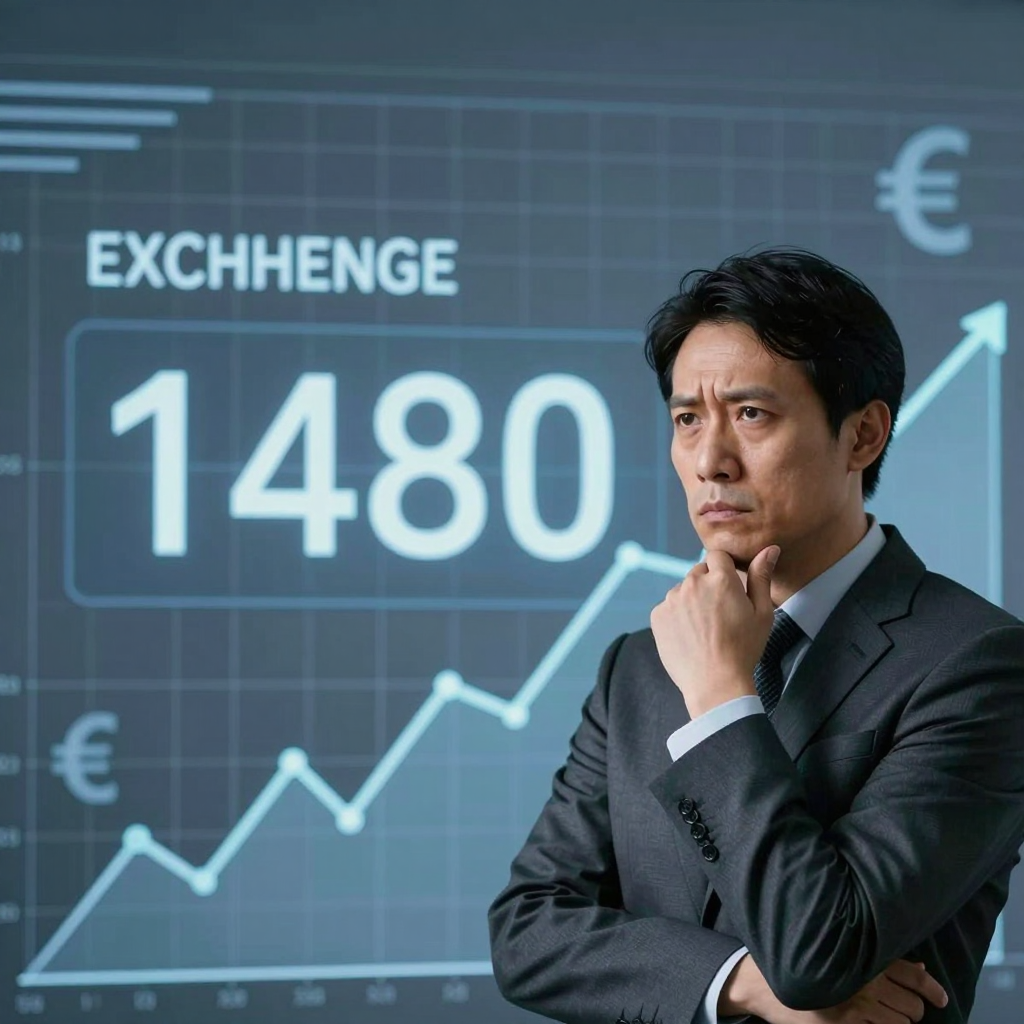
Exchange Rate at 1,480 Won: Why Is It Unnecessarily High?
Lee Chang-yong, Governor of the Bank of Korea, described the exchange rate of 1,480 won as an "unnecessarily high level." But what exactly does this figure signify?
The Meaning Behind the 1,480 Won Exchange Rate
The exchange rate, reflecting the value of the dollar against the won, is far more than a mere number. It stands as a crucial economic indicator that reveals the current state of the Korean economy. The Bank of Korea Governor's remark signals that the exchange rate at that time fails to mirror the economy’s fundamental conditions.
How a Rising Exchange Rate Impacts the Economy
A higher exchange rate means the won is weakening. While this might benefit export-oriented companies, it also triggers various economic challenges such as inflationary pressure from rising import prices, increased burdens from foreign debt, and weakened purchasing power for consumers.
The Reason Behind Labeling It ‘Unnecessarily High’
The Governor’s assessment reflects concerns that the sharp rise in the exchange rate, driven by market sentiment or temporary factors, is diverging from economic fundamentals. An exchange rate climbing beyond rational levels can adversely affect both domestic companies and consumers, justifying monetary policy measures and market interventions.
The exchange rate issue goes beyond mere fluctuations in the foreign exchange market—it is a critical matter influencing the overall stability and growth potential of the nation’s economy.
Where Did the Won/Dollar Exchange Rate Begin?
How has the won/dollar exchange rate evolved recently? Let’s uncover the trends of the past few months and the hidden secrets behind them.
The Current State of Exchange Rate Fluctuations
Lee Chang-yong, Governor of the Bank of Korea, recently described the exchange rate around 1,480 won as an "unnecessarily high level," expressing concerns over the stability of the rate. This statement reveals the deep attention policy makers are giving to the potential impact of the current won/dollar exchange rate on Korea’s economy.
Why the Exchange Rate Matters
The exchange rate is more than just a number. It is a key economic indicator that directly influences export companies’ competitiveness, prices of imported goods, and the profitability of overseas investments. Especially in Korea’s export-driven economy, fluctuations in the exchange rate can determine corporate performance and overall economic growth.
What You Need to Know More About
Behind the current exchange rate lie complex factors such as the U.S. interest rate hikes, global economic uncertainties, and Korea’s own interest rate policies. Understanding these driving forces will help you predict future exchange rate trends and interpret economic news accurately.
The Invisible Hand Driving Exchange Rate Fluctuations: The Role of Economic Indicators
Understanding how interest rates, inflation, and international economic conditions influence exchange rates transforms currency movements from mysteries into clear patterns. The daily exchange rate fluctuations reported in the news are no mere coincidence. Behind them lies a complex economic mechanism, and grasping it offers valuable clues to decoding the flow of the global economy.
How Interest Rate Policies Impact Exchange Rates
Central banks' decisions on interest rates act as the most powerful catalyst for exchange rate changes. When interest rates rise, foreign investors seek higher returns and invest in that country’s assets. To do so, they convert foreign currency into the local currency, boosting demand for the domestic currency and causing the exchange rate to fall. Conversely, when rates drop, returns diminish, capital exits, and exchange rates tend to rise.
Institutions like the Bank of Korea indirectly regulate exchange rates through such interest rate policies. Their decisions, aimed at curbing economic overheating or stimulating growth, inevitably lead to shifts in currency values.
Inflation’s Chain Reaction on Exchange Rates
Inflation is another critical economic indicator directly linked to exchange rates. When a country experiences high inflation, its products lose competitiveness on the international stage. Overseas buyers prefer cheaper alternatives from other countries over more expensive domestic goods, leading to a drop in exports. As demand for the domestic currency falls, the exchange rate rises.
Historically, currencies from high-inflation countries tend to weaken—a natural automatic correction mechanism in the international financial market.
The Interconnection Between Global Economic Conditions and Exchange Rates
Global economic conditions exert a broad influence on exchange rates. In times of worldwide economic boom, demand for riskier assets grows, lifting the value of emerging market currencies. Conversely, during global recessions or financial crises, capital rushes into safe-haven assets like the U.S. dollar, causing exchange rates to spike.
Recently, the Governor of the Bank of Korea remarked that "the 1,480 won exchange rate is unnecessarily high," highlighting how exchange rate levels serve as vital signals reflecting a nation’s economic health. Excessively high exchange rates can trigger imported inflation and exacerbate domestic price rises.
Reading Exchange Rates Reveals the Economy
Ultimately, exchange rates result from the interplay of interest rates, inflation, and global economic conditions. Rather than merely tracking daily exchange rate shifts, understanding the economic forces at work beneath the surface is key. This approach unlocks a deeper insight into economic trends and aids in forecasting future exchange rate movements beyond simple numerical changes.
The Role of the Bank of Korea and the Weight of Exchange Rate Policy
What policies is the Bank of Korea implementing to stabilize the exchange rate? Let’s explore how a single decision from them can send shockwaves through the financial market.
Exchange Rate Stabilization: A Central Bank’s Core Mission
The voice of the Bank of Korea carries great weight in financial markets. This is especially true for exchange rate policies, as they directly affect the entire economy. Bank of Korea Governor Lee Chang-yong’s remark that “the exchange rate of 1,480 won is unnecessarily high” is far more than just an opinion. It is a signal to the market about how the central bank views the current exchange rate level and where their policy direction is headed.
The Bank of Korea’s Impact on the Market
Statements and policy decisions related to exchange rates by the Bank of Korea are immediately reflected in the financial markets. From export companies to ordinary citizens, fluctuations in the exchange rate affect everyone. The central bank’s assessment that the exchange rate is excessively high hints at the potential deployment of various policy tools for long-term stabilization.
The Complex Balance of Exchange Rate Policy
The Bank of Korea’s exchange rate policy is far from simple. Multiple factors—interest rate adjustments, market interventions, and monetary policies—intertwine in complex ways. Their evaluation of the exchange rate considers numerous economic indicators such as inflation, economic growth, and export competitiveness. The central bank carries the heavy responsibility of maintaining a delicate balance between domestic economic stability and the shifting tides of the global economy.
The Bank of Korea’s exchange rate policy decisions are a crucial variable that controls the pulse of our economy. Understanding how careful and strategic their efforts are allows us to interpret movements in the financial market at a much deeper level.
Section 5: Future Exchange Rate Outlook and How We Should Prepare
How will exchange rates fluctuate amid an uncertain global economy? Let’s explore experts’ forecasts and consider strategies we can adopt in response.
Understanding the Current Exchange Rate Situation
According to recent remarks by Lee Chang-yong, Governor of the Bank of Korea, the exchange rate level around 1,480 KRW is deemed "unnecessarily high." This assessment suggests that the current exchange rate is driven more by external factors than by fundamentals of the real economy. It is time to systematically analyze the impact of global interest rate hikes, geopolitical uncertainties, and international capital flows on exchange rates.
Key Factors Driving Exchange Rate Fluctuations
To forecast future exchange rate movements, several critical factors must be closely watched. First and foremost, the direction of U.S. interest rate policy is the most significant variable. A stronger U.S. dollar generally leads to a weaker Korean won, making the Federal Reserve’s rate decisions directly influential on exchange rates. Additionally, domestic economic growth rates, inflation levels, and the Bank of Korea’s base rate decisions play vital roles in determining the exchange rate level.
Preparatory Strategies for Individuals and Corporations
From the perspective of individual investors, it is crucial to reassess the proportion of foreign currency assets during periods of high exchange rate volatility. Rather than aggressively buying dollars when the rate is excessively high, adopting a long-term strategy of phased purchases is wiser. When investing in overseas financial products, considering ways to hedge against losses caused by exchange rate fluctuations is also essential.
From a corporate standpoint, proactive measures against exchange rate volatility are even more critical. Exporters and importers should manage exchange rate risks through forward foreign exchange contracts and adopt flexible pricing strategies in sectors sensitive to currency shifts. Moreover, expanding overseas production bases and diversifying funding currencies can be effective ways to mitigate exchange rate risks and should be actively evaluated.
The Role of Government and Central Bank
In a situation where the exchange rate remains unnecessarily high, the roles of the Bank of Korea and the government become increasingly vital. Appropriate base rate management, consistent policies aimed at market stabilization, and transparent policy communication are key to stabilizing exchange rates. Future exchange rate trends will be shaped by the interaction between decisions made by these policy authorities and the global economic environment.
Directions for Future Preparedness
To effectively respond to exchange rate fluctuations amid an uncertain economic environment, cooperation among individuals, corporations, and the government is essential. Decision-making based on reliable economic information, long-term and diversified investment strategies, and active monitoring of market changes are critical. Properly understanding the economic significance of exchange rates and establishing concrete preparedness measures will be the smartest way to navigate an uncertain future.
Comments
Post a Comment