 \n
\n
The Rise of Ultra-Low Power IoT: The Dawn of the 2026 Internet of Things Revolution
How is the groundbreaking new technology, 3GPP Ambient IoT—cutting power consumption and hardware complexity by tens of times—transforming the future of the Internet of Things?
Over the past decade, the Internet of Things (IoT) industry has flooded our world with countless sensors and connected devices. From smart factories to wearable devices, IoT has penetrated every aspect of our daily lives. Yet, this revolution faced one critical limitation: power consumption. Most IoT devices required battery replacements every few months, and the costs and maintenance burdens of battery changes became a major obstacle to large-scale IoT deployment.
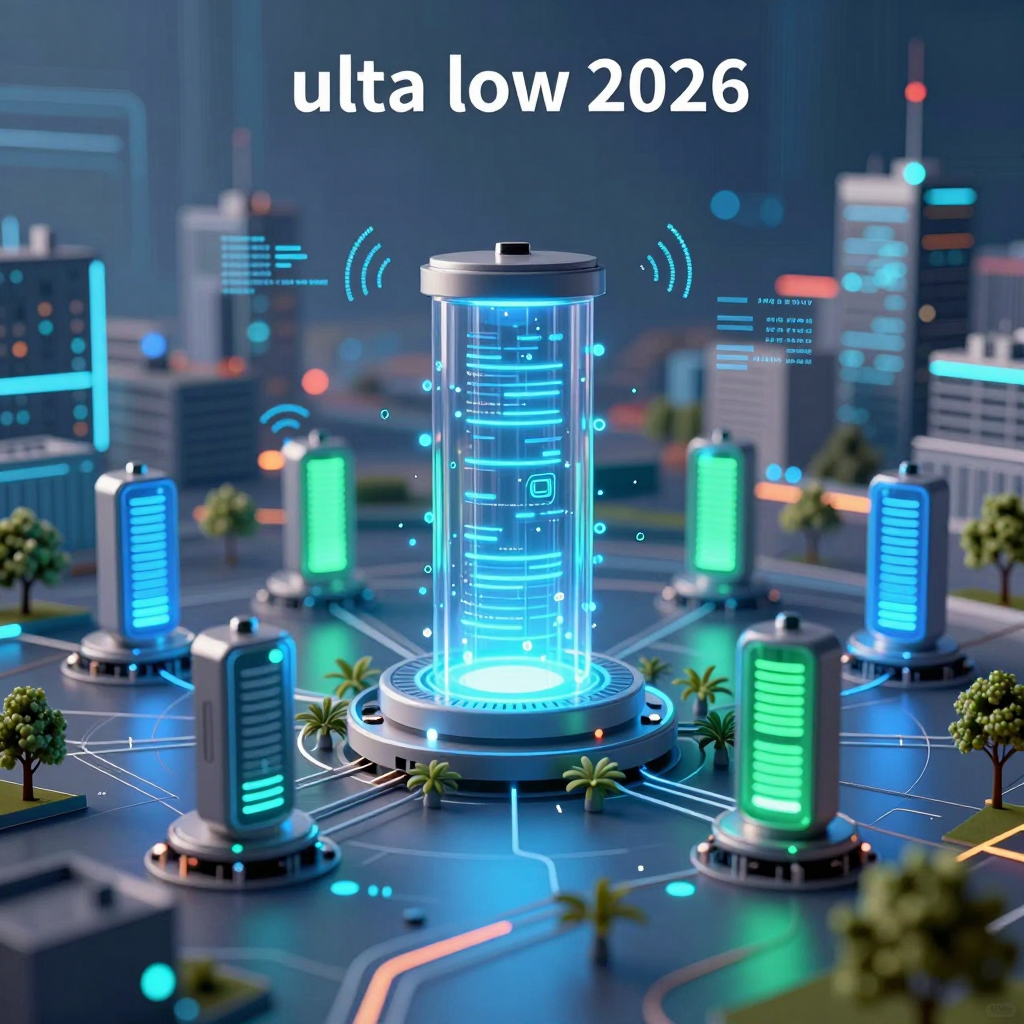
That situation is now changing rapidly. The next-generation IoT technology known as 3GPP Ambient IoT offers an innovative solution that reduces power consumption and hardware complexity by more than tens of times compared to existing Low Power Wide Area (LPWA) technologies. As of 2026, this stands as the most remarkable technological advancement in the IoT sector.
A Fundamental Shift in the IoT Paradigm
The emergence of ultra-low power IoT signifies more than a mere technical upgrade—it marks a fundamental paradigm shift. While the IoT field over the past decade has focused mainly on expanding connectivity and data collection, Ambient IoT has been completely redesigned around the new axis of extreme power efficiency.
At its core, this technology revolutionizes how existing IoT devices consume power. Developing devices capable of operating for years without battery replacements is now a reality. This breakthrough removes the largest barrier that had hindered the large-scale rollout of IoT.
Real-World Impact
This technological evolution is rapidly being adopted in the field—not just in theory. The IoT’s most critical values, such as sensor accuracy and environment-specific design, are now combined with ultra-low power technology.
Leading companies like Willog in the logistics industry have already implemented this technology in real applications. By designing optimal sensors tailored to transportation, storage environments, temperature ranges, and product characteristics—while simultaneously adopting ultra-low power protocols—they have dramatically slashed operational costs. This clearly demonstrates that IoT has evolved from an expensive technology into a practical tool for cost reduction.
The Expansion of Ultra-Low Power IoT
Ambient IoT is quickly spreading across all industries, including manufacturing, smart cities, and healthcare. It creates new value especially in manufacturing’s predictive maintenance when combined with AI. IoT sensors collect real-time data, and analysis algorithms precisely detect issues before they arise—minimizing downtime and maximizing return on investment (ROI).
In 2026, the expansion of ultra-low power IoT technology is no longer optional but essential. This innovative technology, which dramatically lowers the entry barriers for IoT and enables large-scale deployment, will become the core foundation of the ultra-connected society we are about to live in.
2. Fundamental Shift: The Paradigm Change in IoT Brought by Ultra-Low Power Consumption
What if devices could operate for years without needing a battery replacement? This is not just a technical advancement—it’s a revolutionary innovation that redefines the entire value system of the IoT industry.
IoT’s Power Consumption Method Completely Transformed
Over the past decade, IoT technology has focused solely on connectivity and data collection. Success was measured by connecting more sensors faster and collecting more data more frequently. However, this approach inevitably led to the challenge of high power consumption.
The emergence of Ambient IoT directly challenges this paradigm. By reducing power consumption and hardware complexity by tens of times compared to existing LPWA (Low Power Wide Area) technologies, it has fundamentally restructured the core principles of IoT device design. Battery replacement cycles are no longer a major operational cost for IoT deployments because devices that operate for years without swapping out batteries have become a reality.
New Possibilities Created by Ultra-Low Power Consumption
This fundamental shift goes beyond simply improving technical specs; it changes the very operational model of IoT devices.
Increased Freedom of Deployment
Traditional IoT systems required battery management infrastructure. Technicians had to visit sites regularly for battery replacements, increasing operational costs. Ultra-low power IoT significantly eases these constraints, enabling large-scale sensor deployment even in hard-to-reach environments. This has made smart city street monitoring, environmental tracking in forests, and remote infrastructure surveillance economically viable.
Optimized Sensor Design
With power consumption reduced, companies can focus on designing sensors optimized for specific industries and applications. For instance, companies like Willog in the logistics sector develop sophisticated sensors tailored to transportation, storage conditions, temperature ranges, and product characteristics—all while adopting ultra-low power protocols that drastically cut operational expenses. Sensor accuracy and environment-specific design have become the core value drivers of IoT.
A Change Reshaping the Industrial Ecosystem
Ultra-low power consumption is not limited to one area. In manufacturing, predictive maintenance technologies combined with AI have created new value-creation models. Ultra-low power IoT sensors collect real-time equipment data, while analytical algorithms accurately predict the optimal timing before issues arise, minimizing downtime. This forms a virtuous cycle that maximizes corporate ROI.
These transformations are rapidly spreading across industries such as smart cities, logistics, and healthcare. They are recognized as key technologies that lower the entry barriers for IoT and enable large-scale deployments. The fundamental impact of ultra-low power consumption on the future of IoT promises even more remarkable changes ahead.
Section 3: Innovation Shining Onsite: The Tangible Power of Ambient IoT in the Logistics Industry
What happens if pharmaceuticals in transit deviate from the specified temperature range? Or if humidity changes in storage warehouses go undetected in real time? Traditional IoT solutions have struggled to meticulously track such environmental variables while keeping operational costs low. But with the advent of Ambient IoT, the logistics industry faces an unprecedented realm of possibilities.
Differentiation through Tailored Sensor Design
The case of logistics company Willog clearly reveals the true value of Ambient IoT. Instead of simply adopting existing IoT solutions, they designed sensors optimized specifically for transportation and storage environments. They finely tuned temperature, humidity, and shock detection ranges according to the unique characteristics of products like pharmaceuticals, food, and semiconductors.
Why is this customized approach crucial? Conventional IoT sensors often overload features to cover a wide array of environments. In contrast, sensors crafted for particular industries and products focus intensively on the essential functions, delivering far higher accuracy.
Cost Innovation Realized via Ultra-Low Power Protocols
Adding ultra-low power protocols multiplies this innovation. Ambient IoT technology enables power consumption reductions dozens of times lower compared to existing LPWA technologies. This advantage is profoundly practical in logistics operations.
Previously, sensor batteries needed replacement every few months, triggering significant labor costs and operational complexity. Ambient IoT-based sensors extend battery replacement cycles to several years or more, drastically slashing operating expenses. Especially in logistics networks where thousands of sensors operate simultaneously, these savings scale to astronomical levels.
Achieving Both Data Accuracy and Cost Efficiency
The logistics industry’s most critical asset is reliable environmental data. Ensuring product quality demands precise temperature, humidity, and vibration data throughout the transportation process. Ambient IoT’s tailored sensor design maximizes data accuracy while ultra-low power technology significantly reduces system-wide operational costs.
As a result, logistics companies gain multiple pivotal advantages simultaneously:
- High-precision real-time monitoring essential for guaranteeing product quality
- Maintenance cost reductions through less frequent battery replacements
- Expanded data collection coverage enabled by large-scale sensor deployments
- Maximized efficiency via redeployment of operational manpower
A Harbinger of Industry Transformation
The logistics industry’s active embrace of Ambient IoT signifies more than just adopting new technology. It marks the transition of IoT from expensive, complex specialized solutions to a stage of genuine mass adoption. Even cost-conscious sectors like logistics can now achieve clear ROI with this technology.
Looking ahead, custom sensors and ultra-low power solutions based on Ambient IoT are expected to become standards across more industries such as smart cities, healthcare, and agriculture. The logistics industry’s success story stands as a pioneering proof point turning this potential into reality.
4. The Convergence of Predictive Maintenance and AI: Ambient IoT Technology Transforming Manufacturing
What if real-time data and analytical algorithms could predict problems before failures occur? How would the future of production sites be redesigned? The answer to this question is already becoming a reality on manufacturing floors.
The Fusion of IoT and Predictive Maintenance Technologies
In traditional manufacturing environments, maintenance was performed only after equipment broke down. However, with the advent of Ambient IoT technology, it has become possible to shift from this reactive approach to proactive prediction.
In manufacturing, predictive maintenance is creating a new dimension of value by combining real-time data collected from IoT sensors with advanced analytical algorithms. Sensors continuously monitor equipment’s vibration, temperature, acoustic signals, and more, while AI analyzes this data to pinpoint the exact timing for potential issues—before problems even arise.
Ultra-Low Power IoT Enables Massive Sensor Deployment
The reason Ambient IoT is at the heart of manufacturing innovation is its ability to reduce power consumption by dozens of times. Conventional IoT sensors required frequent battery replacements, raising operational costs and complicating maintenance.
Thanks to ultra-low power protocols, Ambient IoT enables continuous operation for years without battery changes, making large-scale sensor networks feasible. With dense sensor installation on every piece of equipment, detailed condition monitoring now becomes possible—something that was unimaginable before.
Maximizing ROI with AI Analytical Algorithms
When real-time data from IoT sensors meets predictive analytical algorithms, concrete benefits emerge:
Minimized Downtime – AI algorithms detect equipment failure signals early, enabling preemptive maintenance and preventing unexpected production halts.
Reduced Maintenance Costs – Proactive maintenance that replaces parts only when necessary significantly cuts unnecessary routine inspection expenses.
Improved Product Quality – Continuous monitoring of equipment condition maintains optimal operating parameters, fundamentally reducing defective product rates.
By combining these factors, maximized return on investment (ROI) becomes a tangible reality.
A New Operational Model for Manufacturing Sites
The introduction of Ambient IoT-based predictive maintenance is transforming the operational philosophy of manufacturing. As data-driven decision-making becomes routine, equipment managers can make precise judgments based on concrete metrics and predictive signals rather than intuition.
Furthermore, the widespread adoption of ultra-low power IoT sensors has allowed small and medium-sized manufacturers to implement large-scale equipment monitoring systems cost-effectively. This boost in competitiveness across the manufacturing sector is a crucial step toward realizing smart factories.
The future of manufacturing is no longer about fixing breakdowns after they happen. With the fusion of Ambient IoT and AI, production sites are rapidly evolving into intelligent environments that predict and prepare for failures in advance.
Section 5. Ambient IoT Spreading Across Industries: From Smart Cities to Healthcare
We delve into the secret behind Ambient IoT technology that lowers the barriers to entry for the Internet of Things and enables large-scale deployment.
How Ultra-Low Power Innovation is Transforming Industrial Ecosystems
While the past decade focused on perfecting IoT technology, now its practical applicability takes center stage. The emergence of Ambient IoT symbolizes this paradigm shift. Consuming power dozens of times less than existing LPWA technologies, this innovation goes beyond performance enhancement, unlocking new possibilities for IoT adoption across entire industries.
Sensor devices that can operate continuously for years without battery replacement force companies to fundamentally redesign their operational cost structures. This doesn’t just mean cost savings—it heralds a new era where building expansive sensor networks becomes economically viable.
Manufacturing: New Competitive Edge in Predictive Maintenance Powered by AI
Ambient IoT’s application in manufacturing is particularly noteworthy. When predictive maintenance meets AI technology, industrial sites are transformed into hubs of innovation.
Traditional methods responded to equipment failures after they occurred or relied on scheduled maintenance. However, ultra-low-power IoT sensors now collect real-time equipment condition data, which advanced analytical algorithms process to schedule maintenance at the optimal moment—before issues arise. This minimizes production downtime and maximizes ROI.
In large-scale factories deploying hundreds or even thousands of sensors, the value of ultra-low-power technology becomes even more pronounced. The dramatically reduced battery management burden per sensor significantly lowers the complexity of maintaining the IoT infrastructure.
Logistics and Supply Chain: Perfect Balance of Sensor Accuracy and Cost
The impact of Ambient IoT is already visible in logistics as well. Companies like Willog design sensors optimized for transportation, storage environments, temperature conditions, and product characteristics, while drastically cutting operating costs through ultra-low-power protocols.
Especially in challenging environments like cold chain management or the transport of precision pharmaceuticals—where previous technologies were only used sparingly due to high costs—sensors can now be deployed at scale. This creates a virtuous cycle that elevates product quality control to a new level while simultaneously reducing overall operating expenses.
Smart Cities and Healthcare: Opening a New Chapter for Mass Deployment
Ambient IoT is a game changer in realizing smart cities. Projects requiring the deployment of tens of thousands of sensors across urban environments—covering areas like environmental monitoring, traffic management, and energy optimization—were practically impossible without ultra-low-power technology. Now, they have become feasible.
Healthcare follows suit. Ambient IoT significantly alleviates the power management burden across all areas requiring continuous data collection, including wearable devices, patient monitoring sensors, and medical equipment status tracking. This boosts the quality of healthcare services while minimizing everyday inconvenience for patients.
Lowering Barriers to Democratize Industry
Ultimately, the greatest achievement of Ambient IoT lies not merely in technological superiority but in economic feasibility. The reduction in hardware complexity through ultra-low power consumption leads to lower product prices, and operational cost savings prompt more businesses and organizations to adopt IoT. This democratizes the benefits of IoT, once limited to large corporations with abundant capital, extending them to small and medium enterprises and public institutions.
From smart cities and healthcare to manufacturing and logistics, the spread of Ambient IoT technology is more than a trend—it’s the spark that will reshape entire industrial structures. As of 2026, how swiftly this technology takes root on the ground will be a decisive factor in future digital competitiveness.
Comments
Post a Comment