 \n
\n
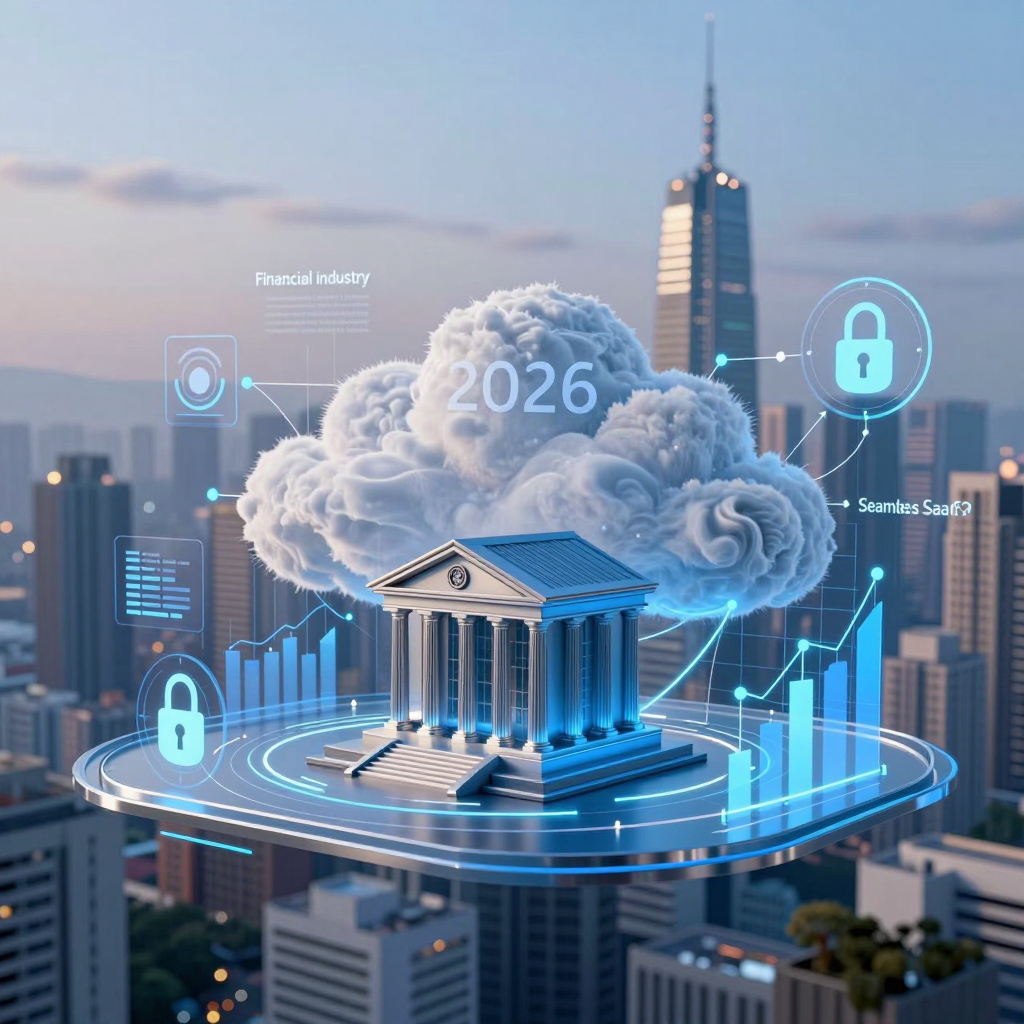
The Dawn of the Financial Cloud SaaS Adoption Era
What revolutionary spark has the dramatic easing of network separation regulations ignited in South Korea’s financial industry? Let’s explore the beginning of financial cloud innovation leading up to 2026.
Cloud-Based Financial Innovation Breaks Through Regulatory Barriers
For years, the Korean financial sector was held captive by the equation ‘security = isolation.’ Now, this paradigm is shifting. With financial authorities relaxing strict rules that once barred financial institutions from using cloud services within their internal networks, these organizations are now embracing digital transformation opportunities on an unprecedented scale. This shift goes far beyond mere technical deregulation; it signals structural transformation within Korea’s financial industry.
Liberation of Cloud-Based Software within Internal Networks
The reason financial firms long hesitated to adopt cloud services was clear: internal networks were off-limits under the guise of security. But with regulatory easing, they can now safely use cloud-based software within their internal environments.
This transformation brings three tangible benefits to the financial sector:
First, a groundbreaking boost in operational efficiency. Financial firms can modernize workflows by integrating cloud-based collaboration tools, advanced analytics, and unified data management systems. Real-time collaboration across geographically dispersed branches becomes possible, fostering data-driven decision-making like never before.
Second, significant cost optimization. The SaaS (Software as a Service) model shifts software ownership to subscription-based cloud usage, slashing upfront infrastructure investments and cutting ongoing maintenance expenses.
Third, enhanced scalability. Thanks to cloud infrastructure’s elastic nature, financial institutions can instantly adjust resources according to changing business demands.
Regulatory Relief, But Security Has Never Been More Critical
Amid these positive changes, one crucial element must not be overlooked: security. Easing network separation regulations does not mean security concerns have lessened. On the contrary, safeguarding data and cloud infrastructure has become more vital than ever.
Financial companies need to collaborate closely with cloud service providers to reinforce multi-layered security measures such as data encryption, access controls, and unauthorized access prevention. As regulations relax, accountability and vigilance must rise in tandem.
This regulatory shift accelerates digital innovation across Korea’s financial landscape while underscoring the urgent need for robust cloud security standards. The unfolding new chapter of Korean finance in 2026 is one to watch with great anticipation.
Section 2: Easing Network Separation Regulations: Breaking Down Boundaries in the Financial Sector
Why has the long-standing restriction on using internal network clouds for financial companies been eased, and what changes will this bring to financial institutions? What is the real reason hidden behind the financial authorities’ strategic decision?
Background of Easing Network Separation Regulations: Global Trends vs. Reality in Korean Finance
For decades, Korean financial regulators have strictly limited the use of cloud services within internal business networks, prioritizing security above all else. This was clearly a defensive stance, driven by concerns over hacking, data leaks, and cyberattacks.
However, as of 2026, this regulatory barrier is gradually coming down. With financial authorities relaxing network separation rules, financial companies are beginning to actively utilize cloud-based software (SaaS).
At the heart of this policy shift is a strategic realization: it is wiser to embrace the innovation of the cloud while building intelligent security systems, rather than blocking progress with regulations. A sense of urgency played a role as well — Korea’s financial industry cannot afford to fall behind a global trend where finance sectors rapidly transition to cloud-based systems.
What Regulatory Easing Means: From Simple Permission to Strategic Openness
The easing of regulations by financial authorities is not just about saying, “Now you can use the cloud.” It sends a proactive signal toward digital innovation in finance.
Allowing financial companies greater freedom to utilize cloud-based software within internal networks practically means:
- Modernizing collaboration tools: Employees can communicate and coordinate tasks in real-time through cloud-based collaboration platforms
- Enhancing analytics capabilities: Implementing advanced data analytics solutions in the cloud speeds up decision-making
- Accelerating system integration: Financial firms can seamlessly connect internal systems with cloud services
SaaS Adoption: From Cost to Innovation
The direct beneficiary of eased network separation rules is SaaS (Software as a Service). SaaS provides software via subscription over the internet, without requiring users to own the software.
For financial companies, the advantages of this shift are clear:
Cost efficiency: Immediate access to needed software without large upfront investments, along with drastically reduced maintenance costs. This benefit is maximized in an environment like Korea’s finance sector, where legacy systems prevail.
Operational efficiency: Financial institutions can now revolutionize workflows by adopting cloud-based data management systems, resulting in faster business processes and reduced customer response times.
Scalability: As user numbers or data volumes rise, cloud resources can be flexibly adjusted without additional physical infrastructure investments.
The True Meaning Behind Security Relaxation: From Control to Trust
So, what about security? This is a common concern among financial professionals.
It is crucial to clarify that regulatory easing does not mean the abandonment of security. Rather, it signifies a shift in how security is managed.
Whereas the old approach built a “fortress” around internal networks with complete isolation, the new method allows access while strengthening cloud infrastructure and data security.
Financial firms now must collaborate with cloud service providers to bolster security measures, including:
- Data encryption: Enhancing encryption for data both in transit and at rest
- Access control: Strict management of who can access what data
- Unauthorized access prevention: Proactive defense through multi-factor authentication and anomaly detection systems
In conclusion, the easing of network separation regulations represents a pivotal moment accelerating digital innovation in Korea’s financial industry. Through the cloud, financial companies will be able to deliver more agile, efficient, and innovative services to customers. At the same time, this development highlights the urgent need to establish robust cloud security standards.
SaaS Adoption: A Giant Seed Sown in the Financial Industry
How can structural innovation across the financial sector be achieved—not just through simple software changes, but by enhancing work efficiency and reducing costs? Let’s focus on the future of finance shaped by subscription-based software.
Cloud-Based SaaS Redefines Financial Institutions’ Operations
The relaxation of network separation regulations has opened the door for Cloud adoption in the financial sector, transcending mere technological implementation. Financial companies can now freely utilize Cloud-based software within their internal work networks, driving a fundamental restructuring of overall business processes.
As cutting-edge Cloud-based SaaS solutions—such as collaboration tools, analytics, and data management systems—seamlessly integrate into daily financial operations, employee productivity is skyrocketing. This enables levels of collaboration and rapid decision-making that were unimaginable in traditional on-premises environments.
Cost Innovation: How Subscription Models Are Transforming Finance
The most powerful economic advantage of SaaS lies in its flexible subscription pricing. Financial firms no longer need to purchase expensive software upfront and depreciate it over long periods. By shifting to subscribing for needed services via the internet, they can drastically reduce initial investment costs.
Even more crucial is the reduction in maintenance expenses. With Cloud-based SaaS, service providers handle all updates and maintenance, allowing financial companies to reallocate substantial IT infrastructure management costs and personnel to more strategic areas. This cost efficiency directly translates into enhanced competitiveness across the financial sector.
A New Experience in Scalability
Another key benefit of Cloud SaaS is instant scalability. Financial companies can flexibly adjust resources according to changes in business size. This means they can swiftly respond to new market entries or customer growth while minimizing unnecessary infrastructure investments.
This agility is a critical competitive factor in today’s accelerated fintech landscape. Cloud scalability provides the foundation for financial institutions to quickly adapt to market changes and rapidly launch innovative financial services.
The Shadow of Innovation: The Responsibility of Security
Despite positive signals from regulatory easing, Cloud adoption brings new security responsibilities. Financial firms must prioritize Cloud data and infrastructure security. Strengthening measures such as data encryption, access controls, and unauthorized access prevention in collaboration with service providers is essential.
This demand goes beyond technical responses and calls for establishing new security standards throughout the financial sector. Protecting data in Cloud environments is vital to sustaining trust within finance, and only through this can SaaS-driven innovation be fully realized.
SaaS adoption is more than a technological upgrade; it is a strategic choice shaping the future of the financial industry. Balancing the triangle of operational efficiency, cost reduction, and scalability will usher in a new era of competitiveness for Korea’s financial sector.
Section 4: The Invisible Battlefield of Security: Securing Cloud Safety
Even with regulatory easing, many challenges remain unresolved. What shadows has financial Cloud security cast, and what are the latest encryption technologies and access control strategies designed to tackle them?
Cloud Security: Hidden Risks Behind Regulatory Relaxation
The easing of network separation regulations has undoubtedly ushered in a wave of innovation in South Korea’s financial industry. Yet, this transformation simultaneously opens the door to new security threats that cannot be overlooked. The moment internal business networks connect to Cloud environments, the exposure scope of data and systems that financial institutions must protect expands exponentially.
Cloud data security and Cloud infrastructure security have become essential, no longer optional. The reality financial companies face is simple: regulations may have loosened, but the responsibility still squarely rests on their shoulders.
Layered Defense: The Role of Cutting-Edge Encryption Technologies
The first line of defense in securing the financial Cloud environment is encryption technology. Modern encryption goes beyond merely rendering data unreadable—it delivers advanced functionalities such as:
End-to-End Encryption keeps financial transaction data encrypted throughout its entire journey—from financial institutions to the Cloud service provider’s servers. Even if intercepted during transmission, the data remains indecipherable.
Data at Rest Encryption ensures customer information, transaction records, and financial analysis stored in the Cloud are encrypted. Even if physical access to the Cloud infrastructure is gained, data remains protected in an encrypted state.
Moreover, next-generation technologies like Homomorphic Encryption allow computations on encrypted data without decryption. This revolutionary solution enables financial analysis and risk management to maintain data confidentiality while enhancing operational efficiency.
Access Control Strategies: Who Can Do What?
If encryption addresses how data is protected, access control governs who can access the data.
Role-Based Access Control (RBAC) grants differentiated access privileges based on employees’ roles and departments. For instance, customer service staff can access basic client information, but cannot view internal transaction histories or risk analysis materials.
Zero Trust Architecture takes this further. This strategy refuses to trust any user or device simply because they are inside the network. Each access attempt undergoes fresh verification via multifactor authentication, device health checks, and behavioral analysis. With Cloud environments weakening internal network defenses, such stringent verification is indispensable.
Multi-Factor Authentication (MFA) combines passwords with biometric data, one-time passwords, security tokens, and more. This additional security layer remains effective even if passwords are compromised.
Preventing Unauthorized Access and Continuous Monitoring
Another vital aspect of data protection is actively monitoring access attempts. Modern financial Cloud environments must employ monitoring systems that:
Real-time Anomaly Detection spots unusual access patterns—such as logins from unexpected locations, bulk data downloads outside business hours, or attempts to access unauthorized materials—and triggers immediate alerts.
Complete preservation of Audit Logs tracks who did what, when, and to which data. This capability serves not only incident response but also provides compliance evidence.
Shared Responsibility with Cloud Service Providers
Financial institutions cannot rely solely on their own efforts for Cloud security. Close collaboration with Cloud service providers is imperative.
Financial companies must require from their providers:
- Regular disclosure of security audits and vulnerability assessments
- Certification in international security standards like ISO 27001 and SOC 2
- Detailed reports on physical security measures and disaster response protocols at data centers
- Swift notification and response systems in case of data breaches
- Guaranteed complete deletion or return of data upon contract termination
Challenges and Opportunities for South Korea’s Financial Industry
While easing network separation regulations has enabled Cloud adoption, it has also placed the onus on each financial institution to bolster its security framework.
This is far from a mere threat. It represents a golden opportunity for South Korea’s financial sector to set global benchmarks for Cloud security. Within the freedom granted by deregulation, financial institutions that proactively build top-tier security will elevate the trustworthiness of Korea’s financial market to new heights.
In this invisible battlefield of Cloud security, the true competitive edge of South Korea’s financial industry will be forged.
Section 5. Digital Innovation in Korea’s Financial Industry and Its Future
The relaxation of network separation regulations is not just a simple policy change. It signals the dawn of a new era of digital innovation in Korea’s financial industry. As the adoption of cloud-based software accelerates, the ways financial institutions operate and manage their workflows are being fundamentally transformed.
Long-term Ripple Effects of Cloud Adoption
The benefits financial companies gain by freely utilizing cloud-based SaaS within their internal networks are extensive. First, there is a groundbreaking shift in operational efficiency. Cloud collaboration tools and data analytics solutions directly enhance decision-making speed and modernize work processes in financial institutions.
Moreover, cost efficiency is significantly improved. Traditional on-premises system setups required massive initial investments and continuous maintenance expenses. In contrast, cloud-based subscription services operate on a pay-as-you-go model, greatly enhancing the efficiency of IT budgets in financial firms.
Additionally, enhanced scalability will be a critical factor determining the future competitiveness of the financial industry. The ability to swiftly respond to rapidly changing market environments and flexibly adjust resources as needed will decide the survival and growth of financial companies.
The Imperative of Establishing Cloud Security Standards
However, positive aspects of regulatory easing alone are not enough. Cloud data security and cloud infrastructure security have emerged as pressing new challenges. Financial institutions face significant security concerns including data leakage risks in open environments, increased chances of cyberattacks, and compliance with regulatory requirements.
Financial authorities and cloud service providers must build layered security measures such as data encryption, access control, and unauthorized access prevention. Establishing cloud security standards tailored specifically for Korea’s financial industry is no longer optional—it is an essential mandate.
The Future Blueprint for Korea’s Financial Industry
The changes brought by regulatory relaxation present Korea’s financial industry with clear opportunities and responsibilities simultaneously. It is an opportunity to leverage cloud technology effectively and secure an edge over global financial competitors, while bearing the responsibility to build robust security frameworks to maintain customer trust.
The future success of Korea’s financial sector depends on its ability to strike a balanced pursuit of technological innovation and strengthened security. The shift to a cloud-based work environment has already begun; now the key lies in how safely and efficiently it can be embedded. Only when regulatory bodies provide sustained support and financial companies make proactive investments will Korea’s financial industry truly step into the era of digital innovation.
Comments
Post a Comment