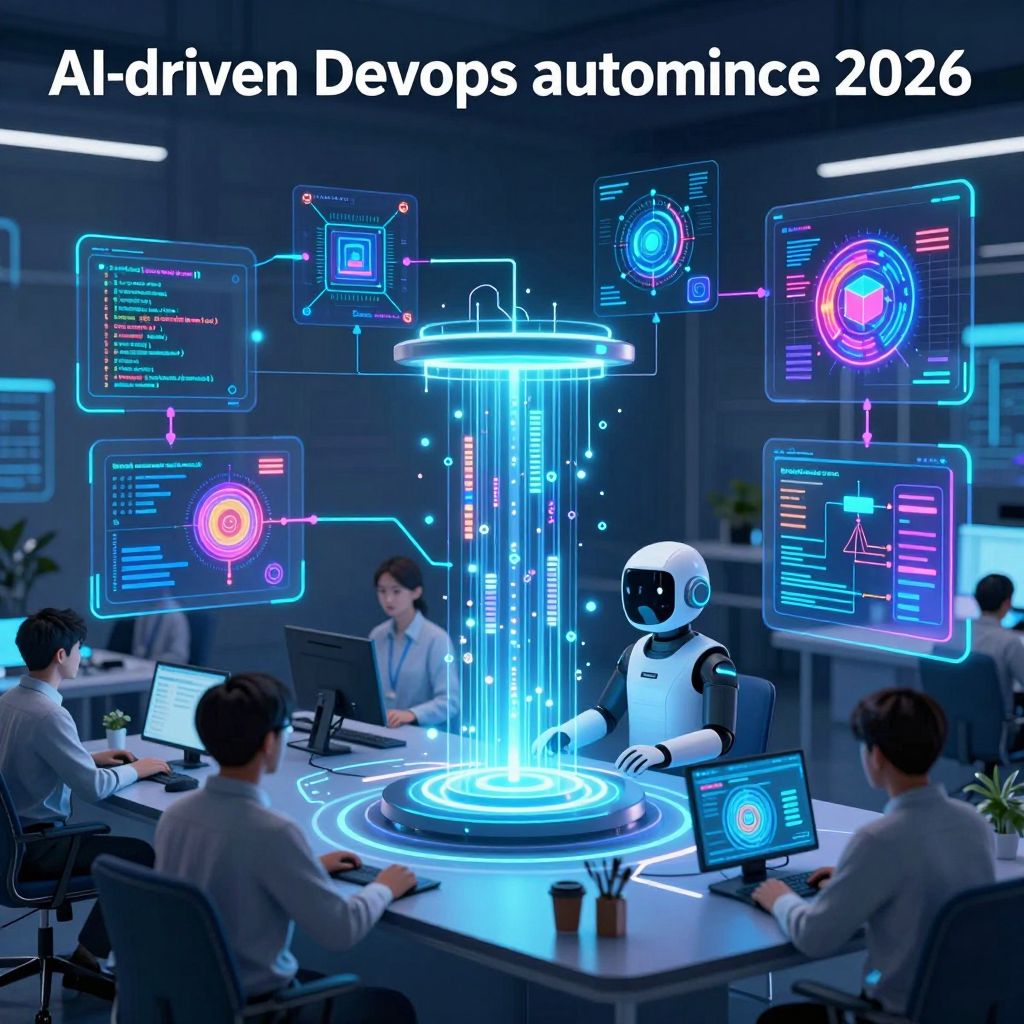
The Dawn of a New Era: What Is the AWS DevOps Agent?
In 2026, AI systems that operate autonomously—not just simple AI assistants—are revolutionizing the DevOps landscape. Have you ever imagined AI resolving issues entirely on its own?
Until now, DevOps teams had to step in personally whenever system failures occurred—to identify causes and fix problems. But this paradigm is rapidly shifting. With the advent of the AWS DevOps Agent, one of 2026’s most remarkable technological breakthroughs in DevOps has begun.
AWS DevOps Agent and Frontier Agent Technology
The AWS DevOps Agent is far more than just an automation tool. It is built upon a groundbreaking AI agent technology known as the Frontier Agent, which operates fundamentally differently from traditional AI assistants.
Whereas conventional AI assistants have remained reactive—responding passively to user requests—the Frontier Agent functions as an autonomous system that independently acts to achieve goals and continuously operates without intervention. It goes beyond supporting individual tasks; it extends the DevOps team’s capabilities by managing large-scale, concurrent operations seamlessly.
A Paradigm Shift in DevOps Operations
The arrival of the AWS DevOps Agent is fundamentally transforming how DevOps organizations work. Notably, it enables 24/7 autonomous incident response, eliminating the urgent need for engineers to scramble when critical failures strike at 2 a.m. or when traffic spikes occur outside regular hours.
The agent automatically classifies incidents the moment alerts arise and, like a seasoned DevOps engineer, learns about resources and their interrelationships to investigate the entire tech stack autonomously. Leveraging observability tools, runbooks, code repositories, and CI/CD pipelines, it systematically pinpoints root causes.
Transition to Proactive Operations
Another core value of the AWS DevOps Agent lies in proactive operational improvement. This system analyzes past incident patterns and offers tailored recommendations to prevent similar issues from happening in the future.
This signifies a vital shift for DevOps teams—from the traditionally reactive, post-incident approach to actively enhancing system resilience and preventing breakdowns. Teams no longer need to be plagued by constant emergency firefighting and can instead focus on strategic improvements.
This is the true transformative power of the AWS DevOps Agent—revolutionizing the DevOps world in 2026.
The Secret Behind Frontier Agent Technology: Revolutionizing DevOps Autonomy and Scalability
Traditional AI assistants remain passive, awaiting user commands to assist with individual tasks. But Frontier Agents completely break free from this mold. How do Frontier Agents, distinct from conventional AI, enable independent and continuous operation? Let’s delve into the core principles that make this technology a game-changer in DevOps operations.
Autonomous Operations in DevOps: Defining Frontier Agents
Frontier Agents are far more than simple automation tools. They are autonomous systems that operate independently to achieve goals and run continuously without intervention. While traditional DevOps automation tools operate according to predefined scripts or rules, Frontier Agents assess situations themselves and make autonomous decisions.
The most groundbreaking feature of this technology is its ability to act as an extension of the team, handling large-scale concurrent tasks with remarkable scalability. Just as a skilled DevOps engineer can manage multiple incidents simultaneously, Frontier Agents process tasks in parallel at near-infinite scale.
The Core of Autonomy: Continuous Learning and Automatic Classification
The first secret to the autonomy exhibited by AWS DevOps Agents is their 24/7 automated monitoring and instant response. The moment an alert triggers, the agent automatically classifies the incident and begins root cause analysis (RCA). But this process is far from simply following rules.
The agent learns the organization’s technology stack. It understands resources and their relationships, integratively analyzing the entire ecosystem—from observability tools and runbooks to code repositories and CI/CD pipelines. Much like an experienced DevOps engineer reviews logs, metrics, and code changes comprehensively, the Frontier Agent conducts an automated investigation that instantly resolves tasks which would otherwise take human teams tens of minutes.
The Foundation of Scalability: Multi-Cloud Integrated Architecture
Frontier Agents’ scalability extends beyond mere parallel processing. More crucial is their ability to seamlessly integrate multi-cloud and hybrid environments.
Modern DevOps setups no longer rely on a single cloud platform. Third-party observability tools like AWS and Dynatrace, in-house runbooks, multiple code repositories, and various CI/CD pipelines are all intertwined. Frontier Agents correlate remote telemetry, code, and deployment data to perform comprehensive analysis.
This solves the complex challenge of pinpointing root causes in intricate infrastructure landscapes. Whether it’s API dependency issues, networking failures, or application-level bugs across layers, Frontier Agents diagnose from an integrated perspective. This capability is the key to dramatically reducing DevOps teams’ operational burdens.
A Paradigm Shift Toward Continuous Improvement
Another revolutionary aspect of Frontier Agents is their ability to enable proactive operational improvements. Traditional DevOps has been reactive—responding to incidents after they occur and learning through that process.
Frontier Agents analyze past incident patterns to provide tailored recommendations that prevent future issues. This goes beyond simple predictions like “a similar problem might recur.” The agent learns the organization’s unique environment and structure and proposes systematic ways to strengthen system resilience. DevOps teams can now focus strategically on stabilizing systems rather than reacting to emergency calls at odd hours.
Real-World Impact on Operations
How do all these technical features translate into real operational changes for DevOps teams? The most immediate benefit is automatic response regardless of time zone. Whether an incident strikes at 2 a.m. or traffic surges outside business hours, the burden on teams to respond vanishes. Instead, Frontier Agents autonomously conduct investigations and route monitoring data and findings through preferred channels like Slack, ServiceNow, or PagerDuty. Engineers intervene only when necessary.
Currently, AWS DevOps Agents are available in trial, allowing multiple agents to be independently configured via agent spaces according to team responsibilities. This means organizations can flexibly deploy Frontier Agents tailored to their structure and workflows.
The Future of DevOps: A Human-AI Collaborative Model
Ultimately, Frontier Agent technology envisions a collaboration model between human engineers and AI agents. This represents a new evolution in automation philosophy. While traditional automation focused on eliminating repetitive tasks, Frontier Agents support higher-level areas of decision-making and investigative analysis.
DevOps engineers no longer suffer from overnight calls. Instead, they concentrate on strategic initiatives like enhancing system architecture, future-proofing, and adopting new technologies. Frontier Agents are not tools for headcount reduction but instruments for maximizing DevOps team efficiency and elevating their roles.
This is precisely why Frontier Agents are recognized as transformative innovation reshaping the landscape of DevOps operations, far beyond simple automation tools.
Powerful Features of the AWS DevOps Agent: From Incident Response to Multi-Cloud Integration
What’s the secret behind AWS DevOps Agent’s ability to autonomously analyze incidents 24/7, enhance proactive operations, and flawlessly perform root cause analysis even in complex multi-cloud environments? By delving into the technical mechanisms behind each of its features, it becomes clear how this groundbreaking technology is transforming the DevOps operations paradigm.
24/7 Autonomous Incident Response: Real-Time Analysis Around the Clock
The AWS DevOps Agent’s first core feature is autonomous incident response—a complete departure from traditional DevOps teams manually monitoring and categorizing alerts.
The moment an alert occurs, the AWS DevOps Agent instantly classifies the incident and begins root cause analysis automatically. This goes beyond simple automation: it acts like a seasoned DevOps engineer, learning about resources and their relationships. Leveraging observability tools, runbooks, code repositories, and CI/CD pipelines, it automatically investigates the entire tech stack to pinpoint the exact cause of the issue.
The greatest practical benefit of this autonomous operation is that development teams no longer need to respond to urgent incidents occurring at night or on weekends. Whether it’s a service outage at 2 AM or performance degradation during traffic spikes, the AI agent continuously handles these issues without any human intervention.
Proactive Operational Improvements: Shifting from Reactive to Preventive
The AWS DevOps Agent’s second powerful capability is proactive operational improvement. This feature analyzes past incident patterns to deliver customized recommendations that prevent future occurrences.
Traditional DevOps operations focused heavily on reactive responses—addressing issues after they occurred and analyzing causes retroactively. The AWS DevOps Agent completely overturns this approach. By learning from historical incident data, it recognizes patterns and suggests ways to reinforce system resilience before similar situations arise.
For instance, if database connection pool exhaustion repeatedly occurs at specific times, the AI agent detects this pattern and recommends actionable solutions such as improving connection pool settings, adjusting auto-scaling policies, or optimizing queries. This empowers DevOps teams to break free from recurring mistakes and concentrate on enhancing the fundamental stability of their systems.
Multi-Cloud and Hybrid Environment Integration: Comprehensive Analysis of Complex Tech Stacks
The third standout feature, multi-cloud and hybrid environment integration, addresses one of the most daunting challenges in modern DevOps operations.
Today’s enterprises mix AWS cloud, on-premises infrastructure, third-party observability tools like Dynatrace, and various CI/CD pipelines. When issues arise across these distributed environments, identifying root causes required manually toggling between multiple tools and sifting through logs.
The AWS DevOps Agent unifies all these components. It connects AWS and third-party observability tools, runbooks, code repositories, and CI/CD pipelines to automatically correlate remote analytics, code, and deployment data. Even in complex settings with third-party API dependencies, networking issues, and application-level errors, it accurately identifies the root cause.
It’s like having a unified dashboard revealing the entire tech stack at a glance. DevOps teams no longer juggle multiple tools to compile information because the AI agent integrates and analyzes all data, delivering precise root causes.
Real-Time Alerts and Automatic Routing: Maximizing Team Efficiency
All analysis results and observations from the AWS DevOps Agent are automatically routed through preferred team channels like Slack, ServiceNow, and PagerDuty. This means DevOps teams don’t need to check multiple monitoring tools—the critical information arrives directly in familiar communication platforms.
Ultimately, the AWS DevOps Agent is far more than a simple automation tool; it represents an innovative model of collaboration between human engineers and AI agents. Currently available as a trial, it allows teams to configure multiple agents aligned with their areas of responsibility via the Agent Space, enabling tailored DevOps automation suitable for any organizational size or structure.
Section 4: Experiencing Change on the Ground: The Practical Innovation Brought by AWS DevOps Agent
An incident alert blaring at 2 a.m. The nightmare of getting out of bed, powering up your laptop, and digging through logs to find the root cause can now be a thing of the past. The AWS DevOps Agent is the technology that turns this nightmare into reality.
AI Working Like a DevOps Engineer
Traditional automation tools have been limited to performing repetitive tasks based on predefined rules. But the AWS DevOps Agent completely breaks through those boundaries. This agent thinks and acts independently, just like a seasoned DevOps engineer.
The moment a critical incident occurs, the agent instantly categorizes the alert and begins analyzing the root cause. It automatically investigates the entire technology stack by accessing observability tools, runbooks, code repositories, and CI/CD pipelines. It’s as if a 10-year veteran DevOps expert volunteered for overtime—except this expert never tires and works 24/7, all year round.
Real-World Value That Instantly Lightens the Team’s Burden
The true value of the AWS DevOps Agent shines brightest in numbers. Consider the industry average: DevOps teams spend over 200 hours per month responding to incidents. What if all that time could be handled by the agent?
Here’s a concrete example: during peak traffic, a microservice suffers a failure. Traditionally, the DevOps team would manually gather and analyze data from various sources—service logs, API response times, database query performance, network bandwidth—and this process typically takes between 30 minutes to an hour, leaving users inconvenienced during that time.
The AWS DevOps Agent automatically handles all of this within minutes. It integrates seamlessly with third-party observability tools like Dynatrace and operates smoothly across multi-cloud and hybrid environments. It even identifies cascading issues such as API dependencies, networking problems, and application-level errors.
Instant Adoption Through Integration With Familiar Tools
Where do the investigation results go? They are automatically routed to channels the DevOps team already uses—Slack, ServiceNow, PagerDuty, and more. There’s no need to learn a new platform. The agent simply integrates naturally into existing workflows.
This dramatically lowers the barrier to adoption. DevOps teams receive the agent’s analysis and recommendations via Slack messages and can collaborate by requesting additional actions as needed. It minimizes communication delays while preserving the team’s decision-making capabilities.
From Reactive Response to Proactive Prevention
Another transformative change brought by the AWS DevOps Agent is a shift in operational philosophy. By analyzing past patterns, it offers tailored recommendations to prevent future incidents and enhance system resilience.
For instance, if the agent detects recurring failures every month at a specific time caused by memory leaks, it flags this as a code review item. Or if it notices a pattern where response times degrade on a particular service during traffic surges, it suggests adjusting auto-scaling policies.
As a result, DevOps teams can focus less on constantly putting out fires and more on preventing them from igniting in the first place.
Current Stage: Real Verification Through a Trial Version
The AWS DevOps Agent is currently available as a trial, allowing teams to validate its value in real operational environments. With the agent space feature, multiple agents can be configured to align with team responsibilities. For teams running microservice architectures, it’s even possible to assign dedicated agents for each service.
This is not just an evolution of automation tools—it’s a collaborative model between human engineers and AI agents. The moment when DevOps teams redefine their role from “firefighters who handle everything directly” to “commanders who strategize and lead agents” is happening now.
Section 5. Future Outlook and Collaboration Models: A New DevOps Co-Created by Humans and AI
As AI agents evolve from mere assistants to true collaborators, what do current trial implementations and future development paths look like? Let’s explore a future where human engineers and AI complement each other.
AI Agents: Evolving from Simple Tools to Trusted Colleagues
Over the past decade, DevOps has largely advanced around automation. However, the emergence of AWS DevOps Agents elevates this trajectory to a whole new level. Where traditional automation tools and AI assistants played passive roles—responding only to commands—the frontier-agent-driven DevOps agents have become autonomous colleagues that independently set and achieve goals.
This fundamentally redefines how DevOps teams operate. Whether it’s a sudden incident striking at 2 a.m. or a surge in traffic outside of work hours, team members no longer need to be awake. AWS DevOps Agents stand guard 24/7, instantly autonomously classifying incidents, analyzing root causes, and routing investigation results automatically to preferred channels like Slack, ServiceNow, and PagerDuty. This transformation does more than streamline workflows—it’s an innovative shift preserving human engineers’ time and mental well-being.
Complementary Collaboration Between Humans and AI
Future DevOps teams will function not as purely human units nor fully automated systems, but as hybrid collaboration models. Human engineers will focus on complex business decisions and strategic judgments, while AI agents handle repetitive, time-consuming diagnostics and initial responses.
This complementary model is the core value of AWS DevOps Agents. Like seasoned DevOps engineers, these agents learn about resources and their relationships, integrating observability tools, runbooks, code repositories, and CI/CD pipelines seamlessly. Especially in multi-cloud and hybrid environments, they link AWS with third-party platforms like Dynatrace to correlate telemetry, code, and deployment data. Their ability to pinpoint root causes across complex technology stacks—from API dependencies to networking issues and application-level errors—perfectly supplements human intuition and experience.
A Paradigm Shift Toward Proactive Operations
Traditional DevOps teams have mainly focused on reactive responses: addressing issues once they arise, investigating root causes, and conducting post-mortem analyses. AWS DevOps Agents invert this model by analyzing historical incident patterns to provide personalized recommendations that prevent future failures.
This preventative approach signals a fundamental shift in the DevOps team’s role. Teams move from “When will a problem occur?” to “How do we prevent problems from happening?” Energy can be redirected toward strategic activities such as enhancing system resilience, refining monitoring frameworks, and establishing automatic recovery mechanisms.
Current Application Status Seen Through the Preview Phase
AWS DevOps Agents are currently available in a Preview stage. What stands out at this phase is the technology’s flexibility. Through the concept of agent spaces, multiple agents can be independently configured to align with different teams’ areas of responsibility and organizational structures. For example, platform teams, application teams, and security teams can each deploy agents tailored to their own tech stacks and operational policies.
This preview period offers organizations a precious opportunity to experiment with AI collaboration models, build trust, and optimize agents for their unique environments. Early adopters are already reporting impressive outcomes—reduced incident resolution times, lessened on-call burdens overnight, and automated repetitive investigative tasks are becoming reality.
Future Development Directions and Challenges
The fusion of DevOps and AI is still in its infancy. As frontier agent technologies advance, their scope will extend beyond incident response into areas like:
- Autonomous Performance Optimization: Automatically adjusting resource allocations based on real-time metrics to evolve infrastructure toward greater cost efficiency.
- Continuous Security Enhancement: Proactively detecting threats, autonomously patching vulnerabilities, and maintaining compliance through self-governing security agents.
- Knowledge Accumulation and Sharing: Transforming learned patterns and solutions into organizational tacit knowledge to continuously elevate team-wide operational excellence.
Yet, the human role will never diminish—in fact, it will become even more crucial. Validating AI agents’ decisions, providing business context, and setting ethical boundaries remain firmly human responsibilities. Refining training data, monitoring algorithmic bias, and designing fallback mechanisms during failures are additional vital tasks for DevOps teams.
Conclusion: At the Dawn of a New Collaborative Era
Frontier agent technologies, epitomized by AWS DevOps Agents, are ushering in a genuine era of collaboration within DevOps. This is not the end of automation, but rather a new beginning where human creativity and AI efficiency converge. The ongoing trials during the preview phase offer critical glimpses into what DevOps’ future holds.
What we are witnessing is the evolution of DevOps teams from “fast problem solvers” to “designers and preventers of problems.” At the heart of this journey lies mutual trust and collaboration between human engineers and AI agents. Ultimately, DevOps success will not be about how smart technology becomes, but how harmoniously humans and AI work together.
Comments
Post a Comment