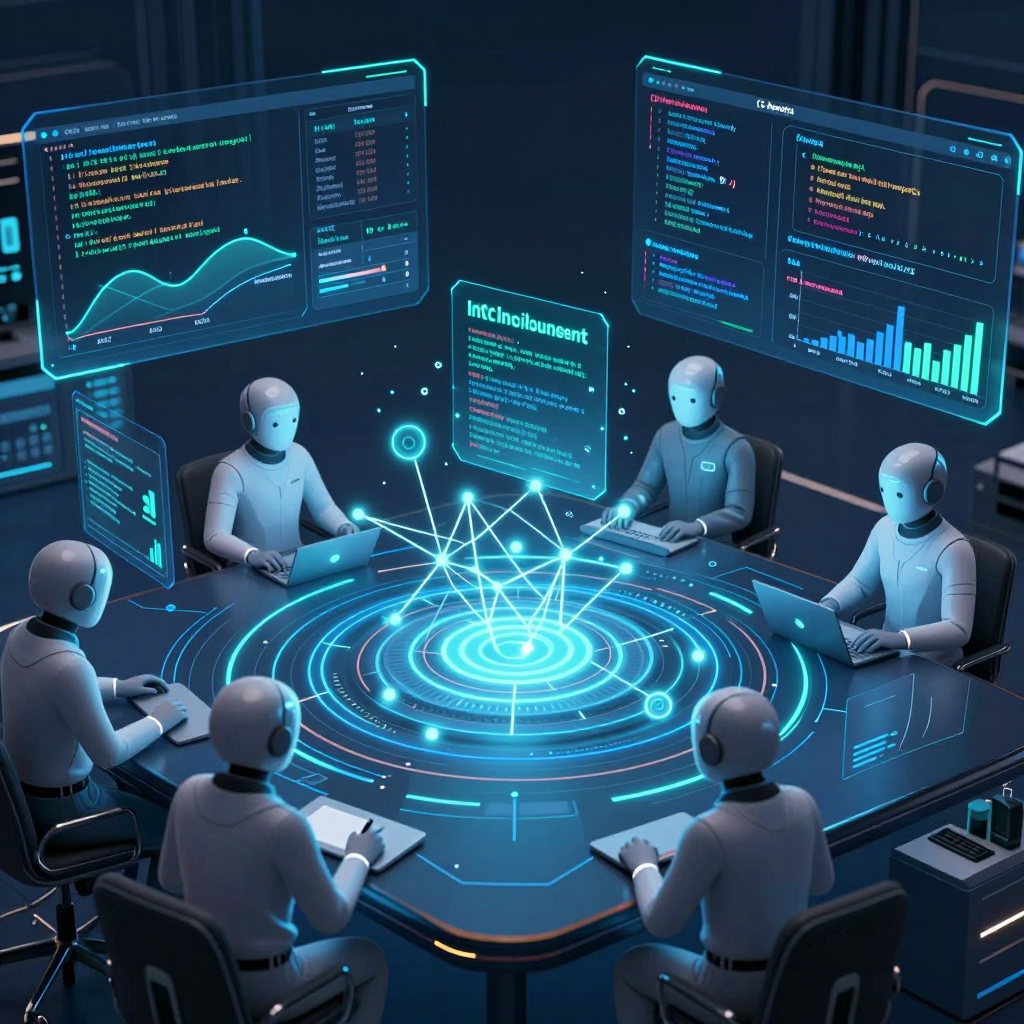
The Emergence of AI Agents Set to Revolutionize DevOps in 2026
As traditional DevOps operations fade away, how are AI-driven autonomous agents steering this transformation? The answer is becoming crystal clear. Next-generation technologies, exemplified by AWS DevOps agents, are rapidly reshaping the industry landscape.
The Revolutionary Arrival of AI-Powered Autonomous Agents
Until now, DevOps engineers have been responding to incidents around the clock. Emergency calls at 2 a.m., deep dives into widespread infrastructure issues, and hours of manual root cause analysis—this was the daily grind of DevOps.
But the game is changing. Enter a new breed of AI agents—autonomous, massively scalable, and capable of running for hours or days with minimal human intervention. These are not mere automation tools. They act as “always-on autonomous on-call engineers,” redefining the very essence of traditional DevOps roles.
New DevOps Capabilities: Autonomous Incident Response
The core strength of AWS DevOps agents lies in their instant response capability. The moment an alert triggers, these agents automatically correlate data across the entire operations toolchain—from metrics and logs to recent code deployments in GitHub or GitLab. This means that investigation begins well before the DevOps team even becomes aware of an issue.
Most impressively, all of this happens without any human involvement. Whether it’s 2 a.m. or peak business hours, the AI agent initiates investigations immediately and prepares the critical information DevOps teams need.
Specializing in Root Cause Analysis
These AI agents go beyond simply detecting symptoms—they emulate the mindset of seasoned DevOps engineers. By learning resource relationships and leveraging observability tools, runbooks, code repositories, and CI/CD pipelines, they deliver deep analysis.
When complex problems arise—whether third-party API dependencies, networking glitches, or application-level errors impacting performance—the AI agents autonomously examine the entire tech stack to identify root causes. Intricate deployment issues that once took multiple teams hours of manual investigation, including network communication faults and dependency conflicts, are now analyzed and pinpointed within minutes.
Holistic Understanding of Complex Infrastructure
Modern cloud environments are anything but simple. Multiple accounts, diverse networks, countless workloads—all interacting to create a complex ecosystem. AI-powered DevOps agents infer the entire landing zone topology, understanding relationships between workloads, networks, and management accounts as a cohesive ecosystem.
This ability is especially vital in multi-cloud and hybrid settings. The automatic analysis of complex dependencies sets a new standard for cloud operations today.
The Future of DevOps Operations: A Paradigm Shift
Ultimately, the advent of AI-driven autonomous agents brings three groundbreaking shifts to DevOps:
First, dramatically reduced incident response times. Time once spent on manual investigation shrinks, accelerating system recovery.
Second, diminished fatigue for human engineers. Pressure from late-night calls and weekend responsibilities eases, enhancing job quality and team satisfaction.
Third, maximized operational efficiency across vast infrastructures. Managing more systems with fewer personnel boosts both organizational scalability and cost-effectiveness.
By 2026, the DevOps landscape will no longer rely solely on human manpower. Instead, a collaborative model between AI-driven autonomous agents and human experts will become the new norm. This is one of the most exciting evolutions in DevOps and an inevitable future every organization must prepare for.
What Is an Autonomous AWS DevOps Agent?
Let’s uncover the secret behind an AI agent that operates autonomously for days on end—just like a 24/7 on-call engineer who never needs a break. The AWS DevOps agent is an innovative technology that goes far beyond mere automation tools.
Defining the Autonomous Agent That’s Transforming the Future of DevOps
The AWS DevOps agent is a next-generation AI agent that is autonomous, massively scalable, and capable of running for hours to days without continuous human intervention. Classified as a “Frontier Agent” disrupting traditional DevOps practices, it acts as your “always-on autonomous on-call engineer.”
While conventional DevOps automation tools function according to pre-set rules and workflows, the AWS DevOps agent assesses real-time situations and independently decides how to resolve issues. It offers an experience akin to having a seasoned DevOps engineer vigilantly monitoring your systems 24/7.
Automated Incident Response: Immediate Action Anytime
One of the most striking features of the AWS DevOps agent is its ability to autonomously respond to incidents. Whether it’s 2 AM or peak business hours, the moment a system alert fires, the agent instantly launches an investigation.
During this process, the agent automatically correlates data across the entire operations toolchain, including:
- Metrics and log analysis
- Reviewing recent code deployment records from GitHub or GitLab
- Checking infrastructure configuration details
- Tracking API call patterns
By integrating these multilayered data points, the agent comprehends the full context—not just isolated symptoms—quickly pinpointing the root cause.
Root Cause Analysis: The Expertise of a Skilled Engineer
The AWS DevOps agent does more than just react to alerts; it analyzes root causes like an experienced DevOps engineer. It can:
- Learn and understand resources and their interrelations
- Utilize observability tools, runbooks, and code repositories
- Assess the health of CI/CD pipelines
Notably, the agent can identify multiple issues across different layers simultaneously. Whether it’s third-party API dependencies, networking glitches, or application-level bugs, it autonomously investigates your entire tech stack, unraveling the complex web to surface actionable insights.
Complete Mastery Over Complex Infrastructures
Modern cloud environments are becoming increasingly complex. To tackle this, the AWS DevOps agent can infer the entire landing zone topology.
Instead of merely inspecting individual systems, the agent:
- Recognizes dependencies among workloads
- Understands the full network architecture
- Maps relationships between management and operational accounts
- Maintains a unified perspective across multi-cloud environments
Real-world tests show that the AWS DevOps agent can analyze intricate deployment issues in mere minutes, identifying network communication failures and dependency conflicts. Tasks that would normally require multiple teams conducting extensive manual investigations are now automated seamlessly.
A New Paradigm in DevOps Operations
The advent of the AWS DevOps agent signifies not just a leap in technology but a transformation in DevOps operating culture. Incident response times shrink dramatically, human engineers’ fatigue from overnight shifts diminishes, and operational efficiency at massive scale reaches new heights.
Its ability to automatically analyze complex dependencies in multi-cloud and hybrid environments sets a bold new standard for modern cloud operations. The future of DevOps in 2026 is already being reshaped around these autonomous AI agents.
Instant Response When Trouble Strikes: Autonomous Incident Handling and Root Cause Analysis
This AI agent awake even in the dead of night seamlessly links everything—from logs to code deployments—to instantly pinpoint the root cause of any issue. How is this possible?
The Biggest Challenge in DevOps Operations: Incident Response
In traditional DevOps environments, incidents always strike unpredictably. Alarms blaring at 2 AM, outages during business hours, system failures impacting customers—all these are daily battles for DevOps engineers. But what if this response could be fully automated?
Next-generation solutions like the AI-driven AWS DevOps Agent tackle this very problem. The moment an alert triggers, it launches an investigation immediately, delivering consistent, reliable responses regardless of time or circumstances.
Unified Data Analysis: Breaking Down Silos Across Teams
Finding the root cause demands a holistic analysis of data spanning multiple domains. The AWS DevOps Agent accomplishes this flawlessly:
Correlation Analysis of Metrics and Logs
A shift in system metrics alone doesn’t reveal the true problem. The agent reviews real-time monitoring data, application logs, and system logs collectively to accurately identify suspicious signals.
Connecting Code Deployments to Incidents
Many issues stem from recent code changes. The AI agent checks recent deployment histories in code repositories like GitHub or GitLab and automatically analyzes correlations with the incident timeline—instantly answering, “Which code change caused this problem?”
Integrated Investigation Across the Entire Toolchain
From observability tools and runbooks to deployment pipelines and CI/CD logs, the entire DevOps ecosystem is interconnected. The agent autonomously navigates this complex toolchain to track down causes swiftly.
Root Cause Analysis Beyond the Skills of Experienced Engineers
What sets the AWS DevOps Agent apart is that it’s not just automated—it thinks like a seasoned DevOps engineer:
Learning Infrastructure Resources and Relationships
The agent learns the organization’s system architecture, understanding how servers, databases, networks, and microservices interrelate, viewing it all as a cohesive ecosystem.
Multilayered Problem Diagnosis
Performance issues are rarely simple—they may stem from third-party API dependencies, network misconfigurations, or application-level bugs. The AI agent autonomously investigates the full tech stack and identifies the true root cause within minutes.
Reducing Cross-Team Collaboration Overhead
Issues that previously required hours of joint manual investigation by network, application, and infrastructure teams can now be independently analyzed by the agent.
Excelling in Multi-Cloud Environments
Modern DevOps often operate across multiple clouds and hybrid environments. The AWS DevOps Agent shines in these complex setups.
By inferring the entire landing zone topology, it consistently comprehends relationships among workloads, networks, and management accounts. Traditionally hard-to-detect issues like inter-cloud communication latency, resource allocation conflicts, and policy violations are automatically spotted and analyzed.
Reducing Engineer Fatigue and Maximizing Operational Efficiency
The bottom line is crystal clear: The burden of incident response on DevOps teams drops dramatically, freeing engineers to focus on strategic, creative work. Operational efficiency at scale soars, enabling significant reductions in Mean Time To Recovery (MTTR).
Midnight alarms no longer spell dread. After all, the AI agent is wide awake.
Section 4: Penetrating Complex Infrastructure: Landing Zone Topology and Network Dependency Analysis in DevOps
Discover astonishing real-world cases of how AI swiftly and accurately identifies issues amidst distributed workloads and countless network relationships.
What AI Agents See: Understanding the Entire Landing Zone Topology
Modern cloud infrastructure is like a vast maze. Workloads spread across multiple accounts, intricate connections between networks, and layers upon layers of management intertwine. Traditional DevOps teams might spend days just pinpointing the root cause within such complexity.
However, AI-driven autonomous agents like AWS DevOps agents fundamentally solve this problem. These agents don’t merely monitor individual resources—they infer the entire landing zone topology to comprehend the relationships among workloads, networks, and management accounts as a single coherent ecosystem.
It’s as if an architect instantly grasps the layout of a complicated city plan—AI perceives your entire infrastructure layout with crystal clarity. With this deep understanding, the speed and accuracy of problem analysis multiply exponentially.
Real Case: Multi-Layer Issues Found Within Minutes
Let’s look at a concrete example. Imagine a large financial company’s production environment suddenly triggers a performance degradation alert. This complex scenario demands multiple teams:
- Network communication issues between test and production environments
- Latencies in third-party API dependencies
- Runtime errors at the application level
Traditional DevOps teams would involve network, infrastructure, and application teams investigating their respective domains over several days. But an AI agent analyzes all these layers simultaneously.
Collecting metrics and logs from observability tools, referencing runbooks for systematic diagnosis, checking recent deployments in code repositories, and inspecting the CI/CD pipeline status—the AI agent quickly uncovers the root cause within minutes: a database migration in the test environment altered network routing, interfering with communication to a specific microservice in production.
The Evolution of DevOps: From Automation to Autonomy
This transformation transcends mere technological advancement. Whereas traditional DevOps emphasized “automation,” AI-based agents take a step further toward “autonomy.”
Automation handles repetitive, predictable tasks. Autonomous agents independently analyze and make judgments amid unpredictable, complex problem scenarios. Whether a 2 AM alert rings unexpectedly or usage spikes during peak hours, AI launches investigations immediately without human intervention.
Strengths in Multi-Cloud and Hybrid Environments
Modern enterprises increasingly blend AWS, Azure, Google Cloud, and on-premises environments. Pinpointing dependencies in such multi-cloud and hybrid settings has long been a headache for DevOps teams.
AI-driven agents offer a perfect solution to this challenge by comprehending the entire technology stack beyond cloud boundaries as a unified perspective. Network communication routes, API call chains, data flows—everything is mapped cohesively, making troubleshooting far more manageable.
A New Role for Human Engineers
Concerns may arise that such technology threatens DevOps engineers’ jobs. The reality, however, is different. By handling repetitive incident responses and intricate analyses, AI agents enable human engineers to focus on more strategic and creative tasks.
DevOps teams can concentrate their skills on high-value activities such as infrastructure optimization, performance enhancement strategies, security hardening, and planning new technology adoption. Simultaneously, engineers’ on-call fatigue dramatically decreases, fostering a healthier work environment.
Conclusion: Elegantly Overcoming Complexity
Distributed workloads, innumerable network relationships, and intricate dependencies—these were nightmares for past DevOps teams. But with AI-based autonomous agents, this complexity is no longer a barrier.
AI agents that fully understand landing zone topology, identify multi-layer network issues within minutes, and monitor operations nonstop—this is the new DevOps paradigm of 2026. Operational elegance amid complexity has now become reality.
The Dawn of the AgentOps Era and Its Revolutionary Impact on the DevOps Industry
A sudden alert ringing past midnight—this moment used to mark the beginning of a nightmare for on-call engineers in traditional DevOps environments. But with the arrival of the AgentOps era, everything is transforming completely. This innovation dramatically slashes incident response times, significantly reduces engineer burnout, and maximizes operational efficiency in complex multi-cloud environments. Could this be the future standard of DevOps? The answer is already unfolding before our eyes.
Defining AgentOps and the Evolution of DevOps
AgentOps is not just a buzzword. It represents an operational model managing the lifecycle of autonomous AI agents, extending the traditional DevOps concept into the era of AI agents.
For decades, DevOps has focused on breaking down the barriers between development and operations and automating continuous integration and deployment. But AgentOps takes it a step further. It’s no longer just about automating deployment pipelines. Now, autonomous agents monitor and respond around the clock—handling everything from incident detection to root cause analysis and proposing solutions.
Revolutionary Impact 1: Dramatic Reduction in Incident Response Time
In a traditional DevOps setup, incident response follows these steps:
- Alert detection via monitoring systems
- Calling the responsible engineer
- Assessing the problem and analyzing logs
- Collaborating across teams to identify the root cause
- Establishing and executing a resolution plan
Depending on complexity, this process could take anywhere from minutes to hours.
AI-powered autonomous agents like the AWS DevOps Agent perform all these steps simultaneously. They automatically correlate data across the entire toolchain—from metrics and logs to recent code deployments in GitHub or GitLab—and begin investigations instantly the moment an alert arrives, whether at 2 AM or during business hours. What used to require extensive manual teamwork to untangle complex deployment issues is now handled by these agents identifying network communication failures and dependency conflicts within minutes.
Revolutionary Impact 2: Drastically Lower Engineer Burnout
The workload on DevOps engineers has historically scaled proportionally with the infrastructure managed by their organizations. The rise of microservices architectures and multi-cloud strategies has exponentially increased management complexity, pushing on-call burdens to unsustainable levels.
In an AgentOps environment, autonomous agents serve as always-on on-call engineers. This is more than mere automation of tasks—it's about shifting the heavy lifting of incident response to AI agents. These agents learn resources and their relationships just like seasoned DevOps engineers, autonomously analyzing and addressing problems using observability tools, runbooks, code repositories, and CI/CD pipelines.
As a result, engineers are freed from the anxiety of late-night emergency calls and can focus on strategic, creative work.
Revolutionary Impact 3: Overcoming Multi-Cloud Complexity
Modern large-scale organizations employ multi-cloud strategies, simultaneously operating across AWS, Google Cloud, Azure, and others. While offering cost optimization and vendor lock-in avoidance, this approach exponentially increases operational complexity.
Traditional DevOps requires building and managing separate monitoring, logging, and alerting systems for each cloud platform. However, AgentOps agents infer the entire landing zone topology, understanding workloads, networks, and management account relationships as one coherent ecosystem.
This means they can autonomously investigate performance issues stemming from third-party API dependencies, networking problems, or application-level errors from a full-stack perspective. For instance, in a complex scenario where an API latency in one cloud causes a workload failure in another, these agents automatically identify the causal chain and offer resolution strategies.
The New Standard for Future DevOps
The transformation brought by AgentOps transcends technological innovation—it signals a fundamental shift in organizational culture and operational philosophy.
Faster incident response, reduced engineer fatigue, and automatic analysis of complex multi-cloud dependencies are no longer futuristic concepts. Leading companies are already adopting AI-driven autonomous agents to maximize operational efficiency, establishing this approach as the new industry standard.
The future of DevOps will be built on human-AI collaboration. Engineers will no longer be shackled by repetitive troubleshooting, instead focusing on system architecture improvements, security enhancement, and driving business value. As the AgentOps era dawns, we are moving beyond automation toward a true era of autonomy in operations.
Comments
Post a Comment