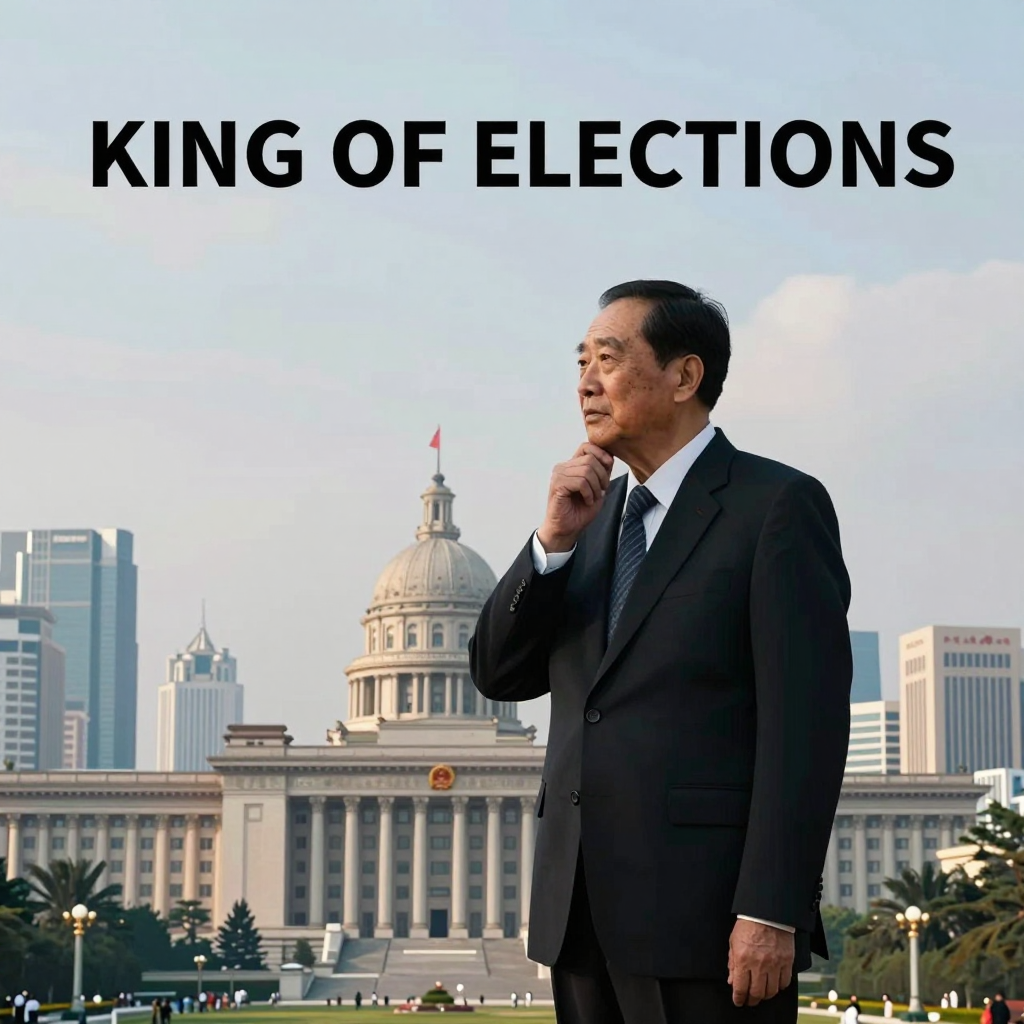
Former Prime Minister Lee Hae-chan in Critical Condition: The Legacy of 50 Years in Korean Politics by the King of Elections
 \n
\n
A Living Witness to Korean Politics, The Beginning of Lee Hae-chan
Lee Hae-chan, who has stood at the heart of Korean politics for over 70 years, how did his story begin?
Born on July 10, 1952, in Cheongyang County, Chungcheongnam-do, Lee Hae-chan is regarded not just as a simple politician but as a living witness to modern Korean political history. His political life is evaluated as having accompanied all the twists and turns of Korean politics—from the turbulent era when the country struggled toward democratization to the current complex political landscape.
From Democratization Movement to Entering Politics
Lee Hae-chan's entry into politics was by no means accidental. Having devoted himself to the democratization movement since the 1970s, he was part of a generation dreaming of national transformation. This conviction and activism bore fruit with his election as the 13th National Assembly member in 1988.
Though Lee’s political debut resembled that of many other activists from the democratization era, the political achievements and influence he demonstrated thereafter made his beginning stand out. Achieving an unprecedented record of seven consecutive terms without ever losing an election, he established himself as a trusted strategist in Korean politics beyond being merely an elected representative.
The Political Trajectory Forged by Lee Hae-chan
Lee Hae-chan’s political career is marked by collaboration with leaders across three different eras. He opened a new chapter in education policy by entering as the first Minister of Education under the People’s Government in 1998 and exhibited strong leadership as the 36th Prime Minister of Korea from 2004 to 2006. Later, as the third leader of the Democratic Party, he took on the role of shaping the future of Korean politics.
His political influence stems not from a simple succession of positions but from his precise judgment and decisiveness at Korea’s critical political turning points, shaping the flow of history. This is why Lee Hae-chan is regarded as an indispensable figure for understanding Korean politics today.
2. The Unbroken Record of Lee Hae-chan’s Seven Consecutive Terms
A seven-term lawmaker who has never lost an election even once—what is the secret behind this extraordinary political career? In Korean political history, such a record is exceedingly rare. Since stepping into politics as a member of the 13th National Assembly in 1988, Lee Hae-chan has maintained his political vitality by winning seven consecutive general elections.
Lee Hae-chan's Parliamentary Activities and Foundation of Political Support
What enabled Lee Hae-chan to avoid defeat in over 30 years of service in the National Assembly? It is far from a mere stroke of luck. The foundation lies in the trust he earned and the deep grassroots support he built through his involvement in the democratization movement since the 1970s.
During his time as a parliamentarian, Lee played a leading role in policy formulation and strategic planning for his party. Particularly, by serving in key government positions such as Minister of Education and Prime Minister across multiple administrations, he solidified his status as a powerful figure in politics. This political influence naturally translated into voters’ unwavering trust during every election.
Accumulation of Political Credibility
Achieving continuous reelection as a lawmaker is impossible without sustained public confidence. Lee Hae-chan has been recognized both for his legitimacy as a democratization activist and his practical competence in government leadership roles. These multifaceted political assets combined to secure voter support consistently.
Notably, as his nickname "King of Elections" suggests, Lee did more than secure his own victories—he also spearheaded overall election strategies for his party. This underscores how pivotal his position was in the National Assembly. Since his personal electoral successes were accompanied by his contributions to the party’s broader triumphs, Lee Hae-chan’s seven-term record is more than a mere individual achievement; it stands as a significant milestone intertwined with the growth of the progressive camp in Korean politics following democratization.
3. Lee Hae-chan, the 'King of Elections': The Kingmaker Behind the Power
From Kim Dae-jung to Moon Jae-in, where does the influence of the secret strategist who created three presidents originate?
One of the most intriguing questions in Korean political history is who truly pulls the strings behind the scenes of power. At the heart of this answer lies Lee Hae-chan. Known in political circles as the 'King of Elections,' Lee transcends the role of a mere politician to become a strategist who has shaped the course of Korean democracy.
The Political Influence of the Kingmaker Who Created Three Presidents
Lee Hae-chan’s influence is proven by numbers. The historic presidential victories in 1997 with Kim Dae-jung, 2002 with Roh Moo-hyun, and 2017 with Moon Jae-in all bear the mark of Lee’s touch. This is no mere coincidence. It is the product of over 40 years of political experience, a vast personal network, and an extraordinary sense of election strategy.
The secret to Lee’s power lies in his diverse political background. Having held various positions such as Minister of Education, Prime Minister, and party leader, Lee gained experience across all facets of politics. This enabled him to build extensive connections not only within his party but also across the executive branch, the National Assembly, and civil society. This network became his greatest asset during presidential elections.
The Role and Strategic Insight of a Kingmaker
Lee Hae-chan’s role as a kingmaker goes beyond merely supporting candidates. His leadership as the Democratic Party’s representative during the 2020 21st general election, which resulted in a historic victory, stands as proof. He has shown a remarkable ability to read political climates, understand public sentiment, and devise strategies tailored to the times.
Moreover, Lee has demonstrated himself not simply as a power seeker but as a devout believer in democracy. His political beginnings in the 1970s, when he engaged in pro-democracy movements, reinforce these convictions. The presidential candidates he backed—Kim Dae-jung’s democratization, Roh Moo-hyun’s reform, and Moon Jae-in’s purge of corrupt elites—all resonated deeply with the spirit of their times, revealing yet another secret behind their electoral success.
Political Reliability as a Seven-Term Lawmaker
The fundamental reason why Lee Hae-chan earned the title 'King of Elections' is his impeccable record as a seven-term lawmaker who has never lost an election. This achievement reflects the trust and support he has from his regional constituents, a foundation without which his political influence could not have flourished.
With over 30 years of experience and credibility in the National Assembly, Lee was positioned to play a pivotal role during political transitions. He secured his place as a mediator capable of bridging factions within his party and as a strategic planner critical to presidential victories.
In Korean politics, the name Lee Hae-chan has become more than that of an individual—it symbolizes political strategy and electoral triumph. How his influence will evolve and reshape the landscape of Korean politics remains a keen subject of interest for many.
4. From a Powerful Leader on the Political Stage to a Health Crisis: The Current Situation of Lee Hae-chan
Lee Hae-chan, a towering figure in Korean politics, has been the 'king of elections' who controlled the flow of power at the center of the political stage for decades. However, his recently deteriorating health has sent unexpected shockwaves through the Korean political arena.
From Strong Influence to Health Crisis
Lee Hae-chan’s political influence is by no means exaggerated. The three presidents he actively supported—Kim Dae-jung, Roh Moo-hyun, and Moon Jae-in—all secured victories in presidential elections under his guidance. During his tenure as Prime Minister, he was known as the 'responsible prime minister,' demonstrating strong policy execution within the Roh administration. As leader of the Democratic Party, he led the historic victory in the 2020 21st general election. His every gesture and word carried enough political weight to sway the course of national affairs.
Changes Triggered by Worsening Health
Recently, Lee Hae-chan faced a health crisis. After undergoing a stent procedure due to a myocardial infarction, he is currently relying on mechanical ventilation in the intensive care unit. This incident is evaluated not merely as a personal medical issue but as an event with potential repercussions for the entire political landscape.
In fact, Lee’s declining health has not been sudden. He was often seen trembling or pausing his speech at official events, and he was hospitalized during the 2020 21st general election due to health deterioration. However, the severity of this acute crisis is unprecedented.
A Possible Turning Point in Korean Politics
This health crisis goes beyond a personal tragedy; it hints at a potential turning point in Korean politics. It highlights the critical role Lee has played as the emblematic strategist and kingmaker throughout parties affiliated with the Democratic bloc. Many eyes are now fixed on how Korean politics will unfold moving forward and how leadership dynamics within the democratic camp might be reshaped.
At present, both the political world and the public are closely watching Lee Hae-chan’s recovery and the possibility of his political comeback.
Section 5. His Legacy Behind the Scenes of History: Lee Hae-chan's Impact on Korean Politics
What is the meaning of Lee Hae-chan’s legacy in Korean politics and its future prospects, after overcoming both a political career and a health crisis? This question prompts us to look beyond a single individual’s health and reconsider the very history of Korean democracy itself.
The Political Trust Supporting Three Presidents
Lee Hae-chan played a pivotal role in three major turning points in Korean political history: the presidential elections of Kim Dae-jung in 1997, Roh Moo-hyun in 2002, and Moon Jae-in in 2017. The nickname “King of Elections” is far from mere flattery; his political decisions shaped the direction of national governance.
Notably, during his tenure as Prime Minister under the Roh Moo-hyun administration, Lee was known as the “Responsible Prime Minister,” highlighting how much Korean politics relied on individual ability and trust. His political influence was not just power but the outcome of enduring credibility built from the democratization movement through to modern politics.
A Symbolic Strategist of the Democratic Party Line
As a seven-term member of the National Assembly who has never lost an election, Lee Hae-chan’s record goes beyond mere victories; it reveals the deep support his political faction commanded among the public.
His historic victory leading the Democratic Party in the 21st National Assembly election in 2020 demonstrated that his political acumen remains potent. His strategic insight and decisiveness have been an emblematic benchmark for the Democratic camp and trace the very evolution of progressive politics in Korea.
Questioning the Future of Politics Amid Health Crisis
Lee Hae-chan’s recent health deterioration has sent shockwaves through the Korean political sphere. His admission to intensive care following a myocardial infarction was seen as more than a medical emergency—it was an event that could influence the entire political landscape. This paradoxically underscores how much Korean politics still depends heavily on certain key figures.
Legacy as a Political Leader
Lee’s political legacy can be assessed on multiple levels. Institutionally, the policies he implemented as Minister of Education laid the groundwork for Korean education, and his administrative skills as Prime Minister contributed to governmental stability.
More importantly, his symbolic heritage stands out. Lee has been a bridge linking the democratization movement with contemporary politics. His political career itself represents the development of Korean democracy, and his relationship with three presidents serves as living history of how generational transition and power transfer have unfolded in Korean politics.
Looking Ahead
Regardless of Lee Hae-chan’s current health condition, his imprint on Korean politics will remain unchanged. The crucial question is how his political philosophy and strategies will be inherited by the next generation.
Structural challenges faced by Democratic Party factions—generational change, overcoming regionalism, and realizing inclusive politics—were precisely the issues Lee confronted head-on. His experience and insight continue to be invaluable assets to today’s political leaders.
Ultimately, Lee Hae-chan exemplifies both how deeply Korean politics has depended on individual leaders and paradoxically underscores the urgent need for institutionalized, democratized political systems. His legacy is not merely past glory, but a profound opportunity to reflect on the future direction Korean politics must take.
Comments
Post a Comment