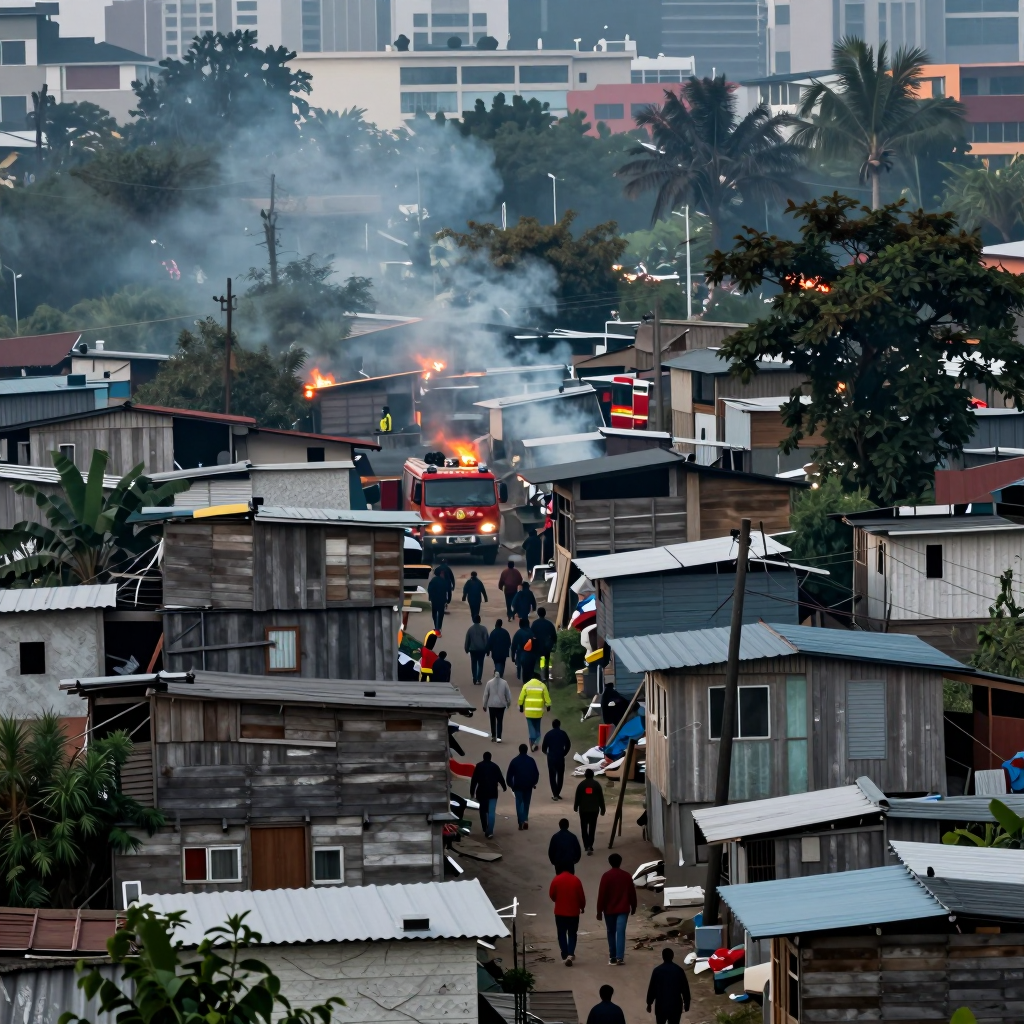
The Hidden Village of Gangnam, Seoul: The Secret of Guryong Village
Did you know there is a place where time seems to have stopped, nestled among the sleek skyscrapers and luxury apartment complexes of Gangnam-gu, Seoul? It’s called Guryong Village. Made up of temporary buildings constructed with plywood and styrofoam, this area reveals another side of Seoul.
What Kind of Place is Guryong Village?
Located in Gaepo-dong, Gangnam District, Guryong Village is a densely populated residential area. Despite the waves of urban development, this place has preserved its form for a long time and exhibits the characteristics of an unauthorized shantytown. Throughout the village, you can find traces of the lives of urban working-class people.
The most striking feature is the crowded houses lining narrow alleys. The buildings clinging tightly to one another within labyrinthine alleys create a landscape unique to Guryong Village. But this dense structure means much more than just a visual spectacle.
Why Should Guryong Village Draw Our Attention?
The existence of this village symbolizes inequality and the darker shadows of urban development within a modern city. That a shantytown made up of temporary buildings still exists in the heart of Seoul raises powerful questions about what our society must do to truly embrace everyone.
Guryong Village is far more than just a collection of old buildings. It is home to real residents living their daily lives, a community thriving within. Understanding this village is, therefore, akin to gaining a deeper, more profound understanding of the city we live in.
2. The Danger Brought by Narrow Lanes: Urban Disaster Rescue Challenges in Guryong Village
Narrow alleys that allow no room for error—what is the worst-case scenario that could unfold in a place where even fire trucks cannot enter?
Guryong Village, a densely populated residential area located in Gaepo-dong, Gangnam-gu, Seoul, is extremely vulnerable to urban disasters due to its structural characteristics. The root of the problem lies in its nature as an unauthorized shantytown, with temporary buildings made of plywood and styrofoam packed tightly together.
Physical Barriers Hindering Disaster Response
The biggest issue in Guryong Village is the structural feature of houses densely packed along narrow lanes. This is more than a mere traffic inconvenience; it triggers severe urban disaster challenges that directly threaten lives.
Difficulty for fire trucks to access the area delays initial firefighting response times. Such delays can turn a small spark into a massive blaze in moments. In Guryong’s narrow alleys, the time it takes for firefighters to reach the scene is inevitably much longer than in typical residential neighborhoods.
The Risk of Chain-Reaction Spread
Another grave concern in Guryong Village is the potential for rapid chain-reaction fire spread. Due to the tightly clustered buildings made from highly flammable materials like plywood and styrofoam, fire originating in one spot can quickly engulf neighboring structures.
This was tragically demonstrated in the early dawn of January 16, 2026. A fire started in an empty house near the community center in Section 4 of Guryong Village. Because early containment was difficult, the response level escalated from Stage 1 to Stage 2, and eventually the fire spread to nearby hills and neighborhood parks.
Complexities of Evacuation and Rescue
The narrow lane layout also presents serious challenges during evacuation. Residents must evacuate quickly through escape routes, but Guryong’s complex, tight alleys make even this a formidable task.
Fortunately, during the 2026 fire, all 47 residents across 32 households safely evacuated. This outcome was only possible due to prompt evacuation orders and a bit of luck. Had the timing or circumstances been slightly different, the results could have been disastrous.
Limits of the Urban Disaster Response System
In the 2026 fire, 708 personnel and 92 pieces of equipment were mobilized—numbers that underscore the severity of urban disasters in Guryong Village. This represents a resource demand far exceeding typical firefighting efforts.
The structural problems that Guryong Village faces are far from easy to solve. Widening the narrow alleys is nearly impossible, and demolishing all illegal buildings at once is unfeasible. Consequently, Guryong Village remains a prime example of a vulnerable urban area where fundamental structural improvements must precede any potential disaster.
Section 3: The Nightmare of January 2026 – A Mysterious Fire Erupts
At 5 a.m., flames like piercing screams shattered the quiet of Seoul. An inexplicable fire swept through Guryeong Village in Gaepo-dong, Gangnam District, throwing 100 residents into utter panic in an instant. What on earth triggered this crisis in the neighborhood?
The Fire That Struck Guryeong Village
Around 5 a.m. on January 16, 2026, a sudden blaze ignited in a vacant house near the community center of Guryeong Village’s Zone 4. The flames spread unexpectedly fast, prompting initial response teams to rush efforts to extinguish the fire. Yet, the situation deteriorated rapidly. What started as a level 1 response escalated swiftly to level 2 as containment became impossible and the inferno relentlessly expanded.
Spreading Flames Expose Guryeong Village’s Structural Weaknesses
Why did Guryeong Village become the scene of such a massive disaster? The answer lies in the neighborhood’s fundamental characteristics. This unauthorized shantytown is densely packed with houses crammed along narrow alleys, constructed from plywood and styrofoam. Such fragile, combustible materials accelerated the fire’s spread dramatically.
Narrow lanes inaccessible to fire trucks and vulnerable building materials turned this blaze into an uncontrollable catastrophe. Eventually, the fire engulfed the hilly terrains of Guryeongsan and Daemosan mountains and even the nearby Gaepo Neighborhood Park—transforming a simple house fire into a widespread calamity.
The Scale of Response Reveals the Fire’s Severity
The true gravity of the fire is underscored by the massive deployment of personnel and equipment: an astonishing 708 responders and 92 vehicles rushed to the scene. Thankfully, 100 residents—including 47 from 32 households in Guryeong Village’s Zone 4 and nearby inhabitants—were evacuated swiftly with no loss of life. Temporary shelters sprang up at Guryeong Middle School and local hotels to house the displaced.
This incident starkly highlights just how vulnerable urban low-income housing areas are to devastating fires.
Section 4. There Is No Disaster Without a Miracle: The Untold Story Behind the Safe Evacuation of All Residents in Guryong Village and the Swift Response
What was the secret behind the safe evacuation of all 47 residents? In the early hours of January 16, 2026, a fire broke out in Guryong Village, Gaepo-dong, Gangnam-gu, Seoul, leaving a deep impression on many. When we dive into the scene of a large-scale firefighting operation involving over 700 personnel and more than 90 pieces of equipment, what valuable lessons can we learn?
Overcoming Guryong Village’s Harsh Conditions
Guryong Village is an unauthorized shantytown with temporary buildings made of plywood and styrofoam, packed tightly along narrow alleys. This structural characteristic makes it difficult for fire trucks to enter and complicates evacuation and firefighting efforts.
Yet, despite these challenges, all residents across 32 households in District 4 were safely evacuated thanks to a rapid initial response system supported by ample resource mobilization. When initial efforts to extinguish the fire proved difficult, the operational level was swiftly raised from Level 1 to Level 2, enabling a more aggressive and decisive approach that played a critical role.
Life-Saving Operations Carried Out Through Large-Scale Deployment
A total of 708 firefighting personnel and 92 pieces of equipment were deployed to Guryong Village. Beyond mere numbers, this reflects how systematically and quickly the response was carried out despite the narrow streets and densely packed building structures.
Simultaneous multi-front operations were conducted not only to ensure the residents’ safe evacuation but also to prevent the flames from spreading to the nearby hills and neighborhood parks. Thanks to this massive firefighting operation, casualties were completely prevented.
A Dense Safety Network and a Swift Evacuation System
The safe evacuation of all 47 residents in District 4 of Guryong Village was also made possible by pre-arranged temporary shelters. Swift arrangements were made for evacuation sites at nearby Guryong Middle School and local hotels, allowing residents to evacuate to secure environments.
This demonstrated a systematic response that goes beyond simply saving lives during a disaster—it also considers the living conditions and stability of evacuees.
Miracles Stem from Prepared Systems
The fact that there were no casualties in the Guryong Village fire was no miracle but the outcome of thorough preparation, swift decision-making, and tireless efforts on the ground.
Shattering the stereotype of structurally vulnerable areas, this incident clearly proved that with sufficient resources and a rapid response system, all residents can be safeguarded. This stands as the greatest success story in disaster response and sets the course for future disaster prevention policies.
Section 5. The Lesson Guryong Village Left Us: Disaster Preparedness and the Future of Urban Safety
The Guryong Village fire incident in January 2026 went beyond being a mere disaster; it posed crucial questions to our society. Despite mobilizing 708 firefighters and 92 pieces of equipment, why was early containment so challenging? And how should we build safety nets for dense residential areas like shantytowns going forward?
The Urban Safety Vulnerabilities Revealed by Guryong Village
The structural issues of Guryong Village sharply expose the shadows of modern cities. This area, filled with temporary buildings made of plywood and styrofoam tightly packed along narrow alleys, creates an environment where fire trucks struggle to even gain access during fires. Once flames ignite, a vicious cycle ensues as fire spreads to nearby hills and neighborhood parks.
Fortunately, there were no casualties in this incident thanks to swift evacuation and response systems. However, this alone is not enough. Communities like Guryong Village exist across the nation.
Disaster Preparedness Requires Fundamental Change Now
The lessons from Guryong Village are clear. First, urgent improvements to the basic infrastructure in densely populated residential areas are critical. This includes securing minimum roads accessible to fire trucks, expanding emergency evacuation routes, and strengthening safety standards for building materials.
Second, tailored disaster preparedness systems are essential. For areas like Guryong Village with poor accessibility, self-response teams equipped with early containment abilities and real-time monitoring systems must be established.
Third, reinforcing resident education and fostering a community safety culture are indispensable. The rapid evacuation was possible only because of regular drills and residents’ cooperation.
Our Commitment to the Future of Urban Safety
The Guryong Village fire offers profound insights: urban safety cannot rely solely on the latest technology or large numbers of personnel. What’s needed is the resolve to confront vulnerable areas head-on and collaborate with local residents to develop long-term solutions.
As the government, local authorities, and communities join forces to safeguard areas like Guryong Village, our society’s urban safety will truly advance to the next level. How we tackle the challenges left by this incident will determine the safety of all our futures.
Comments
Post a Comment