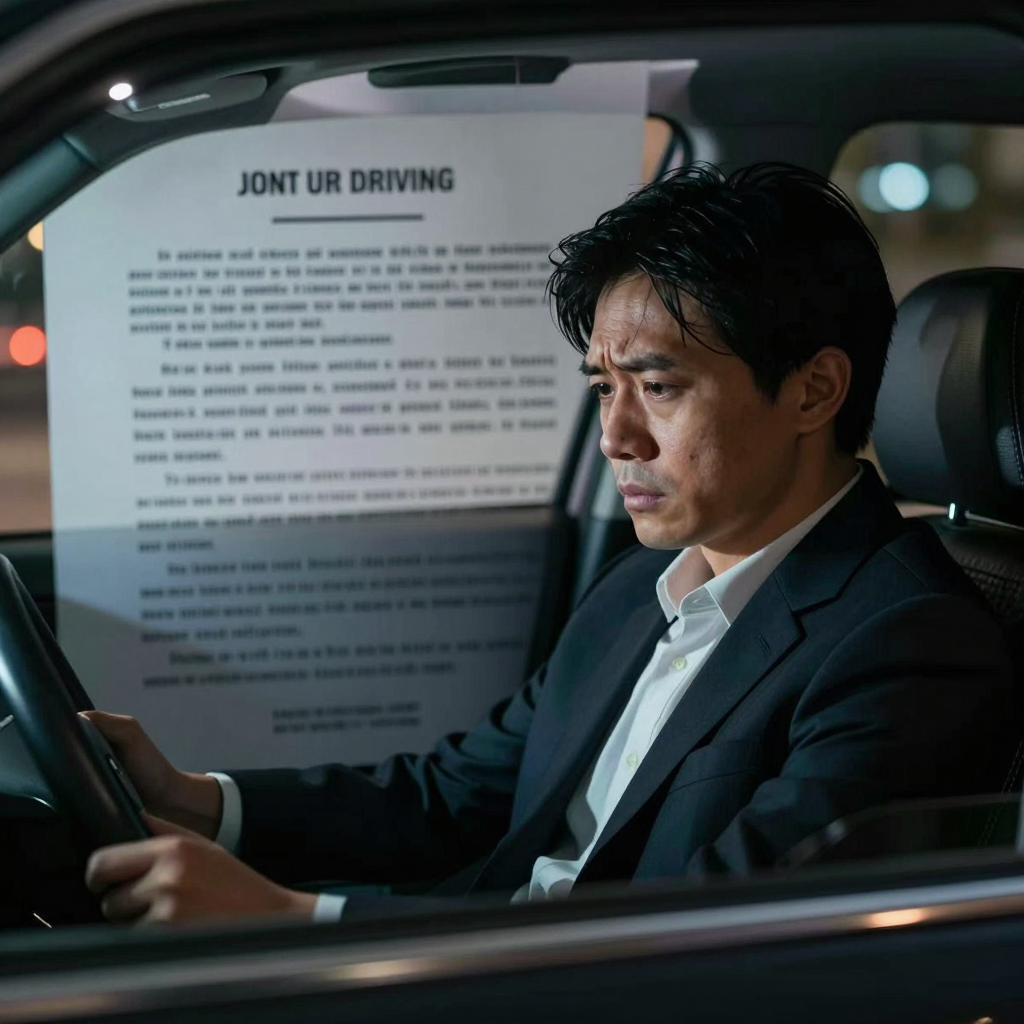
1. Seonggeun Lim’s Shocking Confession: What Is the Truth?
Seonggeun Lim, the star chef of Netflix’s variety show "Black and White Chef 2," made a shocking confession on his YouTube channel on the 18th. The beloved chef admitted to being caught driving under the influence three times over a period of ten years. However, behind this confession lies serious inconsistencies with court rulings, a suspiciously calculated timing, and lingering doubts about its sincerity.
The Contents of Chef Seonggeun Lim’s Drunk Driving Confession
In his YouTube video, Lim acknowledged, “I drove under the influence about three times over ten years,” admitting to past mistakes. Official records show that his DUI incidents occurred in 2009, 2017, and January 2020. The most severe was the January 15, 2020 incident in Guro-gu, Seoul, where Lim was caught driving himself approximately 200 meters around 6:15 a.m. while intoxicated.
Clear Discrepancies Between the Court Ruling and the Confession
What makes the issue even more problematic is the vast difference between the court’s ruling and Lim’s confession. According to the court documents, his blood alcohol concentration was 0.141%, nearly twice the license cancellation threshold of 0.08%, indicating a state of severe intoxication. The court sentenced him on July 16, 2020, to one year in prison suspended for two years, 80 hours of community service, and 40 hours of obey-the-law driving lectures.
Yet, in his YouTube video, Lim’s explanation starkly contrasts with these facts. He focused mainly on the ignition status, claiming, “I was asleep inside the car after drinking, and the police started the engine and asked why I was sitting there.” However, the court ruling explicitly states that he actually drove about 200 meters, which is a completely different situation than merely sitting in a vehicle with the engine on. The omission of the crucial fact that he physically drove the car sparked controversy.
Calculated Timing: Controversy Over Preemptive Disclosure
Another factor intensifying criticism is the timing of his confession. Media outlets requested a clarification of Lim’s DUI record on the 17th and arranged to meet him on the 20th. Yet, Lim released his confession video on the evening of the 18th, preempting the media coverage. This timing was widely criticized as a “calculated move to get ahead of the press.” Rather than a sincere facing of the issue, the confession appeared to be a preemptive attempt at managing public opinion.
Lack of Sincerity: Conclusion
Lim’s DUI cases reveal issues deeper than a mere acknowledgment of past mistakes. Considering the contradictions with court documentation, the calculated timing ahead of media reports, and even potential links to alcohol advertising, doubts remain about the true sincerity of his apology. While it is commendable for a public figure to admit wrongdoing, distorting or concealing the truth in the process only erodes trust even further.
2. The Harsh Reality Reflected in the Verdict: Legal Judgment on Im Seong-geun’s Drunk Driving Case
A drunk driving case with a blood alcohol concentration of 0.141%, nearly double the legal limit for license cancellation. The court’s judgment was exceptionally strict. So, what differences exist between Im Seong-geun’s confession in his YouTube video and the actual verdict?
The Situation at the Time of Arrest as Recorded by the Court
At 6:15 a.m. on January 15, 2020, Im Seong-geun was caught by police on a road in Guro-gu, Seoul—not merely "sleeping in the car with the engine running" as he claimed. According to the verdict, he drove approximately 200 meters himself, a fact objectively stated in the court records.
What made the case even more serious was his mental state. His blood alcohol concentration measured 0.141% at the time of arrest, well over the 0.08% license cancellation standard under the Road Traffic Act. Medically, this level indicates complete intoxication, clearly demonstrating a dangerous loss of normal driving ability.
The Court’s Strict Judgment and Sentencing
In the ruling on July 16, 2020, the court did not treat Im Seong-geun’s drunk driving lightly. The verdict included:
- One year imprisonment with a two-year probation period
- 80 hours of community service
- 40 hours of attendance in a law-abiding driving lecture
This sentence went beyond simple fines, originally imposing imprisonment but then converting it to probation. This means the court judged the incident as a seriously grave crime, not a minor violation.
Discrepancy Between Confession and Verdict
The problem arises here. In his YouTube confession, Im Seong-geun focused on explaining that “after drinking, I was sleeping inside the car when the police started the engine and asked why I was sitting there.” However, the fact of actually driving about 200 meters stated in the official verdict was never mentioned in his video.
This is not just a difference in wording. The distinction between actually driving and merely sleeping in the car carries vastly different implications for assessing the severity of the incident. The police arrest and court ruling clearly prove how dangerous Im Seong-geun’s drunk driving really was.
Discrepancy That Casts Doubts on Sincerity
The court records show a clear pattern with Im Seong-geun being caught drunk driving three times (in 2009, 2017, and 2020). Yet presenting an explanation for the most serious 2020 incident that diverges from the actual verdict raises questions about credibility.
The stern reality recorded by the court suggests that Im Seong-geun’s simple confession alone cannot complete his apology. The verdict’s content reveals this was not a mere “mistake” but a serious violation demanding social responsibility.
Suspicions Raised by the Timing of the Confession and the Calculated Strategy Behind Lim Sung-geun’s Drunk Driving Incident
A confession video released before any media reports. Is it a simple apology, or a meticulously planned move to preempt the news? Doubts flood in.
The Timing Between Media Reports and YouTube Disclosure
Following the timeline of events reveals a clearer intention. On the 17th, the media requested an explanation regarding chef Lim Sung-geun’s drunk driving record, scheduling a meeting for the 20th. Yet, Lim uploaded his confession video to his YouTube channel ‘Lim Sung-geun LimJjangTV’ on the evening of the 18th—two days before the official media inquiry.
This cannot be seen as mere voluntary remorse but rather a clear effort to control the narrative before the report is published. If it were a genuine apology, Lim would have responded sincerely to the media’s questions and explained transparently alongside them. However, his confession reads like a strategic move to preemptively manage information within his own sphere before the story breaks in the press.
A “Preemptive Strike” Communication Strategy
Public relations experts call this a classic example of “news preemption.” In other words, by releasing information on his own channels before negative media coverage can appear, Lim is attempting to seize control of public opinion formation.
The core of this strategy lies in controlling the storytelling. If Lim explains first, the media’s coverage inevitably becomes a process of verifying “what he has already confessed.” He assumes the role of protagonist while the media merely reacts. However, this calculated approach paradoxically undermines the impression of a sincere apology.
The Confession’s Incompleteness Deepens Suspicion
What worsens the problem is that the confession video downplays the seriousness of Lim’s drunk driving. He focused on saying he "was sleeping in the car after drinking," yet the court ruling clearly states he actually drove about 200 meters.
If true reflection and apology had been the goal, he should have acknowledged the full extent of his actions. Instead, by minimizing the most serious 2020 incident and offering an explanation that diverges from the court’s findings, it’s hard to escape the suspicion of deliberate manipulation of public opinion.
Collapse of Credibility
The suspicious timing combined with the discrepancies in content make it difficult for the public to find sincerity in Lim’s confession. This is precisely why critics call it a “calculated act to preempt media coverage.”
A confession should be a responsible act, but once it is perceived as mere image management, all words lose credibility. The controversy surrounding Lim Sung-geun’s drunk driving confession stems less from the facts themselves and more from the dishonest way in which those facts were confronted.
The Contradiction Between Im Seong-geun’s Drunk Driving and Whiskey Advertisement Sponsorship That Fueled the Morality Controversy
Why has public outrage grown even stronger over Im Seong-geun, who admitted to drunk driving yet appeared in whiskey commercials until recently? The answer lies in the lack of moral consistency.
The Controversy Over Sponsorship of Whiskey Brand Advertisements
Im Seong-geun’s admission of drunk driving was not simply dismissed as a past mistake. The primary reason is that he was found to have appeared in alcohol advertisements until shortly before revealing his drunk driving incident.
Serving as a model for the famous whiskey brand ‘Balvenie,’ Im Seong-geun took down the commercials following his confession. However, this reaction only fueled more questions. The core issue itself is that someone involved in such a serious legal and moral issue as drunk driving was the face of an alcohol product.
Delivering Inconsistent Messages
In his confession video, Im Seong-geun clearly stated, “Drunk driving is an unforgivable mistake under any circumstances.” However, this statement directly contradicted the whiskey ads he was starring in just a short time earlier.
This contradiction is the crux of the criticism surrounding the Im Seong-geun drunk driving case. Emphasizing how dangerous and wrong drunk driving is, while simultaneously participating in alcohol advertisements that positively market drinking culture, presents a blatant logical inconsistency.
Public Trust Shattered
This moral inconsistency has severely damaged public trust in Im Seong-geun. If genuine reflection and remorse over this legal and ethical issue existed, avoiding participation in alcohol-related advertisements would have been the bare minimum.
Especially given that alcohol ads carry not just commercial but also social responsibility, having someone with a history of drunk driving as the face of such products poses inevitable problems from both public health and moral perspectives.
Suspicions of Calculated Image Management
Ultimately, what the incident reveals is that Im Seong-geun’s drunk driving confession may not have been a simple voluntary act of remorse but rather a form of calculated image management. The timing of his confession before media reports, inconsistencies with the court ruling, and the subsequent removal of his ads are seen as strategic moves aimed at damage control.
Confessions and apologies lacking moral consistency backfire, causing a loss of trust instead. This is the fundamental reason why the Im Seong-geun drunk driving case has escalated beyond a mere legal issue into a heated morality debate.
Beyond the Authenticity Debate: The Lessons the Im Sung-geun Drunk Driving Incident Teaches Us
Where does true sincerity lie within an apology? Looking into the ripple effects caused by Im Sung-geun’s drunk driving controversy, we see deeper questions our society faces—far beyond the faults of a single celebrity.
Between Apology and Reflection
The moment Im Sung-geun stated in a YouTube video that “drunk driving is an unforgivable mistake, no matter the reason,” many hoped this was a genuine sign of remorse. Yet the discrepancy between court judgments and his confessions, along with the carefully timed disclosure just before media exposure, cast a profound shadow over the apology’s authenticity.
This begs a clear question: What defines a true apology? Is it enough to simply admit past wrongdoing, or does transparency and consistency throughout the process matter even more?
Incident Management vs. Genuine Reflection
The real issue lies not merely in the wrongdoing itself, but in how it was confronted. From the preemptive announcement, to the omission of key facts, and even the subsequent withdrawal from alcohol advertising—the entire sequence feels like ‘incident management.’
True reflection begins with embracing discomfort. Trust is built when one honestly answers public inquiries, fully acknowledges mistakes, and refrains from any strategic calculation. Im Sung-geun’s case reminds us of this essential truth.
Rethinking Public Figures’ Responsibility
Especially as a beloved celebrity chef, his influence carries weighty responsibility. The repeated choice to drink and drive despite knowing the risks, alongside involvement in alcohol ads, suggests a lack of full awareness about the power he wields.
Public figures can err, but how they confront their mistakes reveals their true character.
What We Must Remember
The greatest lesson from Im Sung-geun’s drunk driving controversy is this: the value of transparency can never be undermined.
For society’s leaders acknowledging past faults—and for us evaluating such confessions—authenticity must remain paramount. Glossed-over explanations, strategic revelations, and calculated apologies ultimately breed deeper distrust.
The public does not demand perfection. What is wanted is the courage to face one’s faults honestly, without playing linguistic games. The most precious takeaway from this incident is that only such sincerity can truly initiate forgiveness and growth.
Comments
Post a Comment