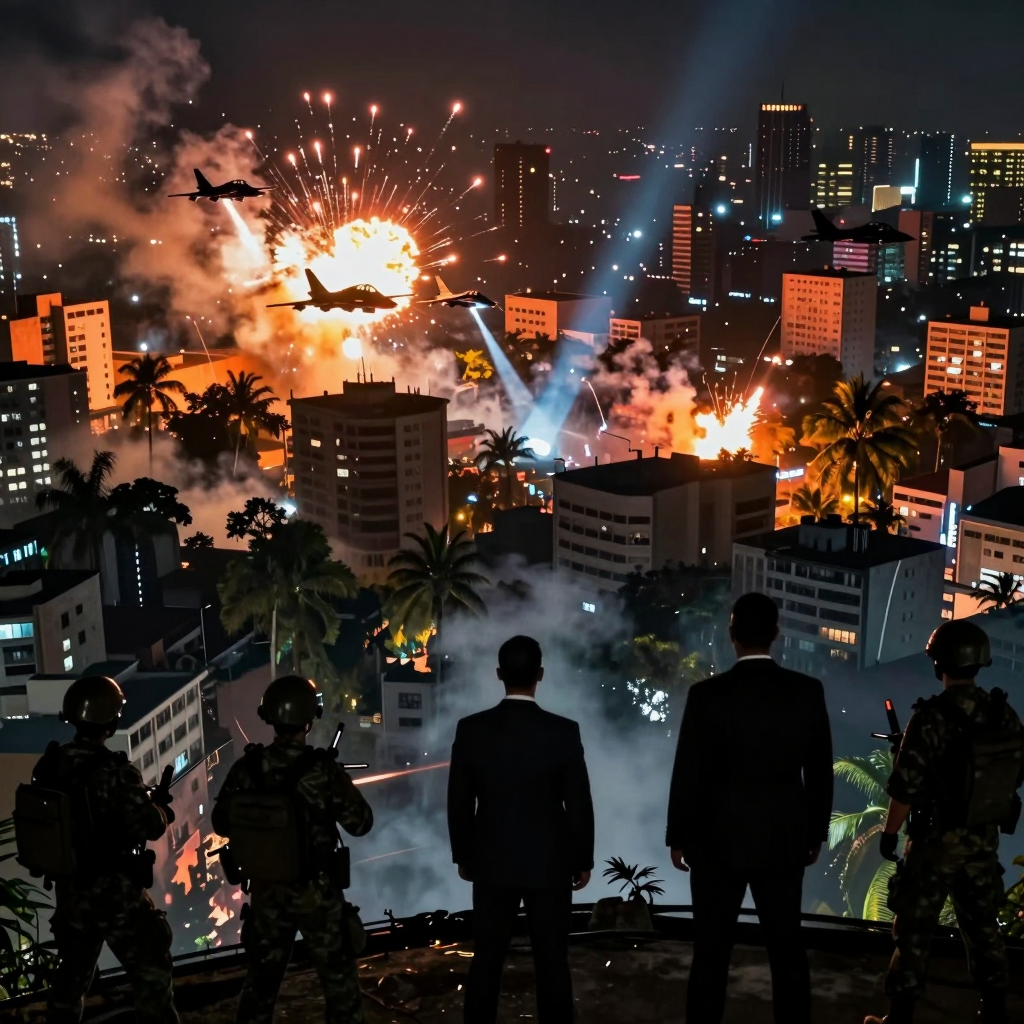
The Shocking Massive US Airstrike: Why Was Venezuela Targeted?
A historic event unfolded as the United States launched a large-scale military operation in Caracas, Venezuela, capturing President Nicolás Maduro and his wife. Did this really happen? For decades, it has been exceedingly rare in international diplomacy for a sitting head of state to be arrested on their home soil by foreign troops and extradited. Since Manuel Noriega's capture during the 1990 Panama invasion, this incident marks the first of its kind in 36 years, prompting a closer look into its background.
The Beginning of the Venezuelan Crisis: Explosions at Dawn
In early 2026, Venezuela was rocked by a sudden military assault by the United States. Around 2 a.m., at least seven explosions were reported throughout Venezuela, including Caracas and the states of Miranda, Aragua, and La Guaira. Then-US President Donald Trump announced via social media, "The U.S. military has successfully completed a massive strike on Venezuela, capturing President Nicolás Maduro and his wife and transporting them out of the country."
The most remarkable aspect of the operation was that no American casualties were reported. This underscores how meticulously planned and efficiently executed the mission was.
A Prolonged Shadow War: The Hidden Pressure Building Up
This large-scale airstrike did not come out of nowhere. The U.S. had been steadily intensifying pressure on Venezuela through irregular warfare tactics.
Since September last year, American forces have destroyed at least 30 ships suspected of drug trafficking in the Caribbean and Eastern Pacific. In early last month, sanctions-targeted tankers traveling to and from Venezuela were blocked, and reports surfaced that the CIA conducted a drone strike on a Venezuelan coastal facility in early November. These actions are widely interpreted as attempts to suffocate Venezuela’s economy and undermine Maduro’s control.
Urgent International Reactions
The Venezuelan government immediately declared a state of emergency and activated all national defense plans. Maduro's regime condemned the U.S. operation as "a severe military invasion," announcing intentions to appeal to the UN Security Council and international bodies.
Neighboring Colombia, now a member of the UN Security Council, called for an immediate session, demanding the enforcement of international law against what it termed "an act of aggression against Venezuela." This reflects the international community’s grave concern over how the arrest of a sitting national leader crosses boundaries of international law and sovereign rights.
2. The Explosion That Shook the Dawn: The Story of a Meticulous, Bloodless Operation
Around 2 a.m., explosions echoed through the skies of Venezuela. At least seven blasts were observed across various regions including Caracas, Miranda, Aragua, and La Guaira. Naturally, such a combat operation would lead one to expect casualties and damage. Yet, astonishingly, the U.S. side announced that not a single American casualty occurred. What, then, is the secret behind this successful mission?
A Bloodless Operation Born of Precision and Thorough Preparation
U.S. President Donald Trump declared via social media, "The U.S. military has successfully completed a large-scale strike against Venezuela." What makes this operation noteworthy is not just its scale. The fact that no American casualties were sustained while striking Venezuela clearly demonstrates how meticulously this mission was planned and executed.
This bloodless mission is interpreted as the result of accurate intelligence gathering, the use of precise military technology, and thorough operational planning. Achieving the key objective—the capture of President Maduro and his wife—while safeguarding their own troops signifies a high level of execution in modern military operations.
Preparatory Work Prior to the Mission
This large-scale military operation did not emerge out of nowhere. Since September last year, the U.S. had already destroyed at least 30 vessels suspected of drug smuggling in the Caribbean and the Eastern Pacific. Additionally, earlier last month, sanctions-targeted oil tankers traveling to and from Venezuela faced blockades. Reports also surfaced of CIA drone attacks on facilities along Venezuela’s coast in early November.
These unconventional pressure tactics were not mere isolated operations but strategic measures aimed at gathering intelligence and weakening Venezuela’s defensive capabilities ahead of a larger military intervention. This gradual preparatory process ultimately paved the way for the mission’s successful outcome.
A New Paradigm in Modern Military Operations
This operation against Venezuela was not merely about physical strikes. It was a case study in a comprehensive approach combining information warfare, economic pressure, and decisive military action. The bloodless nature of the mission stands as a testament to how effectively this multilayered strategy was executed.
It signifies that modern military interventions are no longer defined by brute force alone but by a fusion of information superiority, technological dominance, and strategic patience. The results in Venezuela may well serve as a model for future international military interventions.
Arrest of a Sitting Venezuelan Leader on Home Soil for the First Time in 36 Years, and the International Community’s Reaction
It is the first time in 36 years that a sitting president has been arrested by U.S. forces on their own territory. How has the international community responded to this historic event?
Comparison with Historical Precedents
The arrest of Venezuelan President Nicolás Maduro by U.S. troops in Caracas and his subsequent extradition marks the first occurrence of such an event since Manuel Noriega was captured during the 1990 Panama invasion. This underscores just how rare it is for an active national leader to be apprehended on their own soil through direct U.S. military intervention.
Concerns and Responses from International Organizations
The international community reacted immediately to this incident. Colombia, Venezuela’s neighboring country, urged for an immediate emergency session of the UN Security Council in its capacity as a new member. Colombia strongly asserted that "international law must be applied to the invasion act against Venezuela," highlighting potential violations of international law.
Venezuela’s Intention to Appeal Internationally
The Venezuelan government condemned the U.S. action as a "very serious military invasion." Maduro’s administration announced plans to bring the case before the UN Security Council and other international bodies, declared a national state of emergency, and ordered the activation of all national defense plans.
Significance Under International Law and the Importance of Precedent
This event vividly highlights the sensitivity of issues surrounding sovereignty and self-determination on the international political stage. Coming 36 years after the Panama invasion, this case sends a powerful message to the global community and is expected to trigger intense debates over adherence to international law.
Section 4. The Ever-Persistent Prelude of Tension: What Happened in Venezuela Before This Airstrike?
This military action did not come out of nowhere. How did the irregular warfare and pressure from the United States, which have been ongoing since last year, escalate?
The U.S.'s Gradual Pressure on Venezuela
The current crisis facing Venezuela did not erupt overnight. The United States has systematically intensified its pressure on Venezuela through irregular warfare over a long period. Like a thermometer's rising scale, the U.S.'s military threat toward Venezuela has gradually intensified step by step.
Strengthening Naval Operations in the Caribbean
The U.S. military's pressure became more pronounced starting in September last year. From that time, the U.S. forces began full-scale operations in the Caribbean Sea and the Eastern Pacific. They sank at least 30 vessels suspected of drug smuggling, establishing control over waters linked to Venezuela through maritime operations. This series of naval actions goes beyond mere cleanup; it represents a strategy to tighten a military noose around Venezuela.
Economic Blockade and CIA Activities
The naval operations were just one facet. Early last month, the U.S. imposed blockade measures on sanctioned oil tankers traveling to and from Venezuela. This was a calculated strategy to weaken Venezuela’s national power through economic pressure. Even more direct involvement came from the CIA. Reports surfaced in early November that the CIA conducted a drone strike on a facility along Venezuela’s coast.
Accumulated Tensions Explode
These measures were far from isolated incidents. The naval operations, economic blockades, and CIA drone attacks formed part of a deliberate, stepwise, and systematic U.S. pressure campaign against Venezuela. Ultimately, this steady build-up of tension culminated in a large-scale airstrike, leading to the unprecedented situation of the incumbent national leader being forcibly removed abroad. The crisis Venezuela currently faces is the extreme manifestation of prolonged U.S. pressure unfolding over time.
Venezuela’s Critical Response and the Future of International Legal Disputes
As President Nicolás Maduro declares a state of emergency in Venezuela, how will the escalating conflict with the United States unfold? What transformations might arise within the international community and legal responses? These questions stand at the heart of determining the trajectory of the ongoing international dispute.
Venezuela’s Urgent Response System
In the wake of U.S. military operations, Venezuela acted swiftly. President Maduro declared a state of emergency and ordered the activation of all national defense plans, clearly signaling the gravity with which the Venezuelan government views this crisis. Mobilizing a national emergency system is a comprehensive strategy aimed not only at strengthening defense capabilities but also at securing domestic stability and uniting the citizenry.
Formation of the International Legal Dispute Framework
The Venezuelan government has condemned the incident as a “grave military invasion” and announced plans to bring the matter before the United Nations Security Council and other international organizations. This move goes beyond mere diplomatic protest, representing a declaration of intent to seek resolution through international legal channels. Particularly telling is neighboring Colombia’s call, as a new member of the UN Security Council, for an immediate meeting and insistence on applying international law to Venezuela’s alleged aggression—highlighting the acute divisions within the global community.
Polarized Reactions from the International Community
The arrest and extraterritorial transfer of a sitting national leader by foreign military forces is an event not seen since the Panama invasion in 1990—36 years ago. This incident underscores how fragile the boundaries of sovereignty and international law have become in the modern global order, inevitably sparking wide-ranging debates and divergent views worldwide. The clash between the military might of powerful states and the sovereignty of smaller nations leaves ample room for differing interpretations of international law.
Outlook and Challenges Ahead
The outcome of Venezuela’s international legal challenge remains uncertain. The interplay of interests among major powers within the UN Security Council, the solidarity among Latin American countries, and the broader global political landscape will all shape the results. Venezuela’s urgent crisis raises profound questions regarding the effectiveness of international law, the scope of national sovereignty, and the foundational structure of a world order centered on powerful nations.
Comments
Post a Comment