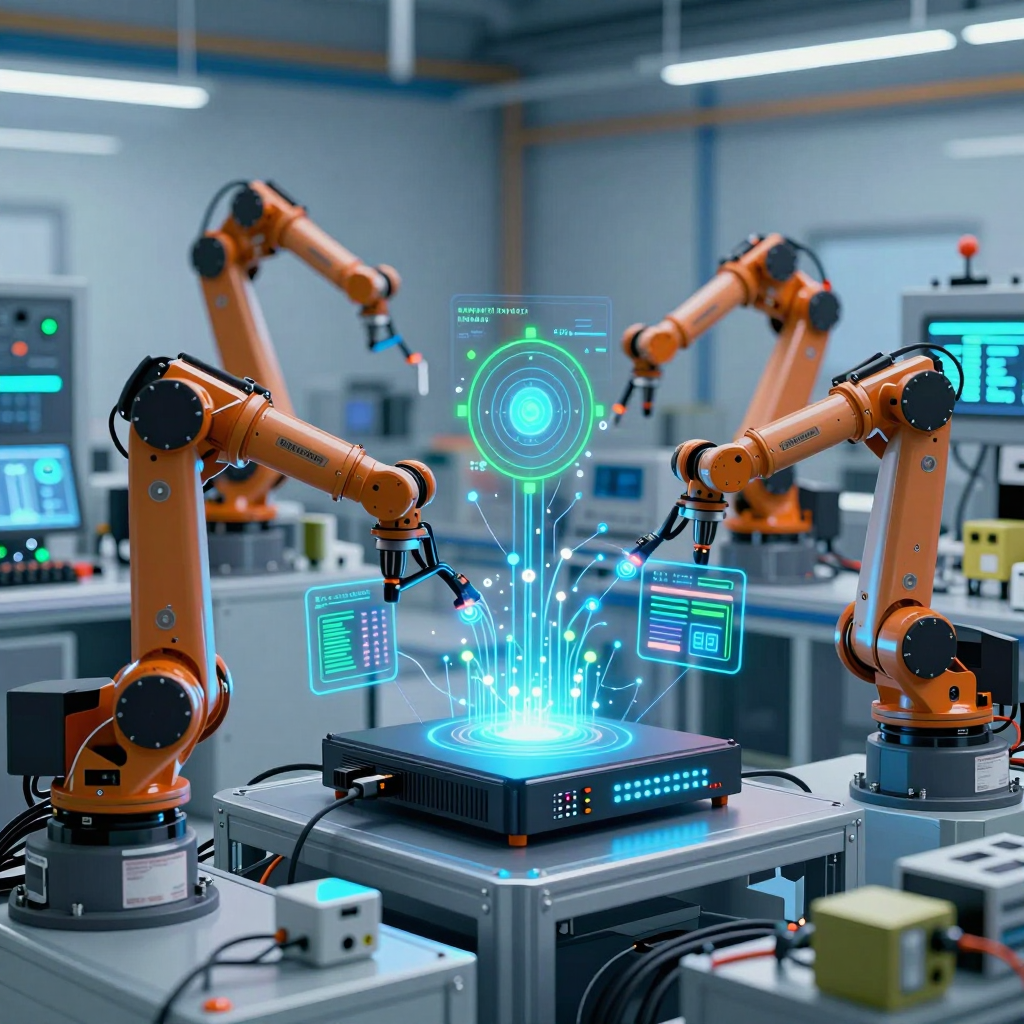
The Dawn of the IoT Revolution: How Edge Computing and Routers Are Transforming the World
The era when the cloud was everything is over. How is the technology of "edge computing," which processes sensor data instantly, shaking up the future of smart societies?
Over the past few years, the IoT industry has evolved around cloud-centric architectures. The standard method was to send all data collected from sensors to cloud platforms for analysis. But as of 2026, this structure is undergoing fundamental change. IoT edge routers and edge computing are injecting intelligence at the network’s edge—the boundary between devices and the cloud—going far beyond the traditional concept of simple networking devices.
Why IoT Edge Routers Are Essential
The limitations of traditional IoT systems are clear. Sending all data to the cloud causes latency, wastes network bandwidth, and if the cloud connection is disrupted, the entire system can grind to a halt. These problems are especially critical in industrial environments where real-time responsiveness is a must.
Edge computing is the solution to these issues. When an IoT edge router analyzes sensor data immediately at the device level, decision-making speeds skyrocket. There’s no longer any need to wait for the cloud's response.
The Core Roles of Edge Routers
IoT edge routers revolutionize network environments in several ways:
The strength of local data processing enables instant decision-making. By analyzing sensor data right within the device, necessary actions can be taken immediately, eliminating latency delays of tens of milliseconds caused by cloud round trips.
Integration of multiple protocols is another vital feature. Supporting diverse communication standards such as Zigbee, Bluetooth Mesh, Wi-Fi, LoRaWAN, and 5G/4G in a single router allows seamless connectivity among different devices. This dramatically simplifies what used to be complex system integration tasks.
The autonomous operation capability dramatically enhances network stability. Even if cloud connectivity falters temporarily, an IoT edge router continues operating independently, performing all required functions. This reliability is crucial for industrial control systems where dependability is paramount.
Additionally, optimizing network bandwidth leads directly to cost savings. By filtering unnecessary data before sending it to the cloud, the volume of transmitted data is drastically reduced—automatically lowering energy consumption and communication expenses.
Real-World Industrial Transformations
Looking at IoT’s real-life applications, the value of edge computing becomes unmistakable. In smart factories, OT equipment such as sensors, robots, and PLCs connect with IT systems, enabling intelligent production operations powered by real-time data and AI. Instant quality inspections and defect detections at the edge allow more agile responses even amid uncertain supply chain conditions.
The same applies to smart buildings and smart lighting. IoT smart lighting systems combine motion and brightness sensors with edge routers, controlling lights locally in real time without waiting for commands from a central platform. Lights turn on instantly when movement is detected and dim automatically to save energy when spaces are empty. This automation not only enhances user experience but also boosts energy efficiency simultaneously.
Strategic Significance of the Technology
As of 2026, edge computing is no longer just an auxiliary technology to cloud computing. It has earned recognition as a standalone value-creating technology. In industries where milliseconds can mean life or death in control systems, healthcare fields demanding absolute privacy, and smart infrastructures requiring ultra-high reliability, the distributed intelligence of IoT edge routers is no longer optional—it’s indispensable.
What draws attention to this technology is its simultaneous solution to IoT’s three most fundamental challenges: scalable management of countless devices (scalability), protection against data leaks and securing systems (security), and delivering instantaneous responses (responsiveness). Edge routers fulfill all three.
Looking ahead, IoT edge routers and edge computing are expected to be not just a technological trend but a cornerstone of future infrastructure in realizing smart societies.
Section 2: From Cloud-Centric to Edge-Centric: The Evolution of IoT Technology
Why is the traditional cloud-based IoT no longer sufficient? In scenarios where real-time data processing and responsiveness are absolutely crucial, edge routers offer the solution.
Limitations of Traditional Cloud-Centric IoT
Over the past decade, IoT technology advances have primarily revolved around cloud platforms. The structure involved transmitting all data collected from sensors to the cloud, analyzing it on remote servers, and then sending the results back to control devices. While this method was effective for early IoT service implementations, it has begun to reveal fundamental limitations.
The first problem is the explosive increase in data transmission volume. Sending data generated by trillions of IoT devices to the cloud rapidly saturates network bandwidth, leading to soaring data transmission costs and wasted energy.
The second issue is response time latency. The round-trip communication to the cloud introduces delays in the range of milliseconds, which can be critical in automated process controls or real-time safety systems. For example, in a smart factory, a few seconds of delay in stopping a production line after detecting a defective product can result in losses worth millions of won.
Problems Solved by Edge Computing
To overcome these limitations, the technology called edge computing has emerged. Edge devices like edge routers sit at the network’s edge—between sensors and the cloud—enabling immediate data analysis and processing.
Local data processing at the edge brings revolutionary change. Since sensor data is analyzed at the point of creation, decision-making speeds dramatically increase. Unnecessary information is filtered out, and only key insights are sent to the cloud, drastically reducing network bandwidth usage.
Paradigm Shift in IoT Technology Architecture
As of 2026, the IoT industry is undergoing a clear paradigm shift. The simple model of “the cloud processes everything” is no longer the norm; instead, a distributed architecture where cloud and edge share responsibilities has become the standard.
At the core of this transformation lies the maturation of IoT technology. Edge routers now support various communication protocols simultaneously—Zigbee, Bluetooth Mesh, Wi-Fi, LoRaWAN, 5G/4G—enabling heterogeneous IoT devices to be integrated into a single network. This capability plays a crucial role in connecting multiple systems within complex industrial environments.
More importantly, autonomy and reliability are emphasized. Edge routers operate independently even when cloud connections are lost, ensuring that systems do not halt during network failures. This characteristic is vital in environments where continuous operation is essential, such as production management or building automation.
Practical Achievements and Value Creation
This technological shift is already producing tangible results in industrial settings. In smart factories, edge-router-based systems enable real-time quality inspections and AI-driven defect detection, simultaneously improving production efficiency and product quality. Smart building lighting systems react to motion detection within milliseconds, cutting energy consumption by over 30% while greatly enhancing user experience.
Ultimately, the transition from cloud-centric to edge-centric is not merely a technical upgrade. It is a compelling demonstration of how IoT technology is evolving in direct response to the practical demands of industry. This new architecture—delivering faster response times, lower costs, and higher reliability—is poised to lead the future of smart societies.
Section 3. Core Functions of Edge Routers and the Multi-Protocol Revolution
What is the secret behind edge routers that integrate every protocol from Zigbee to 5G, going beyond simple network devices? Dive into how local data processing achieves both energy savings and reliability simultaneously.
Analyzing the Core Functions of IoT Edge Routers
IoT edge routers are fundamentally different from traditional routers that merely forward data. Positioned at the network's edge, these devices simultaneously perform data collection, processing, analysis, and transmission. This multi-layered role is the key driver of innovation in IoT systems.
The Power of Local Data Processing
In the IoT environment, local data processing is not just a technical improvement but a paradigm shift. Instead of sending all sensor data to the cloud as before, edge routers analyze data immediately at the device and make decisions on the spot.
This delivers tangible benefits such as:
- Faster decision-making: Completely eliminates cloud round-trip delays crucial for industrial control environments requiring millisecond-level responses.
- Network bandwidth optimization: Prevents network congestion by filtering unnecessary data transmissions in advance.
- Energy efficiency: Dramatically reduces power consumption since IoT devices don’t need to constantly communicate with the cloud.
For example, in a smart lighting system, the edge router directly processes data from motion and ambient light sensors to control lighting in real time without waiting for instructions from a central server. Lights turn on instantly when someone is detected and dim automatically when sufficient natural light is available.
Multi-Protocol Integration: The Foundation of a Distributed IoT Ecosystem
The most groundbreaking feature of IoT edge routers is their ability to integrate multiple communication protocols within a single device. Today’s IoT landscape hosts dozens of standards—from Zigbee and Bluetooth Mesh to Wi-Fi, LoRaWAN, and 5G/4G. Each protocol excels in certain use cases, but failing to unify them leads to serious compatibility issues in industrial environments.
Roles and Characteristics of Each Protocol
Zigbee and Bluetooth Mesh specialize in low-power, short-range communication, primarily serving home IoT devices, wearables, and indoor sensor networks. Wi-Fi is widely adopted for general consumer IoT due to its high bandwidth and ubiquitous infrastructure. LoRaWAN suits agriculture, environmental monitoring, and smart city sensor deployments with its wide coverage and low power usage. 5G/4G is essential for industrial applications and real-time video transmission requiring high bandwidth and low latency.
By managing all these protocols on a single integrated platform, IoT edge routers eliminate the need for manufacturers and system integrators to build separate gateways for each protocol. This drastically reduces system complexity, cuts maintenance costs, and maximizes scalability.
Reliable Connectivity and Autonomous Operation
Another critical characteristic of IoT edge routers is their autonomy, operating independently even when cloud connectivity is lost. In cases of network outages or cloud service failures, edge routers continue to perform core functions through local processing capabilities.
In smart factory environments, this autonomy ensures continuous production operations. Acting as a bridge between operational technology (OT) and IT systems, edge routers analyze real-time data from sensors, robots, and PLCs locally to detect defects, optimize processes, and diagnose equipment. Even if the cloud connection is severed, these vital functions remain uninterrupted, minimizing production line downtime.
Achieving Reliability and Energy Efficiency Simultaneously
IoT edge routers solve the dual challenges of reliability and energy efficiency through distributed intelligence. By processing data locally, they eliminate network latency and filter out unnecessary transmissions to reduce power consumption. Offering multiple communication pathways, they guarantee system availability by automatically switching to alternative protocols if one fails.
This reliability is especially critical in smart infrastructure. Lifeline systems like power grids, water networks, and gas distribution cannot tolerate even seconds of delay or error without severe consequences. Edge routers’ real-time processing and high availability enable the stable operation of such mission-critical systems.
Section 4. Edge Computing on the Industrial Frontlines: The Innovation of Smart Factories and Smart Buildings
What if defects in factories could be detected in real-time, and building lights could sense people on their own? This is no longer a story of the future. Thanks to the maturation of IoT edge router technology, let’s witness the transformative changes already happening right on the frontlines.
The Production Revolution of Smart Factories Reborn Through IoT Technology
Traditional factory operations are becoming relics of the past. Operational Technologies (OT) such as sensors, robots, and PLCs (Programmable Logic Controllers) are now seamlessly connected to IT systems through IoT edge routers, transforming smart factories into intelligent production operation systems that optimize processes using real-time data and AI.
The greatest advantage of edge routers lies in their immediate decision-making capability. Previously, sensor data from production sites had to be sent to the cloud, causing delays ranging from a few to several tens of seconds before processing. But with local edge processing, quality inspection and defect detection now occur within seconds. This means defective products can be detected and isolated before moving on to the next stage of production.
This shift goes beyond mere efficiency improvements—it has revolutionized supply chain flexibility. In an unpredictable global supply chain environment, production plans can be rapidly adjusted, unexpected equipment failures can be addressed swiftly, and demand fluctuations can be met with agility. Connected by IoT technology, the intelligent factory is no longer a rigid mass-production system but an adaptive manufacturing ecosystem that responds dynamically to consumer needs.
When Smart Building Lights Start Thinking for Themselves
The introduction of IoT edge computing in smart buildings is also drastically transforming everyday experiences. Among these developments, smart lighting systems vividly demonstrate the power of edge router technology.
Traditional centralized building management systems gathered data from motion and light sensors installed throughout buildings at a central server, which then processed the information and sent back lighting control commands. This caused delays, often resulting in lights turning on after a person had already entered a brightly lit space or moments of discomfort in dim conditions.
Now, smart lighting empowered by IoT edge routers operates locally in real time without waiting for commands from a central platform. Lights turn on instantly when a person is detected, and they automatically dim when a space is empty to save energy. Judgments—such as how long no movement has been detected or whether natural light suffices—are all made at the edge, right near the lighting device.
This transformation simultaneously enhances energy efficiency and user experience. It significantly cuts building power consumption through automatic light shutdowns while allowing users to enjoy a more seamless, natural environmental adjustment.
The Fundamental Industrial Shift Brought by Edge Computing
As seen in smart factories and smart buildings, IoT edge computing drives not just technological advancements but a fundamental paradigm shift in industrial operations. Decision-making is moving from centralized to decentralized, from reactive to proactive, and from rigid to flexible—all already being realized on the ground.
This innovation is expected to accelerate further. Distributed intelligence enabled by edge routers will spread across more industries—from manufacturing and construction to energy and healthcare—establishing itself as the core infrastructure for building a smart society.
Section 5: The Future of Smart Societies: New Value Created by Distributed Intelligence
Edge computing is not just a mere supplement to the cloud. This innovative technology guarantees privacy protection, ultra-low latency control, and high reliability, finally presenting the answer to how next-generation IoT scalability and security will be ensured.
The Fusion of IoT Edge Computing and Smart Society
As we enter 2026, the evolution of IoT technology goes beyond mere technical progress, driving transformation across the entire social structure. Moving away from traditional cloud-centric architectures, this paradigm shift—distributing intelligence to the network’s edge (the boundary between devices and the cloud)—is the key to realizing the smart society we once only imagined.
Conventional centralized IoT systems relied on sending all data to the cloud. However, this structure carried a fatal flaw in situations requiring real-time responsiveness: latency. Edge computing overcomes these limitations by enabling immediate decision-making at the device level, unleashing the true potential of IoT.
Three Core Challenges Solved by Distributed Intelligence
1. Instant Response Realized through Ultra-Low Latency Control
In industrial control systems, delays measured in milliseconds can lead to disasters. IoT edge routers analyze and process sensor data locally, eliminating round-trip time to the cloud. For example, in a smart factory, when an abnormal signal is detected on the production line, real-time analysis at the edge allows immediate reaction before defects spread. This ultra-low latency control enhances safety, maximizes production efficiency, and dramatically improves trustworthiness across the entire IoT ecosystem.
2. Ethical Smart Society through Privacy Protection
In sensitive fields like healthcare, finance, and personal mobile devices, edge computing sets a new standard for privacy. Personal data collected by sensors is processed locally at the edge, transmitting only the necessary aggregated data or analysis results to the cloud, greatly reducing the risk of original data exposure. Smart speakers, wearables, and smart home systems no longer send all data without user consent but instead complete necessary processing within the device itself. This is not merely a technical improvement—it represents a move toward building an ethical IoT ecosystem that respects users’ fundamental rights.
3. Supporting Smart Infrastructure with High Reliability
IoT systems at the national infrastructure level—such as smart grids, traffic signal systems, and water management—demand availability above 99.99%. The autonomous operational capability of edge routers meets these requirements. Even when cloud connectivity is temporarily lost, edge devices operate independently and automatically respond according to predefined safety protocols in critical situations. This distributed intelligence significantly enhances the resilience of the entire system and guarantees the stability of the infrastructure forming the foundation of smart societies.
A New Frontier in IoT Scalability
Another value edge computing offers is scalability. Traditional cloud-centric architectures required continuously expanding cloud capacity to handle data generated by hundreds of millions of IoT devices. Distributed intelligence empowers each edge node with independent processing capability, enabling near-infinite scaling without overburdening central servers.
Imagine a smart city scenario. Sending the enormous volume of data generated every second by millions of sensors, cameras, and IoT devices to a central cloud would cause severe network bottlenecks. But if edge routers in each region process local data and transmit only necessary information to higher layers, network efficiency dramatically improves. This means more IoT devices can be deployed cost-effectively, ultimately accelerating the transition to a smart society.
Redefining Security: A Layered Defense Structure
Distributed intelligence also opens new possibilities for cybersecurity. In cloud-centric models, all data concentrates at a single point, meaning if the central server is compromised, the entire system is at risk. In contrast, edge computing naturally forms a layered defense. Each edge node acts as an independent security gateway, blocking malicious traffic at the local level. Furthermore, suspicious traffic detected at the edge can be immediately countered, preventing it from spreading to the central system at its root.
Toward the Realization of Smart Society
As of 2026, edge computing is no longer a technology of the future. It is already creating real value in diverse areas like smart factories, smart buildings, smart healthcare, and smart cities. The distributed intelligence offered by IoT edge routers evolves simple sensing technologies into autonomous systems equipped with decision-making capabilities.
The implications of this technological evolution are profound and far-reaching. The smart society we have dreamed of isn’t just a tech-connected world—it is a society that responds swiftly, respects individual privacy, and is trustworthy under any circumstance. The distributed intelligence provided by edge computing is the core element making this smart society a reality. Without this innovative technology that simultaneously addresses scalability, security, and responsiveness, a truly smart society would be impossible.
Comments
Post a Comment