 \n
\n
Shocking 2026 AFC U-23 Asian Cup Third Place Playoff: Korea’s First Defeat to Vietnam
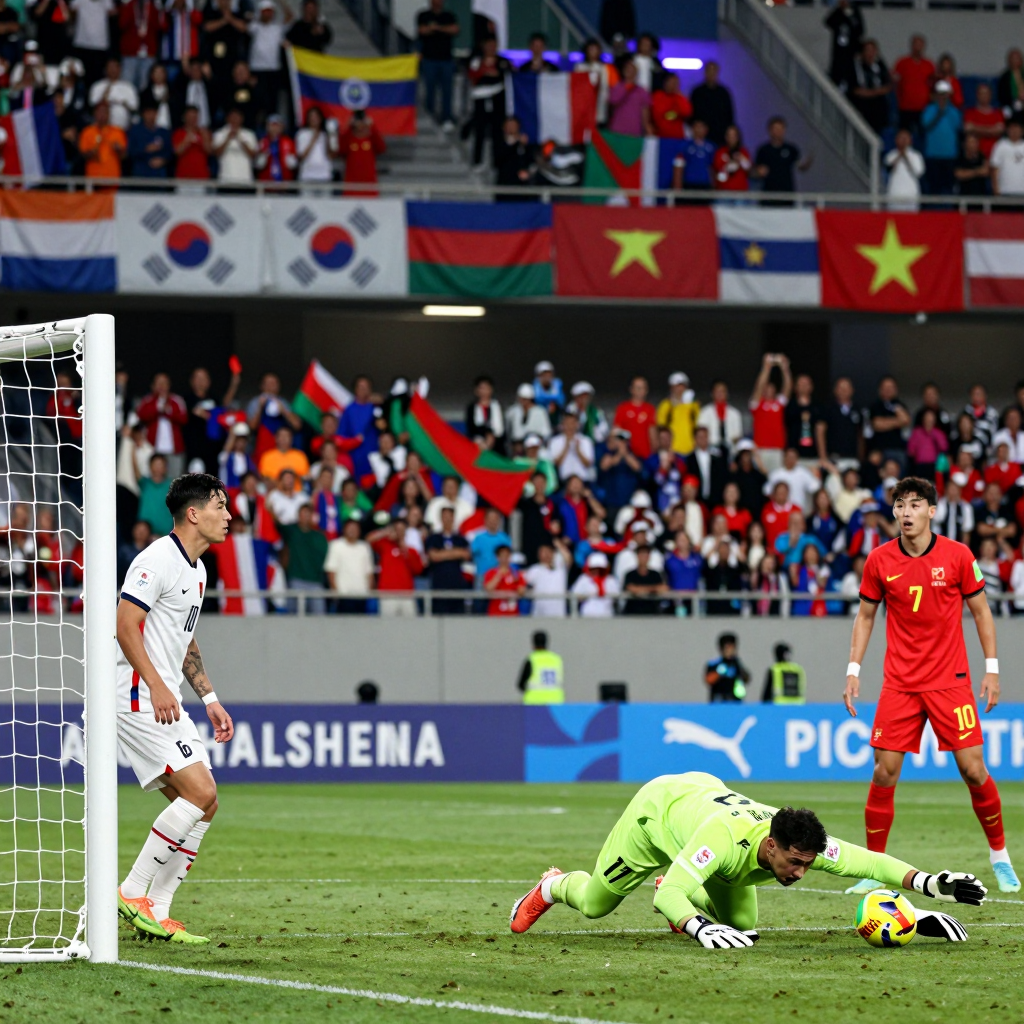
In a historic clash against Vietnam—against whom they had never lost—the South Korean U-23 national team suffered a humiliating defeat after a tense penalty shootout. What were the defining moments that created this stunning upset?
Vietnam U-23 vs. Korea U-23: An Unpredictable Battle Unfolds
The third-place match of the 2026 AFC U-23 Asian Cup was held at the King Abdullah Sports City Hall Stadium in Jeddah, Saudi Arabia. This game transcended a simple ranking decision, marking a new milestone in Korean football history.
Prior to this match, the Korean U-23 team boasted an unbeaten record against Vietnam, with 7 wins and 3 draws. Naturally, many expected Korea to secure a victory against Vietnam’s U-23 squad. Yet, on the ground, all expectations were shattered in an extraordinary drama.
Vietnam’s Organized Pressure Dominates From the First Half
The game kicked off with Vietnam taking the lead in controlling the flow. Despite Korea’s superior possession, Vietnam applied a well-organized press that dictated the pace of the match.
By the 30th minute, a critical moment arrived. During Korean defense, Cho Hyun-tae was pulled out by Đinh Bá, leaving a gap in the backline that Nguyễn Quốc Việt swiftly exploited, giving Vietnam a 1-0 lead. Korea went into halftime trailing.
Fierce Midfield Battle and Dramatic Comebacks in the Second Half
Coach Lee Min-sung launched aggressive substitutions at the start of the second half. Korea ramped up their offensive speed and intensity, and at the 24th minute, Kim Tae-won’s powerful long-range shot leveled the score.
However, the joy was short-lived. Just two minutes later, Vietnamese captain Đinh Bá scored from a free kick, putting Vietnam ahead once again. Korea found themselves down 1-2, facing a critical challenge.
At the 41st minute, tension soared. Đinh Bá was sent off after a tackle that struck Lee Chan-wook’s shin, reducing Vietnam to 10 men. With the numerical advantage, Korea pushed forward and in 7 minutes of stoppage time, defender Shin Min-ha scored a dramatic equalizer, forcing extra time.
Tragic End in Extra Time and Penalty Shootout
Despite 30 minutes of extra time, Korea could not capitalize on their advantage against a 10-man Vietnam team. The match proceeded to a penalty shootout.
Both teams successfully converted their first six penalties. However, Korea’s Bae Hyun-seo’s shot was saved by Vietnamese goalkeeper Bùi Văn, and then Vietnam’s Nguyễn Tăng Yến deceived Korean goalkeeper Hwang Jae-yoon to seal the victory. Korea fell 6-7, finishing fourth in the tournament.
Historic Shock: Vietnam’s First Ever Victory Against Korea U-23
This defeat goes beyond just a placement match loss. For the Korean U-23 team, facing Vietnam U-23 had always been a safe haven with an unbeaten record. The previous tally of 7 wins and 3 draws clearly showed Korea’s dominance.
Yet this match marked the first-ever loss to Vietnam. What’s even more astonishing is that Vietnam had just suffered a 0-3 thrashing by China only three days earlier. This fact only emphasizes how shocking Korea’s defeat is.
The 2026 AFC U-23 Asian Cup third-place match will be remembered not just for the result but as a turning point that redefined the history of Korean U-23 football.
The Flow of the First Half: Vietnam’s Organized Pressing and the Opening Goal in Vietnam U-23 vs. Korea U-23
At the 30th minute of the first half, a minor defensive mistake by Korea led to Vietnam’s opening goal. Despite Korea’s dominance in possession, why did they struggle in the match? To answer this, we must closely analyze the early flow of the Vietnam U-23 vs. Korea U-23 game.
Vietnam’s Organized Pressing Strategy
From the very beginning, Vietnam deployed a tactical pressing system aimed at disrupting Korea’s possession superiority. This approach was unexpected. Typically, the Korea U-23 team is known for its technical skill and solid build-up play. However, Vietnam implemented high pressure to interfere with Korea’s passing game, quickly recovering the ball to create attacking opportunities.
The Crucial Mistake and the Opening Goal
At the 30th minute mark, during Korea’s defensive play, Cho Hyun-tae was dragged out by Vietnam’s Đinh Bá, creating a critical gap. Nguyễn Quốc Việt of Vietnam did not miss this opening and reacted swiftly to score the opening goal, putting Vietnam ahead 1-0. This was more than just a goal. Scoring first while Korea held possession advantage shifted the momentum in favor of Vietnam and distracted Korea’s focus.
Defensive Organization Flaws
Vietnam’s opening goal highlighted how costly individual mistakes in Korea’s defense can be. Despite dominating possession, the team’s lack of defensive organization at the moment they lost the ball ultimately led to a counterattack and a goal. This situation prompted aggressive substitution moves by coach Lee Min-sung in the second half, reshaping the entire course of the match.
Dramatic Comeback in the Second Half and an Equally Dramatic Equalizer, But the Lead Slips Away Again
The South Korea U-23 team regained their momentum thanks to Coach Lee Min-sung’s bold substitution tactics. The second half against Vietnam U-23 was filled with tension that felt like a rollercoaster ride. How did South Korea, struggling in the first half, try to turn the tide of the game?
The Dream of a Comeback Begins with Lee Min-sung’s Aggressive Substitutions
As the second half kicked off, Coach Lee Min-sung unleashed not just defensive adjustments, but an aggressive change that dramatically increased the speed and intensity of the attack. This was a desperate move while trailing 0-1. From this moment, the match between Vietnam U-23 and South Korea U-23 began to change. Fresh energy surged through South Korea’s midfield and forward lines, transforming a team previously overwhelmed by possession into one that started creating real threats.
Kim Tae-won’s Equalizer and the Instant Despair That Followed
In the 24th minute of the second half, Kim Tae-won’s long-range shot rattled the net. The score was now 1-1. The South Korean bench erupted, and the hearts of hundreds of thousands of fans began pounding once again. It seemed as if Korea had wrested control of the game with that dramatic equalizer. But football does not allow emotion to take over.
Just two minutes later, Vietnamese captain Dinh Bach struck again with a free kick, restoring the lead for Vietnam. The hope sparked by Kim Tae-won’s equalizer vanished instantly into despair. Like sand slipping through fingers, South Korea lost control of the match once more. This rapid exchange between the two teams was a moment that briefly stopped the heart of the 2026 AFC U-23 Asian Cup third-place playoff.
The Tension Reaches Its Peak
Trailing 2-1, South Korea made another push forward. Then, in the 41st minute of the second half, the situation grew even more complicated. Vietnamese captain Dinh Bach received a red card for a dangerous tackle on Lee Chan-wook’s shin. With Vietnam down to 10 men, new hope sparked for South Korea.
However, the match was not over in regular time. During 7 minutes of added time, defender Shin Min-ha scored a dramatic equalizer, taking the game into extra time. South Korea, bolstered by their numerical advantage, seemed close to victory. Yet in the 30 minutes of extra time, Korea failed to produce a decisive moment, and the match inevitably went to penalties.
A Tale of Contrasting Fortunes in Overtime and a Shootout Defeat: The Dramatic Clash Between Vietnam U-23 and South Korea U-23
South Korea's U-23 team scored a dramatic equalizer in stoppage time against a ten-man Vietnam side. With defender Shin Min-ha’s goal, the match headed into extra time, and everyone seemed to expect a Korean victory. But the reality proved far more challenging. What unfolded in that crucial moment?
A Make-or-Break Moment: South Korea’s Equalizer Against Ten-Man Vietnam in Stoppage Time
As regular time drew to a close, the situation shifted drastically. In the 86th minute, Vietnam’s captain Dinh Ba was sent off for a tackle that struck Lee Chan-wook’s shin, granting South Korea a numerical advantage. This was undeniably South Korea’s golden opportunity.
Against ten men, South Korea pressed aggressively, and their efforts paid off in the 7th minute of stoppage time. Defender Shin Min-ha netted a dramatic equalizer, reigniting hope as the match headed into extra time. With the numerical edge and an equalizing goal, South Korea’s momentum seemed unstoppable.
Silence in Extra Time: South Korea’s Missed Decisive Chances
However, throughout the 30 minutes of extra time, South Korea remained surprisingly silent. Despite their numerical superiority, the U-23 squad failed to carve out decisive opportunities. Vietnam, despite being down to ten men, focused intently on defense, blocking South Korea’s attacks, and Korea couldn’t break through this solid barrier.
As extra time wound down, the hearts of fans everywhere sank. The stark reality was setting in—without a goal, the match would be decided by a penalty shootout.
The Highs and Lows of the Shootout: South Korea’s Defeat Confirmed
Both teams faced the penalty shootout with tense expressions. After both sides scored their first six penalties, everything hinged on a single moment. South Korea’s Bae Hyun-seo took his shot, but Vietnam’s goalkeeper Bui Tinh’s divine save denied him.
Vietnam’s Nguyen Tang Yan then flawlessly deceived Korea’s goalkeeper Hwang Jae-yoon to score the winning goal. And just like that, the match concluded. The intense battle between Vietnam U-23 and South Korea U-23 ended in Vietnam’s favor, with Vietnam securing 3rd place and Korea settling for 4th.
This loss stings even more deeply for South Korea, who had never been defeated by Vietnam in their previous ten encounters—boasting 7 wins and 3 draws—making this result a painful chapter in their football history.
Section 5: The Historic Significance of an Unforgettable Defeat and Future Challenges
The Collapse of an Unbeaten Tradition: Vietnam U-23 vs. Korea U-23 Shock
The defeat of Korea’s U-23 football team by Vietnam is far more than just the outcome of a single match. The real weight of this game lies in the fact that Korea, boasting an unbeaten record of 7 wins and 3 draws, suffered its first-ever loss to the Vietnam U-23 squad. Especially stinging for Korean football fans was the 6-7 penalty shootout loss, marked by Bae Hyun-seo’s blocked shot and Nguyen Tang Yan’s decisive goal.
Miracle of the Underdog or the Fall of a Giant?
What makes this loss even more shocking is the identity of the opponent. Vietnam had just been trounced 0-3 by China a mere three days earlier. By conventional logic, a team crushed by China was hardly expected to topple Korea. This result transcends the typical sports narrative of an underdog victory; it signifies a steep decline in the performance and focus of Korea’s U-23 team.
Re-examining Tactical Flaws
Coach Lee Min-sung’s bold substitutions sparked a miraculous equalizer early in the second half (Kim Tae-won) and a dramatic equalizer during stoppage time (Shin Min-ha). Yet, the team failed to create decisive moments during the entire 30 minutes of extra time, and their lack of preparation for the penalty shootout exposed limitations in both tactics and mental management. The clash between Vietnam U-23 and Korea U-23 coldly demonstrates that technical superiority does not always guarantee victory.
Future Challenges and a Time for Reflection
This defeat marks a crucial crossroads for Korea’s U-23 football. It is imperative to clearly recognize the warning signs of Korea’s eroding relative advantage on the Asian stage. The rise of emerging powerhouses such as Vietnam, Thailand, and Uzbekistan signals a shifting landscape in Asian football where Korea’s standing is no longer assured.
Moving forward, Korean football must earnestly reflect on and address:
- Strengthening the mentality and concentration of its young generation
- Improving stamina management, especially in the late stages and extra time of matches
- Embracing responsibility as a top-tier team and fostering respect for every game
Though finishing fourth is a humiliating result, it simultaneously signals a unique opportunity for Korea’s U-23 team to reinvent and elevate itself anew.
Comments
Post a Comment