Martin Luther King Jr. Day: Why Does It Still Matter?
Even in 2026, Martin Luther King Jr. Day remains a federal holiday—so what does this day truly signify for American society? Observed every year on the third Monday of January, Dr. Martin Luther King Jr. Day stands as an official federal holiday shaped by decades of struggle and perseverance.
The Historic Significance of Dr. Martin Luther King Jr. Day
The journey to establishing Dr. Martin Luther King Jr. Day as a federal holiday was far from brief. Beginning with campaigns launched after Dr. King’s assassination in 1968, it wasn’t until 1983—15 years later—that the day was officially recognized as a national holiday. Even then, it took another 17 years for all 50 states to formally acknowledge it. This timeline is more than a mere designation of a date; it serves as a profound reflection of how American society has come to recognize the civil rights movement and its emblematic leader.
The Enduring Value of Federal Holiday Status
As of 2026, Dr. Martin Luther King Jr. Day continues to hold a powerful place as a federal holiday. This status demonstrates that the United States still embraces the values of equality, justice, and human rights championed by Dr. King at a national level. Despite economic shifts and policy reevaluations over the years, the preservation of this day as a federal holiday reflects a collective commitment to remembering the struggles and achievements of the past.
Reinterpreted as a Day of Service
More than just a day off, Dr. Martin Luther King Jr. Day has been designated as a "National Day of Service." Known by the slogan “a day on, not a day off,” this idea encourages Americans to carry forward Dr. King’s lifelong dedication to community service and societal betterment. It underscores that this day should not be merely about rest, but a call to action—an opportunity to practice and advance social justice in meaningful ways.
The Journey to Recognizing Dr. Martin Luther King Jr. Day as a Federal Holiday
The assassination of Martin Luther King Jr. on April 4, 1968, sent shockwaves through American society. Yet, it took far longer than expected for a federal holiday honoring his achievements to be officially recognized. The fact that it took a full 15 years from the start of the campaign after King’s death to federal approval reveals just how complex and fraught with conflict American society was during that time.
The First Federal Approval in 1983: The Fruit of a Long Struggle
Dr. Martin Luther King Jr. Day was officially designated as a federal holiday in 1983. This marked the culmination of a long campaign that began immediately after King’s assassination in 1968, finally coming to fruition 15 years later. Throughout this period, civil rights activists, religious leaders, and countless Americans continuously raised their voices in support.
Various reasons made federal recognition difficult at the time. Some conservative politicians expressed concerns about King’s political leanings, while debates over the economic costs of an additional holiday also fueled opposition. Moreover, certain southern states traditionally resisted the holiday’s establishment. Overcoming these obstacles required supporters to patiently persuade, petition, and rally public opinion.
An Additional 17 Years Until All States Recognized It: The Challenge of True Unity
Even more striking is the fact that after the federal holiday was authorized in 1983, it took another 17 years for all 50 states to officially recognize Dr. Martin Luther King Jr. Day. In other words, it took more than three decades—from King’s assassination—before the holiday gained complete national acceptance.
Behind these delays lay issues of state autonomy and regional cultural differences. Some southern states initially resisted by calling the holiday by different names or merging it with existing holidays. For example, a few states sought compromise by naming it "Civil Rights Day" or combining it with celebrations of other historical figures. This process shows that Dr. Martin Luther King Jr. Day transcended being a mere holiday—it embodied deep conflicts over American values and historical interpretation.
The Meaning of the Struggle and Its Contemporary Significance
This 30-year journey demonstrates how social change can be a slow and gradual process. It took more than two generations of Americans to transform King’s spirit of nonviolence and his dream of equality into an official federal holiday. Nevertheless, this struggle is a clear testament to American society’s determination to acknowledge historical justice and honor the civil rights movement on a national stage.
Today, Dr. Martin Luther King Jr. Day stands as a significant federal holiday in the U.S., celebrated not just as a day off but as a "National Day of Service," embracing the spirit of service and volunteerism. Remembering this long and challenging journey reminds us how vital social justice is—and how much effort it demands from all of us.
The Heated Controversy Behind the Exclusion of Dr. Martin Luther King Jr. Day from Free National Park Entry
As the New Year 2026 dawned, an unexpected shift was felt across the United States. The longstanding benefit of free entry to national parks every third Monday of January abruptly vanished. Americans nationwide planning to visit national parks to honor Dr. Martin Luther King Jr. Day are now stunned to learn they must pay admission fees.
Background of the Policy Change: What Has Shifted?
In November 2025, the Trump administration announced a groundbreaking policy overhaul. Dr. Martin Luther King Jr. Day was removed from the list of federal holidays granting free entry to national parks, forests, and wildlife refuges. This was not a mere bureaucratic adjustment but part of a sweeping reevaluation of federal holiday policies.
What stands out most is the shift in focus. The approach moved from traditional federal holiday recognition to emphasizing American patriotism. Alongside MLK Day, Juneteenth was also dropped from the free entry roster, while Flag Day was newly added. These changes hint at the values and priorities shaping decision-making behind the scenes.
The Deeper Meaning Behind the Policy Change: Beyond Symbolism
This policy shift carries significance beyond the issue of park entrance fees. Dr. Martin Luther King Jr. Day commemorates one of the most influential figures in the American civil rights movement. Excluding this day from free admission reflects a change in how the government officially acknowledges his legacy.
Starting in 2026, visitors must pay full admission on MLK Day, signaling a recalibration of this holiday’s status at the policy level. This change signals an evolution in federal commemoration practices and sparks a wide range of interpretations and reactions among different social groups across America.
A Policy Pivot Toward American Patriotism
At the heart of this policy change lies a refocusing on "American patriotism." The Trump administration’s direction seems to prioritize broader expressions of patriotism over celebrating specific historical events or individuals. The addition of Flag Day makes this shift unmistakably clear.
This policy choice has ignited widespread debate nationwide. Beyond the tangible loss of free national park access, intense social discussions are unfolding around the symbolic implications of altering official modes of commemoration.
Section 4: MLK Day as a 'Day of Service': The True Meaning of Giving Back
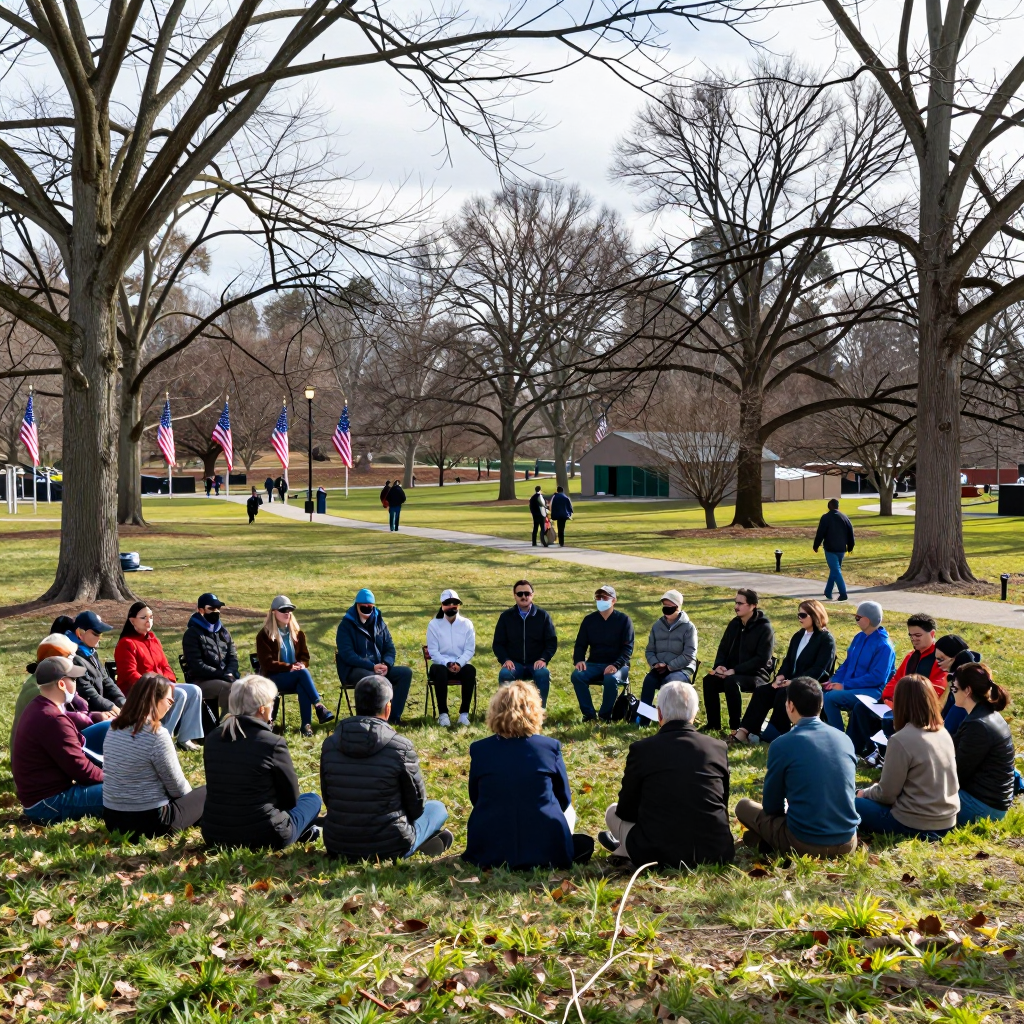
Designated not as a day off but as a day of action, how do citizens approach MLK Day? Dr. Martin Luther King Jr. Day holds a special significance beyond just a federal holiday—it serves as a powerful revival of America's civic spirit.
Dr. Martin Luther King Jr. Day as a National Day of Service
Officially declared the "National Day of Service," Dr. Martin Luther King Jr. Day is widely known by the slogan "a day on, not a day off." This title does not simply imply refraining from work; rather, it encourages Americans to actively engage in volunteer efforts aimed at improving their communities.
The unwavering dedication and lifelong commitment to equality exemplified by Dr. King form the core of this national holiday. To ensure his life and struggle remain more than just historical memory, millions of Americans each year face their communities' needs head-on and take action to create change. This is how King's legacy is kept alive through meaningful practice.
Carrying the Legacy Through Service
The reason Dr. Martin Luther King Jr. Day is called a "day of service" is deeply philosophical. King devoted his entire life to justice and equality, emphasizing the collective well-being over individual comfort. Volunteering on this day is more than just doing good—it is a direct embodiment of King's philosophy and values.
Across countless communities, various service activities are organized around this day. From environmental cleanups to supporting underserved populations and running educational programs, these diverse efforts transform Dr. Martin Luther King Jr. Day from a mere holiday into a catalyst for social change.
Reaffirming Civic Spirit
The concept of "a day on, not a day off" offers a profound opportunity to reaffirm American civic spirit. While holidays typically imply rest, Dr. Martin Luther King Jr. Day invites a different approach. It calls on citizens to reflect on the pursuit of collective interests beyond personal gain.
This philosophical shift may sound simple, but it raises fundamental questions about social structures and personal responsibility. It inspires individuals to contemplate their role in community betterment and challenges them to consider how they will act.
Why Aren’t Flags Lowered to Half-Staff? The Hidden Rule Behind Dr. Martin Luther King Jr. Day
Among American public holidays, is there anything more symbolic than the way flags are displayed? Many are surprised to learn that on Dr. Martin Luther King Jr. Day—a day of national significance—flags are not lowered to half-staff. Traditionally, flags are lowered during times of national mourning, so why is this day an exception? Let’s uncover the historical truth behind this hidden rule.
Why the Federal Government Does Not Lower Flags on Dr. Martin Luther King Jr. Day
The federal government does not lower American flags to half-staff on Dr. Martin Luther King Jr. Day. At first glance, this may seem contradictory. This holiday honors a great leader of the civil rights movement, so why omit the traditional gesture of mourning?
According to official federal regulations, flags are lowered to half-staff only during official periods of national mourning. Although Dr. Martin Luther King Jr. Day is an important federal holiday, it is not classified as a designated day of mourning, and therefore does not qualify for this practice. This isn’t just a bureaucratic detail—it offers a glimpse into how the nation perceives this day.
1968: The Sole Exception Following King’s Assassination
Historically, the only time flags were officially lowered nationwide for Dr. Martin Luther King Jr. was immediately after his assassination in 1968. President Lyndon B. Johnson ordered flags to be flown at half-staff from April 4 to 9, as a solemn tribute expressing the nation’s grief and deep sorrow.
However, when Dr. Martin Luther King Jr. Day was later established, it was defined not as a day of mourning but as a commemorative holiday. This distinction carries profound meaning: mourning looks back at a loss, while commemoration honors the legacy and spirit that continue into the present and future.
Autonomy of Individual States and Local Governments
Interestingly, federal rules aren’t absolute. Individual states and local governments have the discretion to lower flags to half-staff on their own. Because there is no federal mandate, some states or municipalities choose to observe Dr. Martin Luther King Jr. Day more solemnly by lowering their flags.
This reflects the autonomy inherent in America’s federal system, allowing regions to express their values as they see fit. Consequently, flag protocols may vary by location on this day, reflecting differing levels of understanding and respect for its meaning.
Rediscovering Dr. Martin Luther King Jr. Day as a National Day of Service
The fact that flags are not lowered to half-staff on this holiday invites us to rethink the true essence of the day. Dr. Martin Luther King Jr. Day is designated as a “National Day of Service,” famously known with the slogan “a day on, not a day off.”
This honors King’s lifelong commitment to service and equality by encouraging Americans not just to rest, but to actively volunteer and improve their communities. Paradoxically, the absence of half-staffed flags may serve as a call to embody Dr. King’s spirit through action rather than mourning.
The Philosophical Meaning Behind the Rule
Ultimately, the rule against lowering flags to half-staff is more than administrative protocol. It symbolizes how American society views Dr. Martin Luther King Jr. Day and how it chooses to carry forward King’s legacy. While remembering the past is vital, the philosophy embedded in this practice emphasizes the importance of keeping his spirit alive and active in the present.
Comments
Post a Comment