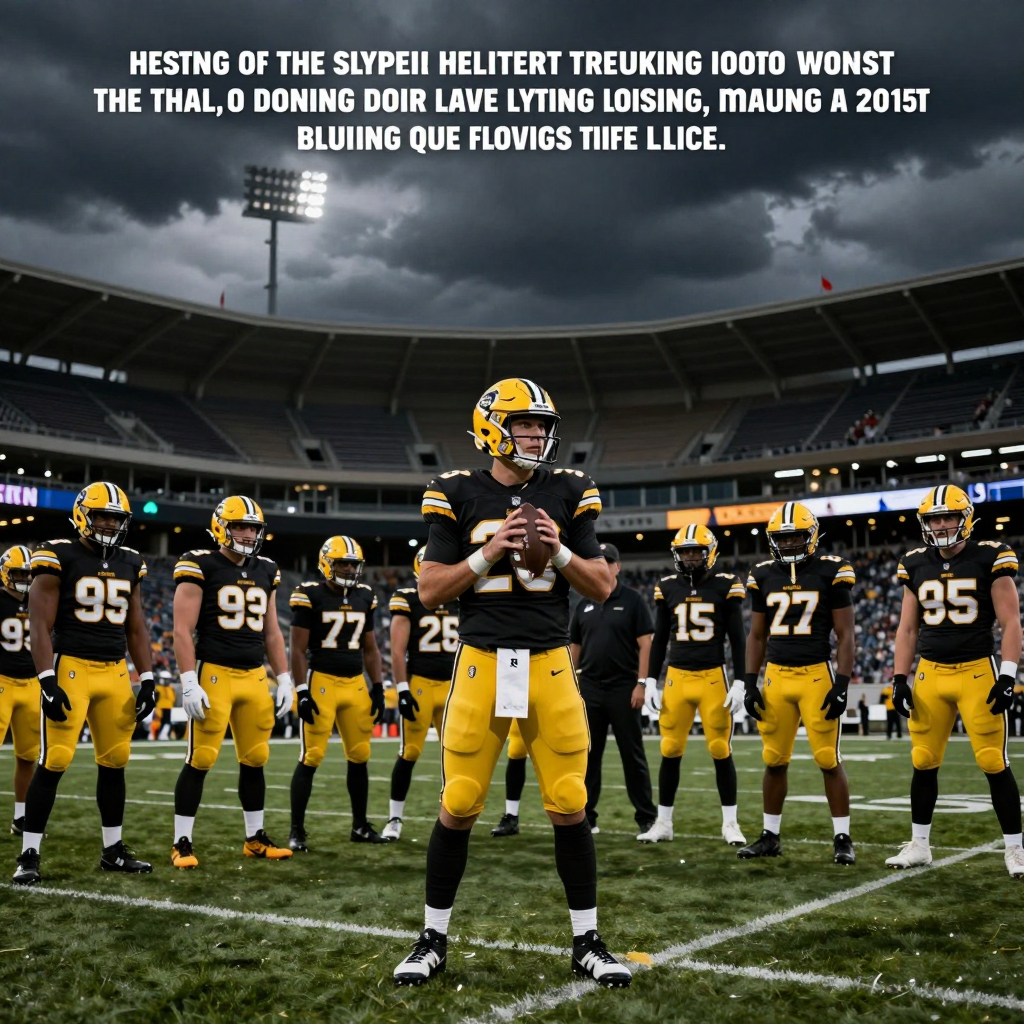
Pittsburgh Steelers: Where Has Their Once-Glorious Legacy Gone?
Once boasting six Super Bowl victories, the Steelers have faced a daunting playoff drought, losing six straight postseason games since 2016. So, what does the current state of the Steelers reveal? Once one of the NFL’s most celebrated franchises, Pittsburgh has now become synonymous with consecutive playoff disappointments.
The Historic Prestige of the Steelers vs. Stark Reality
The history of the Pittsburgh Steelers is steeped in glory. Alongside the New England Patriots, they hold the record for the most Super Bowl titles in NFL history with six championships. Their legendary “Steel Curtain” defense, masterminded by Coach Chuck Noll in the 1970s, remains a hallmark of greatness, celebrated even by today’s NFL fans.
However, as time progressed, the Steelers’ glory has gradually faded. Since their Super Bowl XL win in 2006 and Super Bowl XLIII victory in 2009, they have failed to capture triumph on the grand stage for an astonishing 17 years. This stark reality highlights just how distant their former dominance has become.
The Playoff Abyss Pressing Down on the Steelers
What intensifies the crisis is the Steelers’ dreadful playoff record. Despite clinching the AFC North title in the final week of the 2025 season with a win over the Baltimore Ravens (10-7), Pittsburgh’s campaign ended abruptly in the AFC Wild Card round with a loss to the Houston Texans, extending their historical record to six straight postseason defeats.
Even more startling is their performance over these six years. Since 2016, the Steelers have lost all six playoff games, cumulatively outscored by 230 to 148. The precipitous decline in defense—now conceding over 38 points per game on average—is widely regarded as the primary culprit for this dark era.
The Steelers’ Challenge to Reclaim Their Future
In a bold move to reverse this downward spiral, Head Coach Mike Tomlin made the daring decision to acquire Hall-of-Fame quarterback Aaron Rodgers. Leaving behind a disappointing stint with the New York Jets, Rodgers is now striving to reclaim his greatness with the Steelers.
Currently, the Steelers’ odds to win the Super Bowl stand at +4500, ranking them second lowest among the 14 playoff teams—an expert consensus reflection of how difficult it will be to restore past glory without structural changes.
While their lifetime playoff record of 36-29 testifies to their once-mighty legacy, current performances paint a very different picture. Whether the Steelers can overcome six years of playoff darkness and return to the grand stage will be one of the most compelling narratives to watch unfold.
The Dark Abyss of Playoff Defeats: Why the Steelers Collapse in Crucial Moments
Suffering consecutive losses by a total of 230 points and a defense that concedes over 38 points on average—this is the harsh playoff reality the Steelers have faced since 2016. Once hailed as the “Steel Curtain” and sculpting defensive legends in the NFL, why does this team keep collapsing when it matters most? Let’s uncover the hidden truth.
Steelers’ Defensive Collapse: The Heart of the Playoffs Stops Beating
To sum up the Steelers’ current state in one phrase: a defensive disaster. Despite clinching the AFC North with a 10-7 regular season record, they transform into a completely different team on the playoff stage.
In recent playoff games, the Steelers have allowed over 38 points on average. This goes beyond mere individual errors or tactical flaws—it signals a structural defensive breakdown. Losing six straight playoff games by a combined margin of 230 points since 2016 means surrendering over 38 points per game. This starkly exposes just how vulnerable the Steelers’ defensive organization is under the intense spotlight of the playoffs.
The Gap Between Regular Season and Playoffs: Why Is It So Wide?
This raises a fascinating question: why does a team capable of winning the AFC North in the regular season crumble so dramatically in the playoffs?
The playoffs are a completely different battlefield. Competition heats up, and opponents come with their absolute best. While the Steelers’ defensive system may hold up reasonably well against regular-season adversaries, it’s too easily broken against playoff powerhouses.
Even the recent signing of superstar quarterback Aaron Rodgers hasn’t been enough to offset the collapsed defense. The offensive prowess that helped topple the Baltimore Ravens in the last week of the 2025 regular season failed to perform on the grand playoff stage.
A Stark Contrast to Historic Glory: How Far Have They Fallen?
The Steelers are a storied franchise with six Super Bowl titles in NFL history. The “Steel Curtain” defense under Coach Chuck Noll in the 1970s remains one of the greatest defensive units ever assembled. Their triumphs in Super Bowl XL (2006) and Super Bowl XLIII (2009) are relatively recent testaments to their legacy.
Yet, the current Steelers starkly illustrate how far removed they are from that pinnacle of glory. Not winning a single playoff game since 2016 reveals that past fame is not translating into present success. Expert assessments echo this reality, noting a +4500 Super Bowl odds mark as the second lowest among the 14 teams qualified for this year’s playoffs.
The Mike Tomlin Era’s Lingering Challenge
Although Coach Mike Tomlin has led the Steelers for many years, playoff struggles remain unresolved. The acquisition of Aaron Rodgers aims to strengthen the offense, yet it falls short of addressing the fundamental issue—a structurally weak defense.
For the Steelers to reclaim playoff supremacy, the solution demands more than just star player additions. A complete overhaul of the defensive system and a cultural revolution within the organization are essential. This, above all, is the core challenge to overcoming the playoff darkness that has endured since 2016.
Aaron Rodgers Acquisition: A New Hope? Can He Be the Steelers’ Savior?
Hall-of-Fame quarterback Aaron Rodgers has made Pittsburgh his new home. This ambitious signing, spearheaded by coach Mike Tomlin, appears to be the final card to break the Steelers’ six-year playoff losing streak. But can his talent truly save this team? And, more importantly, where will Rodgers’ real impact be felt?
Frustrations in New York and New Expectations in Pittsburgh
Leaving behind a disappointing stint with the New York Jets, Aaron Rodgers has chosen a fresh start. In New York, he failed to showcase his true potential and faced significant criticism. However, joining the Pittsburgh Steelers opens the door for a different story.
If Rodgers can recreate "what made him so great as a Packer" in Pittsburgh, the Steelers will finally have a chance to awaken from their playoff nightmares. His precise passing, innovative playmaking under pressure, and, above all, his experience on big stages are exactly what this team desperately needs.
Why Individual Talent Alone Isn’t Enough
Yet the reality remains harsh. His achievements so far are limited, and the defeat to the Houston Texans in the 2026 playoffs starkly highlighted how deep the Steelers’ structural issues run.
No matter how outstanding Rodgers’ personal skills are, if the Steelers fail to fix their crumbling defense—a fundamental weakness—his impact will be meaningless. Pittsburgh’s defense has allowed an average of over 38 points in recent playoff games, a deficiency no quarterback, no matter how great, can cover.
Where Real Change Must Happen
For Aaron Rodgers’ Pittsburgh journey to be successful, improving the offense alone won’t suffice. The Steelers need a structural overhaul across the entire defense. Alongside Rodgers’ acquisition, Coach Tomlin must push for innovation in defensive coaching staff, reinforcement of the defensive line, and skill improvements in the secondary.
Additionally, Rodgers himself will require time to adapt to his new environment. Despite being a seasoned quarterback, adjusting to Pittsburgh’s system, his receivers, and the overall team culture will not be a swift process.
Between Hope and Reality
There is no doubt that Aaron Rodgers’ signing will aid the Steelers’ playoff aspirations. However, overcoming the playoff curse that has lingered since 2016 demands a far broader transformation.
How Coach Tomlin’s long-term strategy will merge with Rodgers’ experience, and whether the Steelers can overcome their defensive shortcomings, will be key focal points moving forward. Aaron Rodgers is undeniably a game-changer, but he alone cannot turn everything around. The Steelers’ true revival hinges on a holistic reform of offense, defense, and organizational structure alike.
Between the Steelers' Past Glory and Their Dark Present
Did you know that the Steelers are one of the greatest teams in NFL history? So why haven't this legendary team secured a major victory on the big stage in the past 20 years? This question is key to understanding the current state of the Pittsburgh Steelers.
The Steelers' Historic Standing: Six Super Bowl Championships
The Steelers are among the most successful franchises in NFL history. Their astonishing record of six Super Bowl championships ties them with the New England Patriots for the best performance ever. Most of this success came under the leadership of coach Chuck Noll in the 1970s, centered around the legendary defense known as the "Steel Curtain."
Back then, the Steelers were more than just a football team—they were a dynasty that dominated the NFL with ironclad defense and potent offense. This era of glory firmly etched the Steelers as eternal champions in the hearts of their fans.
Last Major Stage Victory: Super Bowl XLIII in 2009
Looking at the Steelers’ playoff history, they boast an impressive 36 wins and 29 losses overall. However, this figure masks the grim reality of recent years.
The Steelers’ last Super Bowl victory came in Super Bowl XLIII in 2009. Since their previous win in Super Bowl XL in 2006, over 17 long years have passed without the Steelers tasting victory on the grandest stage. A team that once basked in glory now finds even playoff wins increasingly rare.
The Dark Present: Prolonged Historical Slump
Even more shocking is the fact that since 2016, the Steelers have suffered six consecutive playoff defeats. During this stretch, the combined score gap stands at 230-148, indicating not just losses but deep-rooted structural issues.
The decline in defensive performance has been pinpointed as a major cause of this dark era. In recent playoff games, the Steelers have allowed over 38 points on average—an unthinkable collapse for a defense once known as an impenetrable fortress.
The Gap Between Past and Present
This is the paradox the Steelers face today. Once hailed as one of the greatest franchises in NFL history, they are now repeatedly falling at the playoff hurdle. Though their legacy and reputation forged during the glory days remain intact, their current results fall far short of those lofty expectations.
Escaping this bleak cycle will require more than simply acquiring new players; fundamental structural reforms are needed. While the past glory can serve as a source of inspiration, today’s challenges demand concrete actions to reclaim that brilliance.
Section 5: 2026, The Steelers at a Crossroads
The harsh reality that the Pittsburgh Steelers have a Super Bowl win probability of +4500—second lowest among the 14 playoff teams—clearly illustrates just how desperate the situation is for this storied franchise. Six consecutive playoff losses since 2016, coupled with declining defensive performance, signal that even the traditional powerhouse Steelers cannot avoid structural change. But could the strategic partnership between Coach Mike Tomlin and Aaron Rodgers be the answer to ending this dark era? Let’s explore the direction ahead.
Facing the Crisis Head-On: The Reality the Steelers Confront
The Steelers’ playoff struggles over recent seasons are far from a matter of mere luck. Despite having the competitiveness to win the AFC North in the regular season, their defense has repeatedly collapsed—allowing an average of over 38 points in playoff games. This exposes how the Steelers’ defensive strategy fails to meet the demands of the intensity found on the playoff stage.
Historically, the Steelers brought home six Super Bowl titles during the Chuck Noll era in the 1970s, famously powered by the “Steel Curtain” defense. Yet, the fact that they have not achieved such success on big stages since Super Bowl XLIII in 2009 signals a need for fundamental organizational reassessment.
The Aaron Rodgers Acquisition: Hope or Gamble?
Mike Tomlin’s decision to bring in Hall of Fame quarterback Aaron Rodgers is both bold and risky. Leaving behind a disappointing chapter in New York with the Jets, Rodgers is striving to prove his greatness anew on the Steelers’ stage. The convergence of two strong leaders has indeed injected fresh energy into the organization.
However, results so far remain limited. The loss to the Houston Texans in the AFC Wild Card round reveals that Rodgers’ fit in Pittsburgh is still uncertain. It will take more time and effort before Rodgers’ individual brilliance and the Steelers’ organizational strength truly combine.
Looking Toward the 2026 Season: Is Structural Innovation Urgently Needed?
The Steelers’ all-time playoff record stands at 36-29—a winning total largely anchored in the glory days of the 1970s and 1990s, failing to mirror recent 15 years’ performances. Their painfully low Super Bowl odds underscore that mere reinforcements won’t suffice; a comprehensive rebuild is essential.
Mike Tomlin’s long-term strategy must redefine the entire offense while fundamentally overhauling the defensive system. How Aaron Rodgers’ experience and leadership reshape the Steelers’ organizational culture will be pivotal. The 2026 season promises not just a year of games but a crucial turning point to decide whether the Steelers can reclaim their status as champions.
Comments
Post a Comment