The 2026 Agentic AI Revolution: 7 Essential Technologies Transforming Business Automation with Microsoft 365 Copilot
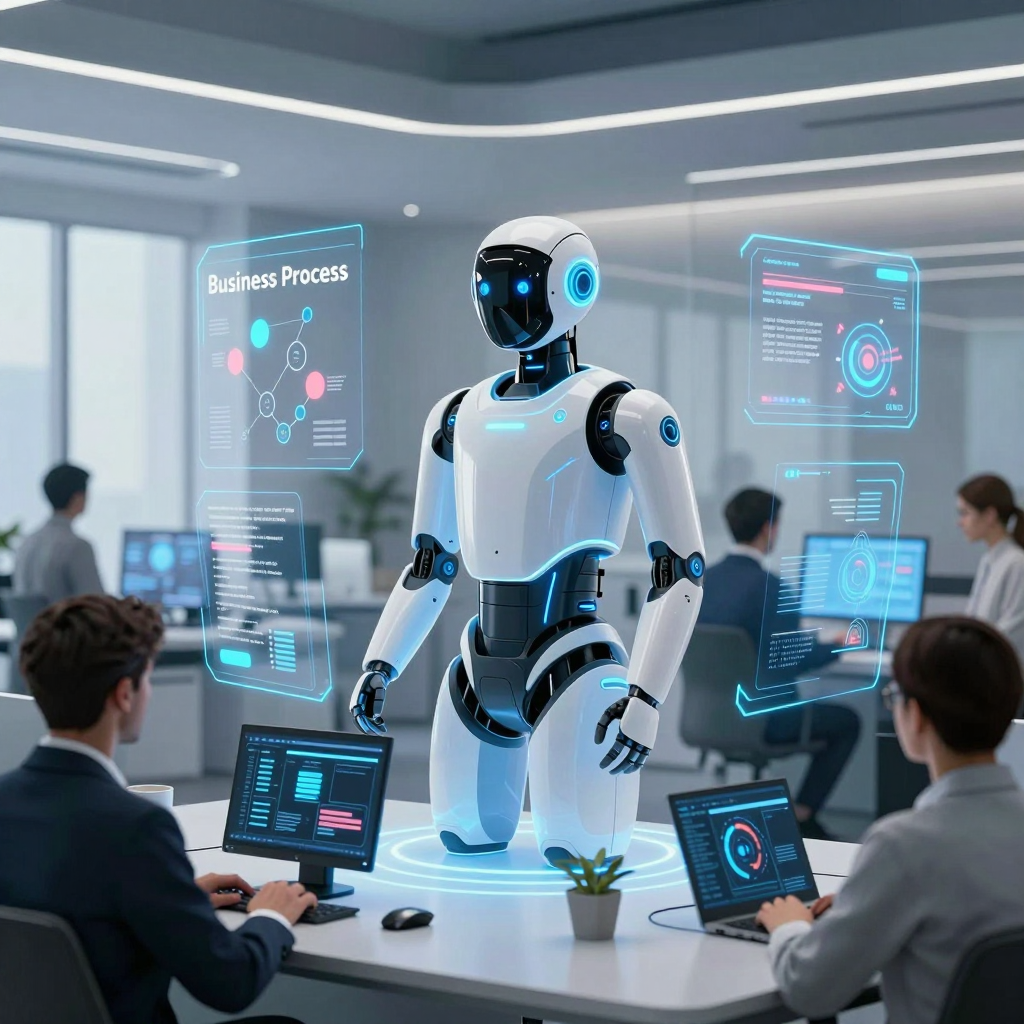
The Era of Agent AI is Here: Autonomous Systems Reshaping Business
What if AI didn’t just answer questions but made decisions and took actions on its own? In 2026, let’s explore the rise of Agentic AI set to revolutionize the corporate world.
In recent years, generative AI has mostly remained at the level of responding to user queries. But now, the AI paradigm is fundamentally shifting. With the emergence of a new form called Agent, artificial intelligence evolves from a simple information provider to an autonomous decision-maker and actor.
Agent AI: Defining Intelligent Systems with Autonomy
An AI Agent is a software system that perceives its environment, makes autonomous decisions, and acts to achieve goals. What sets it apart from previous AI technologies?
It’s the ability to automatically decompose complex objectives and solve them step-by-step without continuous human oversight. The Agent is not a mere tool executing commands; it independently understands given goals, discovers optimal paths to solve them, and dynamically adapts to changes during the process.
Three Revolutionary Leaps in Agent Technology
Modern Agent systems differ from traditional AI due to three key innovations.
First, system autonomy. Through reinforcement learning and planning algorithms, Agents implement closed-loop decision-making without human intervention. This means the Agent can evaluate the outcomes of its actions and automatically adjust subsequent behaviors.
Second, temporal continuity. Using memory networks and state-tracking technologies, Agents can execute long-term tasks continuously and optimize strategies. This represents genuine learning, where today’s experiences impact tomorrow’s decisions.
Third, environmental adaptability. Leveraging multimodal perception and transfer learning frameworks, Agents dynamically respond to complex, changing environments. They apply learned knowledge to new contexts never encountered before.
Technical Architecture: A Complete “Perceive-Think-Act-Learn” Cycle
To understand how Agent systems operate, consider their internal structure, composed of five core modules.
The environment perception module collects current states from sensors like vision and audio. The cognitive reasoning module uses large language models with Chain-of-Thought reasoning to break down complex tasks step-by-step. The action planning module determines optimal action sequences via hierarchical reinforcement learning.
The execution control module translates these abstract instructions into concrete commands interfacing with real systems. Finally, the memory feedback module continuously learns and enhances performance through experience pooling.
The harmonious interplay of these five modules completes a human-like cognition cycle of “perceive-think-act-learn.”
Agent in the Enterprise: The Case of Microsoft 365 Copilot
Agent technology is no longer futuristic. In business environments, Microsoft 365 Copilot’s Agents feature has already moved into practical deployment.
This system not only conducts information retrieval and data summarization but also directly executes specific actions such as sending emails and updating records. Crucially, by embedding organizational knowledge and automation, it fundamentally simplifies existing business processes. Repetitive tasks once handled manually by employees are now automated by Agents, dramatically boosting organizational productivity.
Diverse Agent Types: Industry Applications Across the Board
The use of Agents is expanding across numerous fields. Experts currently classify seven main Agent archetypes.
They include business task Agents for enterprise software, conversational Agents for customer support, research Agents performing data analysis (e.g., OpenAI Deep Research), analytical Agents generating reports, coding Agents assisting software development (e.g., Cursor), specialized Agents leveraging domain-specific expertise, and web browsing automation Agents (e.g., OpenAI Operator).
Agent technology is actively used for automation, data analytics, and decision support in finance, healthcare, retail, manufacturing, and enterprise IT. For instance, financial institutions deploy Agents to analyze customer transactions and manage risks, while healthcare uses them for diagnostic support and patient management.
Future Direction: Evolving Toward Multi-Agent Systems
The concept of Agentic AI is evolving from a single agent to collaborative multi-agent systems (MAS). This evolution signifies not just a technical advance but a transformation in business paradigms.
In multi-agent systems, multiple Agents cooperate to solve complex, distributed problems. This marks the dawn of autonomous ecosystems capable of independently tackling sophisticated challenges beyond simple automation. Imagine multiple Agents dispersed across an organization’s departments automatically coordinating to achieve company-wide objectives.
By 2026, Agent technology will be a necessity, not an option. Organizations ready to embrace this wave will gain a decisive competitive edge.
2. The Core of the Technology: The Brain Architecture of AI Agents Realizing Autonomy and Adaptability
From reinforcement learning to memory-based long-term task execution, what is the hidden secret behind AI agents that achieve goals without human intervention? The answer lies in the sophisticated architecture of modern AI agent systems.
AI Agent: Definition of an Autonomous Decision-Making System
The most fundamental distinction between traditional chatbots or automation tools and AI agents is autonomy. AI agents are not passive systems that simply respond to user inputs; they perceive their environment, make autonomous decisions, and act to achieve goals.
What’s even more crucial is that this entire process runs without continuous human supervision. The ability to automatically decompose complex objectives and solve them step-by-step marks not just a technical evolution but signifies that artificial intelligence has entered a new dimension.
Three Revolutionary Leaps of AI Agents
Modern AI agent technology fundamentally differs from previous generations of automation solutions thanks to three groundbreaking characteristics.
First, the realization of system autonomy
Through reinforcement learning and planning algorithms, AI agents implement a closed-loop decision-making mechanism. This means the system judges situations on its own, chooses the optimal action among various options, evaluates the outcomes, and incorporates the feedback back into decision-making—a cyclical structure. This is completely different from outdated automation, where programmers had to pre-code rules for every possible condition.
Second, securing temporal continuity
Memory networks and state-tracking technologies enable AI agents to continuously perform long-term tasks and optimize strategies. The ability to store past experiences, connect them with the present situation, and adjust future actions resembles how humans plan the future based on lessons learned. Rather than just performing the current task, AI agents make better decisions by accumulating knowledge over time.
Third, maximizing environmental adaptability
Thanks to multimodal perception and transfer learning frameworks, AI agents dynamically respond to complex and evolving environments. The capacity to process multiple forms of information simultaneously—such as vision, voice, and text—and apply knowledge learned in one environment to another greatly expands the scope of AI agents’ usability.
The Brain Architecture of AI Agents: Five Core Modules
What is the secret behind AI agent systems being able to carry out complex tasks without human intervention? The answer is the harmonious interplay of five meticulously designed modules.
Environment Perception Module: The Eyes and Ears
This module collects multimodal data such as visual, auditory, and sensor inputs. Just as humans perceive surroundings through sight and hearing, AI agents understand their environment through diverse channels. The quality and accuracy of information gathered here influence all subsequent decisions.
Cognitive Reasoning Module: Organizing Thought
Utilizing the chain-of-thought approach of large language models, this module logically decomposes the given problem. It systematically responds to questions like “What steps are needed to achieve the goal?” and “What resources are required at each stage?” This process mirrors how humans organize complex projects into mind maps.
Action Planning Module: Discovering the Optimal Path
Through hierarchical reinforcement learning, it determines the most efficient sequence of countless possible actions. It decides not only “what to do” but also “when and in what order” to act. This is akin to a chess grandmaster thinking hundreds of moves ahead with strategic insight.
Execution Control Module: Actualizing the Ideal
It transforms abstract, high-level instructions into concrete interface operations. For example, the command “Summarize this report” is executed as a series of specific actions: opening the document, reading the text, and drafting a summary. Without this module, even the best plans could never materialize in reality.
Memory Feedback Module: Learning from Experience
Through an experience pool mechanism, past successes and failures are stored, and the system continuously learns from them. After completing any task, it evaluates the results and improves itself to make better decisions in similar future scenarios. This mirrors how humans learn from mistakes.
Completing the Human Cognitive Cycle with AI Agents
When these five modules operate together, AI agents complete a full cognitive cycle of “perception—thought—action—learning.” This mimics how humans interact with the world. The difference is AI agents can perform this entire process faster, more accurately, and tirelessly.
AI agents are no longer a technology of the future. They are actively performing practical tasks like sending emails, summarizing data, and updating records in real-world corporate environments, such as Microsoft 365 Copilot’s agents. This is the cutting-edge innovation we are witnessing today.
Section 3: Innovation in Reality: Unveiling How Microsoft 365 Copilot Agents Work
From sending emails to summarizing data, discover vivid real-world examples of how AI Agents simplify business processes in everyday work.
AI Agent Technology Enters the Corporate Environment
As of 2026, the forefront of technological innovation centers on the full-scale deployment of Microsoft 365 Copilot Agents in practical operations. Whereas AI was once merely a responsive tool following user commands, the Agent system now autonomously makes decisions and independently executes business processes, marking a transformative shift.
Notably, the Agent capabilities of Microsoft 365 Copilot go beyond simple conversational AI, deeply integrating into organizations’ actual workflows. This marks the starting point of the “true automation” that companies have long dreamed of.
Real-World Use Cases of Microsoft 365 Copilot Agents
Microsoft 365 Copilot Agents automatically perform the following concrete tasks:
Information Retrieval and Data Summarization: The Agent system automatically searches vast organizational databases and document repositories to swiftly extract necessary information. For example, it comprehensively analyzes quarterly sales status, customer feedback, and project progress to deliver processed insights to decision-makers. Human intervention is minimized as the Agent autonomously dissects and processes complex information structures without constant supervision.
Automated Execution of Actionable Tasks: The true value of Agents lies beyond analysis—they take direct action. They independently perform specific tasks such as sending emails, updating calendar schedules, modifying CRM records, and generating reports. These actions are automatically executed with only the responsible person’s approval, dramatically reducing wasted time on repetitive manual work.
Mechanisms Behind Simplifying Business Processes with Agents
Microsoft 365 Copilot Agents operate effectively due to three core elements:
Organization-Specific Knowledge Base: Agents are not generic AI. They learn each organization’s business processes, data structures, and operational rules to deliver customized automation. The finance team’s Agent understands accounting regulations, while the sales team’s Agent adheres to customer relationship management protocols.
Multistep Decision-Making Capability: Complex tasks require multiple decision steps. Agents answer questions such as “What information is needed to process this request? → Where can that information be found? → What actions should be performed sequentially?” using Chain-of-Thought algorithms. This mimics human reasoning while minimizing errors.
Continuous Learning and Feedback Loops: Agents record and learn from every task outcome. Each time similar requests arise, they leverage past experiences to respond faster and more accurately. As organizational processes change or new rules are added, Agents quickly adapt to follow updated workflows.
Productivity Gains Observed in the Field
Companies adopting Microsoft 365 Copilot Agents report the following changes:
- Time Savings: Time spent collecting and organizing data is reduced by more than 80%.
- Error Reduction: Automated processes eliminate human errors, greatly enhancing data accuracy.
- Faster Decision-Making: Real-time insights and automated execution provided by Agents shorten decision-making cycles dramatically.
- Workforce Redeployment: Employees freed from repetitive tasks focus on high-value work such as strategy, customer relationships, and innovation.
Technological Limitations and Practical Considerations
At this stage, Microsoft 365 Copilot Agents remain within the realm of Supervised Automation. Critical decisions and large-scale actions still require human review and approval. While this reflects tech limitations, it also serves as a prudent safeguard for risk management from a corporate perspective.
Moreover, Agent efficiency heavily depends on how well organizational data structures are maintained. In organizations with scattered data or unclear workflows, Agents struggle to demonstrate their full potential. Therefore, data standardization and process definition within the organization must precede Agent deployment.
Conclusion: The Dawn of the Agent Era
Microsoft 365 Copilot Agents are not merely tools for automation. They represent a paradigm shift toward a new way of working in collaboration between humans and machines. The emergence of Agents that automatically send emails, independently summarize data, and drive tasks will fundamentally transform how companies operate. Going forward, corporate competitiveness will hinge on how effectively they utilize and integrate Agent systems.
Section 4: The World’s 7 Classified Types of AI Agents and Their Applications Across Industries
From customer support to research analysis and coding— which AI agent is set to drive competitive advantage in your industry’s future?
In the technological landscape of 2026, not all AI agents operate the same way. Specialized agent solutions are leading innovation in various domains, tailored to meet specific corporate needs. Let’s explore the seven agent archetypes classified by the influential US tech media outlet, The Information, and see how they’re being applied across industries.
The 7 Types of AI Agents and Their Distinct Characteristics
First are Business Task Agents for Enterprise Software. These agents are the most widely used for automating repetitive tasks within organizations. Microsoft 365 Copilot’s Agents are a prime example, autonomously performing concrete actions like information retrieval, data summarization, sending emails, and updating database records. These agents learn an organization’s specialized knowledge and processes to revolutionize business workflows.
Second come Conversational Agents for Customer Support. An evolution beyond traditional chatbots, these agents don’t just respond but autonomously take actions to resolve customer issues. They achieve the dual benefits of enhanced customer satisfaction and reduced support costs, offering continuous 24/7 service.
Third are Research Agents for Information Analysis. Solutions like OpenAI Deep Research automatically gather data from vast sources, analyze it systematically, and generate insightful reports. These agents empower researchers and analysts to complete in hours what might otherwise take days.
Fourth, Analytical Agents for Data Analysis and Report Generation. They automatically conduct statistical analyses of complex datasets, identify trends, and build predictive models, instantly providing visualized reports essential for decision-making. This dramatically boosts the efficiency of business intelligence teams.
Fifth are Coding Agents for Software Development. Tools such as Cursor understand developer intent and autonomously write code, fix bugs, and automate testing. These agents significantly enhance productivity while ensuring code quality.
Sixth, Specialized Agents Leveraging Domain-Specific Knowledge. Operating in industries like healthcare, law, and finance, they offer expert advice and analysis based on deep domain expertise, delivering far higher accuracy and reliability compared to general agents.
Seventh are Web Browsing Automation Agents. Solutions like OpenAI Operator perform tasks such as information gathering, booking, ordering, and comparison automatically on the web. When users specify their desired outcomes, these agents navigate the internet independently to complete the tasks.
Real-World Use of AI Agents Across Industries
These agent technologies are rapidly spreading across finance, healthcare, retail, manufacturing, and enterprise IT sectors.
In Finance, agents are used for automated data analysis and decision support— evaluating real-time market data, assessing risks, and managing investment portfolios autonomously.
In Healthcare, specialized agents assist with diagnostic support, patient monitoring, and medical record management, easing the workload of medical professionals.
In Retail, customer support agents automate order processing, returns management, and product recommendations, enhancing operational efficiency.
In Manufacturing, data analysis agents monitor equipment, manage quality, and optimize processes to maximize production efficiency.
Enterprise IT departments leverage business task agents to automate IT operations, enabling IT professionals to focus on more strategic initiatives.
Choosing the Right AI Agent for Your Industry: The Key to Competitive Edge
The optimal agent type varies by industry and organizational needs. The critical factor isn’t merely adopting the latest technology but selecting and applying the agent that aligns best with your business processes and strategic goals. The companies that will lead in 2026 are those that successfully tailor and integrate these diverse AI agent technologies to fit their unique industrial contexts.
5. The Future as a Collaborative AI Ecosystem: The Advent of Multi-Agent Systems and Their Significance
What if 'multiple agents' work together to solve complex problems beyond just a 'single agent'? Current AI technology is on the brink of revolutionizing autonomous ecosystems. The evolution from simple, isolated systems to cooperative multi-agent systems signals a fundamental transformation in the business world.
The Evolution of Agentic AI: From Solo to Collaborative
In recent years, AI agent technology focused on autonomously performing individual tasks—one agent retrieving information, making decisions, and executing specific actions. However, the current concept of Agentic AI is evolving further.
Multi-Agent Systems refer to architectures where multiple independent AI agents operate simultaneously, cooperating and coordinating with each other. Each agent has specialized roles and expertise while exchanging information and orchestrating tasks toward shared goals. This is not just an incremental feature but a fundamental shift in AI system architecture.
Autonomous Ecosystems: Independently Tackling Complex Problems
The greatest change brought by multi-agent systems is that they can independently solve complex and distributed problems. Without human supervision or instructions at every step, a network of multiple agents autonomously collaborate to decompose and resolve challenges.
Consider, for example, supply chain optimization at a large manufacturing enterprise. In such a complex task:
- The Procurement Agent gathers supplier data and negotiates prices.
- The Logistics Agent plans delivery routes and optimizes costs.
- The Inventory Agent monitors warehouse status and forecasts demand.
- The Quality Agent ensures product quality standards are met.
These agents exchange information in real time and cooperate, enabling the entire supply chain to be optimized automatically without human intervention.
Structure and Operating Principles of Multi-Agent Systems
For effective collaboration, multi-agent systems require several key components:
1. Autonomous Decision-Making Mechanisms
Each agent independently makes decisions based on reinforcement learning and planning algorithms, optimally performing its role without centralized control.
2. Efficient Communication
Cooperation necessitates information exchange via API-based communication, message queues, or shared memory structures. Real-time information sharing is the lifeblood of multi-agent systems.
3. Conflict Resolution Mechanisms
Agents with differing objectives can encounter conflicts. Efficient coordination requires consensus protocols and arbitration mechanisms.
4. Continuous Learning and Adaptation
Each agent gradually improves performance by accumulating experience, learning from past interactions through memory networks, and dynamically adapting to environmental changes.
Future Scenarios of Multi-Agent Systems Across Industries
In financial services, multiple agents simultaneously conduct market analysis, risk management, and customer consultation, automatically optimizing portfolios.
In healthcare, diagnostic agents, treatment planning agents, and drug interaction agents collaborate to devise personalized treatment plans.
In manufacturing, production, quality control, and maintenance agents work collectively to realize smart factories operating at peak efficiency with zero downtime.
In enterprise software, platforms like Microsoft 365 feature multiple task agents automating and optimizing organizational workflows.
Transformations Brought by Multi-Agent Systems
This collaborative AI ecosystem will usher in several fundamental changes for businesses and society:
Surge in Productivity: Complex tasks difficult for humans to manage are resolved automatically, significantly boosting organizational productivity.
Advanced Decision-Making: Cooperation among agents integrating diverse perspectives and data enables more sophisticated and accurate decisions.
Cost Reduction and Efficiency: Minimal human involvement lowers operational costs and eliminates time wastage.
Emergence of New Roles: New jobs will arise to manage and monitor agents and orchestrate collaboration between systems.
Caveats and Future Challenges
While multi-agent systems offer vast opportunities, challenges remain. Autonomous agents may cause unintended outcomes, so maintaining system transparency and explainability is crucial. Data security and privacy protection are also vital considerations.
The AI Ecosystem of the Future
From 2026 onward, the evolution of Agentic AI will not only propel technological progress but reshape how organizations and societies function. A new era is approaching—where humans and multi-agent systems collaborate, with AI operating autonomously yet aligned with human values and objectives. This is not merely the future of technology but the future of work environments and social structures.
Comments
Post a Comment