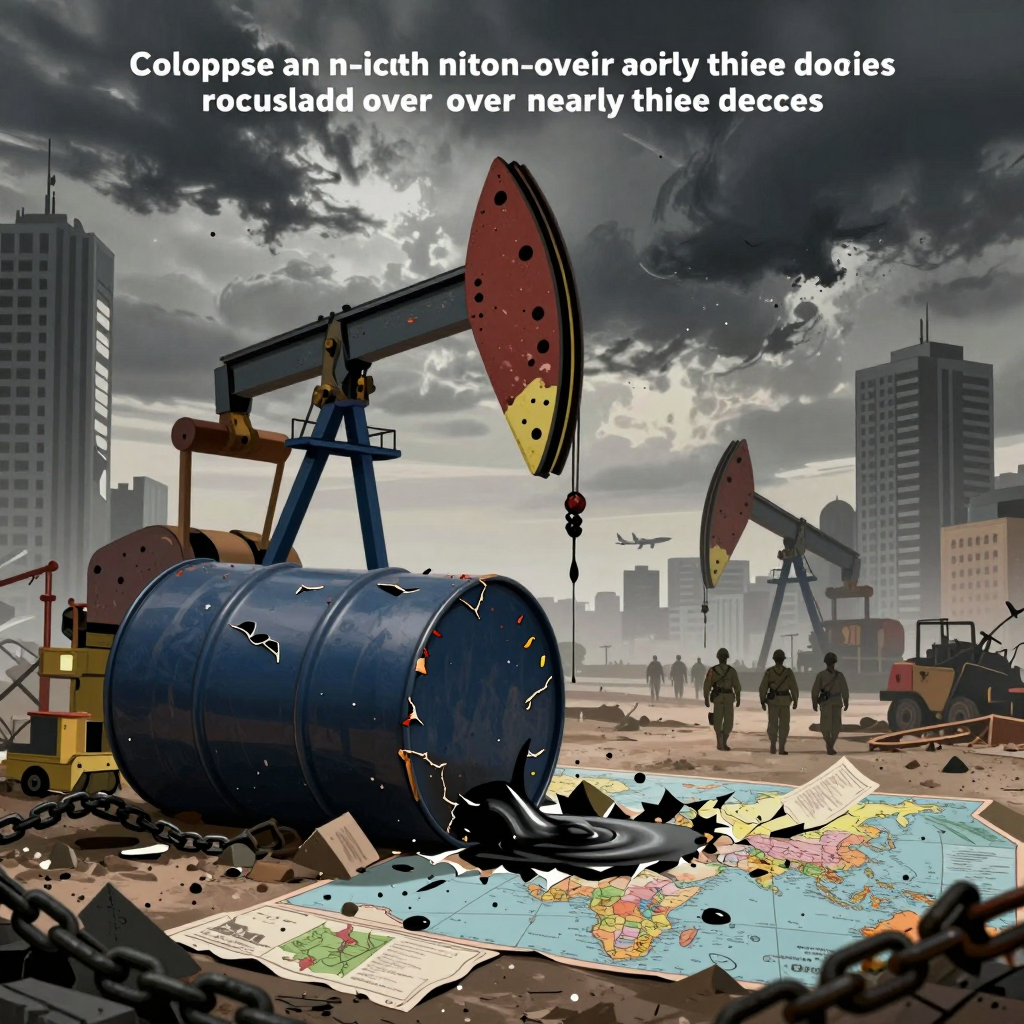
Venezuela: From Resource-Rich Nation to Failed State – The Dawn of a Dramatic Shift
How did Venezuela, once the largest oil reserve holder in South America, collapse under an economic crisis? Let’s explore the changes brought by the U.S. military intervention in 2026.
Venezuela’s Glory and Fall: The Price of Oil Dependence
Once one of the wealthiest countries in Latin America, Venezuela gained independence from Spain in 1819 and nationalized its oil industry in 1976, making it the backbone of the national economy. However, this status as a resource-rich country proved to be more fragile than expected.
When President Hugo Chávez took office in 1999, the situation changed swiftly. Under an anti-American policy stance, U.S. companies’ assets were seized and the oil industry was renationalized. Revenues from oil flowed into poverty relief and populist policies, sustaining an economic boom until 2013.
Yet, Venezuela’s fate hinged entirely on oil prices.
The National Collapse Triggered by Plummeting Oil Prices
The sharp oil price drop beginning in 2015 dealt a fatal blow to Venezuela’s economy. Sparked by the shale gas revolution and Saudi Arabia’s production increase, this crisis became an irreversible catastrophe for a country recklessly dependent solely on oil exports.
Since 2016, Venezuela was branded the worst failed state in South America. The government forced civil servants to work only four days a week, and large-scale protests erupted everywhere. Coupled with drought, food shortages worsened, and hyperinflation rapidly destroyed people’s livelihoods.
Political Crisis and Total Societal Breakdown
After allegations of election fraud in 2019, the Maduro regime faced a severe legitimacy crisis. The overlap of economic collapse and political chaos led Venezuela to lose its very state functionality.
By 2021, the situation worsened. Public security completely collapsed, with gangs—not police—controlling the streets in a shocking reversal of roles. With U.S. economic sanctions imposed, citizens began fleeing en masse to the U.S. and Latin America for survival.
U.S. Military Intervention and a Dramatic Turning Point
On January 3, 2026, Venezuela entered a historic turning point. The United States launched a swift military operation, arresting President Nicolás Maduro and his wife and extraditing them abroad.
Interestingly, this date exactly matches January 3, 1990—the day U.S. forces captured Panama’s dictator Manuel Noriega. This is no coincidence but a symbolic reflection of how U.S. strategies in Latin America tend to repeat.
Venezuela’s future remains uncertain. Despite possessing the world’s largest oil reserves, its fate is entangled with the interests of Russia and China. The economic system’s collapse and the presence of armed militias raise fears that the resulting power vacuum could escalate into civil war. The next chapter for Venezuela will unfold amid regional dynamics and international conflict management.
2. The Fate Bound to Oil: Venezuela's History of Prosperity and Decline
From independence in 1819 to the nationalization of oil in 1976, and to the populist policies of the Chávez regime—why did Venezuela's oil become both a blessing and a curse? To answer this, one must trace the dramatic trajectory experienced by this resource-rich country.
The Rise of the Oil Industry After Independence
After gaining independence from Spain in 1819, Venezuela maintained its identity as an agricultural nation for a long time. However, the situation rapidly changed entering the 20th century. In 1976, the Venezuelan government made the decisive move to nationalize the oil industry, marking a turning point where the core of the national economy shifted entirely to oil. At the time, this decision was considered a clever strategy to control the nation’s wealth.
The Chávez Era: The Illusion and Reality of Oil Wealth
With Hugo Chávez’s ascent to the presidency in 1999, Venezuela entered a new chapter. The Chávez administration strengthened anti-American stances, seizing assets of US companies and further tightening national control over the oil industry. Understanding this period requires a look at the domestic political climate—the public, enraged by unfair wealth distribution and deepening inequality, welcomed Chávez’s populist policies.
Chávez’s government poured unlimited oil revenues into widespread social programs—poverty alleviation, education, healthcare. Until the economic boom peaked in 2013, these policies enjoyed significant popular support, and Venezuela’s future appeared hopeful.
Oil Price Crash and Economic Collapse
However, starting in 2015, the plummeting oil prices shattered everything. The shale gas revolution ramped up US oil production, and Saudi Arabia’s aggressive output increase sent crude prices into a freefall—against which Venezuela was completely unprepared.
In reality, Venezuela’s tragedy was foreseeable. By relying solely on its oil industry and neglecting the development of other economic sectors, and complacently resting on oil wealth without efforts to diversify, the country set itself up for disaster. When oil prices dropped, Venezuela’s economy—once boasting the world’s largest oil reserves—collapsed almost overnight.
Since 2016, Venezuela has gained infamy as South America’s most troubled failed state, with the government even imposing extraordinary measures like a four-day workweek on public employees.
The Paradox of Oil
Venezuela’s story reveals that natural resources don’t always bring blessings. While abundant oil enabled rapid short-term wealth, it stifled long-term economic diversification and healthy institutional development. Reliance on populist policies yielded temporary satisfaction but robbed the nation of opportunities for structural reform. Ultimately, Venezuela found itself locked in a fragile economy utterly dependent on oil, facing the dire crisis it endures today.
Political Crisis and Social Collapse: The Harsh Reality of Venezuela’s Failing State
Amid plunging oil prices, massive protests, and allegations of electoral fraud, how did the people endure the collapse of security and sky-high inflation? A close look at Venezuela’s political crisis and social breakdown reveals how swiftly a once resource-rich nation can descend into a failed state.
Political Crisis Triggered by Economic Collapse
Venezuela’s nightmare began with the oil price crash in 2015. The shale gas revolution and increased production from Saudi Arabia caused international oil prices to tumble, instantly collapsing Venezuela’s economy, which relied almost entirely on oil revenues. Since 2016, Venezuela earned infamy as South America’s worst failed state, with the government plunged into a severe fiscal crisis.
That year, the government imposed extreme measures such as forcing public workers to work only four days a week, igniting fierce public outrage. Large-scale protests erupted across the streets, and the economic crisis rapidly snowballed into a political disaster.
Electoral Fraud Allegations and the Collapse of Legitimacy
2019 marked a turning point in Venezuelan history. Following allegations of fraud in the presidential election, Maduro’s regime faced a grave legitimacy crisis. Public trust hit rock bottom, and political divisions deepened dramatically. From this moment, Venezuela spiraled into a vicious cycle of economic and political collapse.
Breakdown of Security: Total Loss of State Function
By June 2021, Venezuela confronted yet another nightmare. Public security had completely disintegrated, with gangs—rather than the police—controlling the streets in a shocking role reversal. Having lost its most fundamental duty to protect its citizens, Venezuela could no longer be considered a functioning state.
The People’s Despair: Inflation and Food Shortages
Caught in the midst of this political crisis, ordinary citizens endured unimaginable suffering. Hyperinflation devastated the currency’s value, and worsening food shortages threatened the survival of millions. Coupled with crippling U.S. economic sanctions, Venezuela’s economy ground to a total halt.
The Great Exodus: Desperate Choices by the People
Ultimately, Venezuelans decided to flee their homeland. Massive waves of refugees streaming into the U.S. and across Latin America left behind any hope for a future in their country. This exodus signified not just an economic crisis, but the collapse of the nation itself.
Venezuela’s political turmoil and social disintegration starkly illustrate the dangers of resource-dependent economies and political corruption. Once a beacon of hope in South America, this nation’s fall into failure offers a crucial lesson for global political leaders everywhere.
Section 4: The U.S.-Venezuela Feud: 27 Years of Conflict Over Oil
Why did the United States label Venezuela a "special security threat" and launch a military operation in 2026? How does this connect to the 1990 Panama incident? To answer these questions, we must delve into the complex 27-year conflict between the two nations.
The Beginning of the U.S.-Venezuela Oil Conflict
The confrontation between the U.S. and Venezuela is more than a mere diplomatic spat—it is a product of geopolitical rivalry over energy resources. After Hugo Chávez rose to power in 1999, Venezuela adopted a hardline anti-American stance. The Chávez government seized assets of American companies and pushed for complete nationalization of the oil industry, aiming to free Venezuela’s oil resources from U.S. influence.
Gradual U.S. Economic Sanctions and Political Interference
The Obama administration officially declared Venezuela a national security threat, initiating serious pressure. Under Trump’s first term, this pressure intensified. In 2019, the U.S. froze assets of Venezuela's state oil company PDVSA and imposed a full ban on crude oil exports. These harsh economic sanctions delivered a devastating blow to Venezuela's already collapsing economy amid plummeting oil prices.
But the U.S. didn’t stop at economic sanctions—it also engaged in political interference. Supporting opposition leader Juan Guaidó as "interim president," Washington moved to directly promote regime change.
The 2026 Military Operation: History Repeating Itself?
On January 3, 2026, the U.S. launched a surprise military operation against Venezuela, arresting President Nicolás Maduro and his wife and deporting them. Fascinatingly, this date marks exactly 36 years since January 3, 1990—the day U.S. forces captured Panama’s dictator Manuel Noriega. This is likely no coincidence, symbolizing America’s consistent policy approach in Latin America.
Geopolitical Complexity and an Uncertain Future
However, Venezuela’s situation differs fundamentally from Panama’s. As the country with the world’s largest proven oil reserves, Venezuela is entangled with powerful allies like Russia and China. A U.S. military intervention alone cannot guarantee long-term stability; power vacuums could spark violent clashes among armed militias and competing interests.
Ultimately, the 27-year saga between the U.S. and Venezuela reflects a profound confrontation over energy resources and geopolitical influence, transcending a mere bilateral conflict. How Venezuela moves forward is expected to mark a pivotal turning point in international politics.
Reflections Toward the Future: A New Beginning or Another Chaos for Venezuela?
Amidst a power vacuum in the world’s largest oil reserve holder, tangled interests of Russia and China, and the proliferation of armed groups—what picture will Venezuela’s tomorrow paint?
On January 3, 2026, Venezuela reached a historic turning point with the U.S. military intervention. The fall of Nicolás Maduro’s regime appeared, at first glance, as a signal of ‘change’ spurred by international involvement. Yet, the reality Venezuela faces carries complexities far beyond a mere regime change.
The Resource-Rich Nation’s Dilemma: Oil and the Epicenter of International Conflict
Venezuela holds incomparable strategic value, far beyond something like Panama. As the country possessing the world’s largest oil reserves, it plays a pivotal role in the international energy market. This is precisely why global powers like the U.S., Russia, and China are deeply invested in Venezuela’s political landscape.
Russia and China have maintained close ties with the Maduro regime, grounded in strategic interests. Now, with a power vacuum emerging, these nations are expected to exert direct influence over Venezuela’s future political framework. Clashing interests over oil resources are likely to make Venezuela’s path to stable reconstruction even more challenging.
The ‘Afghanistan Model’: The Risk of Armed Faction Proliferation
In Venezuela, where the economic system has utterly collapsed, pro-government armed militias and various gang organizations are entrenched across society. As early as 2021, gangs—not police—were effectively controlling local security in a role reversal, and the power vacuum risks rapidly expanding these armed groups’ influence.
Experts warn Venezuela could descend into an ‘Afghanistan model’—marked by prolonged civil war and rampant armed factionalism. As central government control weakens, armed groups could seize independent territories, escalating violent clashes. This threatens not only internal security but could destabilize the entire region.
The Road to Reconstruction: The Imperative of International Cooperation and Internal Consensus
For Venezuela to embark on a true new beginning, balanced international intervention combined with political consensus within the country is absolutely essential. While U.S. military intervention may have succeeded in toppling the regime, the process of national rebuilding conceals far more intricate challenges.
Beyond economic revival, Venezuela must tackle destroyed institutions, societal divisions, and the complex web of international conflicts. Managing the influence of Russia and China, controlling domestic armed factions, and redefining relations with the U.S. all need to happen simultaneously.
A Future to Watch
Today, Venezuela stands at a crossroads of countless possibilities. It may establish a new democratic system through international cooperation or spiral into a long-term civil war fueled by armed groups. The direction of Venezuela’s internal regime and how the conflicts between major powers are resolved ultimately rest on the efforts of the U.S., the international community, and Venezuelan citizens.
The future of the world’s largest oil reserve holder is no mere Latin American issue—it carries significant implications for the global political order. Watching Venezuela’s tomorrow unfold will be indispensable for understanding the trajectory of world politics.
Comments
Post a Comment