The Reasons for Ruben Amorim's Failure as Manchester United Manager: A 15th Place Disaster Caused by Sticking to 3-4-3 and Lack of Communication
Rúben Amorim: The New Head of Manchester United's Historic Coaching Debut
For the first time in its illustrious 150-year history, Manchester United has introduced the role of 'Head Coach.' The man at the forefront of this groundbreaking change is none other than Rúben Amorim. This pioneering appointment is far more than a mere change in title; it signals the club’s bold ambition to revolutionize its traditional coaching structure as it ushers in a new era.
Amorim’s Appointment and the Club’s Aspirations
When Amorim was named Manchester United’s new leader, the club’s executives had a clear mission. Key figures from INEOS, including Jason Wilcox, Omar Berada, and Dan Ashworth, vowed a "grown-up" and methodical approach to driving the team. Within this framework, Amorim’s hiring reflected a vote of confidence based on his stellar achievements in Portugal and his sharp tactical philosophy.
The Gap Between Expectations and Reality
However, the very first words Amorim uttered at his introductory press conference raised warning flags. “As both manager and head coach, I must choose the players myself,” he declared—an assertion that exposed a fundamental contradiction beyond a simple slip of the tongue. The club’s promise of systematic management clashed with his claim for absolute authority, revealing an inherent misalignment at the heart of this new structure.
This marked the dawn of the Rúben Amorim era—a beginning that unfolded into the opening chapter of countless challenges awaiting Manchester United.
Ambiguous Title, Leadership Doomed from the Start
Manchester United’s new era was filled with promises. A systematic operational system under INEOS, experienced executives’ leadership, and the expectation that one coach would change everything. Yet, a single remark during Amorim’s first press conference as the club’s inaugural ‘Head Coach’ after 150 years starkly revealed how fragile the foundation beneath all those promises truly was.
“As the coach and head coach, I must be the one to select the players.”
This statement was far more than a simple linguistic slip. It exposed a fundamental contradiction in the organizational structure Amorim sought to build. The pledge that "adults are leading the team" under names like Jason Wilcox, Omar Berra, and Dan Ashworth ultimately boiled down to confusion about who actually held decision-making power.
Amorim and the Vacuum of Structural Authority
Manchester United is one of the most complexly organized clubs in modern football. Clear divisions of roles between management, technical staff, and coaches are essential for consistent policy-making. Yet Amorim’s appointment completely disregarded this principle.
From the start, the meaning of the title ‘Head Coach’ was ambiguous. Amorim interpreted it as absolute authority, while the club’s executives understood it as a role under institutional oversight. This gap widened over time, resulting in inconsistent signals across every area—player transfers, tactical planning, even public statements.
Leadership Failure Born of Cultural Clash
The football environment Amorim experienced in Portugal was a world apart from the Premier League. Coaches wield near-absolute authority, and time is a precious asset. In that setting, direct and emotional expressions signify strong leadership.
But Old Trafford is different. Every training session is analyzed, and every word from the coach is amplified by the media. Amorim’s loquaciousness and emotional outbursts became poison in this environment. Publicly calling his team “one of the worst in the club’s history” and admitting that he himself was not good enough as a coach shook the team’s credibility.
Leadership fundamentally entails giving people direction and confidence, but Amorim’s self-criticism shattered this core. Manchester United’s 15th-place finish last season was not merely a tactical issue—it was because, in such an unclear and chaotic leadership environment, players could not fulfill their roles.
Pride That Rejected Change
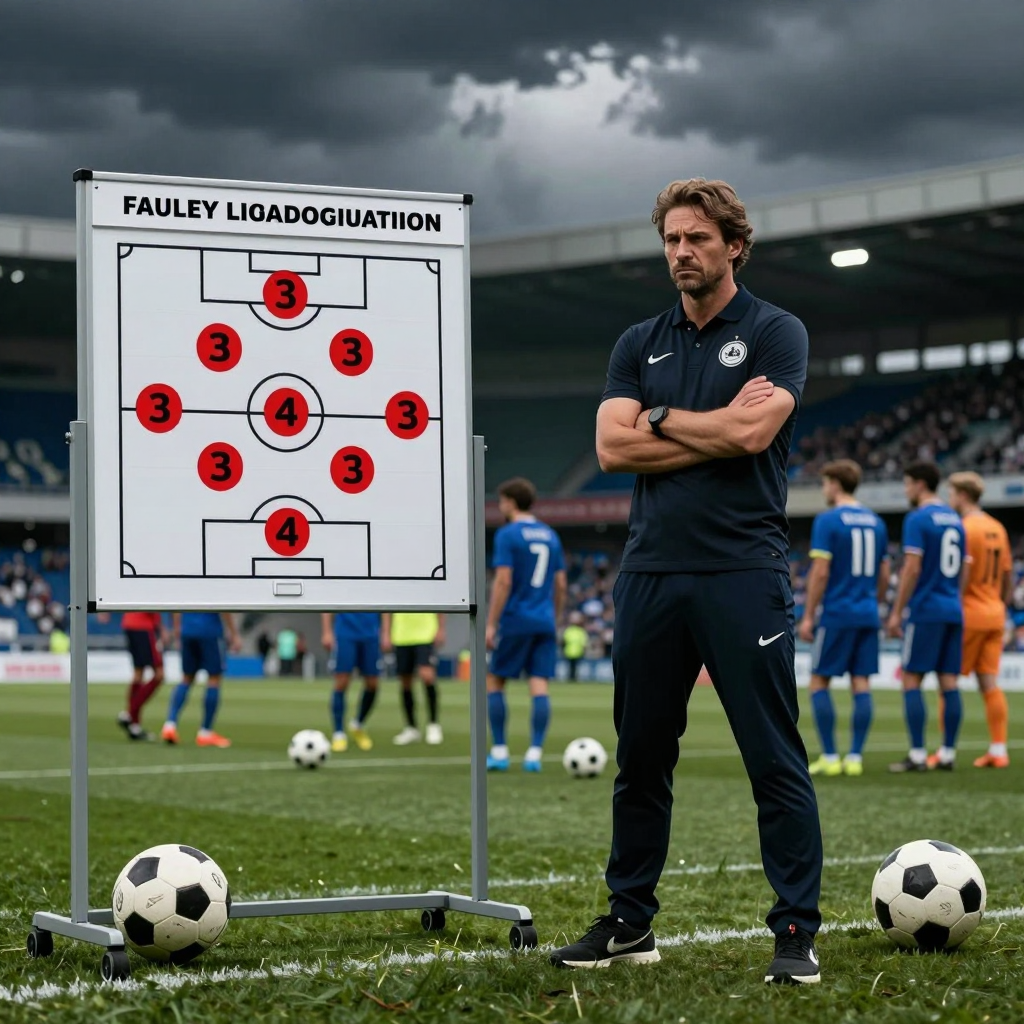
An even greater problem was Amorim’s stubbornness. Until December 2025, when he finally experimented with a four-defender system, he clung to his 3-4-3 formation. Even as opponents repeatedly exploited the same weaknesses, players’ role assignments remained vague, and the defensive system faltered, he held firm.
His reason was astonishing: “I couldn’t make that change because I worried players might think I changed it because of them.”
This statement encapsulates every paradox of football organizational leadership. He prioritized personal status over collective efficiency. What a massive club like Manchester United needs is clarity, consistency, and accountability—qualities entirely absent from Amorim’s leadership.
Amorim’s journey, beginning with an ambiguous title, became a case study in how a leader who values pride above team performance can drive an organization to collapse.
3. Amorim’s Premier League Adaptation Failure: The Limits of Portuguese-Style Leadership
When Rúben Amorim arrived at Old Trafford, he was a manager accustomed to the absolute authority structure of Portuguese football. There, the manager’s voice was law, and blunt remarks and emotional swings were natural occurrences. However, the Premier League, especially Manchester United, does not operate on that logic.
Why Amorim’s Portuguese-Style Domineering Approach Became a Problem
In Portugal, time was a precious asset, and managers were granted nearly absolute authority. Amorim thrived in that environment. But the moment he took charge at Manchester United, everything changed. Every move on the training ground, every word at a press conference, and every post on social media was dissected and scrutinized in painstaking detail.
Amorim’s talkative nature, direct speech, and emotional outbursts were seen as part of leadership in Portugal. Yet at Old Trafford, these traits became “poison.” He publicly called his side “one of the worst teams in the club’s history” and openly admitted he was not a good enough manager. This was not mere humility but a clear expression of leadership failure to adapt to the Premier League stage.
Lack of Clarity and Avoidance of Accountability
The most decisive moment came in December 2025. Having identified weaknesses in the 3-4-3 formation all season, Amorim finally decided to experiment with a four-man defense. However, his explanation caused an even bigger stir:
“I couldn’t make that change because players might think I’m doing it because of them.”
This single statement exposed Amorim’s fundamental problem: he prioritized personal status and pride over collective efficiency. Even in moments demanding clear tactical judgment, protecting his own image mattered more. This exemplified how a Portuguese-style manager, accustomed to absolute authority, could be vulnerable within Manchester United’s complex structure.
The Inevitable Outcome of a Cultural Clash
The Premier League demands clarity, consistency, and accountability. Players want a manager’s clear vision; fans expect transparent communication. Yet Amorim’s leadership style conflicted with all these. Relying on authority to make decisions but evading responsibility when convenient, and sparking unnecessary controversy with blunt remarks, was unsustainable on the Old Trafford stage.
Manchester United finished 15th last season. Despite summer signings and an improved fixture list in 2025, Amorim’s leadership style and failure to adapt became fundamental obstacles blocking the club’s progress.
Stubborn Tactics and the Crisis of Amorim’s 3-4-3 Formation
What weaknesses lay hidden behind Amorim’s tactics that even confused his players? And what is the truth concealed behind his phrase, "necessary pain"?
Vulnerabilities of the 3-4-3 Revealed in the Premier League
The 3-4-3 formation, which Amorim tested in Portugal, became less of a tool and more of an idol after his appointment at Manchester United. This formation continuously revealed its flaws against the Premier League’s fast and varied playing styles. Opponents quickly identified Amorim’s tactical weaknesses and relentlessly exploited them.
The fundamental problem was the unclear division of roles among players. The ambiguous operational structure of the formation disrupted the team’s cohesion. The defensive system remained unstable, and transitions to attack were chaotic. This was not merely due to a lack of player ability; the tactic itself failed to adapt to the Premier League environment.
Escaping Under the Name of “Necessary Pain”
Instead of confronting and improving these weaknesses head-on, Amorim justified the team’s struggles with the phrase “necessary pain.” At a time when immediate adaptation and tactical flexibility were crucial, he stubbornly clung to the logic that enduring pain would eventually lead to improvement.
It wasn’t until December 2025 that Amorim finally decided to experiment with a four-defender system. Yet, more impactful than the tactical shift was his explanation: “I couldn’t let the players think that I was making this change because of them,” he said publicly.
Personal Status Trampling Team Efficiency
This statement reveals all there is to know about Amorim’s leadership philosophy. He placed his own image and status above the team’s performance and effectiveness. He feared appearing weak through tactical changes or admitting that his initial stubbornness was wrong.
A true leader revises decisions when necessary and prioritizes the team’s collective benefit over personal pride. Amorim chose the opposite path. As a result, Manchester United finished 15th last season, and players lost confidence amid the coach’s confusing tactics.
The 3-4-3 formation itself is not inherently flawed. But in Amorim’s hands, it became less a tool for progress and more a shield for preserving his stubbornness. This was not a tactical issue—it was a leadership problem.
Hope Amidst Chaos and the Road Ahead: Rebuilding Under Amorim
Last season, Manchester United finished 15th in the Premier League, marking yet another dark chapter in the club’s history. However, by the summer of 2025, things began to shift. The acquisition of promising talents like Cunha, Mbeumo, and Sesko reignited the flames of hope among fans. Additionally, the absence from European competitions granted a lighter match schedule, offering Amorim the much-needed opportunity to shorten the “necessary pain” period he so desperately sought.
New Signings as a Sign of Tangible Change
The arrival of new players is far from just filling numbers. Each one possesses the qualities United has long demanded: freshness, energy, and the physicality required to adapt to the intensity of the Premier League. Through these additions, Amorim has gained a stronger foundation to effectively implement his tactical philosophy. Especially significant is the reinforcement of midfielders and fullbacks to cover weaknesses in the 3-4-3 formation, marking a genuine effort to overcome the repeated failures of last season.
Are the Fundamental Problems Still There?
Yet, the question remains: can bringing in new players alone resolve United’s core issues? Amorim’s leadership style and cultural adaptation failures were problems beyond the pitch—they were organizational. Publicly criticizing players as “one of the worst squads in club history” and prioritizing his position over collective efficiency won’t be automatically remedied by new signings.
For real change, Amorim needs maturity in leadership as much as tactical flexibility. His blunt approach and emotional expressions, which worked in Portugal, will be tested under Old Trafford’s high standards and the media’s unforgiving gaze.
Looking Forward: A Crossroads of Hope and Concern
The changes of summer 2025 are an encouraging sign. Yet true rebuilding must start with culture and trust beyond the pitch. Amorim must rebuild relationships with players, present a clear direction, and above all, take responsibility for his decisions.
The new season will be a defining moment for both Manchester United and manager Amorim. Will the new signings translate into tactical improvement, or will structural chaos cause another wasted opportunity? The club’s legacy, fan expectations, and Amorim’s future all hinge on this one season.
Comments
Post a Comment